

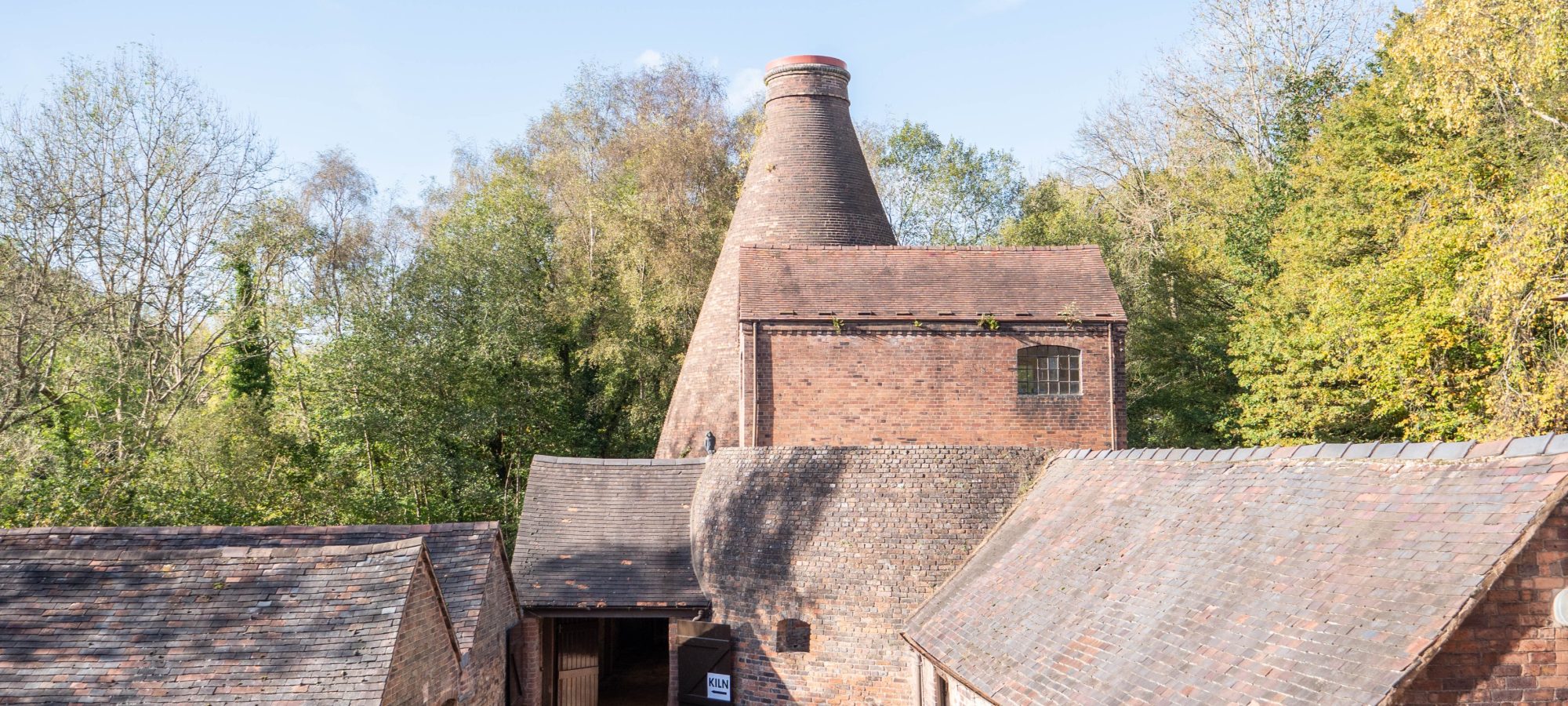


On Saturday 28th October 2023 I was privileged to be invited to help celebrate 30 years of conservation at Claymills Pumping Station. Claymills is a Victorian pumping station on the northern side of Burton-upon-Trent designed to pump effluent from the brewery industry in the town. Burton was the largest brewing centre in Victorian Britain, and the brewing processes generated a huge quantity of foul smelling, high temperature, sulphate rich effluent which also contained a lot of suspended matter. This was all discharged into local brooks and streams around the town. These became open sewers, until eventually the crude sewage ran into the River Trent at an outfall at Wallsitch. Claymills was was designed to pump this brewery effluent to a the sewage farm at nearby Egginton, built in the 1866.

Claymills Pumping Station was built in the period 1884-86 to designs by James Mansergh, consulting engineer to Burton-upon-Trent Municipal Borough Council, with George Hodges of Burton-upon-Trent as the main contractor. It became operational in 1886, and continued to pump the sewage up to the farm until 1969, when the current treatment works was commissioned. The beam engines were then used to pump sludge to the farm until electric pumps were installed in 1971. Abandoned, but with all its machinery intact, by the the mid-1980s the site faced demolition. However, it was listed as a grade II* building in 1986 due to the completeness of the buildings and the machinery on the site. Thereafter, interest in saving the complex grew and in September 1993 The Claymills Pumping Engines Trust was formed. This has been entirely volunteer-run since its foundation.
The main pumping plant consists of four Woolf compound, rotative, bean pumping engines. These are arranged in mirror image pairs, in two separate engine houses, with a central boiler house (containing five Lancashire boilers) and chimney. The engines were built in 1885 by Gimson & Co of Leicester and represent the final technical development of the beam engine. All the engines are similar and typically have a high-pressure cylinder with a 24-inch bore by 6-foot stroke, and the low-pressure cylinder is 38-inch bore by 8-foot stroke. Steam is distributed by means of double beat ‘Cornish’ valves, mounted in upper and lower valve chests. The cylinders act on one end of the beam, via a parallel motion. The beams, which are rivetted together and hollow to reduce weight, are 26 feet 4 inches between end centres, 4 feet deep at the centre, and each weigh around 13 and are carried on 12-inch-diameter (300 mm) bearings.
The Trust has spent its first 30 years restoring the workshop, engine houses, chimney, boilers, and steam engines. 2023 marks the return to work of all four original beam engines. Thus, the highlight of the celebrations was the running of these four beam engines, steaming all at the same time. This included the recently restored engine A, which I got to help to start! The steam and heat in the engines houses were not surprising, but the quietness of the engine movements was a surprise, the beams whispering as they rose and fell as a rapid rate.
Although the site is now fully functioning the Trust have further plans to expanded their operations and to develop their visitor and learning facilities.
 Industrial Heritage Networks