

The latest free exhibition at the Ironbridge Gorge Museum Trust (IGMT), ‘From Stars to Cells: The Life of Iron’, opened to the public on the 24 April in the Coalbrookdale Gallery. Running until December 2024, the exhibition explores the science of iron, taking you on a journey from iron’s origins in space billions of years ago through to its use by humankind and in the Ironbridge Gorge.
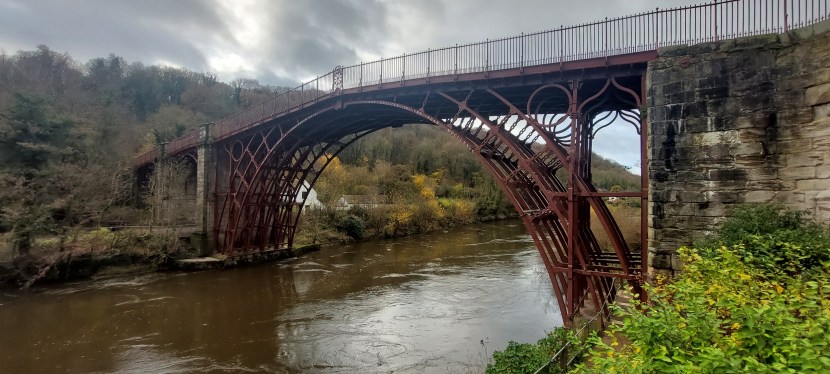
The story of iron is particularly important to the local area, where the pioneering Darby family revolutionised our lives with their innovations in the iron industry, a symbol of which is the Ironbridge. This exhibition will explore the formation of iron atoms in stars and supernovas. You will have the chance to see up close meteorites formed in space 4.5 billion years ago. Then you will be transported to the Iron Age and around 750 BCE, with a selection of objects on loan from Shropshire Museums. You will see Iron Age coins from the Claverley Hoard, unearthed in Shropshire; a gold decorative torc excavated in Telford; and a bronze sword found in the River Severn.
Months of work has gone on behind the scenes to do research, source objects from the collections of IGMT and other organisations, write the exhibition text, and doing the design. IGMT volunteers will staff the exhibition, welcoming visitors as they arrive. A highlight of the exhibition is a bead from a necklace (also on display) from ancient Egypt dating from approximately 3200 BCE, the earliest known manmade iron object in human history. It is a loan from the Petrie Museum of Egyptian and Sudanese Archaeology at University College London, and this is the first time it has been exhibited outside London.
IGMT are grateful to the Friends of Ironbridge Gorge Museum, who have paid for the case in which this bead will be displayed, and to Hiscox for insuring it. This free exhibition is curated in partnership with Keele University and supported by Arts Council England.

 Industrial Heritage Networks