
Discovering the Industrial Revolution in Essex: 26 April 2025

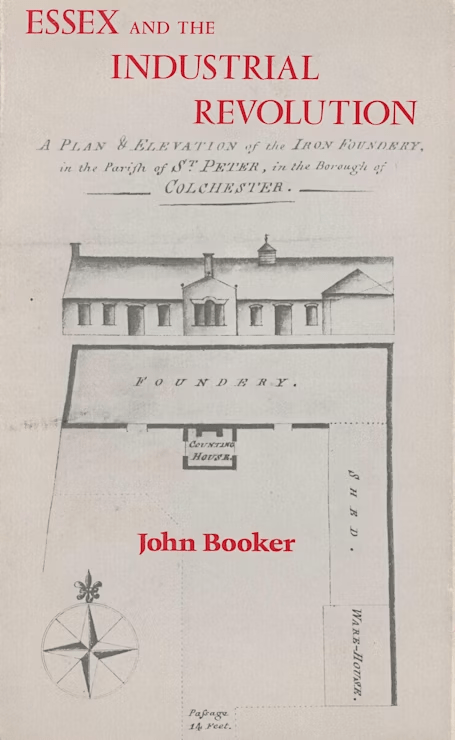
In 1974 Essex Record Office published John Booker’s ground breaking Essex and the Industrial Revolution. This highlighted the fact that significant industrial activity was going on in Essex, and not just those areas of the country traditionally associated with the Industrial Revolution, such as Ironbridge. To mark the 50th anniversary of its publication, Essex Record Office is running a series of short talks on various aspects of the industrial past of the county as well as celebrating this significant anniversary.

This event is run in conjunction with the Essex Society for Archaeology & History, Essex Industrial Archaeology Group, and Anglia Ruskin University. It is hoped that John Booker will be able to present one of the talks.

To review the programme and book form, follow this link: https://www.eventbrite.co.uk/e/discovering-the-industrial-revolution-in-essex-tickets-1217710758659?aff=erelexpmlt
Job Opportunity at Chance Heritage Trust for a Heritage & Culture Coordinator

Thanks to the support of National Lottery players, Chance Heritage Trust are looking to appoint a Heritage & Culture Coordinator to drive their community engagement activities over the next 3 years. The Trust want to make sure the community are front and centre as they take forward the regeneration of the Chance Glassworks.

Following a grant from The National Lottery Heritage Fund they are seeking to employ an experienced Heritage and Culture Coordinator. As the Community and Culture Coordinator, the role will be to develop and drive their heritage, culture, and enterprise offer using the rich industrial history and legacy of the Chance Glassworks and other heritage projects as a source of material. Coordinating all strands of the Trust’s community engagement activities, managing their social media and external communications, will all be part of the role.

If this challenge appeals to you, a detailed job description and contact information can be found on their website here: www.chanceht.org

Please include a covering letter detailing your past experience and telling the Trust why you think you can fulfil the role and include a current CV.

Historic England Publish New Data on Economic Value of the Heritage Sector

Each year, Historic England (HE) commissions a detailed economic study that aims to capture the economic ‘footprint’ of the heritage sector using national statistics disaggregated into subsectors, occupations, and local geographies. Using the latest available national statistics (2022), England’s heritage sector is estimated to have contributed £44.9 billion in Gross Value Added (GVA) to the UK economy in 2022 and supported the employment of over 523,000 workers (CEBR, 2024).

Like many sectors, the heritage sector has faced extraordinary challenges since 2020 due to macro-economic shocks, including the COVID-19 pandemic, growing cost-of-living costs, and escalating global energy prices. The post-pandemic evidence demonstrates a resilient and recovering heritage sector emerged in 2022.

The top three constituent sub-sectors of England’s Heritage Sector (construction; libraries, archives and museums; and architectural and engineering activities) accounted for over 80% of the total GVA of England’s heritage sector. The construction industry remained the largest constituent heritage sub-sector in 2022, generating £7.42 billion GVA. The next largest industry – Libraries, archives, museums and other cultural activities -contriubed almost £3.34 billion. Architectural and engineering activities contributed £1.86 billion. The heritage sector in the South East supported the largest number of workers in 2022, with 61,000 directly and indiretcly employed in the sector.

To read the Historic England overview of this research follo this link: https://historicengland.org.uk/research/heritage-counts/heritage-and-economy/economic-value/

Images courtesy of Historic England.

Historic England Latest Research on Wellbeing and Heritage

New research from Historic England shows that the average individual benefit of cultural heritage near individual residences to be £515, with a collective WELLBY (Wellbeing Adjusted Life Year) value of £29 billion across England. This research demonstrates that the very presence of nearby historic places benefits residents’ quality of life, whether or not they participate in heritage activities.

The research investigated the impacts of different types of heritage, including listed buildings (Grade I, Grade II* and Grade II buildings), scheduled monuments, protected wrecks, registered parks and gardens, battlefields and world heritage sites. The findings reveal a statistically significant, positive, relationship between the density of local heritage assets and self-reported life satisfaction, after adjusting for various socio-economic, neighbourhood and regional effects. The analysis also demonstrates that Grade II listed buildings, which represent 92% of England’s historic places on the National Heritage List for England, are the main drivers of life satisfaction increases.

The report concludes that these findings highlight the intrinsic value of cultural heritage in contributing to societal wellbeing, and provide a compelling argument for its preservation and integration into society development and wellbeing strategies.

To read more about this research follow this link: Heritage Capital and Wellbeing: Examining the Relationship Between Heritage Density and Life Satisfaction

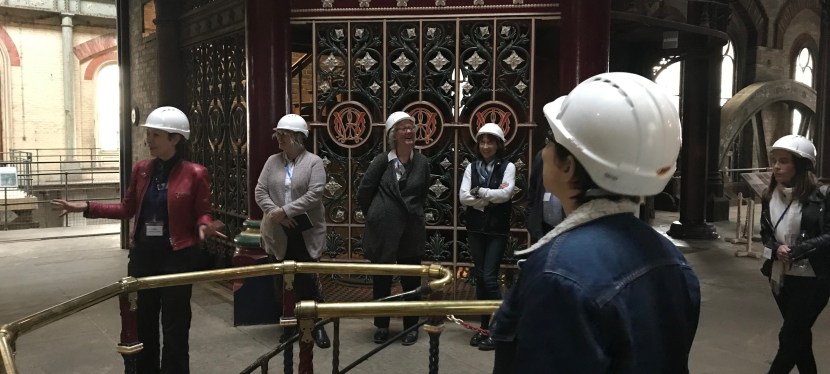
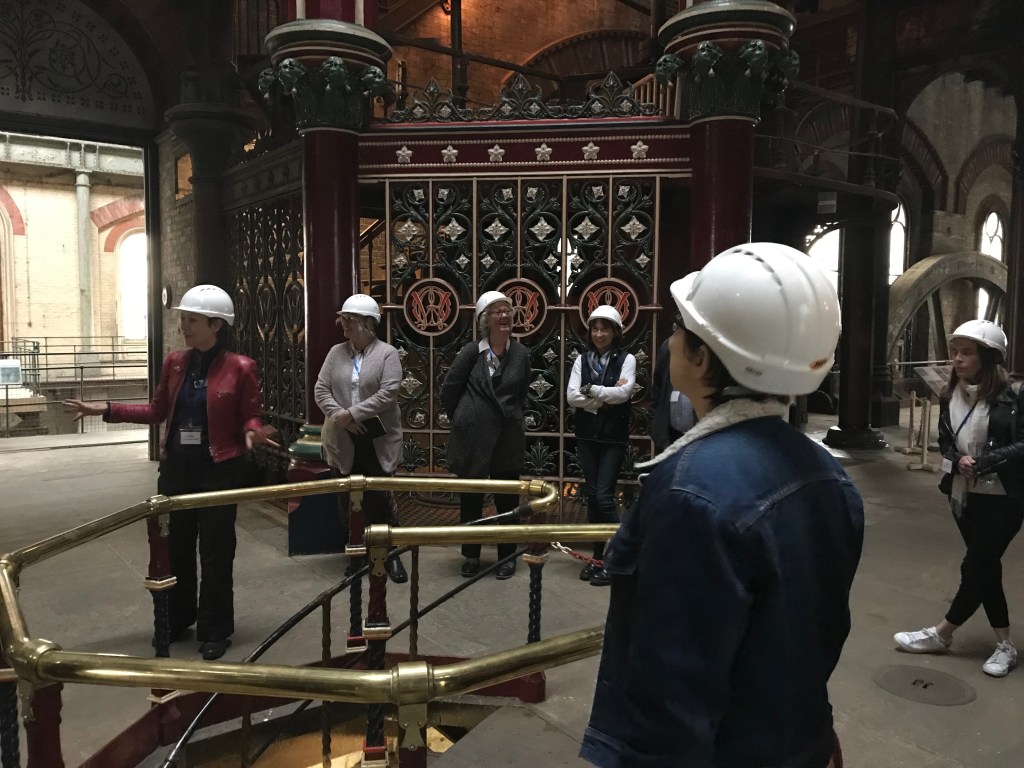
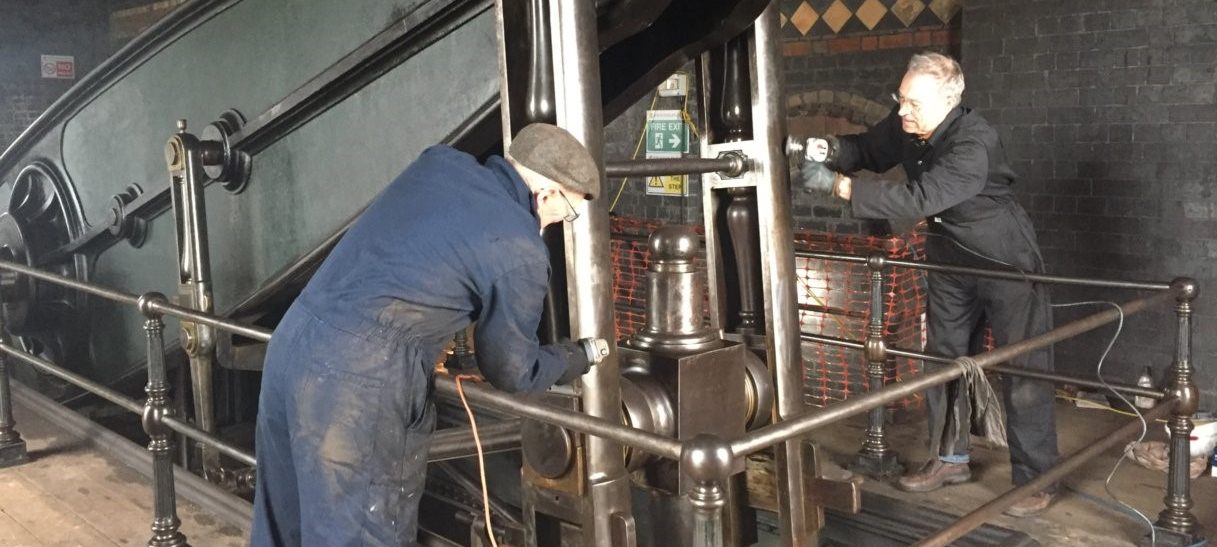
IHN London visit to Crossness Pumping Station.

Industrial Heritage Sites in England Survey Form Now Live

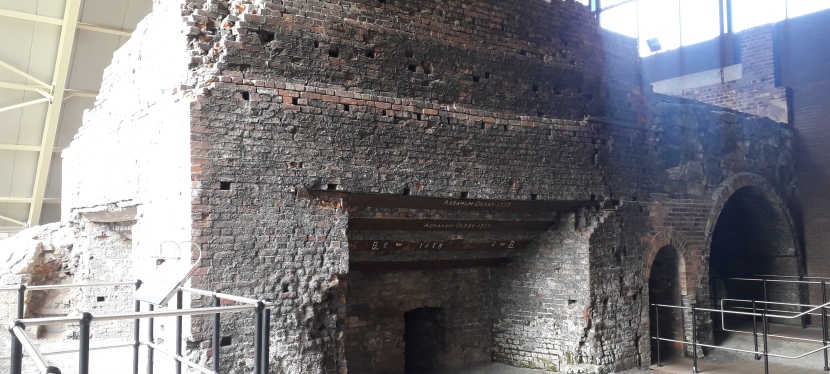
The Old Furnace, IGMT, Coalbrookdale

The Ironbridge Gorge Museum Trust and Heritage Innovation are undertaking a survey of the c.600 publicly accessible and protected industrial heritage sites in England. The ‘Designated Industrial Heritage Sites Open to the Public in England Project’ 2024 Survey is now live. It is open to all publically accessible Industrial Heritage Sites in England and the deadline is 10th May. 

Funded by Historic England, the 2024 survey will gather data on these sites which can be compared with the earlier reports. The main focus will be visitor numbers, conservation and maintenance, funding models, and community engagement. The survey will also consider how sites are responding to the challenges of Covid-19, the cost-of-living crisis and climate change. Any parties who receive an invitation to complete the survey are urged to do so where possible, as this will help to build a truer picture of the experience of sites and people and can inform the subsequent management recommendations.

The survey deadline is 10th May.  We want to hear from you – so if you haven’t received a link to the survey and wish to participate, please check your junk folder or email IHSO@ironbridge.org.uk for a direct link.

Connected Heritage Webinars From Wikimedia

As part of the National Lottery funded Digital Skills for Heritage initiative, Wikimedia UK is running free webinars to showcase what Wiki-based platforms and digital skills can offer organisations in a heritage context.

Heritage organisations of all sizes are invited to attend. These webinars will cover open knowledge, the digital skills gap, digital preservation and how WMUK is addressing those issues through this project. Participants will be provided with access to resources and materials to take back to their organisations, and the opportunity to follow up with the project and engage in partnership. You need only attend one webinar: sessions are free, open and no prior Wiki experience is required.

Webinar dates

2 February

17 February

4 March

To book follow this link: https://www.eventbrite.co.uk/o/wikimedia-uk-2325991761

You can follow them on Twitter for project updates, and you can contact the team at connectedheritage@wikimedia.org.uk