
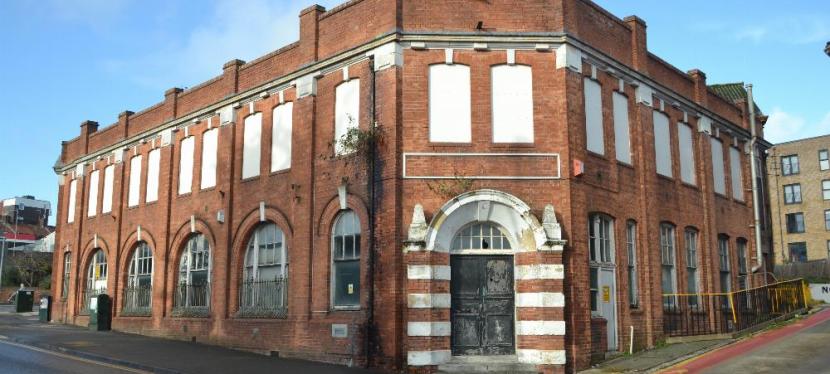
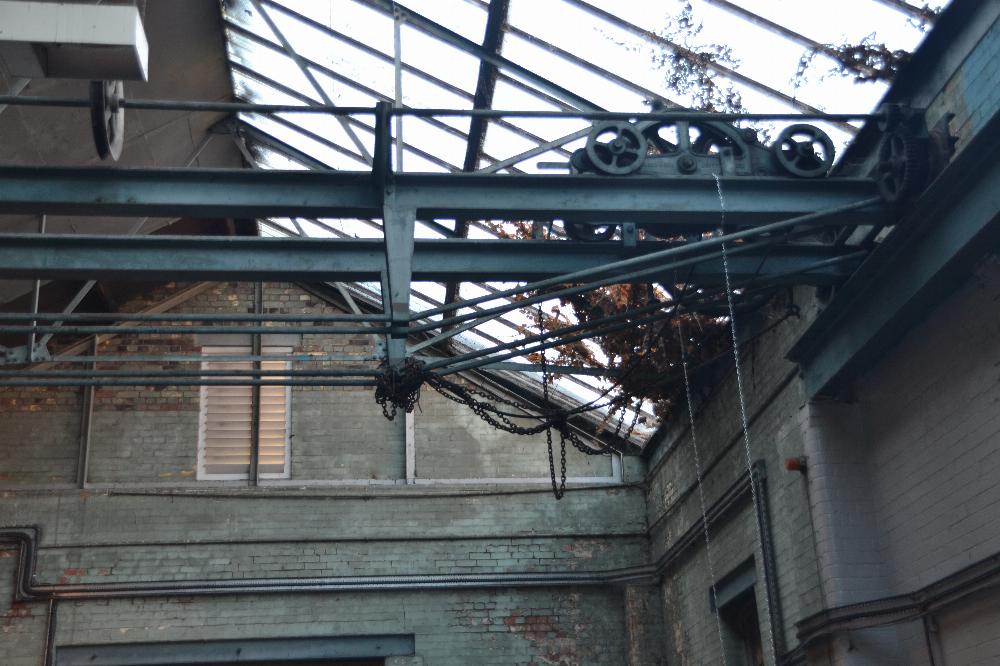
A historic crane in a former engineeering works in Yeovil is in need of a new home. The site owners, First Bus, is preparing to demolish the Nautilus Works, an early 20th century complex built by the Petter family of engineers. The site includes the former erecting shop, engine house, and foundry. However, First Bus has committed to donating salvageable items to organisations with an interest in the historic machinery left within the complex. The main items are a gantry crane made by Willcocks and Son of Buckfastleigh, c. 1907, and a large workbench.
The Petters were internationally renowned for their oil engines for use in agriculture and light engineering, and the site can be said to be the genesis of Westland Aircraft. The Petters responded to government pleas in World War I for firms to help build aircraft and built Short seaplanes on a separate site in the town, known from the start as Westland. In 1933 two Westland biplanes became the first aircraft to fly over Mount Everest.
The crane can be seen, together with a full description of the works on South West Heritage Trust’s website at: https://www.somersetheritage.org.uk/record/32107# Demolition is to take place in the New Year (no precise date known at the time of writing). Any organisation interested in the crane or bench should contact Craig Leake, property projects director First Group at craig.leake@firstgroup.co.uk. Smaller items are expected to go to the South Somerset Heritage Collection. A photograph of the bench may be made available later in the new year.
Any organisation interested in the crane or bench is also asked to let Tina Rowe of the Yeovil Archaeological and Local History (sampepys@btinternet.com), so that the Society knows whether artefacts from this important site have a continuing life.

 Industrial Heritage Networks