Steam Returns to Calderdale Industrial Museum

Calderdale Industrial Museum, after a fundraising campaign and months of hard work and training, will be running its steam engines for the first time since the museum closed 26 years ago, on the 18 April.

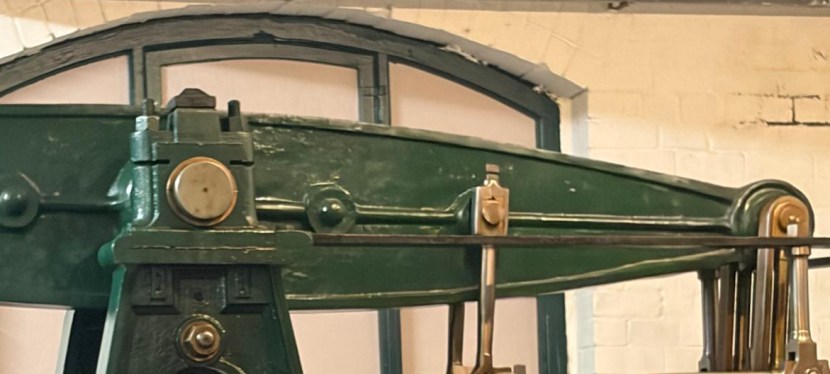
Since taking over the running of the museum in 2013, the Calderdale Museum Association (CIMA) has worked towards running the steam engines in the Power Gallery again as they had been before the closure of the museum in 2000. These are the 1926 built Newton, Bean & Mitchell horizontal ‘Corliss’ engine, the 1860s beam engine, the Fairbank Brearley vertical engine and the 1926 Bellis & Morcom inverted vertical compound engine. All are on display in the power gallery.

Once the volunteers worked out what was required, fundraising started in earnest, with money coming from members and visitors to contribute to the replacement of the old inefficient steam boiler. In August 2022, the old boiler was dismantled and removed from the basement and the area prepared for the new boiler. By 2025 enough money had been raised to cover the purchase and installation costs, and the boiler was then supplied and fitted out by H.A. McEwens – Boiler Repairs Ltd. A SolidTek STL 1000 was fitted by SolidTek MD Steve in November 2025 and they have offered to supply the necessary chemicals free of charge. The museum is very grateful for this kind gesture and look forward to working with Steve and SolidTek in the coming years. All the electrical work has been carried out by Richard Lennard, our in house electrician.

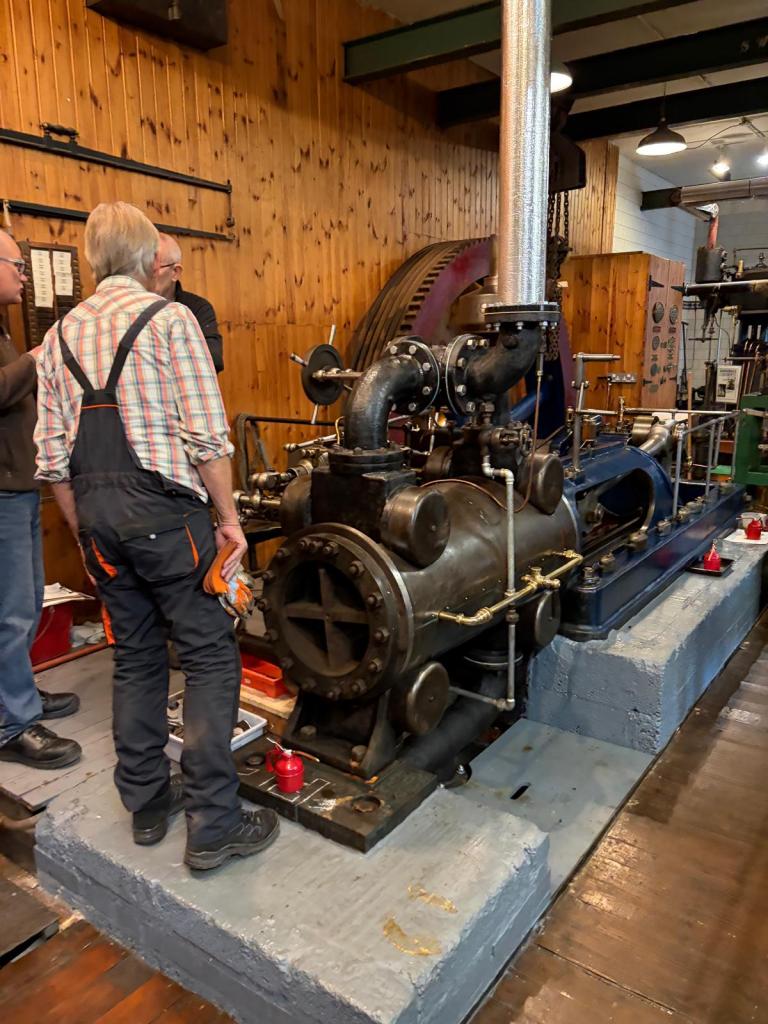
CIMA’s steam team operating the Newton Bean & Mitchell Corliss engine. Image copyright CIMA.

In the meantime, the team of museum volunteers have been working on refurbishing and recommissioning the four engines in readiness for public viewing. Training and testing have been going on over the winter, with modifications and repairs carried out as needed. A team of six volunteers were given professional training, over two sessions, by steam consultant Ian Roberts. They are now qualified with a City & Guilds ‘Industrial Boiler Duty Manager Course’. This ensures they operate the gas boiler safely. Further training to run the four engines has been given by Steve Buckley.

The museum plans to run steam fortnightly from 18th April until 28th June 2026, with further dates to follow over the summer period. Running the steam engines will add hugely to the quality of the visitor experience and is a very exciting day for the volunteers who have worked so hard to get to this point. It’s an added dimension to the tourist offering in Halifax and adds to the story told at the museum, of Calderdale’s significant contribution to the industrial revolution of the late 18th and 19th centuries. Enthusiasts from around the country will be drawn to the area to see these beautiful engines at work.

Trevor Hardaker, Operations Director for CIMA, said “Now we can confidently promote steam days where we run the engines, for the public once more. This is a crucial part of telling the story of the development of power in industrial Calderdale and will add to the exciting visitor experience at the museum.”

The museum relies on its open day takings to fund all the work done to maintain and develop the collection. You can now be a named sponsor of steam for a day, by donating £100, or make whatever contribution you can by putting money in Baby Enid or going to the museum website to the donation page. The museum is open on Saturday 10am – 4pm with last entry at 3pm. They also open, with the same hours, on Thursdays during the Calderdale School holidays. The licensed café opens when the museum is open.

The CBA Festival of Archaeology 2026 – How to Take Part

The Council for British Archaeology‘s Festival of Archaeology is back for 2026, and the theme for this year is “Archaeology and Nature”. The Festival will take place across the UK from Saturday 18th July to Sunday 2nd August. Last year over 120,000 people attended events across the UK in July. For 2026, the opening event is heading to Westonbirt, Gloucestershire, to explore Archaeology and Nature.

Event listings and resource submissions for the 2026 Festival of Archaeology are now open. Dozens of industrial heritage sites and industrial archaeology societies took part last year, putting on a variety of events, from talks and walks to exhibitions and tours. If you would like to find out more about the Festival activities or are interested in organising an event in 2026 please sign up for CBA newsletters via the link below and check the event organisers area where you’ll find lots of useful information on developing and delivering your activities.

To submit an event follow this link: Festival Council for British Archaeology

The Council for British Archaeology (CBA) is a UK wide educational charity that helps champion and promote participation in archaeology. We run the Young Archaeologists’ Clubs for young people aged 8-16 and the annual Festival of Archaeology to encourage the exploration of the places and spaces around us and their stories.

AIA’s 10th East-West Workshop on Industrial Archaeology

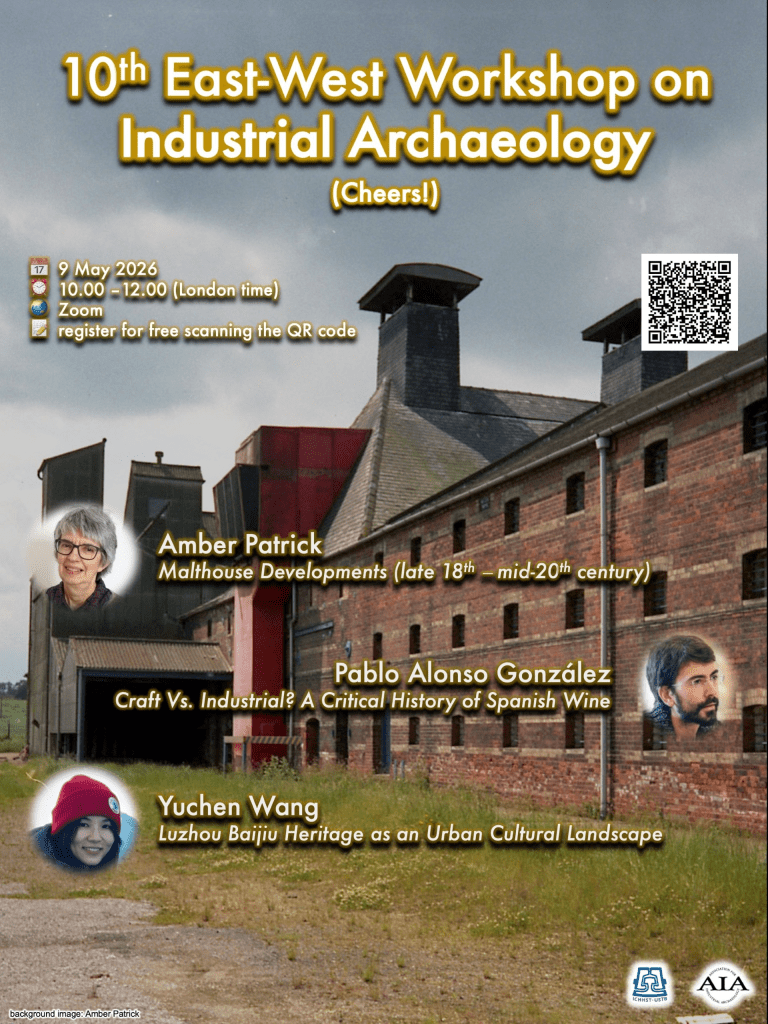
The next East-West Workshop on Industrial Archaeology, co-run by the Association for Industrial Archaeology (AIA), will be on the 9th May. This is 10th online, free, workshop in the series and takes place exactly five years after the AIA co-hosted the first edition in May 2021.

The East-West Workshops on Industrial Archaeology were not created to endure; at least, not in a purely virtual format. When the first workshop was held in May 2021, it was mainly a way to prevent the COVID pandemic from disrupting our academic activities and international exchanges. However, the experience exceeded expectations. Five years on, the AIA are launching the 10th edition of a series of workshops that has become increasingly popular in the West, the East, and beyond.

To mark this special occasion, this workshop focuses on the archaeology, heritage, and history of alcoholic beverages. The speakers will examine the architecture of malt production in Britain and continental Europe (a key component of beer, whiskey, and other spirits), the history of winemaking and wine consumption in Spain, and the landscape of baijiu production in China. While the workshop acknowledges the serious consequences of alcohol abuse, it also recognises it as a significant element in many cultures worldwide, their social practices, and their heritage.

The East-West workshop series aims to exchange ideas and knowledge between Western and Eastern colleagues to develop a more international and diverse industrial archaeology. The event is jointly organised by the Institute for Cultural Heritage and History of Science & Technology (USTB, China) and the UK Association for Industrial Archaeology.

SPEAKERS & TALKS

  • Amber PATRICK (Association for Industrial Archaeology, Britain): “Malthouse Developments – The Late 18th Century to the Mid-20th Century”
  • Pablo ALONSO GONZÁLEZ (Spanish National Research Council, Spain): “Craft Vs. Industrial? A Critical History of Spanish Wine”
  • Yuchen WANG (University of Science and Technology Beijing, China): “Symbiotic Cityscape: Luzhou Baijiu Cultural Heritage as an Urban Cultural Landscape”

DATE & TIME

9 May 2026, Saturday. 10.00-12.00 London time

PLACE

Zoom (online meeting). More info and free registration:

Museum of Science and Industry, Manchester, to Hold Volunteering Open Event in April

The Science and Industry Museum in Manchester is hosting a volunteering open event on Thursday 9 April from 11.00–13.00, offering visitors the chance to discover how they can help operate and demonstrate thge historic machines that powered Manchester’s industries.

The ‘Rocket’ locomotive on display at the museum in 2018.

The museum is particularly seeking Volunteer Historic Machinery Operators, who will work alongside its expert Technical Services team to bring these engines and machines to life for visitors by supporting with live demonstrations and conversations about how they work and their impact. The museum’s volunteer programme plays a key role in making sure that knowledge isn’t lost, while also inspiring a new generation of engineers, makers, and creators. Katie Powell, Volunteer Manager at the museum, said: “Nothing inspires our visitors quite like seeing our historic machinery in motion. By volunteering with us, you’ll help bring these extraordinary machines to life, share their stories, and inspire the next generation of innovators.”

Further details caon be found on the musuems website here: Volunteering | Science and Industry Museum

If you are interested in attending, please contact MSI at volunteering@scienceandindustrymuseum.org.uk with your name and contact details.

The recently renovated power hall at the Science and Industry Museum, Manchester. Image copyright Dr Michael Nevell.

South Wales & West England Regional Industrial Archaeology Conference 2026 (SWWERIAC) Open for Booking

The Worcestershire Industrial Archaeology & Local History Society (WIA&LHS) is hosting the South Wales & West England Regional Industrial Archaeology Conference (SWWERIAC) on Saturday 18th April 2026 at Avoncroft Museum of Historic Buildings, Stoke Heath, Bromsgrove B60 4JR.

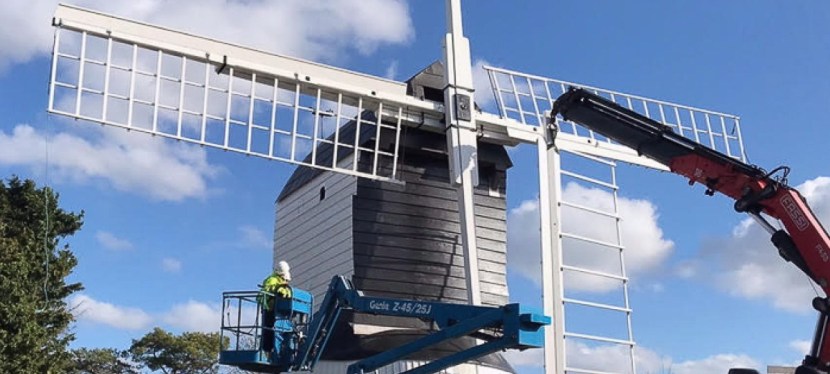
Get set for a day of engaging talks from leading speakers and a chance to explore Avoncroft’s remarkable open-air collection. The museum, home to over 30 rescued and reconstructed historic buildings spanning seven centuries, provides a unique backdrop. Highlights include the UK’s National Collection of Telephone Kiosks, working historic windmill, and a selection of timber-framed, brick, and prefabricated structures including a chain shop, nail workshop, sawmill, and icehouse. This inspiring setting promises a rich blend of learning, discussion, and heritage discovery.

Tickets cost £28 per person and include:

  • Six speakers covering a wide range of industrial heritage in Worcestershire
  • Access to the museum’s entire collection
  • Two 30-minute dedicated tours of the telephone kiosk collection and windmill
  • Buffet lunch including cold meats, new potatoes, crusty bread, and a selection of salads and cheese
  • Unlimited hot and cold soft drinks
  • Free parking

Society chairman Dr John Beale said “Avoncroft is home to 30 historic buildings and structures across a 19-acre site. For this reason, we have scheduled a 2-hour lunch break so that delegates can see the museum exhibits either self-guided and/or the dedicated tours of the 19th century windmill and the National Telephone Kiosk Collection. This marks a departure from the traditional arrangement of offsite visits as there is so much to see at Avoncroft.”

Get your tickets by submitting an online or Microsoft Word booking form available at https://wialhs.org.uk/swweriac2026/ or contact conference@wialhs.org.uk

Avoncroft’s National Collection of Telephone Kiosks. Image copyright WIA&LHS.

Industrial Heritage Networks Online – Spring Dates for 2026

The next round of online Industrial Heritage Network (IHN) meetings will provide a lunchtime opportunity to connect in Spring 2026. The IHNs are a vital part of the Industrial Heritage Support Project (IHSO), providing an opportunity for individuals, both professional and volunteer, working at Industrial Heritage sites in England to get together to exchange experiences and catch up with the latest trends in the sector.

This Spring’s online Industrial Heritage Network meetings will be taking place during later February and March at a midweek lunchtime, 1pm to 2pm. Those attending are very welcome to bring a drink and a sandwich whilst we spend an hour talking about updates from individual sites, as well as current trends. The date for the 10 IHN online meetings are as follows:

  • 24 February – West Midlands IHN
  • 25 February – East Midlands IHN
  • 3 March – East of England IHN
  • 4 March – London IHN
  • 11 March – Yorkshire IHN
  • 12 March – South East IHN
  • 17 March – North West IHN
  • 18 March – Cornwall & Devon IHN
  • 26 March – South West IHN
  • 27 March – North East IHN

Network members will be emailed joining details nearer the time. For queries about joining the Industrial Heritage Networks, please email the IHSO, Dr Michael Nevell, at: mike.nevell@mikenevell.org.uk

The IHSO project, which runs the IHNs, is funded by grants from Historic England and the Association for Industrial Archaeology, and is based at the Ironbridge Gorge Museums in Shopshire, England.

Museum of Making, Derby, Installs Flood Barriers

New flood defences have been installed at Museum of Making, Derby. The protective barriers have been placed inside the old Silk Mill, now the Museum of Making, which was flooded by waters from the River Derwent to a depth of 0.7m during Storm Babet in 2023.

Alex Rock, director of commercial and operations at Derby Museums Trust, said “We’re delighted to add further protection to our building, and very grateful for the support of Derby City Council’s planning team and their engineering colleagues. Both departments have been crucial in securing the relevant permissions and funding from DEFRA for this work. It adds another layer of protection to two key operational areas, which means that should a flood event occur again – and it is worth bearing in mind that Storm Babet was forecast as a once-in-a-century event for Derby – then we’ll be able to shorten the period of closure. It protects the two areas of the ground floor that are most impacted by flood events.”

As part of Derby City Council’s ‘Our City Our River’ scheme, flood defences are also to be improved around the museum. Work is underway to demolsih disused office buildings on the eastern bank of the river, close to the museum, at Stuart Street and Phoenix Street. This will allow the construction of a new flood wall, floodgates, and a riverside green area to provide a controlled corridor for flood waters fromt eh River Derwent to pass through the city.

More details here: https://www.msn.com/en-gb/news/world/derbys-museum-of-making-gets-flood-defence-boost-after-closure-cost-six-figure-sum/ar-AA1PA7v1?ocid=BingNewsSerp

and here: https://www.derby.gov.uk/environment-and-planning/regeneration-and-economic-growth/our-city-our-river/our-city-our-river-project-overview/

The Museum of the Making (the Old Silk Mill), Derby. Image copyright Dr Michael Nevell.

De Havilland Aircraft Museum is Recruiting a General Manager

The de Havilland Aircraft Museum, London Colney, is currently seeking a new General Manager due to the retirement of the present incumbent. The full time paid post offers many opportunities to the right candidate.

The Museum is the first aviation museum in the UK, established in 1959, and is dedicated to preserving the heritage of Geoffrey de Havilland and his contribution to UK Aviation history. The de Havilland Aircraft Museum is staffed mainly by volunteers.

Please apply to Tim Crichton (email tim.crichton@dehavilland museum.co.uk) for further details if interested.

Job Description attached.

Wandle Industrial Museum Talk 18 Feb: William Kilburn – Botanical Illustrator & Eminent Calico Printer

The Wandle Industrial Mseum ‘s latest talk is a chance to learn about a boy from Ireland, who became the most highly skilled, but little known, calico printer of his day. His designs were particularly loved by Queen Charlotte, wife of George III. This illustrated talk by Alison Cousins of the Wandle Industrial Museum, will reveal the legacy of Kilburn’s designs and the role he played in copyright law.

The talk is part of the Society’s monthly West Barnes Local History Group programme. This talk is free of charge: Tuesday, February 18, 10:30am-12:00noon, West Barnes Library, Station Road, New Malden, KT3 6JF.

For more details about the society visit their website: www.wandle.org

Chance Heritage Trust Secures Future Funding

The Chance Heritage Trust has been awarded a grant of £250,000 from The National Lottery Heritage Fund, thanks to money raised by National Lottery players with a further grant of £165,000 awarded by Historic England. The combined capacity building grants will transform how the Trust operates and will help to drive the regeneration and repurposing of the Chance Glassworks in Smethwick in the West Midlands.

For over 150 years, the former Chance Brothers Glassworks in Smethwick was the world’s leading glass manufacturer and a pioneer of British glass-making technology, operating from 1824 to 1976 and finally closing in 1981. In that time, the factory produced glass used in places like the Houses of Parliament, Big Ben’s clockface, and the Crystal Palace in London. It also developed specialist glass for telescopes and lanterns and, in 1848, began working on lenses which were eventually used in around 2,500 lighthouses around the world.

The funding will enable the Chance Heritage Trust to employ a project director and a small support team. They will continue to work with stakeholders in pushing forward plans for the regeneration of both sites for the benefit of the local community. Working with volunteers and the local community the team will develop a programme of heritage and cultural activities using the rich industrial history of these sites as a resource for people of all ages and backgrounds.

For further details click this link

The Chance Brothers Glassworks, Smethwick, Birmingham. Image courtesy fo the Chance Heritage Trust.