The Newcomen Society Launches Small Grants Scheme

The Newcomen Society has introduced a Small Grants programme, aimed at organisations who are working in the field of the history of engineering and technology, and are charities, voluntary organisations, or registered archives holding relevant collections. The scheme will initially run for a year, February 2026 to February 2027, before being reviewed.

The new scheme is intended to fund projects which:

  1. Support the collection, cataloguing and preservation of objects and archives about the history of technology.
  2. Promote the display and interpretation of the history of technology.
  3. Encourage and support the publication and wider dissemination of material about the history of technology in a range of formats such as articles, videos, podcasts, conferences etc.

The minimum grant will be £500 and the maximum £10,000, with applications possible throughout the 12 months of the initial scheme. To download an application follow the link below:

Expressions of interest should be made by email or post to the Hon Secretary, The Newcomen Society, P O Box 79326, London SW1P 9NP Email: cosec@newcomen.com

All successful applicants will be required to submit an end of project report and are encouraged to submit article(s) on their projects for possible publication in Newcomen Links or the International Journal for the History of Engineering & Technology.

Updating the South West Archaeological Research Framework (SWARF) – Call to Take Part

The Bureau for the Contemporary and Historic Consultancy (BUTCH) has been commissioned to support the update of the South West Archaeological Research Framework (SWARF). This is to make sure that it reflects all the research done in the last 18 years and that the priorities for future research are clear. This research framework includes a substantial post-medieval, industrial, and modern section, which will be of interest to the dozens of industrial heritage and archaeology sites, groups, and museums in the region.

The BUTCH team are looking for expressions of interest from experts in their field to fulfil two roles in this process. The roles are (1) Resource Assessment Chapter Team Lead; (2) Expert Panel Member. You may also wish to be involved in their commitment to engage the wider research community. 

The online version of the current South West Archaeological Research Framework (SWARF), including the industrial section, can be found here: Post-Medieval, Industrial and Modern Periods – South West England Research Framework

If you are interested in taking part, please register your interest by completing the form, via the link below, by 7 June 2026 for roles 1 and 2. The form will remain open for those who wish to be updated on the project or who might be interested in being involved in future discussions. The link for the form is here: SWARF Involvementhttps://lnkd.in/e-gu3exM

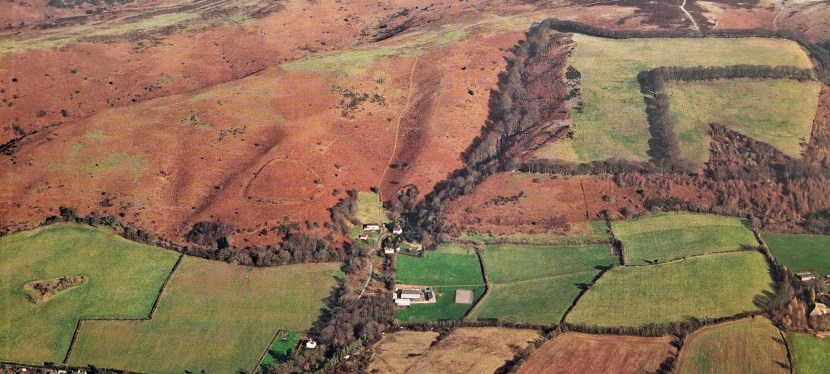
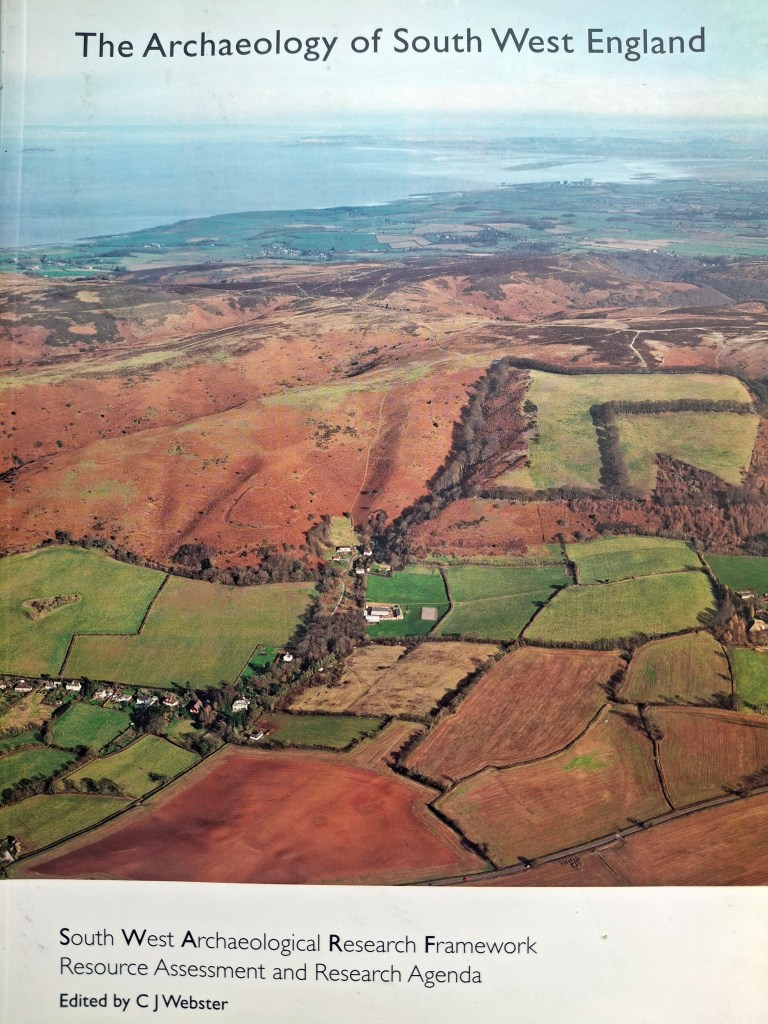
The front cover of the 2008 SWARF monograph.

SPAB One Day Conference: ‘Caring for Their Future: Recording, Repairing, & Researching Mills’, 13 June 2026

The SPAB Mills Section is running a one day conference on wind and water mills in Britain on 13 June 2026 in Reading, and booking is now open. There will be chaired panel discussions after both the morning and afternoon talks. Refreshments will be available during break times and delegates will have the opportunity to see some of Rex Wailes’ drawings on display at the Mills Archive Trust.

Mildred Cookson and Nathanael Hodge from the Mills Archive Trust, will share their knowledge on caring for documents and images, and project archivist Hei-Yan Tsui will share some finds from the Rex Wailes collection. Dr Toby Huitson and Duncan McCallum will explore the Mills at Risk theme and the intricacies of listing historic buildings. Justin Coombs will demonstrate his innovative Smartmolen Project, and the confence will also hear from water-mill expert Stephen Bartlett about flood warning and prevention for watermills.

To book the conference follow the this link: Caring for their future: Recording, Repairing, & Researching Mills | The SPAB

AIA’s 10th East-West Workshop on Industrial Archaeology

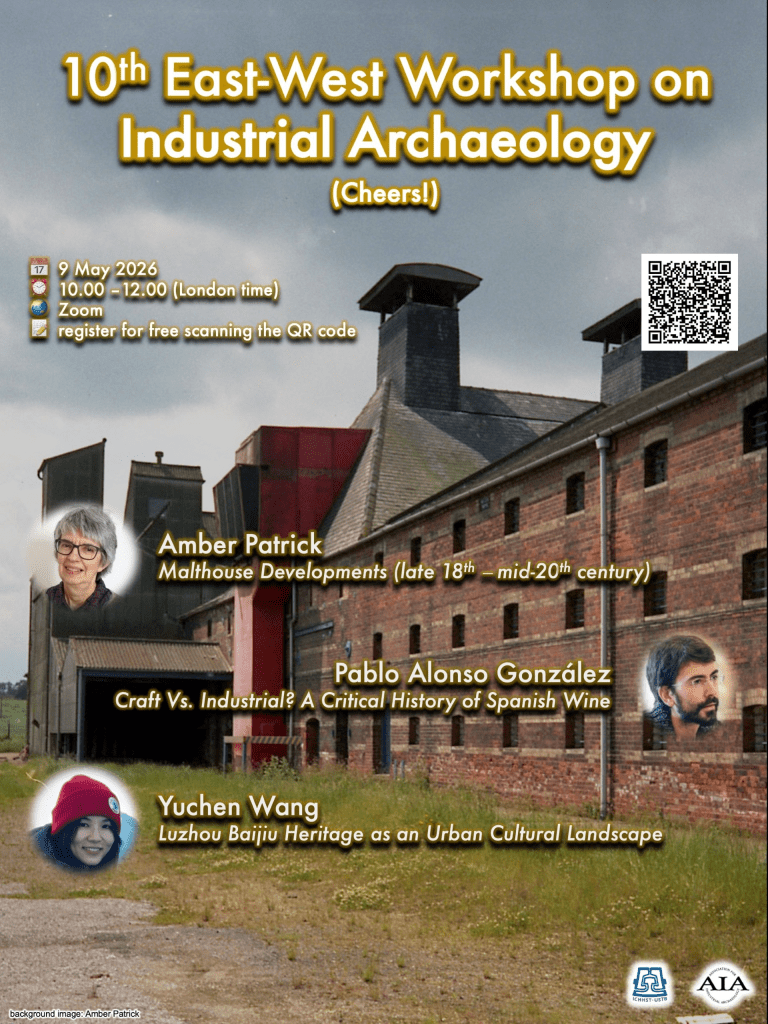
The next East-West Workshop on Industrial Archaeology, co-run by the Association for Industrial Archaeology (AIA), will be on the 9th May. This is 10th online, free, workshop in the series and takes place exactly five years after the AIA co-hosted the first edition in May 2021.

The East-West Workshops on Industrial Archaeology were not created to endure; at least, not in a purely virtual format. When the first workshop was held in May 2021, it was mainly a way to prevent the COVID pandemic from disrupting our academic activities and international exchanges. However, the experience exceeded expectations. Five years on, the AIA are launching the 10th edition of a series of workshops that has become increasingly popular in the West, the East, and beyond.

To mark this special occasion, this workshop focuses on the archaeology, heritage, and history of alcoholic beverages. The speakers will examine the architecture of malt production in Britain and continental Europe (a key component of beer, whiskey, and other spirits), the history of winemaking and wine consumption in Spain, and the landscape of baijiu production in China. While the workshop acknowledges the serious consequences of alcohol abuse, it also recognises it as a significant element in many cultures worldwide, their social practices, and their heritage.

The East-West workshop series aims to exchange ideas and knowledge between Western and Eastern colleagues to develop a more international and diverse industrial archaeology. The event is jointly organised by the Institute for Cultural Heritage and History of Science & Technology (USTB, China) and the UK Association for Industrial Archaeology.

SPEAKERS & TALKS

  • Amber PATRICK (Association for Industrial Archaeology, Britain): “Malthouse Developments – The Late 18th Century to the Mid-20th Century”
  • Pablo ALONSO GONZÁLEZ (Spanish National Research Council, Spain): “Craft Vs. Industrial? A Critical History of Spanish Wine”
  • Yuchen WANG (University of Science and Technology Beijing, China): “Symbiotic Cityscape: Luzhou Baijiu Cultural Heritage as an Urban Cultural Landscape”

DATE & TIME

9 May 2026, Saturday. 10.00-12.00 London time

PLACE

Zoom (online meeting). More info and free registration:

Free Heritage Carbon Webinars & Training for Industrial Heritage Organisations

Historic England continues to offer Heritage Carbon Literacy training, and free places on two new workshops:  ‘How to Measure a Carbon Footprint’ and ‘How to Write a Carbon Reduction Plan’. Both are designed especially for heritage organisations, such as industrial sites, who are just starting out on their carbon reduction journey.  Find out more and sign up here – https://historicengland.org.uk/education/training-skills/training/training-courses/carbon-reduction-training-for-the-heritage-sector/

Historic England has also published new guidance, factsheets, and resources to help cultural and heritage organisations develop Decarbonisation Plans for their heritage buildings. Developed by architects Haworth Tompkins through a co-funded Arts Council England and Historic England project, the free resources can be accessed here – https://historicengland.org.uk/advice/climate-change/your-organisation-to-net-zero/developing-a-decarbonisation-plan/

To accompany the resources HE are running a series of free webinars in March and April to go through the different steps in the decarbonisation process. More information and booking links here – https://historicengland.org.uk/education/training-skills/training/training-courses/carbon-reduction-training-for-the-heritage-sector/ 

Finally, Historic England is delivering a series of Heritage Carbon Reduction webinars. These have been developed especially for the heritage sector as part Historic England’s programme of Carbon Reduction training to help organisations reduce their carbon emissions. Topics include ‘How to get Trustee buy-in for your carbon reduction plan’, ‘Tenant/Landlord collaboration in lowering emissions’, and ‘Soil emissions in archaeology’. Training on further topics will be announced later in the year. Everyone is welcome to attend these free training sessions. If you can’t make it recordings will also be available on the Historic England website. Booking links here – https://historicengland.org.uk/education/training-skills/training/training-courses/carbon-reduction-training-for-the-heritage-sector/

Urban air pollution. Image copyright Historic England Archve.
Stormy seas crashing against a historic quayside. Image copyright Historic England Archive.

AIA Events in 2026: Norwich Annual Conference

The Association for Industrial Archaeology’s (AIA) 2026 conference will be based at Norwich, England, from the 4th to 9th September. The East Anglian counties of Norfolk, Suffolk, and Cambridgeshire have a rich history of Industrial Heritage including wind and water mills, maritime and port industries, agriculture, and the associated manufacture of agricultural machinery and food processing.

The 2026 programme will follow the usual format, starting on the Friday evening with an informal dinner followed by a talk introducing the Industrial Heritage of East Anglia. On Saturday there will be a full day of talks on local topics, presentations to and by award winners, and the Conference Dinner. On Sunday morning there will be AIA’s AGM followed by the Rolt Lecture. From Sunday afternoon until Wednesday lunchtime there will be a number of site visits across the three counties. Lunches, informal evening dinners and talks are included. Full details and booking will be available on the conference pages of the AIA website in due course. Recordings of the 2025 Bradford Conference are now available on the AIA YouTube channel.  

For more information, including booking details, please visit the events pages of the AIA website

View of Carrow Works and the River Wensum, Norwich c 1870. The home of Colman’s Mustard (unknown artist). From the Norfolk Museums Collections

Industrial Heritage Networks Online – Spring Dates for 2026

The next round of online Industrial Heritage Network (IHN) meetings will provide a lunchtime opportunity to connect in Spring 2026. The IHNs are a vital part of the Industrial Heritage Support Project (IHSO), providing an opportunity for individuals, both professional and volunteer, working at Industrial Heritage sites in England to get together to exchange experiences and catch up with the latest trends in the sector.

This Spring’s online Industrial Heritage Network meetings will be taking place during later February and March at a midweek lunchtime, 1pm to 2pm. Those attending are very welcome to bring a drink and a sandwich whilst we spend an hour talking about updates from individual sites, as well as current trends. The date for the 10 IHN online meetings are as follows:

  • 24 February – West Midlands IHN
  • 25 February – East Midlands IHN
  • 3 March – East of England IHN
  • 4 March – London IHN
  • 11 March – Yorkshire IHN
  • 12 March – South East IHN
  • 17 March – North West IHN
  • 18 March – Cornwall & Devon IHN
  • 26 March – South West IHN
  • 27 March – North East IHN

Network members will be emailed joining details nearer the time. For queries about joining the Industrial Heritage Networks, please email the IHSO, Dr Michael Nevell, at: mike.nevell@mikenevell.org.uk

The IHSO project, which runs the IHNs, is funded by grants from Historic England and the Association for Industrial Archaeology, and is based at the Ironbridge Gorge Museums in Shopshire, England.

South East Regional Industrial Archaeology Conference 2026 Open for Booking

The 2026 South East Regional Industrial Archaeology Conference (SERIAC) will take place on 25 April at Stanley Arts, South Norwood, London, from 10.30 to 16.45.

The day will consist of papers from members of the constituent societies in the region, including topcis such as Brunel’s Viaducts and Reading’s Other Industries. Display Space will be available for those Societies who wish. An optional box lunch will also be available. Further details here:

Book your tickets online via this link: https://tinyurl.com/SERIAC-2026

North East Industrial Heritage Network Meeting, 9 December, Now Booking

The next in-person North East Industrial Heritage Network meeting will be held at Hopetown Museum, Darlington, on Tuesday 9th December 2025, from 11am to 1pm. This will be followed, after lunch (there is a cafe on site), by a tour of the site (2pm to 3pm). The themes for the 2025-26 IHN meetings are conservation and maintenance.

All IHN members and friends are very welcome to attend. To book a free place follow this link:

Hopetown Musuejm encompasses the original North Road Station in Darlingotn, which opened in 1842 on the route of the Stockton & Darlington Railway. The listed station was purchased in the 1970s by a consortium consisting of the local council and tourist board, Darlington museum’s service and local businesses. It was transformed into a railway museum, the North Road Station Museum, which opend in 1975. The museum was refurbished in 2007, and reopened in 2008 as the Head of Steam – Darlington Railway Museum. After securing £35 million of funding, between 2022 and 2024 the museum, and surrounding heritage buildings across 7.5 acres, were transformed into a brand new visitor attraction, Hopetown Darlington. The name takes inspiration from the old Hopetown foundry works associated with the railways.

The station at Hopetown, Darlington. Image courtesy of Historic England.

AI in the Heritage Sector Free Seminar

UK Heritage Pulse is running the second of two free online seminars on ‘AI in the Heritage Sector’ on Friday 7th November at 2pm. The first session explored the principles, opportunities, and risks of using artificial intelligence. If you weren’t able to attend, you can now watch the recording here.

The follow-up webinar on the 7th November will take a deeper look at practical applications of AI, sharing real-world examples and tips for the sector. To book your place follow this link: 🔗 Book your place here

You can also read Heritage Pulse’s recent report on the operational use of AI within the heritage sector here.

Heritage Pulse is a collaborative data and insight project for the UK’s heritage sector informing strategy, recovery, and reinvention. You can register for regular updates, or take part in their research, via this link: https://heritagepulse.insights-alliance.com/