
Collections Trust Takes on Museums Association’s ‘Find an Object’ Service

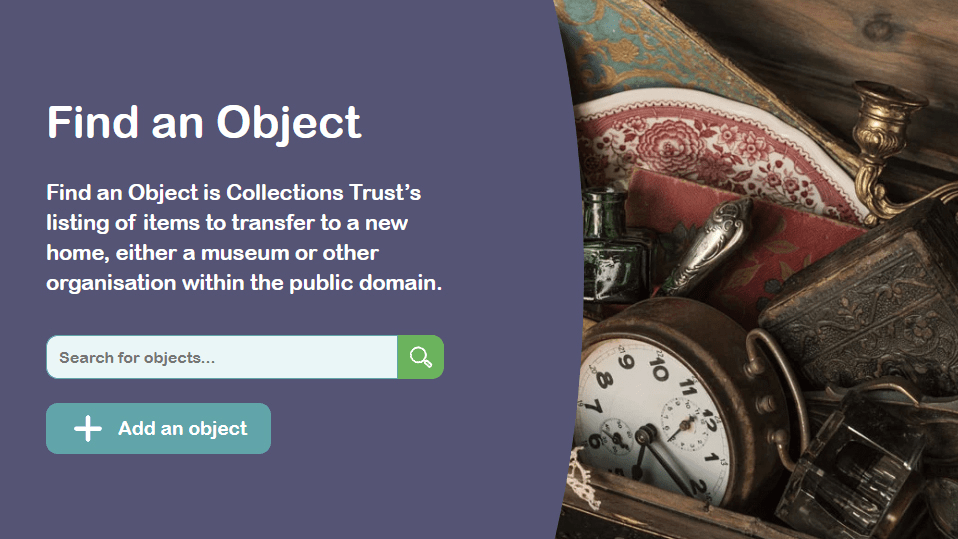
The Collections Trust has taken on the Find an Object platform, a service previously managed by the Museums Association (MA). The platform lists deaccessioned items from museum collections that are available for transfer to other museums or organisations within the public domain.

Users can upload items they plan to dispose of, as well as search for objects that might find a place within their collection. They can also make speculative requests for items that they are looking to acquire. More than 200 items from museums across the UK are already listed on the Collections Trust website. Current listings on the MA website will remain live until 18 May, after which the service will be taken offline. 

Museums with active listings on the are encouraged to repost these to the new site as soon as possible.

Further details here: Collections Trust takes on Find an Object service – Museums Association

New Industrial Heritage Exhibitions for Spring 2026

Each year there are a range of new and temporary exhibitions on industrial heritage and archaeology put on by dozens of industrial heritage sites across England. Spring 2026 sees three new industrial heritage exhibitions open to the public covering coal, salt, and textiles.

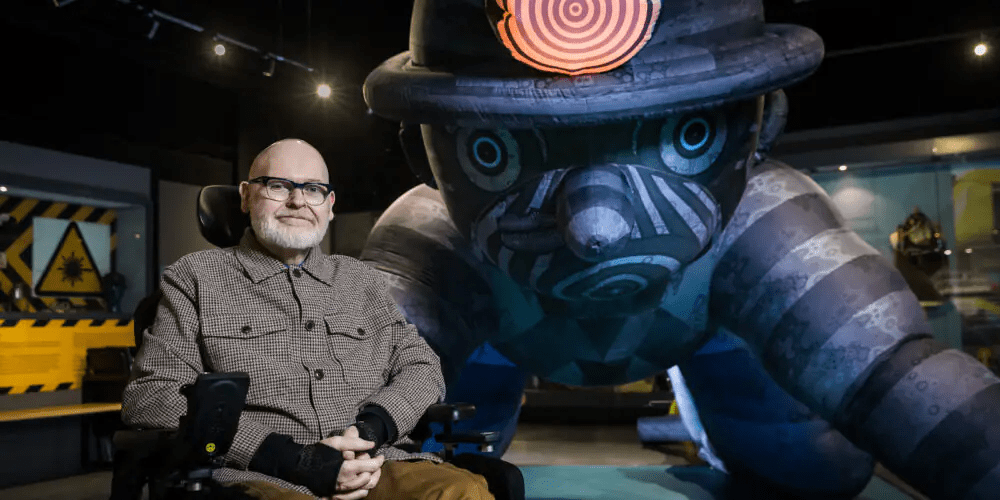
“Jason and the Coal Mining Adventure”, is on from the spring to the autumn, 27 March to 4 October, at the National Coal Mining Museum, Wakefield. It is a colourful and immersive reimagining of Britain’s mining history and the communities at its heart.

The “Untangled”, exhibition runs from 23 May to 6 June, at Leeds Industrial Museum. The new exhibition, from the International Felt Makers Association Region Ten, celebrates the connections between nature and industry through textiles.

Lastly, “The Salt of the Erthe”, exhibition runs from 26 February to 28 June 2026, at the Lion Salt Works, Northwich, and celebates Cheshire’s salt heritage.

Walsall Leather Museum Given Listed Status

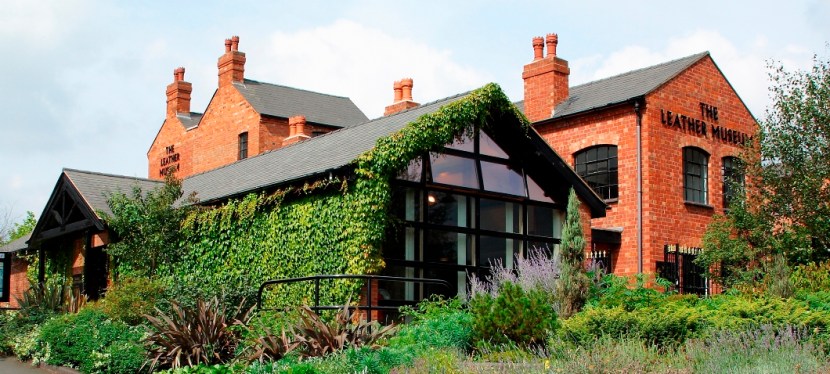
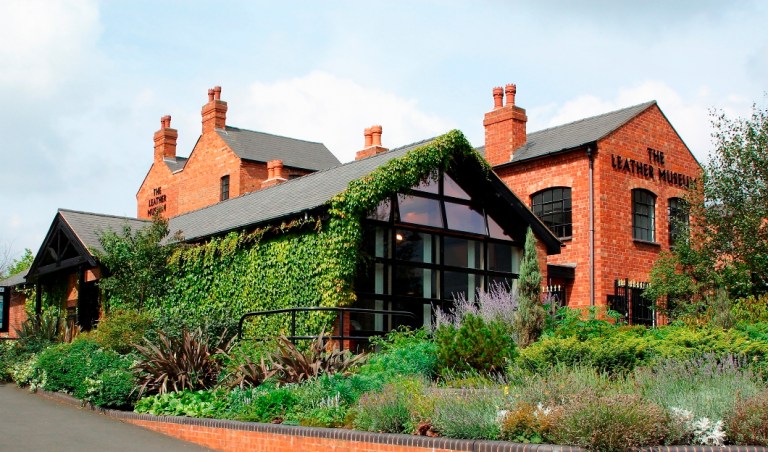
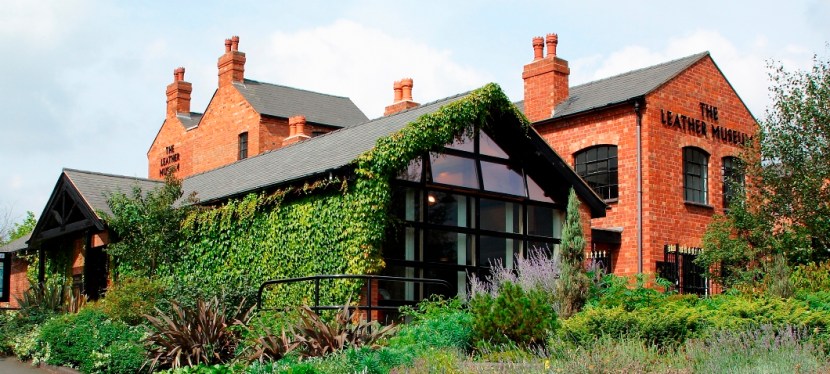
The Walsall Leather Museum in the Midlands, which is housed in the 19th century brick-built, multi-storey, buildings of the former Withers and Son and Samuel Llewellen leather works buildings, was given Grade II listed status earlier this month. The museum is facing closure on the 11 April, although Walsall Council has purchased new premises in the centre of the town for the proposed site of the re-located museum. A time-frame for the re-opening is yet to be announced.

In announcing the listing, Historic England noted that “We recommended listing the buildings at Grade II due to their historic and architectural interest. Leather working is strongly associated with Walsall, and the town is still a major centre for the industry. The workshops on Wisemore are among a very small group of such buildings of this date surviving in Walsall, and so are of particular significance for the town as they embody the industry that played a major part in the lives of many local people.”

In response to the listing, Walsall Council’s leader Mike Bird was quoted in the local press as saying: ‘It might be heritage to them but at the end of the day it’s an old factory, simple as that.’

More details about the listing, proposed closure, and move of the museum can be found here: Walsall Leather Museum’s listed status ‘won’t affect move’

The listing details can be found here: Two former leather goods works, Wisemore, Non Civil Parish – 1495986 | Historic England

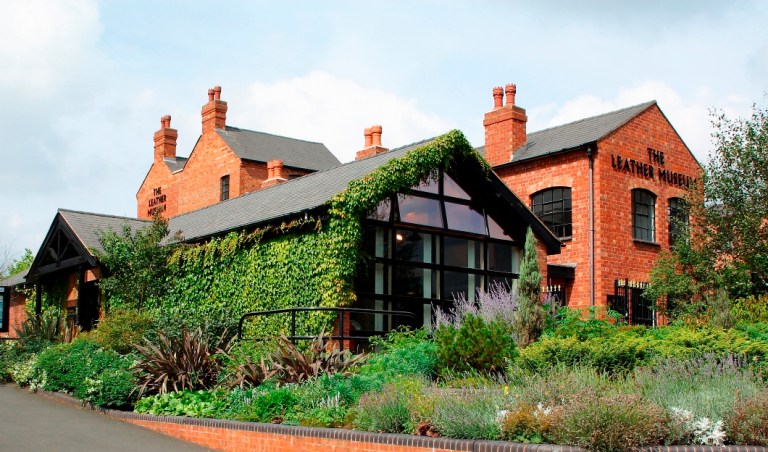
The Walsall Leather Museum. Image courtesy of the museum.

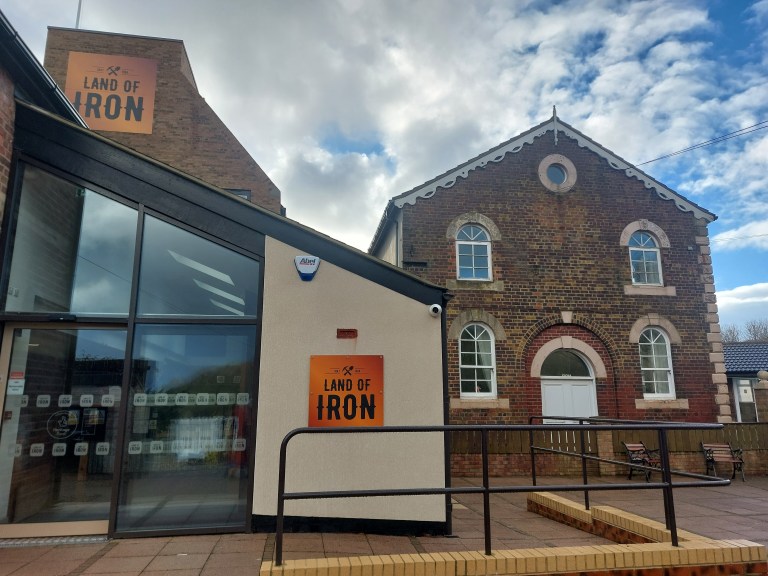
Land of Iron Museum Looking to Recruit a New Museum Manager

The Land of Iron is currently looking to recruit a new Museum Manager. They are seeking someone with a heritage background and an entrepreneurial mindset to lead their vision of being an asset to both the nation and the region.

Over the last 12 months, with support of the National Lottery Heritage Fund, the Museum has created new jobs, strengthened its community outreach, and expanded lifelong learning initiatives. As a result of this investment, this is an exciting time to join the charity as Museum Manager.

Land of Iron is a visitor attraction and museum on the site of the first ironstone mine in East Cleveland, in the coastal village of Skinningrove. Visitors can experience the rich and fascinating history of the area, taking them back 150 years to the Industrial Revolution, when the area and its people supplied over a third of the world’s iron and steel.

Deatils on how to apply are here: https://landofiron.org.uk/opportunities/museum-manager

Land of Iron Musuem, Cleveland. Image copyright Dr Michael Nevell.

Industrial Heritage Networks Online – Spring Dates for 2026

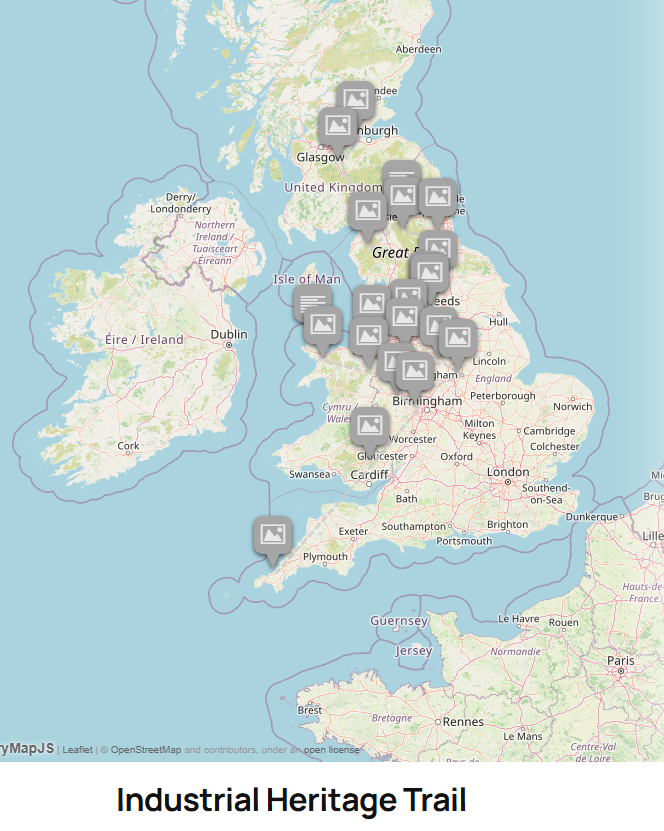
The next round of online Industrial Heritage Network (IHN) meetings will provide a lunchtime opportunity to connect in Spring 2026. The IHNs are a vital part of the Industrial Heritage Support Project (IHSO), providing an opportunity for individuals, both professional and volunteer, working at Industrial Heritage sites in England to get together to exchange experiences and catch up with the latest trends in the sector.

This Spring’s online Industrial Heritage Network meetings will be taking place during later February and March at a midweek lunchtime, 1pm to 2pm. Those attending are very welcome to bring a drink and a sandwich whilst we spend an hour talking about updates from individual sites, as well as current trends. The date for the 10 IHN online meetings are as follows:

  • 24 February – West Midlands IHN
  • 25 February – East Midlands IHN
  • 3 March – East of England IHN
  • 4 March – London IHN
  • 11 March – Yorkshire IHN
  • 12 March – South East IHN
  • 17 March – North West IHN
  • 18 March – Cornwall & Devon IHN
  • 26 March – South West IHN
  • 27 March – North East IHN

Network members will be emailed joining details nearer the time. For queries about joining the Industrial Heritage Networks, please email the IHSO, Dr Michael Nevell, at: mike.nevell@mikenevell.org.uk

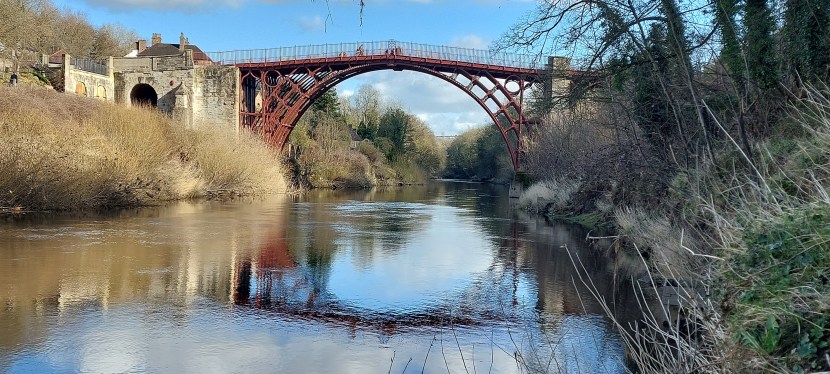
The IHSO project, which runs the IHNs, is funded by grants from Historic England and the Association for Industrial Archaeology, and is based at the Ironbridge Gorge Museums in Shopshire, England.

Museum Data Service – January Introduction to the Service Webinar

This 60-minute online briefing session on January 22 (11am to 12 noon), which will be of interest to industrial heritage sites, will give attendees an introduction to what the Museum Data Service (MDS) is and how to join. The session will describe the different types of data available on the MDS, how to add collections overviews and how to express an interest in adding object data. This includes:

  • how data added to the MDS can be used
  • The different types of data available on the MDS
  • Adding collection overviews
  • Expressing an interest in adding object data
  • An overview of the joining process, including:
  • a description of the process; from expressing an interest to publishing live data
  • a breakdown on the tasks done by the joining museum and the tasks done by MDS
  • considerations when deciding how much data to add to the MDS

To book your place foillow this link: https://museumdata.uk/events/intro-to-mds-22-jan-2026/

Stroudwater Textile Trust is Looking for Guides, Demonstrators, and Welcomers

The Stroudwater Textile Trust are looking for volunteers at their two museums near Stroud. There are many ways of getting involved in volunteering with the Stroudwater Textile Trust. From welcoming visitors to their mills to sparing a few hours to work at home or to help restore historic machine, your support is really important to the Trust, and you will find volunteering both enjoyable and rewarding.

The Trust offers training in using both hand looms and power looms, as well as wider training. The museums are open from April to September on weekends and occasional weekdays. Information about the Trust is on our website, or e-mail chair@stroudtextiletrust.org.uk.

To get involved follow this link: https://www.stroudtextiletrust.org.uk/volunteering/

The Stroudwater Textile Trust is a Registered Charity run entirely by volunteers. The Trust was established in 1999 by local people wanting to promote awareness of the historic woollen industry in the Stroud valleys, to preserve some of its important machinery and to celebrate contemporary textiles. The Trust runs a fully-accredited museum at Dunkirk Mill in Nailsworth with a working waterwheel, and also a weaving shed at Gigg Mill nearby, which has a recently-restored vintage power loom. We also arrange visits to St Mary’s Mill in Chalford from time to time, where there is a Tangye steam engine. Dunkirk Mill and Gigg Mill are open regularly through the spring and summer months.

Volunteers at Stroudwater Textile Trust. Image courtesy of Stroudwater Textile Trust.

Volunteering Opportunties at Northampton Transport Heritage

Northampton Transport Heritage is looking for volunteers to help keep their historic buses on the road, with increasing demand for its heritage vehicles at a variety of events running from April to November. However, they are constrained by a lack of volunteers – whether that’s helping to maintain the vehicles or assisting during events.

If you’re interested in old buses and want to help keep them on the road, or if you’d enjoy supporting Northampton Transport Heritage at the half dozen or so events they attend around Northamptonshire, please follow this link below:

https://ntheritage.org/

Historic buses at Northamptonshire Transport Heritage. Image courtesy of Northamptoshire Transport Heritage.

Friends of Chain Bridge Forge Launch Crowd-Funding Appeal to Teach Teenagers Blacksmithing Skills Using VR

The Friends of Chain Bridge Forge have lunched a crowd-funding appeal to teach traditional Blacksmithing to young individuals aged 13-16, blending heritage craftsmanship with cutting-edge virtual innovation. Through collaboration with the National Saturday Club, and led by experienced Blacksmith Ryan Atkin, participants will develop foundational skills in metalwork and have the chance to craft unique handmade items.

This new project follows on from 2024’s successful National Saturday Club, where Chain Bridge Forge trained young people in blacksmithing. To donate to the new VR project follow this link: https://www.spacehive.com/forging-futures-skills–vr-fusion.

Chain Bridge Forge is a short walk from Spalding town centre, alongside the Welland river and is open for bespoke commissions or blacksmithing workshops. The Forge has its origins in the mid-1700s, but the current building was constructed in the early nineteenth century. In the 1980s, nearing retirement and with the building in a poor state of repair, the then blacksmith, Mr Dodd, approached the South Holland District Council (SHDC) to take on the forge. After two years of discussions the site was purchased from him by SHDC for the nominal fee of £1, on September 20th 1988. In 2011 The Friends of Chain Bridge Forge were formed and took over the Forge on a 25 year lease. The Heritage Lottery Fund subsequently awarded the Forge £50,000 to restore the site and make it accessible, which opened in 2012. This award was followed by a further £10,000 to record the history of the community.

Follow this link for more news about the forge: https://chainbridgeforge.co.uk/

Teenagers being taught balcksmithing skills. Image courtesy of Friends of Chain Bridge Forge.

Foxton Canal Museum Launches Crowding Funding Campaign to Secure the Future of the Site

The Trustees of the Foxton Inclined Plane Trust have launched an urgent crowdfunding appeal to raise £20,000 by February so that the museum and site can open in 2026. A combination of rising costs, the long-term impact of COVID-19, and recent operational challenges—including lock closures that reduced visitor numbers this year—has left the Foxton Canal Museum, the beating heart of Foxton Locks and a vital guardian of Britain’s canal heritage, under threat. As a consequence, income has not kept pace with escalating expenses, making sustainability increasingly difficult.

The Museum tells the story of the Foxton Inclined Plane – a Victorian engineering marvel and a scheduled monument – and the people who shaped our waterways. Since its founding by the Foxton Inclined Plane Trust in 1982, the Museum has grown from a volunteer-led dream into a nationally recognized institution. It has hosted award-winning exhibitions, educational programs, and community events, becoming a hub for history, creativity, and learning.

From its humble beginnings – volunteers clearing overgrown inclines and rebuilding the boiler house – to achieving official museum status and welcoming thousands of visitors annually, Foxton Canal Museum has always been powered by passion and perseverance. Recent projects include Foxton Creates, a co-curated exhibition with local schools, and Ingenuity & Vision, exploring the 1950 Market Harborough Festival & Rally of Boats. The Museum also runs STEM workshops, artist residencies, and oral history projects, ensuring canal heritage remains relevant for future generations.

However, the Museum faces mounting financial pressure and without urgent support the Museum cannot guarantee opening in 2026.

To contribute to the Crowdfunding Appeal, and for more information about the site and the campaign to secure its future, follow this Link: https://www.crowdfunder.co.uk/p/save-foxton-canal-museum