Two Industrial Sites on Victorian Society’s Ten Most Endangered Sites List for 2026

The Victorian Society has published its annual list of the ten most endangered buildings in Britain, and this year’s list includes two protected industrial heritage sites. The list is drawn up each year by the Victorian Society, and is selected from nominations made by the public, in order to raise the profile of the buildings it believes are most in need of rescue.

The former Strand Raiwlay Station, Barrow-in-Furness. Image courtesy of Thomas Ollivier & Victorian Society.

The former Strand Railway Station in Barrow-in-Furness, a Grade II listed building designed by the architect EG Paley and built in 1863, is a significant survivor from the earliest phase of the town’s rapid industrial growth. Once at the heart of a transforming settlement, it now stands vacant and deteriorating, its future uncertain.

James Hughes, Director of the Victorian Society, said: “This building is closely tied to Barrow’s remarkable rise as an industrial powerhouse. Its history of adaptation shows exactly the kind of sustainable reuse we should be championing today. What is needed now is a clear commitment to securing its future before further deterioration takes hold.”

The 1911 Grade II* Tees Transporter Bridge, engineer G.C. Imbault, and construction by Sir William Arrol & Co Ltd is an iconic symbol of Teesside’s industrial heritage. It has been closed since 2019 due to serious structural concerns. Spanning the River Tees between Middlesbrough and Port Clarence, it is one of the most recognisable engineering landmarks in the UK. 

Griff Rhys Jones, Victorian Society President, said: “You don’t need me to tell you that people love this bridge. It is a symbol. It is a monument. And more than that it is a link and a potential working part of Stockton and Middlesbrough. Got to be saved. Got to be operational again. If we can find money for new bridges, we can find money for this great survivor and all that it means.”

The full building list for 2026 can be found here: Endangered buildings – The Victorian Society

The Tees Transporter Bridge. Image courtesy of CAV Aerial.

Mills Now & Then – SPAB Call for Your Mill Histories

To celebrate Mills in 2026 the Society for the Protection of Ancient Buildings (SPAB) is producing a compilation of individual mills’ histories. The SPAB Mills Section wants to create a new and comprehensive picture of mills of all types throughout the UK, Ireland, and Europe and are calling for submissions from owners, volunteers, millwrights, or anyone interested in the history of a mill or a linked group of mills, to write about how they evolved.

SPAB would like to understand a mill’s origins and how the structure and uses have changed over its lifetime. This can be a post mill, smock or tower mill, a watermill or tide mill, or an industrial mill. The mill can be located in the UK, Ireland or Europe. The entry can be about mills stil existing, derelict, or lost.

The chosen entrants will receive a copy of the published booklet, which will be available at SPAB Mills Section events. A digital version of selected submissions will also be available.

The deadline for submissions is Friday 1 May 2026. All entries to be submitted via email to: nmwsubmissions@spab.org.uk

Further details can be found by following this link: Mills Now & Then – Call for your histories | The SPAB

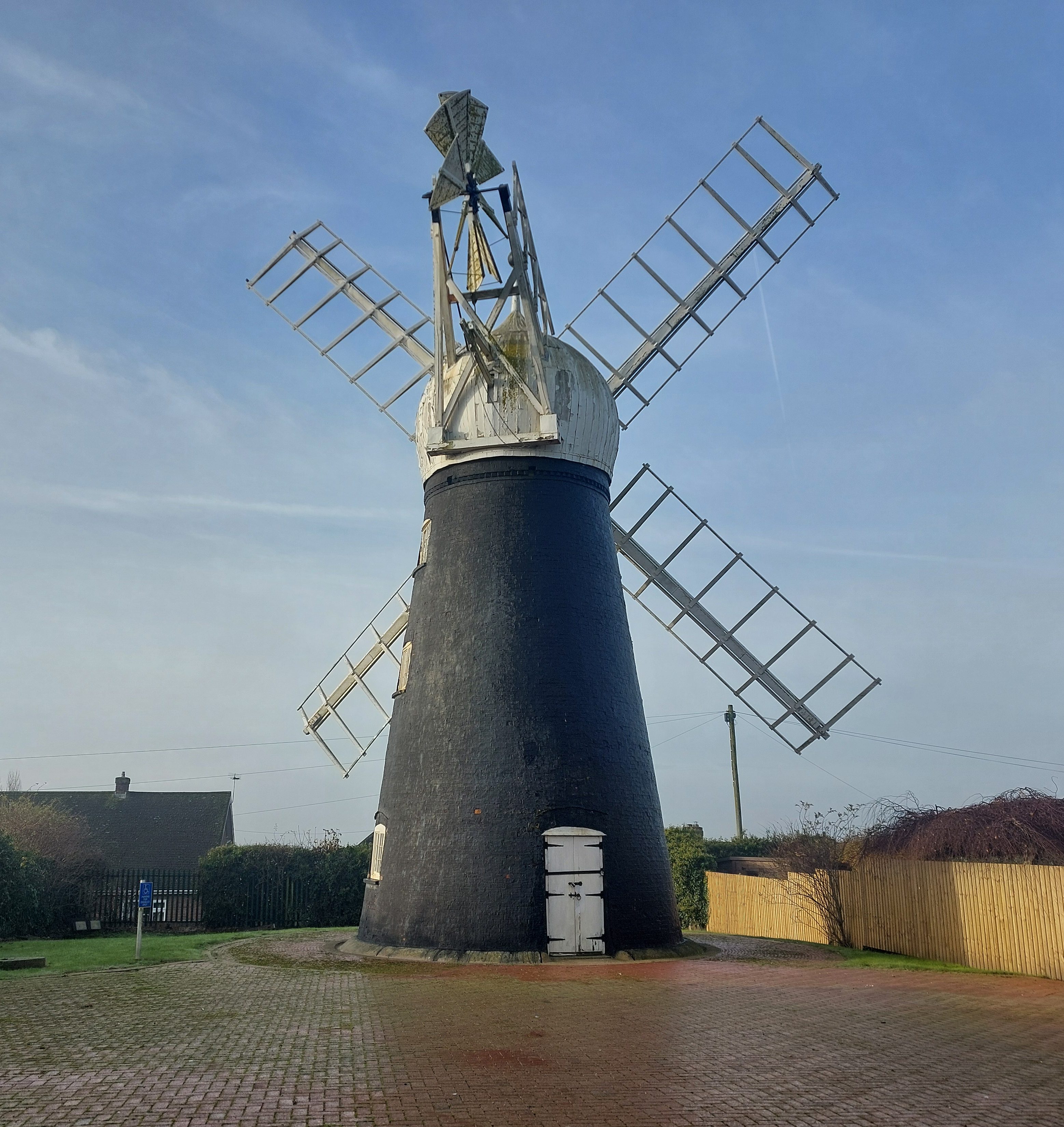
Windmill in Lincoln. Image copyright Dr Michael Nevell.

SAVE Britain’s ‘Heritage Buildings at Risk Register’ – Call for Entries

SAVE Britain’s Heritage has issued a call for nominations for historic buildings at risk which will be considered for their 2026 Buildings at Risk register. SAVE want to bring attention to historic buildings at risk across the UK.

They are interested in vacant or partially vacant historical buildings that are at risk from stalled projects, neglect or lack of action. Unlike some other risk registers, the building does not need to be listed to be eligible,l which means that many threatened industrial structures could be included. Their central aim is to raise awareness of these forgotten spaces and provide a platform to advocate for their retention and reuse.  

To nominate a building:

  • Click on this link to the ‘Buildings at Risk’ register on their website
  • Check if your building is already on SAVE Britain’s Heritage Buuildings at Risk Register  
  • If it’s not already on the Register, fill in a quick form with what you know including a (copyright-free) photograph and as much address information as you can.  
  • You can also email your nomination to: amy.popham@savebritainsheritage.org

New Historic England Book on the Buildings of the Temperance Movement

The latest Historic England / Liverpool University Press publication considers the ‘Built Heritage of the Temperance Movement’. English Temperance societies were established from the 1830s, especially in the new industrial centres of the era, and became one of the most influential social movements of the 19th century. Over the next century, millions ‘signed the pledge,’ committing to a life of abstinence, helping those affected by drink, and advocating for alcohol restrictions, even prohibition.

This fascinating book examines the built heritage associated with the movement including temperance halls and institutes, missions, coffee taverns, reading rooms, billiard halls and hotels. It complements the earlier volume ‘Licensed to Sell: The History and Heritage of the Public House’, also authored by Andrew Davison. Further information on the Temperance Movement can be found in this accompanying Historic England blog – https://heritagecalling.com/2026/01/08/temperance-buildings-the-way-out-of-darkest-england/  

Details on how to order the book can be found here: – https://historicengland.org.uk/images-books/publications/built-heritage-temperance-movement/.