More Grants for Industrial Heritage Sites in England, Spring 2026

This spring three more Industrial Heritage sites in northern England have been awarded grants from a variety of funding sources. These are the Liverpool Martime Museum, the National Railway Museum in York, and the Oswaldtwistle Mills Heritage Centre in Lancashire.

Liverpool’s International Slavery Museum and Maritime Museum have received £19 million from the Department of Culture Media and Sport’s Public Bodies Infrastructure Fund. The Maritime Museum was opened fully to the public in 1986 as part of the regeneration of the Albert Dock. The International Slavery Museum opened in 2007. The new redevelopment of both museums is the cornerstone of National Museums Liverpool’s Waterfront Transformation Project, reimagining the area between Royal Albert Dock and Mann Island, combining storytelling, heritage, community and connectivity in the Grade I-listed buildings – Hartley Pavilion and Dr Martin Luther King Jr Building (previously the Dock Traffic Office). The Maritime Museum will see significant regeneration to enable the museum to show a more comprehensive and coherent vision of Liverpool’s maritime story, with a new entrance and new galleries. Further details here: £19 million funding boost | National Museums Liverpool

The National Railway Museum in York has been awarded an addtional £3 million form the UK Government towards the construction work on the Central Hall, a project planned to increase visitors to the museum. Providing level access throughout the site, Central Hall will unify the museum, with new gallery space highlighting innovative technologies and the impact of the railways on everyday life. Further details here: Central Hall | National Railway Museum

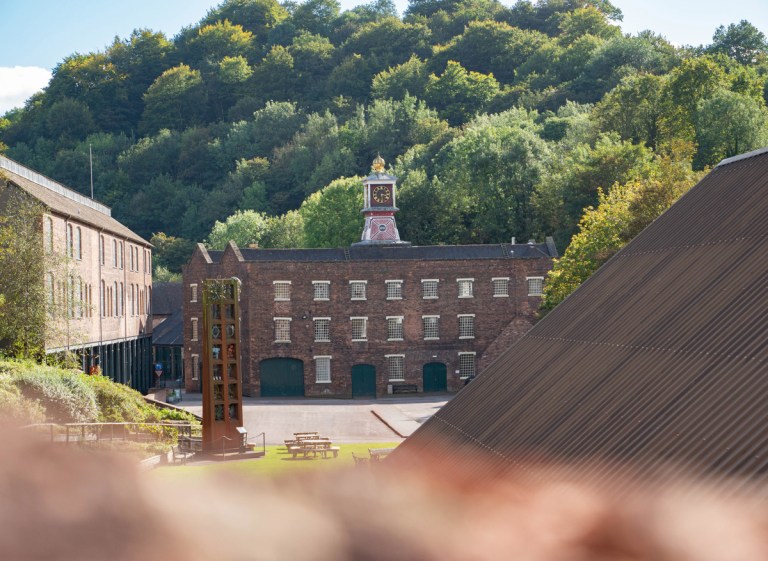
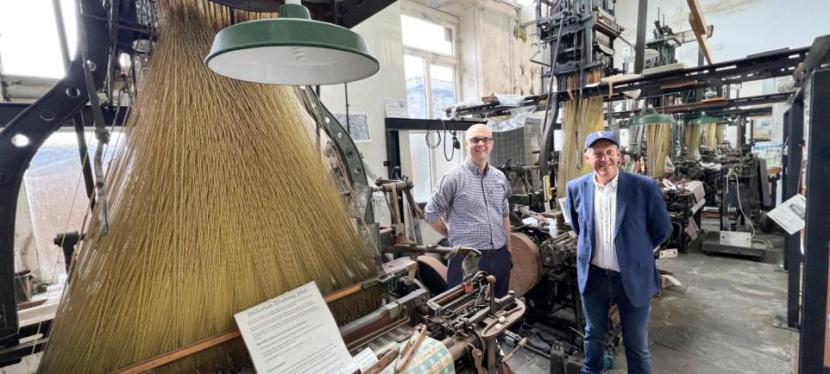
The Oswaldtwistle Mills Heritage Centre in Lancashire, has been awarded £178K from the National Lottery Heritage Fund. The money will be used to conserve, repair, and re-open the listed weaving shed that houses the Oswaldtwistle Heritage Centre, within the former Moscow Mill. Established in 1996, the heritage centre houses historic Jacquard looms, archives, and personal stories that reflect over 177 years of continuous textile production. However, due to roof damage and resulting safety concerns, the centre has been closed for several years. It will transform access to this heritage by working with nine local primary schools to co-create a modern education programme for Years 1 and 2, ensuring young people can connect with their local history. Further details here: Lottery grant to restore Oswaldtwistle Mills Heritage Centre | Lancashire Telegraph
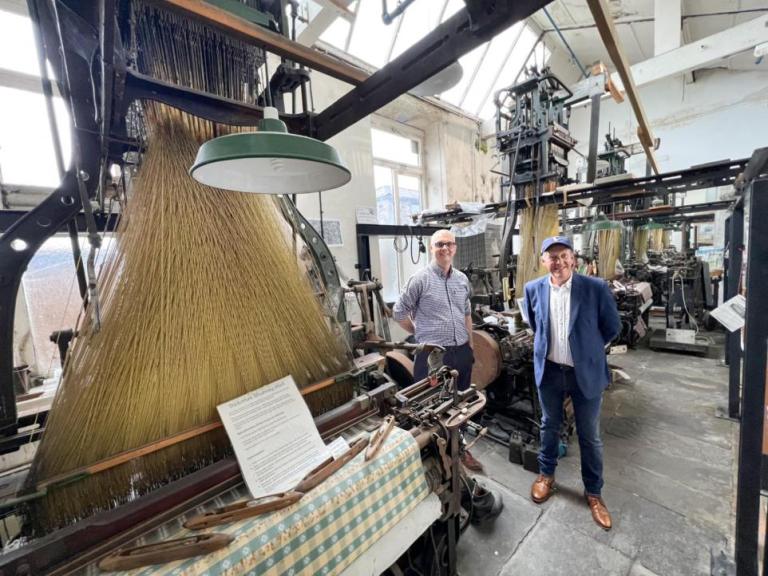
National Heritage Lottery Funding will help to restore and re-open the Oswaldtwistle Heritage Centre in Accrington. Image courtesy of Oswaldtwistle Mills.

Free Online Talks and Training Videos for Industrial Heritage Sites in Early 2025

The early new year is often a time for charities and musuems to undertake staff training and maintenance in the ‘off season’. Online, several organisation offer free training and briefing videos relevant for industrial heritage sites. Some of the recent offerings listed below provide an opportunity for armchair training.

The East-West Workshops on Industrial Archaeology aim to exchange ideas and knowledge among Western and Eastern colleagues to build a more international and diverse industrial archaeology. The workshops are organised jointly by the Institute for Cultural Heritage and History of Science and Technology (USTB, China), and the Association for Industrial Archaeology (AIA) together with its Young Members Board. Videos of all the workshops are available on the AIA’s YouTube Channel, including the latest event from November 2024 on ‘Weaving the Industrial Period’. Follow this link to view the workshops: https://www.youtube.com/channel/UCILr2TkRAOIfk_NKchshwZQ

On Thursday 21st November 2024 the ‘Craft of the Miller’ network held an online conference on ‘Managing Health & Safety Risks in Your Mill’. Jon Cook gave an introduction to highlight a number of key risks in a working mill, including hygiene, flour dust, vacuum equipment, and fire risks. Jippe Kreuning explored how to work with a stone crane and how to operate it safely to lift a set of millstones. You can catchup with the recordings from the conference here: https://network.molens.nl/

Finally, Historic England have a range of heritage webinars to watch with topics from flooding, embodied carbon, and renewabler energy, to heritage building skills, roofs, and windows. The Historic Environment Webinars strand includes a session on the role and work of the Canal & River Trust form November 2024. Follow this link to view the webinars: https://historicengland.org.uk/services-skills/training-skills/training/webinars/recordings/#technicaltuesdays

Industrial Heritage Network Meetings in Person – Autumn 2024

The next round of in-person Industrial Heritage Network (IHN) regional meetings will be taking place this autumn. These regional network meetings take place twice a year in the spring (online) and in the autumn (in-person). They are a chance to bring together volunteers and professionals from industrial heritage sites around England to exchange experiences, catch up with the latest news and practices, and make or renew contacts. There are ten regional networks in England run by the IHSO project at the Ironbridge Gorge Museum Trust, and funded by Historic England, with the support of the Association for Industrial Archaeology.

The first four in-person IHN meetings will be held this autumn for the following regions:

  • North West England, Catalyst Museum, 25th October 2024.
  • Cornwall & Devon, East Pool Mine, Redruth, 7th November 2024.
  • South West, Westonzoyland, 8th November 2024.
  • West Midlands, Claymills, 22nd November, 2024

Further dates for other regions will be published in October. Regional network members will be emailed details of the venues and how to attend. For further details contact the Industrial Heritage Support Officer for England: mike.nevell@ironbridge.org.uk

Westonzoyland Pumping Station

Deadline for Industrial Heritage Sites in England Survey Extended to 14 June

The deadline for the Industrial Heritage Sites in England Survey 2024 has been extended to the 14th June. The Ironbridge Gorge Museum Trust and Heritage Innovation are undertaking this survey of the c.600 publicly accessible and protected industrial heritage sites in England. Funded by Historic England, the 2024 survey is gathering data on these sites which will be compared with similar reports undertaken in 2008 and 1998.

The original deadline for response was the 10th May, but in order to capture as many replies as possible we have decided to extend the deadline and will continue to accept responses until 14th June. We hope this will allow as many sites as possible to take part in the once-in-a- generation survey. This work is being carried out by Heritage Innovation, https://heritageinnovation.org/, and can be accessed here:

https://docs.google.com/forms/d/e/1FAIpQLSc9qr7qNrAF630__UlRR_Pdb7LqJD69aHVNktS9kysmduzQVw/viewform?usp=sf_link 

The questionnaire will take around 15-30 minutes to complete. Please do drop the project a line if you need any support to complete the survey. If you require this questionnaire in an alternative format or have any questions about the survey please let us know at IHSO@ironbridge.org.uk. For general queries contact Zoe Arthurs via email on zoearthursheritage@gmail.com or call 07581 405835. 

Help Sought in Finding a New Home for Historic Crane

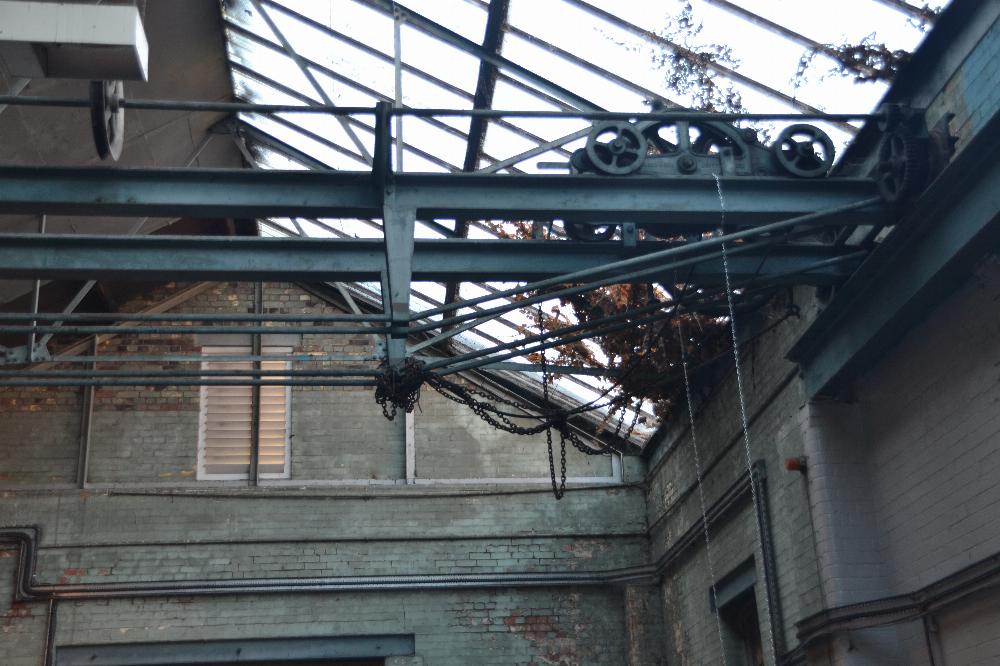
Somerset HER: Nautilus Works, Reckleford, Yeovil. First Erecting Shop of c. 1907 – Second Willcocks & Son Buckfastleigh gantry crane / trolley. HER Image 60244. Photography: Somerset Council, 14 November 2023.

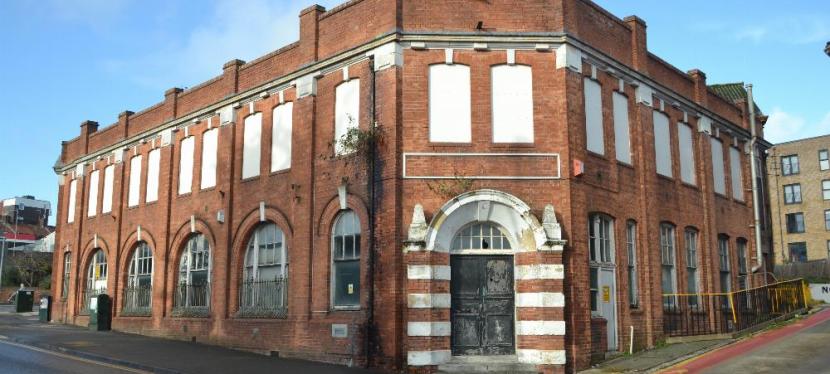
A historic crane in a former engineeering works in Yeovil is in need of a new home. The site owners, First Bus, is preparing to demolish the Nautilus Works, an early 20th century complex built by the Petter family of engineers. The site includes the former erecting shop, engine house, and foundry. However, First Bus has committed to donating salvageable items to organisations with an interest in the historic machinery left within the complex. The main items are a gantry crane made by Willcocks and Son of Buckfastleigh, c. 1907, and a large workbench.

The Petters were internationally renowned for their oil engines for use in agriculture and light engineering, and the site can be said to be the genesis of Westland Aircraft. The Petters responded to government pleas in World War I for firms to help build aircraft and built Short seaplanes on a separate site in the town, known from the start as Westland. In 1933 two Westland biplanes became the first aircraft to fly over Mount Everest.

The crane can be seen, together with a full description of the works on South West Heritage Trust’s website at: https://www.somersetheritage.org.uk/record/32107# Demolition is to take place in the New Year (no precise date known at the time of writing). Any organisation interested in the crane or bench should contact Craig Leake, property projects director First Group at craig.leake@firstgroup.co.uk. Smaller items are expected to go to the South Somerset Heritage Collection. A photograph of the bench may be made available later in the new year.

Any organisation interested in the crane or bench is also asked to let Tina Rowe of the Yeovil Archaeological and Local History (sampepys@btinternet.com), so that the Society knows whether artefacts from this important site have a continuing life.

Somerset HER: Nautilus Works, Reckleford, Yeovil. Offices c. 1909 – Main entrance to Office building on s-e corner facing Reckleford. HER Image 60282. Photograph: Somerset Council, 14 November 2023.