Welcome to the Industrial Heritage Networks and Support website. This site is maintained and updated by the Ironbridge Gorge Museum Trust who run the project and the networks. We aim to support industrial heritage in England through networking, information exchange, guidance, and training. Please explore the website and please contribute! For more information you can … Read more Welcome to the IHNs website!
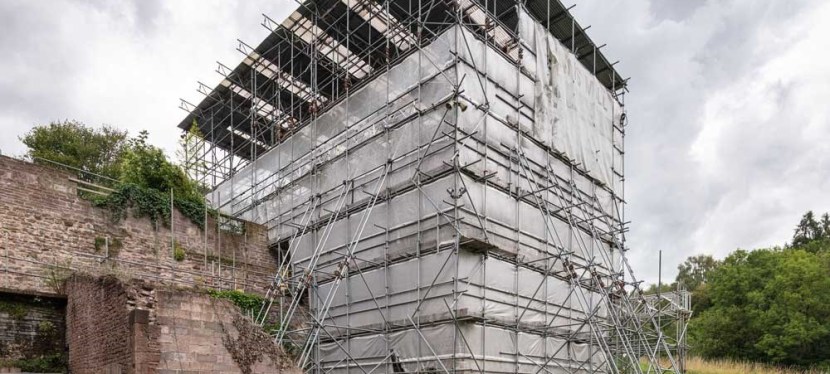
Historic England has awarded a grant of £31,020 to the Forest of Dean Building Preservation Trust to help repair Gunns Mill furnace in Mitcheldean. Gunns Mill is considered to be the best-preserved charcoal blast furnace in Britain.
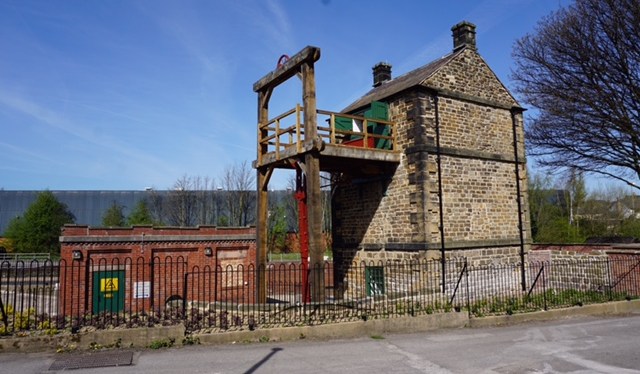
The current furnace structure dates from the mid-17th century when the Forest of Dean was one of the most important centres for iron production in the country. It was converted to a papermill in 1743 but had fallen out of use by the 20th century.
The Forest of Dean Buildings Preservation Trust took on the ownership of Gunns Mill in 2013 and since then has undertaken a number of repairs to the structure with support from Historic England. This most recent round of funding will enable architects and engineers to design a structural solution to repair the timber frame of the roof of the bridge house and provide a usable space within.
The surviving lower tier of the building is a blast furnace built in 1625 on the site of earlier fulling and corn mills. That furnace was destroyed in the Civil War and was rebuilt by 1682, evidenced by cast iron lintels with cast dates of 1682 and 1683. The charge house roof on the upper tier north side has been dendro-dated from this time. It continued as a blast furnace until 1738.
A pioneering partnership between the Science and Industry museum Manchester and the Landmark Trust will see the Station Agent’s House made available for overnight stay for up to eight people, alongside free public open days. This is one of Manchester’s oldest surviving Georgian houses, and adjoins the Museum’s Grade I listed 1830 Station.
The Station Agent’s House will be the Landmark Trust’s first property in the region, and will join a collection of 200 historic buildings once completed. A final £118,000 is needed to meet the costs of the repair and conversion work, which will include an improved environmental performance through the installation of heat pumps.
The building, on the corner of Liverpool Road and Water Street in Castlefield, was built in 1808 for John Rothwell, partner in a nearby dyeworks. The house then provided accommodation for the Station Agent at Liverpool Road Station before being converted for shop use in the mid 20th century. More recently, the former residential house was used as offices when the Science and Industry Museum opened on the site in 1983. The shop frontage was removed, and a replica of the historic doorway was reinstated. The adjacent 1830 Station is currently being repaired ahead of re-opening to the public in future years as part of the museum’s major conservation and redevelopment plans.
Sally MacDonald, Director of the Science and Industry Museum said “We are delighted that the Landmark Trust will be bringing their expertise in sensitively restoring incredible heritage buildings to enable Station Agent’s House to be experienced by the public for the first time.”
Anna Keay, Director of The Landmark Trust, said the Station Agent’s House “is an outstanding piece of industrial heritage. The building will be sensitively repaired and made available to all through self-catering stays and free public open days. As a charity, the Landmark Trust is committed to saving and sustaining outstanding heritage, and is thrilled to be playing a role in Manchester.’
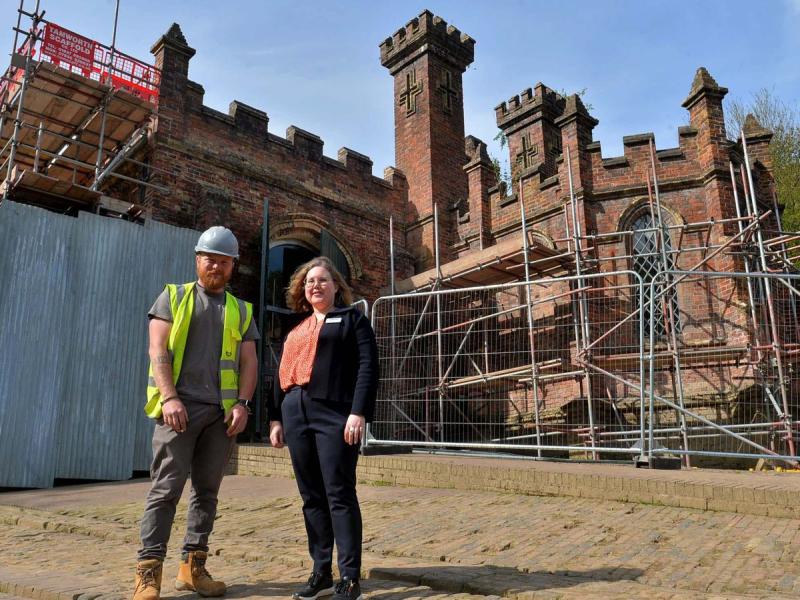
The next stage of conservation work on The Museum of The Gorge began in May 2023, as part of a £9.9M grant by the National Heritage Memorial Fund to help secure the future of the buildings that form the Ironbridge Gorge Museum Trust. The building was built in 1840 as a riverwarehouse for the Coalbrookdale Company for the onward transport of its goods down river to Bristol and beyond.
Work on the Grade II* Listed building has already seen internal beams replaced prior to this second stage of work which will deal with the leaking roof, re-pointing brickwork, restoring the parapets, re-building the original roof for the Lady Chapel and removing the vegetation.
The £9.9m will be used for restoration on buildings across the Trust, but also includes £4.5m in endowment funding, which will be invested to ensure income generation for ongoing conservation maintenance. One of the sites which will be restored throughout the project is the The Old Furnace at Coalbrookdale, where Abraham Darby I developed the production technique for smelting iron with coke – a catalyst for the Industrial Revolution that transformed much of the wider world in the 18th centuries.
Others sites include the Bedlam Furnaces, the impressive clock tower which was added to the Great Warehouse of the Coalbrookdale Company in 1843, and Coalport China Works. The Museum Trust’s ‘Conserving the Historic Estate Project’ is managed by Lucy Oldnall and focuses on heritage buildings and structures within the Ironbridge Gorge World Heritage Site that are in the care of the Trust including, five Scheduled Monuments, one Grade I Listed structure, 10 Grade II* Listed structures and 19 Grade II Listed structures – all within an area of 5.5 square km.
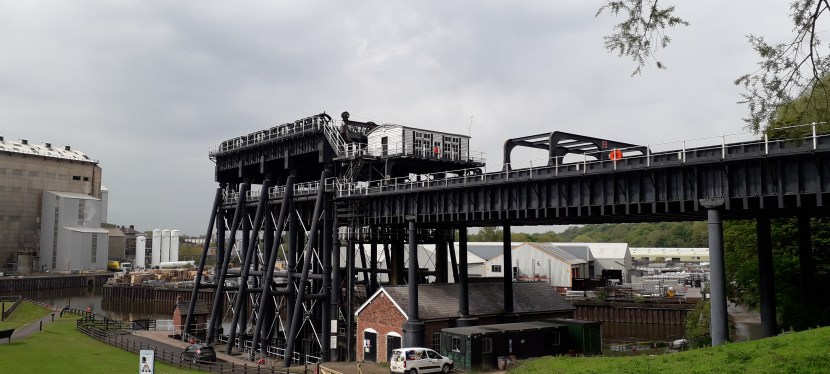
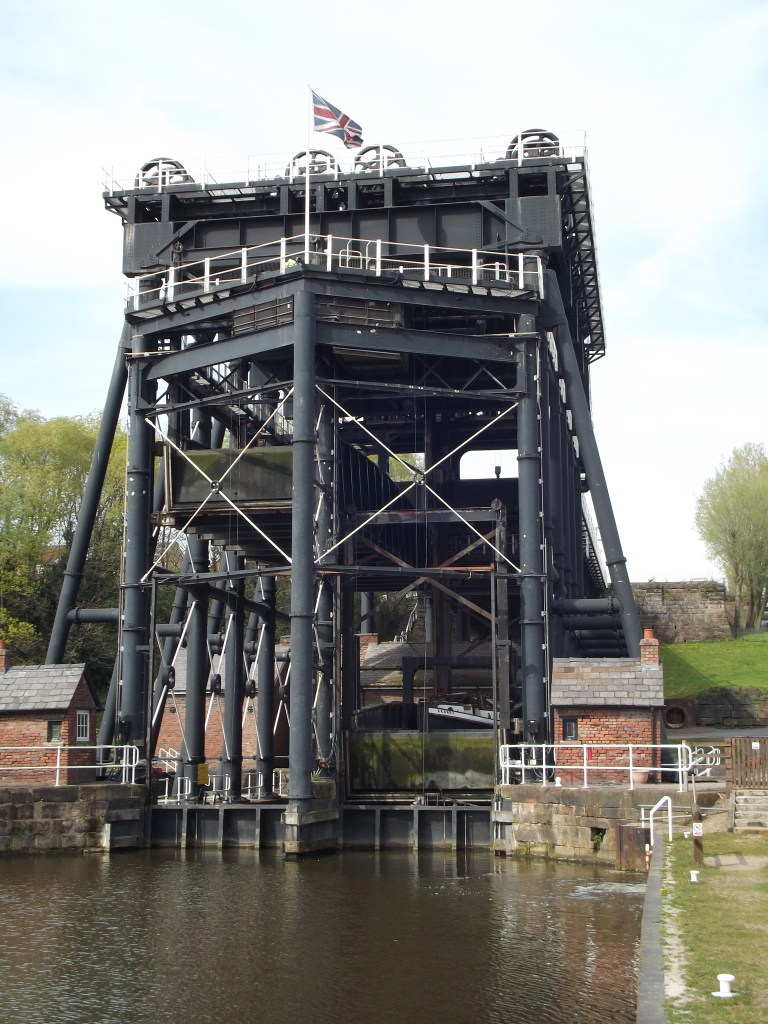
Britain’s oldest boat lift has received a £574,000 National Lottery Heritage Fund grant towards essential repairs.This grant will be used to repair the hydraulics and computer system of the Anderton Boat Lift in Northwich, Cheshire, by the Canal and River Trust (CRT).
The lift on the Trent and Mersey Canal was built by Edwin Clarke in 1875 to allow boats carrying salt and coal to move easily between the canal and the Weaver Navigation 15m (50ft) below.
The lift, which is known as “Cathedral of the Canals” and also as one of the “Seven Wonders of the Waterways”, was in operation for more than 100 years until 1983 when it closed due to corrosion. The lift reopened to the public in 2002 after a multi-million pound restoration but has been out of action since August 2022 due to the failure of a safety mechanism.
Andrew Davison, inspector of Ancient Monuments at Historic England, which supported the Canal & River Trust’s application to the National Lottery Heritage Fund, said the boat was an “extraordinary feat of engineering, an outstanding product of Victorian technical ability and ingenuity…There is no substitute for seeing it in operation or experiencing sitting on a boat which is being lifted or lowered between the canal and the river.”
Rebecca Mason, enterprise manager at the Canal & River Trust, said they were “thrilled” to be awarded this development phase grant. She said the trust would work closely with partners and stakeholders including Historic England over the next 18 months “to ensure we can submit a really robust second-round application to the lottery in 2024”. Further details here: https://canalrivertrust.org.uk/places-to-visit/anderton-boat-lift-visitor-centre
Historic England’s next free lunchtime industrial heritage webinar takes place on 23 February, 1300 – 1400. This webinar will describe the work and findings from the Elsecar Heritage Action Zone which ran from 2017 – 2020.
The model industrial village of Elsecar was developed in the late 18th- and 19th-centuries by the Earls Fitzwilliam of Wentworth Woodhouse to exploit nearby abundant coal and iron reserves and much of the landscape comprising ironworks, collieries, housing and supporting infrastructure survives to this day. The webinar will consider this nationally important landscape through the research programme, protection and management strategies, community outreach and engagement, how Barnsley Museums are building on this legacy with an ambitious programme and vision for the village, and potential lessons for elsewhere. It will be of interest to all those involved in the investigation, interpretation, management and presentation of our rich industrial heritage and how it can be at the forefront of place-shaping and regeneration.
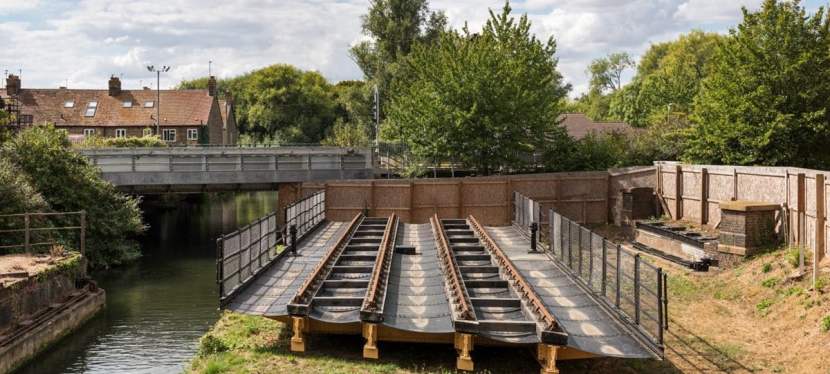
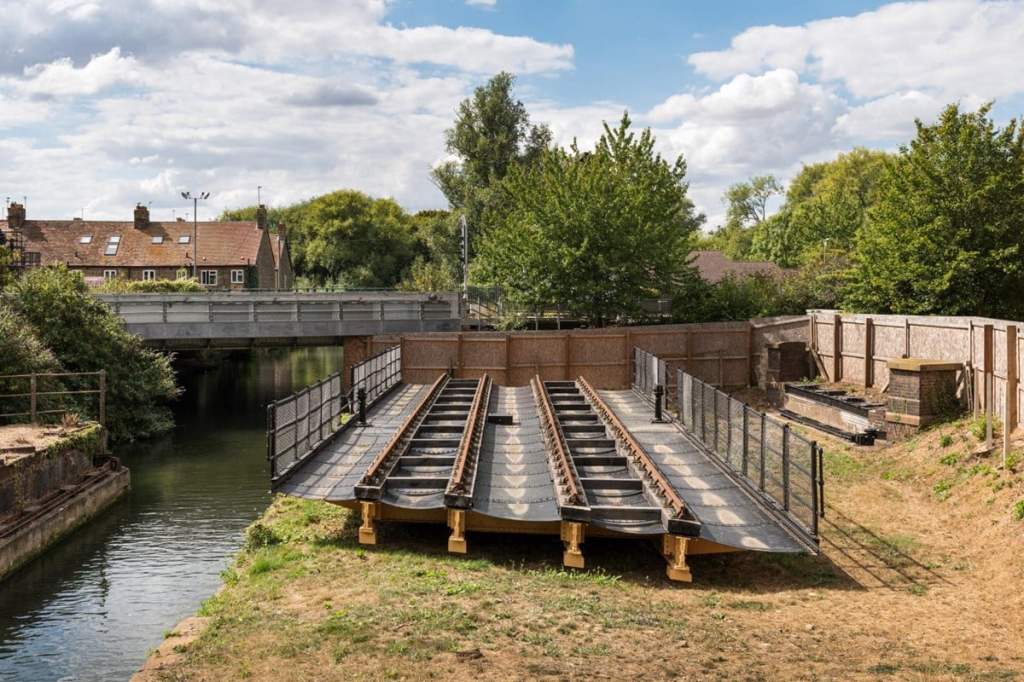
The London Midland and Scottish Swing Bridge after restoration. Image copyright Historic England DP325398
Amongst the industrial heritage sites successfully removed from this year’s Historic England Heritage at Risk Register is the scheduled London Midland and Scottish Railway Swing Bridge – also known as the Rewley Road swing bridge – crossing the Sheepwash Channel in west Oxford. This structure was suffering from severe decay affecting the plating and paint protecting its moving parts.
Designed by engineer Robert Stephenson the railway bridge was built in 1850-1 for the former Buckinghamshire Railway branch of the London Midland and Scottish Railway. It was reconstructed in 1890 and again in 1906. The bridge closed to passenger traffic in 1951 and to goods in 1984. It is one of only two moving bridges on the River Thames, the other being Tower Bridge, London. It is had been in the care of the Oxford Preservation Trust since 2019 who have overseen the restoration with funding from Historic England, Network Rail, and the Railway Heritage Trust and other sources.
In November 2022 Historic England published their annual survey of Heritage at Risk. This year there are 4,919 entries on the Heritage at Risk Register. This identifies the listed or scheduled sites that are most at risk of being lost as a result of neglect, decay, or inappropriate development.Industrial archaeology and industrial heritage sites on this list include museums open to the public as well as privately owned buildings and monuments.
Three industrial sites have been saved from decay in the last 12 months and are no longer on the register: the Carriage Works, Bristol; lock and swingbridge on the Broadwater Estate, Greenwich; and the North Park furnace dam, Chichester.
Ten industrial heritage sites were newly added to the register in 2022: Alford Windmill, Lincolnshire; cementation furnace, Sheffield; coal drops, Sheldon; Cross-in-Hand Windmill, Bexhill; Elsecar Ironworks, Barnsley; Heage Windmill, Derbyshire (above); High Mill cornmill & foundry, Alston, Cumbria; Pakenham Windmill near Bury St Edmunds in Suffolk; Papplewick Pumping Station, Nottinghamshire; and Rockingham Kiln in Rotherham.
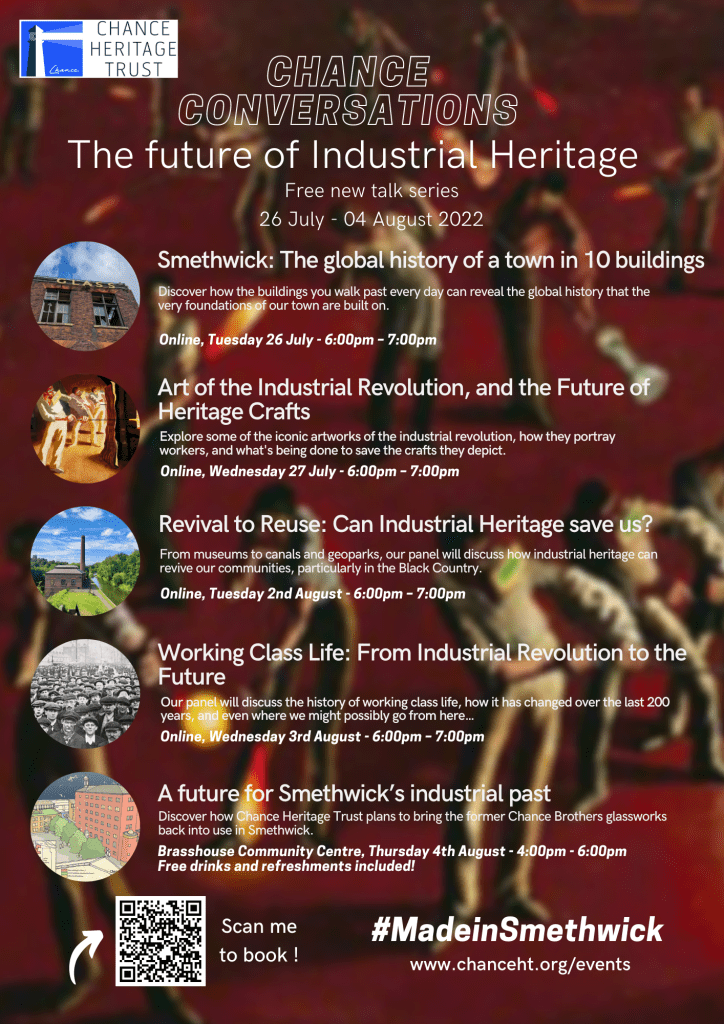
Taking place online from 26 July – 04 August 2022, Chance Conversations will explore some of the biggest current topics in industrial heritage, from the different ways it can revive communities, to how old industrial buildings can reveal the global foundations a town is built on. The talks are being hosted by Chance Heritage Trust and DigVentures as part of #MadeinSmethwick – a programme of public events inspired by stories from Chance Brothers glassworks in Smethwick, and the continuing mission to give this disused industrial building a new lease of life within its surrounding community.
Panellists include Simon Briercliffe (University of Birmingham), Lizey Thompson (Canal and River Trust), Graham Worton (Black Country UNESCO Global Geopark coordinator), Mary Lewis (Heritage Crafts Association), Malcolm Dick (University of Birmingham), Marianne Monro (Chance Heritage Trust), and many more. Each panel discussion will include a live Q&A.
You can see the whole series and join in the discussion by registering for FREE at:
Chance Conversations: The Future of Industrial Heritage Hosted by Chance Heritage Trust and DigVentures as part of #MadeinSmethwick
Global Smethwick: The history of a town in 10 buildings
Tue 26 July 2022, 6pm BST (via Zoom, recording available)
Smethwick isn’t just any old town: from the Red Cow pub to Marshall Street’s Malcolm X plaque and Guru Nanak Gurudwara, it has been built by people from all over the world. Our panel will discuss how the buildings you walk past every day can reveal the foundations of a town, and the global history it is built on.
Art of the Industrial Revolution and the Future of Heritage Crafts
Wed 27 July 2022, 6pm BST (via Zoom, recording available)
During the industrial revolution, artists created murals and paintings showing the skill and craft of its workers, like the dancer-like glassblowers painted by Mervyn Peake inside Chance Glassworks. What can we learn from images like this? And what’s being done to save the skills they depict today? Our panel will discuss the art of the industrial revolution, and introduce some of the people trying to save heritage crafts today.
Revival to Reuse: Can industrial heritage save us?
Tue 02 August 2022, 6pm BST (via Zoom, recording available)
Why is industrial heritage so popular right now? And can its ruins be used to heal some of the wounds created by the human and environmental impact of industrialisation? From museums to canals and even geoparks, our panel will discuss how industrial heritage can encourage revival, reuse, and renewal within our communities, particularly in the Black Country.
Working Class Life: From Industrial Revolution to the Future
Wed 03 August 2022, 6pm BST (via Zoom, recording available)
Working life has changed in so many ways over the last few hundred years, for men, women, children, and families – not just in the UK, but around the world. Our panel will discuss the history of work and working-class life, how it has changed (and how it hasn’t) from the industrial revolution to the present day, and even where we might possibly go from here…
Thu 04 Aug 2022, 4pm BST (Brasshouse Community Centre, Smethwick)
How do you bring an old industrial building back into use? And how do you make sure it contributes to community life? Our panel will discuss the journey, from the different options available and how to get started, to what can be learned along the way – all while hearing about Chance Heritage Trust’s ongoing plans to bring the former Chance Brothers Glassworks back into use in Smethwick.
The Science and Industry Museum in Manchester has received a £3million donation from The Law Family Charitable Foundation to fund the future of its iconic Power Hall gallery. The donation, the museum’s largest philanthropic gift to date, will support the gallery’s regeneration.
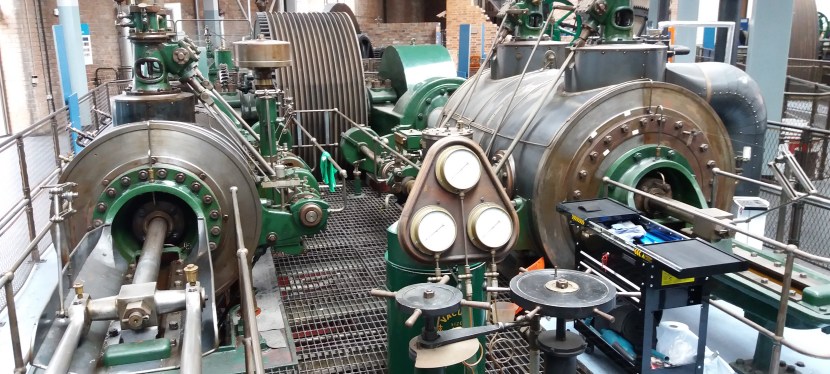
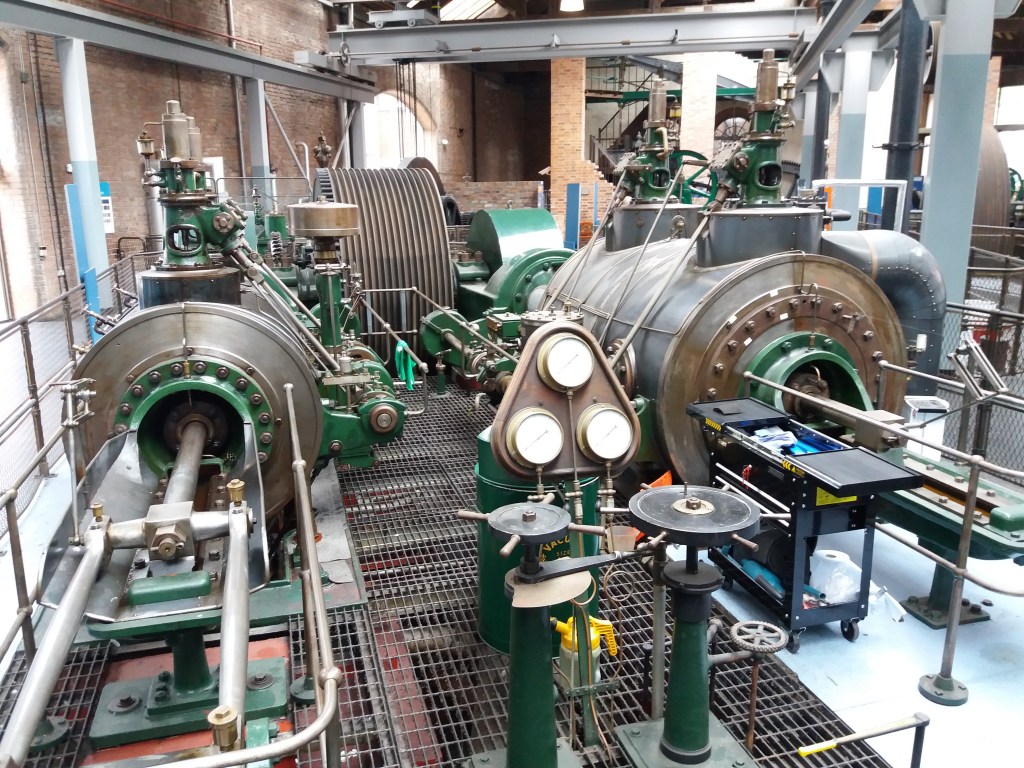
In recognition of The Law Family Charitable Foundation’s generosity and the significant benefit it will have for visitors, the gallery will be known as the Power Hall: The Law Family Gallery, when it reopens to the public in 2024. The Grade II listed Power Hall building was built in 1855 as the transhipment shed for Liverpool Road Station, the world’s first purpose-built intercity passenger railway station. It houses one of the UK’s largest collections of working stationary steam engines, most of them built in Manchester.
The gift is in addition to the £4.3 million given by the Government’s Public Sector Decarbonisation Scheme to transform the whole museum’s environmental sustainability and place zero carbon technology at the heart of the museum’s visitor experience. £2.6 million from that grant will enable the Power Hall (currently undergoing urgent restoration thanks to £6 million from the DCMS) to reduce C02 emissions by 60% by 2030 through enhanced roof insulation and glazing to improve energy efficiency, an electric boiler and water source heat pumps to heat the space and power the historic engines sustainably, and a new building management system to monitor and control energy use of this iconic gallery.
Galleries, museums, libraries, and cultural venues across the country are to benefit from almost £50 million of funding which will improve people’s access to the arts, safeguard cultural assets for future generations, and power economic growth through culture. This support comes from the Cultural Development Fund (CDF) strand of the funding and £6,943,759 of this fund will be spent on seven industrial heritage museums in England.
Barnsley Museums have been awarded a grant of £3.93 million by the Department for Digital, Culture, Media and Sports, delivered by Arts Council England. The significant funding will transform Elsecar Heritage Centre, creating new creative studios in derelict historic spaces, maker and museum galleries and stunning new indoor and outdoor areas for events and cultural activity. Ironbridge Gorge Museum Trust received £1,064,348 for repairs from the MEND strand of the funding which will enable the Trust to carry out vital infrastructure and essential maintenance work at Blists Hill Victorian Town.
In addition, Leeds Industrial Museum received £653,000, Brooklands Museum Trust were granted £488,000, Bletchley Park received £468,393, the London Transport Museum was granted £277,093, and Ruddington Framework Knitters Museum was granted £62,925 to repair its historic fabric.