Emergency and Risk Management Network: Extreme Environments Training for Museums, 5 November 2024

Join Museum Development Midlands (MDM) and Anita Hollinshead for this session exploring extreme environments and their impact on conditions in museums, collections, visitors, and staff on 5th November. The free workshop will include a number of case studies and measures that can be put in place to minimise risks.

Delegates will be encouraged to share their own experiences of extreme weather conditions, including high temperatures, flooding, and storms and the impact of climate change on collections management, all issues familiar on for industrial heritage sites. This workshop is part of MDM’s Emergency and Risk Management Network, helping museums prepare for emergency situations and develop skills in risk management and mitigation.

Places are limited to a maximum two delegates per organisation. Priority will be given to delegates from non-NPO and non-National museums in the Midlands which are Accredited or officially Working Towards Accreditation. You’re welcome to book a place if you are not from a priority museum, including non-Accredited museums, on the understanding we may ask you to release your place if the event becomes oversubscribed. Fololow this linbk to book the free trainbign session: https://www.eventbrite.co.uk/e/emergency-and-risk-management-network-extreme-environments-tickets-1028753909637?aff=oddtdtcreator
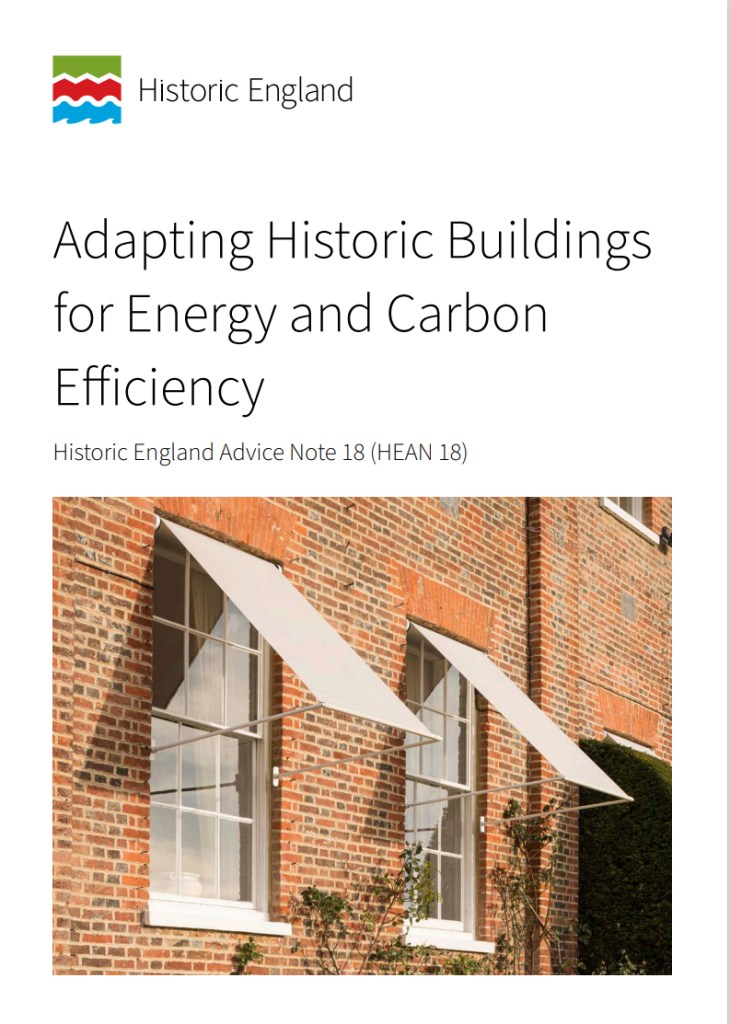
Historic England Publish New Guidance on Adapting Historic Buildings for Energy & Carbon Efficiency

Historic England has published new advice on balancing climate action with building adaptation. The new advice note ‘Adapting Buildings for Energy and Carbon Efficiency’ is aimed primarily at local authorities, heritage consultants, and those involved in the planning process. It makes clear that historic properties can be retrofitted with energy-efficient measures such as heat pumps, solar panels, and insulation.

The guidance is intended to “provide clarity and support consistent decision-making” for proposals to reduce carbon emissions and improve the energy efficiency of historic buildings, while conserving their significance. It reflects current planning policy and covers:   

  • Advice on what permissions, such as listed building consent, are needed for some of the common changes required to decarbonise and improve the energy efficiency of historic buildings 
  • Advice to assist local planning authorities – and other parties involved in the planning process – in determining proposals to decarbonise and improve the energy efficiency of historic buildings to enable positive climate action. Some typical building adaptations in response to climate change impacts are also included 
  • Signposting to other relevant information, advice, and guidance. 

Download the Adapting Buildings for Energy and Carbon Efficiency advice note here.