Ironbridge Look for Volunteers for Phase 2 of Sentinel Loco Conservation

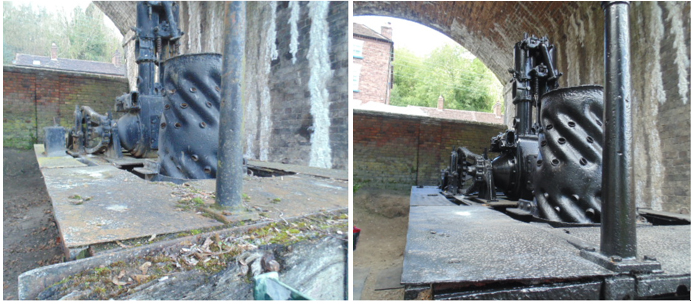
Before (left) and after (right) shots of one of the conserved Sentinel locomotive, Coalbrookdale. Image copyright: Ironbridge Gorge Museum Trust.

The Ironbridge Gorge Museum Trust (IGMT) is looking for volunteers to help us complete the second phase of their project to conserve two Sentinel locomotives at Coalbrookdale. The two Sentinel Shunting Locomotives, which date from the 1860s, are historically important parts of the Trust’s collection. They were used by the Coalbrookdale Company on their internal railway system, were modernised and converted by the Sentinel Waggon Works Ltd in the 1920s and are now the oldest locomotive conversions by Sentinel that are known to have been preserved. 

In 2023 IGMT secured funding from the Association for Industrial Archaeology to carry out work to conserve the engines, whose condition had deteriorated over time due to weather conditions. Work on one of the Sentinel locomotives has already been completed and new volunteers are now needed to complete the second stage of the project.

Requirements:

  • Volunteers who can commit to a half-day on Fridays between September and December. 
  • The role will require a reasonable amount of physical activity and working outside (though under some cover) in all weather. 
  • No specific qualifications are required but the work will involve wet and dry cleaning; priming bare iron; painting; and if appropriate carrying out some minor repairs. 
  • Volunteers regularly receive questions from members of the public interested in their work and will be asked to take photographs to help record the progress of the project.

This is a great opportunity to learn new skills and meet new people. If you would like to volunteer with us or know someone who you think would like to be involved get in touch with me or with Sharon Sinclair, Volunteer Officer, volunteering@ironbridge.org.uk.  
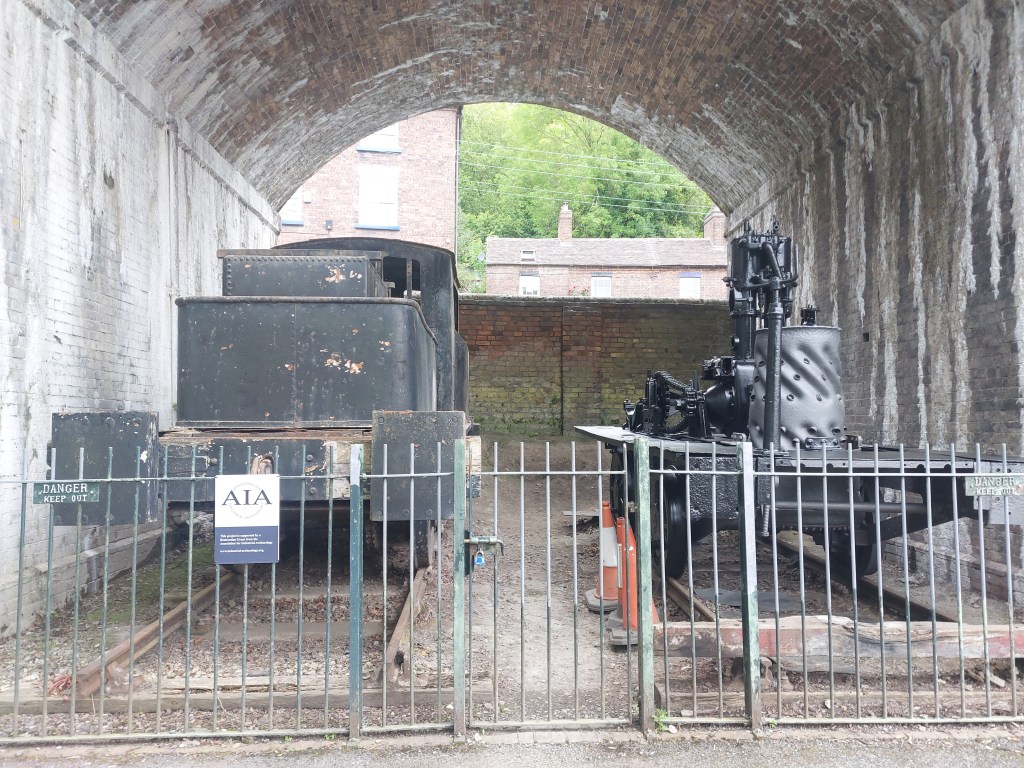
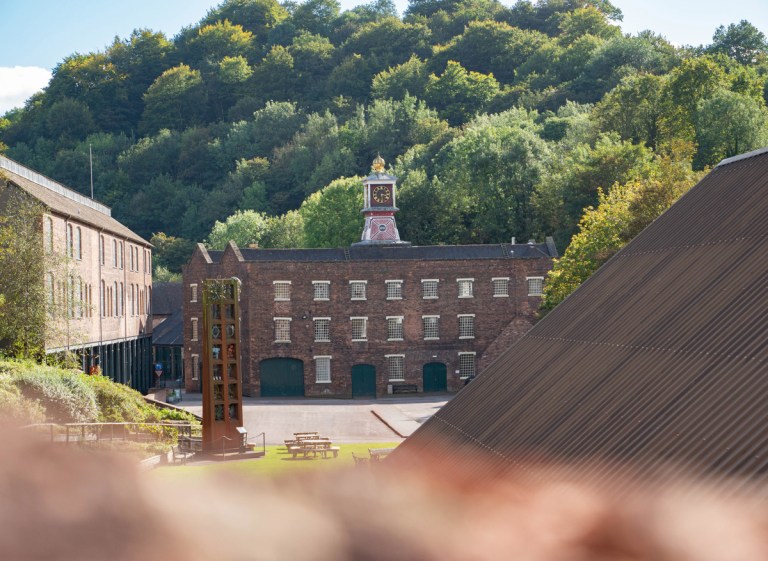
The two Sentinel shunting locomotives at Coalbrookdale, Ironbridge. Image copyright: Dr Michael Nevell.

2024 Archaeological Achievement Awards Nominations Open

Nominations are now open for the 2024 Archaeological Achievement Awards. They celebrate excellence in archaeology by awarding a project or individual for the following categories:

  •  Archaeology and Sustainability
  • Early Career Archaeologist
  •  Engagement and Participation
  •  Learning, Training and Skills
  •  Public dissemination or Presentation

You can nominate through the Council for British Archaeology’s webiste via the link here. Past winners have included industrial archaoelogy and heritage sites, and volunteers. The deadline for nominations is 12.00pm, Wednesday 25 September 2024.    

The Council for British Archaeology (CBA) is a leading educational charity dedicated to championing and promoting engagement in archaeology and supporting grassroots archaeologists across the UK. Established in 1944, they have a long history of championing public participation in archaeology (including industrial archaeology), aiming to connect diverse communities with the heritage of our shared past. To find out more follow this link: https://www.archaeologyuk.org/about-us.html

Free Online Course on How to Create Effective Video Content for Your Charity Using Your Phone

The Saltways are offering charities the opportunity to learn to create video content. Film and video have been used for many years to illustrate the processes and lives of industrial heritage sites and workers. Now smart phones have brought the use of video to a mass audience.

The Saltways team are offering a free 60 minute practical workshop for charities on the 10th or 31st October on how to create a video for your site using a smart phone. The training session will cover: learning how to plan your films to get the best results possible; learning technical tips on how to improve your footage and sound; and an introduction into editing and how to build a campaign around your film. There will also be a chance to ask questions and get feedback on your footage.

To book your free place follow this link: https://www.eventbrite.co.uk/e/how-to-create-effective-video-content-using-your-phone-tickets-927311663147?aff=oddtdtcreator

The Saltways are specialists in charity films. They aim to help the charity sector produce more authentic, inspiring, compelling films ethically, openly, and collaboratively. For more details about The Saltways follow this link: https://thesaltways.com/ethical-storytelling/

Heritage Open Days 2024: Hundreds of Industrial Heritage Sites Open

The 2024 edition of Heritage Open Days takes place from the 6th to the 15th September. Billed as England’s largest festival of history and culture, thousands of local volunteers and organisations are opening more than 1500 sites for free to the public. This year’s event includes more than 230 industrial heritage sites in England.

More industrial heritage sites than ever before are offering free access to their sites and professional and volunteers expertise, under this year’s theme of ‘routes, networks, and connections’. This includes over 70 transport sites, more than 50 chemical, extractive and metal working sites, over 30 water-powered corn mills, over 30 maritime and utility sites, more than 20 wind mills, and over than 20 textile sites.

Heritage Open Days are a chance for the public to explore England’s rich heritage, and the peopel involved in preserving and presenting it, with over 2,000+ organisers arranging events. To search for an industrial heritage site open during the festival, follow this link: Heritage Open Days.

The Coalbrookdale Museum is one of the sites taking part in 2024. Access is open for free on the 7th & 8th September.

‘Scuttled’: New Audio Drama To Be Launched Based on the Archaeology Excavations of Rochdale Canal Barges

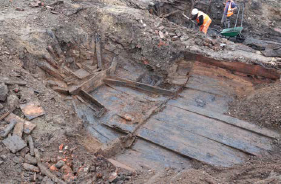
The excavation of the stern of Boat A at the Rochdale Canal Basin, October 2022. Image courtesy of MOLA.

An audio drama based on archival research and excavations of 19th century barges in the Rochdale Canal basin, and starring Christopher Eccleston & Joyce Branagh, is to be launched on the 4th September 2024. Five northern writers collaborated with the Museum of London Archaeology (MOLA) and North West production company Bamalam CIC to produce a professional audio drama entitled ‘Scuttled’ as 5×30 minute episodes. It tells the story of a single family living and working on the Rochdale Canal between 1840 and 1922.

‘Scuttled’ was produced by Bamalam Productions and one of the archaeologists involved in the dig, Kelly Griffiths. It is written by Ian Winterton with Neil Bell, Isabel Hague, Janine Lanek, Katie Moore and Paul Rigby, with input from Rochdale Local Studies and the children of St Edward’s School, Rochdale.

The drama is based upon the excavation of the Rochdale Canal basin undertaken in October 2022 by MOLA, ahead of redevelopment works. The partial remains of six vessels were excavated in the canal basin, with two types present; Mersey Flat Type flat dumb barges and a composite iron and wooden framed pontoon or float. The flats dated from the mid-19th century with the float likely from a later date. The vessels were abandoned in 1921 when the Rochdale Canal Company ceased to trade. The site demonstrated how vessels at the end of their life were abandoned and likely exploited for reusable parts.

The link to episode one is here: https://audioboom.com/posts/8564866-scuttled-episode-one

For more details on the project and drama, follow this link: https://www.mola.org.uk/get-involved/iaa-grants/creative-residencies/scuttled-life-rochdale-canal

Opportunity to Get Involved with the Merseyside Industrial Heritage Society

The Merseyside Industrial Heritage Society (MIHS) is looking for new faces to help with its committee. 2024 marks its 60th year, making it one of the oldest such societies in Britain. Established as the North Western Society for Industrial Heritage Society, it changed its name to the MIHS in 1977 as part of an earlier renewal of the society.

Like all such groups the committee needs refreshing from time-to-time. MIHS now needs new faces to help it organise its winter programme of lecture meetings, some on line, as well as the running a number of field visits in the spring and summer months including the annual “Long Weekend” in May.​ This is an excellent volunteering opportunity for a new generation to help develop the society as an important part of the Liverpool city region’s heritage landscape. For details on how to get involved email the Chairman, Peter Purland, at: petepurland@btinternet.com.

The Merseyside Industrial Heritage Society has been instrumental in recording and raising awareness about the Liverpool city region’s industrial heritage. A key part of this has been the Society’s guide to the industrial heritage sites of Merseyside. This was first published in 1974, in its earlier guise as NWSIAH. This has gone through several editions over the years, in 1984, 2007, and 2011. In 2020 the guide was comprehensively revised with support from the Association for Industrial Archaeology. The new guide is much more than a listing of locations. It contains comprehensive overviews of the industrial development of both the region and of the individual Merseyside boroughs. Further features are panels on “Notable Dock Engineers” and a guided walk past places associated with “Railway Pioneers”. These guides also provide a record of the way in which Merseyside’s heritage, its preservation and presentation, has evolved since 1964.

To learn more about the Merseyside Industrial Heritage Society visit their website here: http://www.mihs.org.uk/

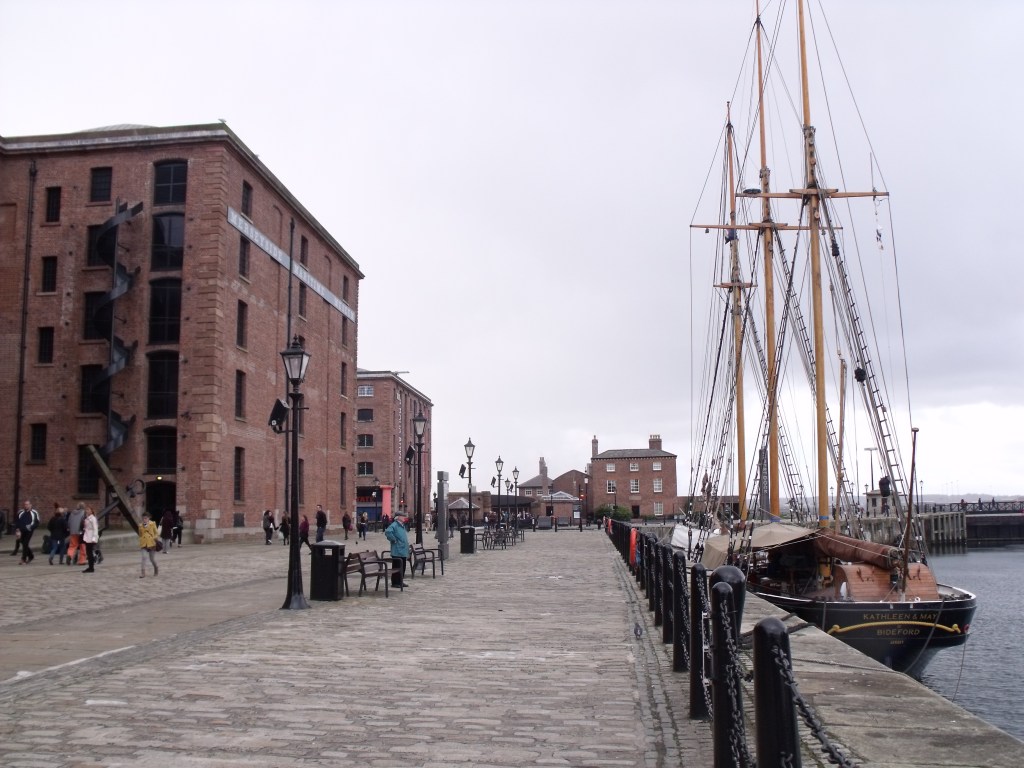
Albert Docks, Liverpool. Copyright Dr Michael Nevell.

The Canals and Waterways of Lancashire Day School, November 2024

The Lancashire Local History Federation, with the Leeds & Liverpool Canal Society, are running a day school on the 2nd November on theme ‘The canals and waterways of Lancashire’. This is to celebrate the 250th anniversary of the opening of the first section of the Leeds and Liverpool Canal from Parbold to Wigan.

Talks on the day will cover the historical importance of Lancashire’s industrial waterways, the construction of the Leeds & Liverpool Canal, the Douglas Navigation, canal traffic and traders, and the Lancaster Canal. The Day School will be held at the Preston Masonic Hall in Preston, Lancashire, from 10am to 4pm.

The booking form is below, or you can email the Day School organiser here: elizoelaw@gmail.com

SERIAC 2024 Conference Now Booking

The 2024 South East Regional Industrial Archaeology Conference (SERIAC) is being held on the 12th October at Chichester College. SERIAC is an association of Industrial Archaeology and related societies based in the South East of England. Since 1983, a member society has organised an annual day conference.

This year’s event is being hosted by the Sussex Industrial Archaeology Society. The one day conference will include talks on: railways to Chichester; Portsmouth Dockyard; and the Bursledon Brickworks. There will also be a post-conference walk around Chichester’s canal basin.

Book online here: https://www.ticketsource.co.uk/seriac2024

Further details about the day can be found here: www.sussexias.co.uk/seriac2024

Ironbridge Launches ‘Get Us Winding Again’ Appeal

The Blists Hill winding engine

The Ironbridge Gorge Museum Trust has launched a new £100,000 fundraising appeal, Get Us Winding Again, to raise funds to repair the winding engine at Blists Hill Victorian Town. The steam-powered winding engine is one of the earliest and most significant exhibits in Blists Hill Victorian Town. 

Winding engines were used to carry people, equipment and horses up and down a mine shaft. The museum’s winding engine dates to the mid-19th century and was originally used at Milburgh Tileries, a mine in nearby Jackfield. The cage on the end of the cable would have carried one tub of coal or clay at a time or six men at winding speeds of up to 30mph (44 feet per second) without men and about half that with men on.

Today the winding engine at Blists Hill Victorian Town is capable of winding empty tubs a short distance up and down the original mine shaft. However, due to normal wear and ageing (the winding engine ran most days from its installation in 1973 to 2018) and due to an overwind incident that occurred in 2018, it has not been in operation for the last six years.

The new Get Us Winding Again campaign aims to raise £100,000 to repair and restore the winding engine so that visitors can once again see it in action. Find out more about the campaign, as well as seeing a video of the winding engine in action, on the IGMT website.  

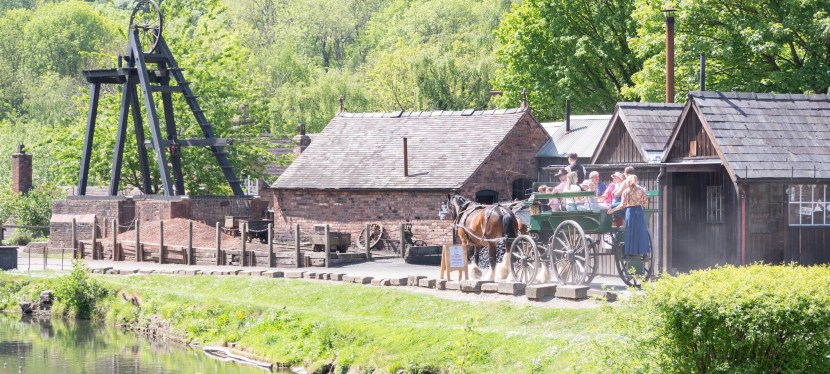
The Blists Hill mining headstocks and centrte, the winding engine house. Image Coutesy fo IGMT.

Chance Heritage Trust Secures Future Funding

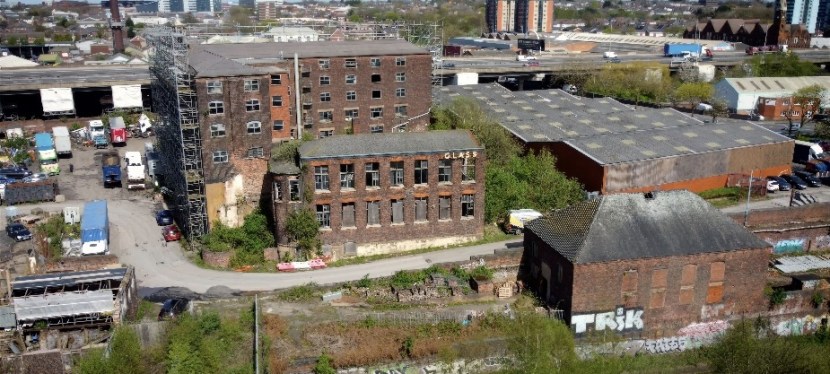
The Chance Heritage Trust has been awarded a grant of £250,000 from The National Lottery Heritage Fund, thanks to money raised by National Lottery players with a further grant of £165,000 awarded by Historic England. The combined capacity building grants will transform how the Trust operates and will help to drive the regeneration and repurposing of the Chance Glassworks in Smethwick in the West Midlands.

For over 150 years, the former Chance Brothers Glassworks in Smethwick was the world’s leading glass manufacturer and a pioneer of British glass-making technology, operating from 1824 to 1976 and finally closing in 1981. In that time, the factory produced glass used in places like the Houses of Parliament, Big Ben’s clockface, and the Crystal Palace in London. It also developed specialist glass for telescopes and lanterns and, in 1848, began working on lenses which were eventually used in around 2,500 lighthouses around the world.

The funding will enable the Chance Heritage Trust to employ a project director and a small support team. They will continue to work with stakeholders in pushing forward plans for the regeneration of both sites for the benefit of the local community. Working with volunteers and the local community the team will develop a programme of heritage and cultural activities using the rich industrial history of these sites as a resource for people of all ages and backgrounds.

For further details click this link

The Chance Brothers Glassworks, Smethwick, Birmingham. Image courtesy fo the Chance Heritage Trust.