Welcome to the Industrial Heritage Networks and Support website. This site is maintained and updated by the Ironbridge Gorge Museum Trust who run the project and the networks. We aim to support industrial heritage in England through networking, information exchange, guidance, and training. Please explore the website and please contribute! For more information you can … Read more Welcome to the IHNs website!
The Historic England Archive will be participating in the Heritage Open Days 2023 events on 9 September. This event is FREE to attend. The Heritage Open Days theme this year is ‘Creativity Unwrapped,’ and runs from 8-17 September throughout England.
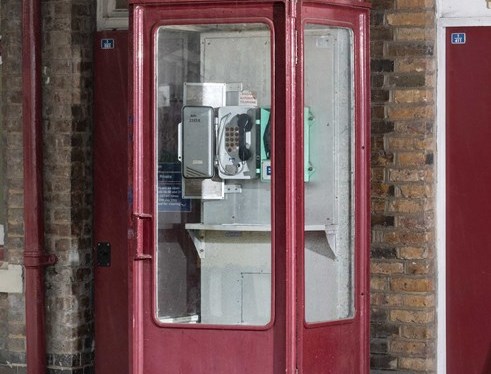
In July 2023 four rare K8 telephone boxes, found on several London Underground stations, were listed. Dating from the 1960s these are located on the platforms at the Chalfont and Latimer, Chorleywood, High Street Kensington, and Northwick Park stations.
The K8 was designed in 1965-66 by architect Bruce Martin who was commissioned by the General Post Office, which owned the public telephone network at that time. They have been listed at Grade II by DCMS on the advice of Historic England. Most of the remaining K8s are in Hull, nine of which were listed earlier this year (see elsewhere on this blog).
The tube station phone boxes survived privatisation in the 1980s as they were owned by London Underground and housed an internal telephone system for station staff. Each of the boxes are painted in different colours, as a way of denoting this private use. Only around 50 such telephone boxes now survive, despite more than 11,000 being built between 1968 and 1983. There are only 24 listed examples in England, and Historic England will consider listing applications of any unrecorded K8s where suitable evidence is provided to support the case for listing.
Icon, the Institute of Conservation, has received funding from the National Lottery Heritage Fund, Heritage Innovation Fund programme to develop interventions which will support the development of skills in the workforce working to protect and preserve industrial heritage collections in the UK.
As part of this project Icon is running a survey to develop their understanding of the nature of industrial heritage collections which are held, who is caring for these collections, and specific workforce skills needs. Please take the time to fill in the survey – respondents will be entered into a prize draw to win a £50 voucher to attend an Icon Skills professional development event.
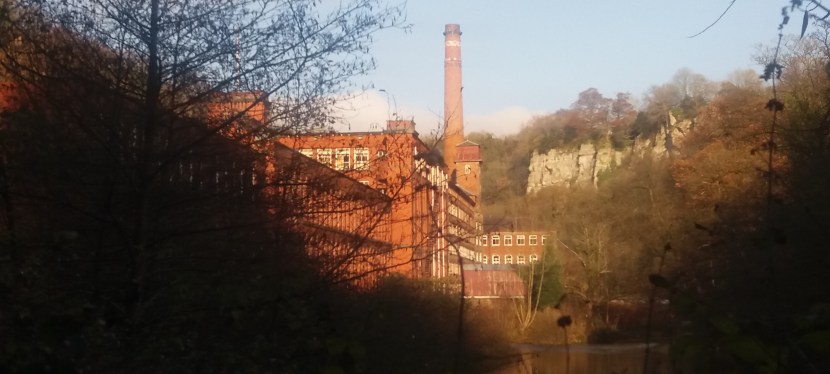
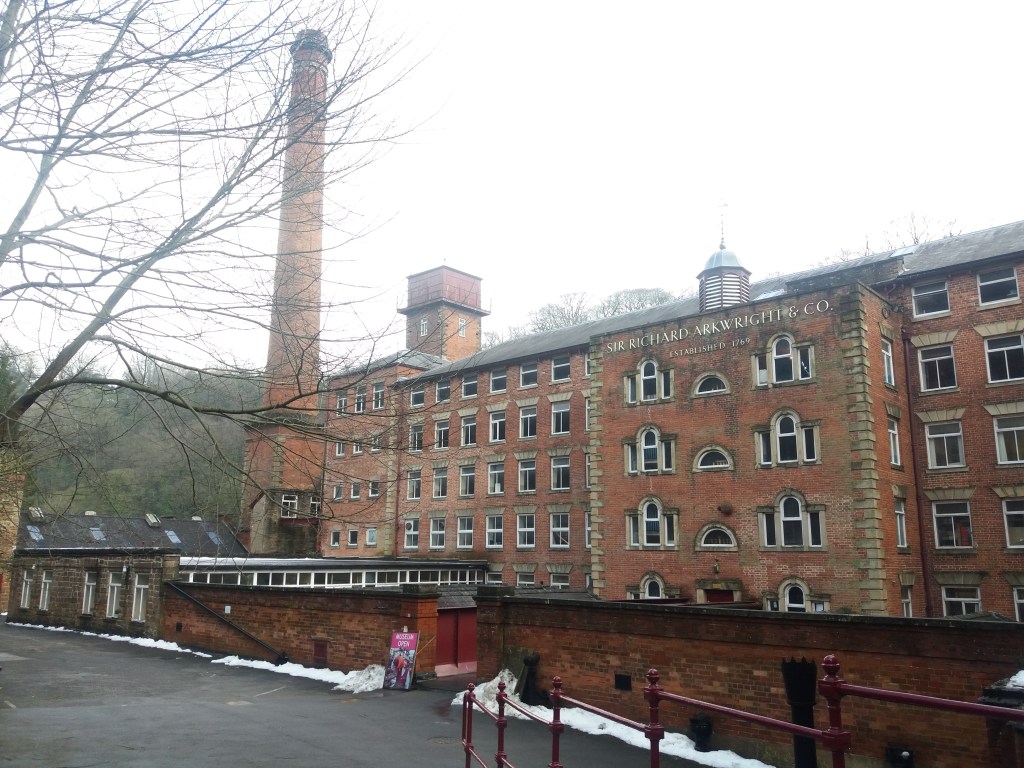
A new visitor centre has been opened at Masson Mills. Part of the mills complex, which sits within the Derwent Valley World Heritage Site, was previously occupied by a retail village which was forced to shut at the start of the pandemic in 2020 and never recovered. However, the textile museum remained open for tour bookings. The mills were bought by the Derwent Hydro group of companies, a business owned by the Needle family which has operated hydropower stations since the 1980s, in 2022.
The new visitor centre, which was once the manager’s officers, is accessible at the front, roadside, of the building and has an array of historic mill-related artefacts, photographs, and equipment, and is open Monday to Friday, 11am to 4pm. Guided tours of the mill and its working machinery are now available every weekday at 2pm. Visitors are encouraged to book in advance to avoid missing out but walk-ins will be possible subject to space.
Jamie Needle, director at Masson Mills and Derwent Hydro, said: “It’s really exciting to be able to welcome people back through the doors to learn more about the history of industry in the World Heritage Site. There is nothing like being able to hear and touch the old machinery to illustrate the realities of early factory working. Our business started with water power and it’s hugely significant to me that factories also began with water power, this museum brings the two together in a fantastically tangible way.”
The new owners are also improving the existing hydropower scheme at the mill, which was installed in 1995. The entire site is supplied with renewable energy produced by its hydroelectric turbines with any surplus fed into the National Grid. The hydroelectricity produced emits no emissions to air, land or water, thereby minimising the carbon footprint of Masson Mills and those visiting the site.
Port Sunlight Village Trust are looking to appoint a Collections Curator. This is a brand-new post and the holder will work with the Heritage Manager to care for, maintain and secure the future of the Port Sunlight Trust collections.
The post-holder will contribute to the exhibition programming of Port Sunlight Museum and the development of the Lyceum Hub as well as making the collections as accessible as possible to all visitors both physically and virtually. Candidates should be creative, people-focussed, an excellent communicator, and passionate about the difference museums and heritage can make to people’s lives.
To apply, please send your CV and a supporting statement of no more than 500 words using the form on PSVT’s website here to recruitment@portsunlightvillage.com by 10am on Monday 7th August.
The Industrial Heritage Support project is conducting research on the current state of stationary steam engines on industrial heritage sites and museums in England. In partnership with Keele University we are looking to establish how many sites in England run stationary steam engines, as op[posed to just static exhibits. We are also gathering data on the costs of maintenance, the types of fuel used to run these engines, and the skills required to keep them running.
Many sites have already been contacted individually to discuss how they run their machinery and this has helped to inform a questionaire which is now being emailed (early August 2023) to more than 30 sites. This research is a follow-up to the recent ‘Industrial Heritage and Climate Change’ seminar the project ran in July, where presentations from Claymills, Crofton Beam Engines, and The Arkwright Society showed how eco-fuels and water power are being used on industrial sites. This research will be published at a later date.
If you haven’t received a questionaire but think that your site could help with this research please email: mike.nevell@ironbridge.org.uk
Horizontal steam engine at Cambridge Technology Museum
The Association of British Transport & Engineering Museums (ABTEM) 2023 annual seminar will be held on the 4th October. It will focus on how transport collections are facing the challenge of climate change and sustainability, and how carbon reduction and environmental impacts are being tackled by museums large and small.
The emphasis of the day will be on best practice solutions that can inspire curators, volunteers, and others to help address climate change and embed environmental sustainability into their operation and work. The morning session of the seminar will be held at the LT Museum at Acton, London, followed by an afternoon walk and talk session at the nearby London Museum of Water & Steam based around the theme of ‘Sustainable Steam and Sustainable Communities’.
The seminar marks the relaunch of ABTEM and further events and activities are planned for 2024. For further details of the network, and how to join, please visit www.abtem.co.uk. A programme and full list of speakers will be announced shortly. To register an interest please contact: abtemseminar@gmail.com
The Ironbridge Gorge Museum Trust has been been awarded a grant by the Society for Museum Archaeology to digitise a selection of large-scale archaeology drawings held at the IGMT Archive. The original drawings were produced by the Ironbridge Gorge Museum Archaeology Unit between 1981 and 2010 during the course of their survey and excavation work at various museum sites within the Gorge. The drawings are currently neither catalogued nor publicly available for consultation.
This work will be particularly useful for those buildings which form part of the ‘Conserving the Historic Estate’ project, an initiative funded by the National Heritage Memorial Fund to help secure the future of the buildings that form the Ironbridge Gorge Museum Trust.The digitisation work will be completed by museum volunteers alongside a professional photographer, and on completion of the project the digital images will be made publicly available for wider research.
The next three in-person meetings of the Industrial Heritage Networks will be taking place on the 26, 27, & 28 July 2023. These will be for the Yorkshire, East of England, and East Midlands Networks. These free events will be the first in-person meetings for these networks, which were set up during the COVID pandemic.
Like the other seven IHN groups in England, these in-person events are designed to bring together those industrial heritage sites open to the public in each region, and local groups and individuals working or volunteering on industrial archaeology and heritage subjects and sites in the area. The format will be a round-table discussion in the morning with a tour of the site in the afternoon.
Details on how to book on Eventbrite can be found here:
The Britannia Sailing Trust are thrilled to announce a recent generous donation from the Association for Industrial Archaeology of £6,600. This is the second time the AIA have funded restoration work on Britannia. The first time was in fact the first grant the Trust ever received and helped to kick-start the monumental restoration project.
Britannia Sailing Trust cares for the last remaining Class 1 East Coast Smack. Britannia was built in 1914 in Kings Lynn, Norfolk, by a well-known and respected family of shipwrights, the Worfolk brothers. She is a Gaff Cutter, 58 feet long on the deck, with a 13 foot six inch beam and drawing eight feet. She has a beautiful hollow bow, making her a very fast vessel and giving her beautiful lines. Having discovered her in a state of severe disrepair, the Britannia Sailing Trust was formed in 2014 and has succeeded in saving her from destruction.
Vicki Samuels of the Trust said that ‘We are so grateful for the Association’s continued support. The money will go towards the completion of the restoration, helping us get Britannia back in the water on the 24th September this year!’
















 Industrial Heritage Networks