Welcome to the Industrial Heritage Networks and Support website. This site is maintained and updated by the Ironbridge Gorge Museum Trust who run the project and the networks. We aim to support industrial heritage in England through networking, information exchange, guidance, and training. Please explore the website and please contribute! For more information you can … Read more Welcome to the IHNs website!
The Heritage Alliance’s Rebuilding Heritage programme is now taking bookings for its latest round of free webinars during late May through to July. The theme for the latest series of webinars is the post-pandemic recovery and moving from ‘survival to sustainability’.
The Rebuilding Heritage programme is also providing free one-to-one and group support for organisations and individuals in the heritage sector. This support is open to organisations (including voluntary organisations) and to individuals. Applications are now open to receive support July to August. Deadline for applications is 1st June 2021.
With confirmation that the museum sector can re-open its doors from Monday 17th May, now is good time to review the latest guidance relevant for Industrial Heritage sites normally open to the public. The following list of advice and links is not comprehensive but is a useful starting point/reminder for those running and/or volunteering at Industrial Heritage sites.
NMDC has updated its Good Practice Guidelines for Reopening Museums in the light of recent Government announcements. The tier system has now moved to a step system with Step 3 starting from May 17th when museums can re-open their buildings.
The ‘EMBED Reopening Recommendation’ guidance has been created to support organisations in their decision making prior to reopening following COVID-19 lockdown. It considers potential barriers faced by disabled visitors and customers and offers solution based guidance for organisations of all types with the ultimate aim of keeping stakeholders, staff, volunteers visitors, students or customers as safe as possible.
This scheme has been set up to offer grants of £500 to individual MA members whose finances have been significantly affected by the current pandemic. It is open to individual members who have held membership for two or more years and can demonstrate a genuine and measurable need.
A reminder that the National Lottery Heritage Fund is now accepting applications again for larger projects (from £100,000 up to £5million) as well as small and medium project funding applications.
In July 2020, the Association for Industrial Archaeology (AIA) established a Young Members Board (YMB) as a sub-committee of the Association, comprising early or mid-career people with an interest in industrial heritage. The AIA recognises the current demographic of both the membership and Council, and believe that by engaging with younger, more diverse, people they can together better deliver the aim of the Association to ‘give our industrial past a future’.
The YMB provides an exciting new opportunity for individuals to work with like-minded people to influence the direction of the Association and industrial archaeology generally, raise your own profile, develop your personal skills and knowledge, build your CV, network with interesting and knowledgeable people, and take on real responsibility.
The YMB are seeking new members to join them and fill vacancies on the Board. To apply, please submit your CV and a short description of why you would like to joint to: ymbcontact@industrial-archaoelogy.org by 31sdt May 2021.
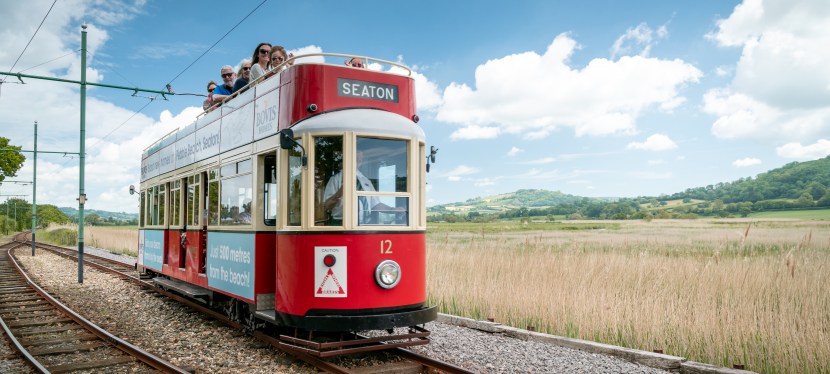
Seaton Tramway is the trading name of Modern Electric Tramways Ltd and is a registered charity (number 1164157). Sited in the UNESCO Jurassic Coast World Heritage Site and laid on the track bed of the former British Rail Seaton Branch, the Tramway opened to the public in August 1970.
It is the only 2’9″ gauge railway/tramway in operation, with a fleet of 14 heritage trams, including unique open-top double decker trams and single deck heritage trams from the early 20th century. The trams travel a 3-mile stretch between Seaton, Colyford and Colyton in East Devon’s Axe Valley, alongside the River Axe estuary through two nature reserves and giving an unrivalled view of the abundant wading bird life.
EFAITH, the European platform for the exchange of ideas and experiences of volunteers and associations concerning industrial and technical heritage, is looking to highlight and raise awareness about railway heritage across Europe during the European Year of Rail. Since railway heritage receives little attention within the concept and program of the European Year of Rail, EFAITH are in the process of building a specific website, as a way of highlighting the heritage dimension of the European Year of Rail.
At the moment the website consists of four databases:
1) Who’s who – a list of organisations involved in the preservation and mise en valeur of railway heritage in Europe – to encourage networking
2) a list of good examples of conservation and re-use of railway heritage (both buildings and infrastructure and lines)
3) a list of activities that will be organised, i.e. a calendar
4) a series of news items and press releases.
EFAITH are looking for organisations and volunteers to help build the website by adding railway news, events, and best practice items. If you would like to add material either go directly to the website above or contact the IHSO for further details (mike.nevell@ironbridge.org.uk). In addition, EFAITH is running two online railway heritage webinars, the first on 10 May and the second on 7 June and are inviting short conference papers from organisations presenting their experiences briefly (max. 15 minutes), in French or English. The English presentations will be summarised in French and vice versa.
EFAITH aims to encourage cross-border contacts and cooperation between industrial heritage organisations across more than 47 European countries. Details about what they do and who they are, can be found on there website here: EFAITH Home
The annual Festival of Archaeology, coordinated by the CBA in partnership with Historic England, showcases the very best of archaeology, with special events right across the UK. Many industrial heritage and industrial archaeology sites and groups take part each year.For 2021, the theme is Exploring local places. Discover the archaeology that is all around you by exploring your local area and the stories of the people and communities who lived there.
Join the CBA for the 2021 Festival of Archaeology from 17 July – 1 August. CBA wants you to help them celebrate local sites, stories, and the people who lived and shaped our local places. Archaeology is a great tool to help you do this and to find out more about places through time such as:
How have they changed and how do we use them today?
Who lived and worked there in the past and do we use them in the same way today?
What can you see today that would have been in the landscape 10, 100 or even a 1,000 years ago?
The Ironbridge Gorge Museum Trust in Shropshire has been awarded more than £1.1 million Government funding to help it get back on track after being hit hard by the pandemic, with visitor revenue down by almost £3 million last year. The Trust, a registered charity, saw around 340,000 fewer visitors than expected last year due to restrictions and closures introduced in response to the pandemic. And with 80 per cent of its revenue coming from visitors and the Trust costing £6 million annually to run, bosses said the funding will be a ‘lifeline’.
The funding announced on 2 April 2021 – £1.14 million – is part of the Government’s £1.57 billion Culture Recovery Fund to help organisations in the arts, culture & heritage sector recover and reopen. It will allow the Trust, which runs 10 individual museums in and around the Ironbridge Gorge World Heritage Site, to get back onto an even keel over the next three months as visitors are allowed to slowly return.
More than £300 million has been awarded to thousands of cultural organisations across the country including the Trust, in the latest round of support from the Culture Recovery Fund, the Culture Secretary announced today. Trust boss Nick Ralls said after surviving the most challenging 12 months in its history, the funding news was extremely welcome.
“The last year has been difficult for everyone, and as a tourist attraction and an independent charity, we’ve been hit hard,” said Mr Ralls, Trust Chief Executive. Some of our attractions have been closed for more than 12 months now, and while we have a robust recovery plan in place to ensure each of our 10 museums has a strong future, severely reduced visitor numbers over the last year have left our reserves severely depleted. Given that 80 per cent of our revenue comes from ticket sales and visitor spending, this funding is a lifeline and will help us replace some – but not all – of that lost income, giving us some much-needed stability. This financial boost is not only vital for us, but for the wider community and local tourism economy – the local hotels, cafes and B&Bs that rely on trade from our visitors to survive.”
Mr Ralls revealed that some of the money will be used to install a new lighting system at Blists Hill Victorian Town that will allow the outdoor attraction, which is running at a reduced capacity, to open for longer during the autumn and winter, with an exciting programme of evening events planned for later on in the year. “Being able to offer people the chance to see Blists Hill lit up in the evening with our new lighting will add a new dimension to the special atmosphere people know and love. Culturally, we’re proud custodians of the birthplace of the Industrial Revolution and we’re one of only 32 World Heritage Sites in the UK. We’re responsible for 35 historic buildings and structures in the Gorge and that the maintenance and keeping these buildings secure comes with considerable costs. There’s a real sense of history as you come through the Gorge, its importance cannot be underestimated and we’re very conscious that we have a duty to our visitors, the region and the nation to ensure we’re able to give people the best experience possible when they are with us – and this funding will ensure we’re allowed to continue to do so.”
The Trust recently announced it would be reopening Blists Hill to visitors at weekends only, kicking off on April 17 – 18, with a special celebration of steam weekend. Tickets need to be pre-booked ahead of time at http://www.ironbridge.org.uk. The ever-popular Furnace Kitchen, Coalbrookdale will also reopen on Fridays, Saturdays and Sundays for takeaway and outdoor table service from April 16 onwards.
“We can’t wait to welcome people back through our doors and we know our visitors are desperate to get out and about again. Being immersed in culture and heritage lifts the spirits and has an important part to play in the wellbeing recovery of the nation.”
Culture Secretary, Oliver Dowden, said: “Our record-breaking Culture Recovery Fund has already helped thousands of culture and heritage organisations across the country survive the biggest crisis they’ve ever faced. Now we’re staying by their side as they prepare to welcome the public back through their doors – helping our cultural gems plan for reopening and thrive in the better times ahead.”
Sir Nicholas Serota, Chair, Arts Council England, said: “Investing in a thriving cultural sector at the heart of communities is a vital part of helping the whole country to recover from the pandemic. These grants will help to re-open theatres, concert halls, and museums and will give artists and companies the opportunity to begin making new work. We are grateful to the Government for this support and for recognising the paramount importance of culture to our sense of belonging and identity as individuals and as a society.”
The funding awarded in Round 2 is from a £400 million pot which was held back last year to ensure the Culture Recovery Fund could continue to help organisations in need as the public health picture changed. The funding has been awarded by Arts Council England, as well as Historic England, National Lottery Heritage Fund and the British Film Institute.
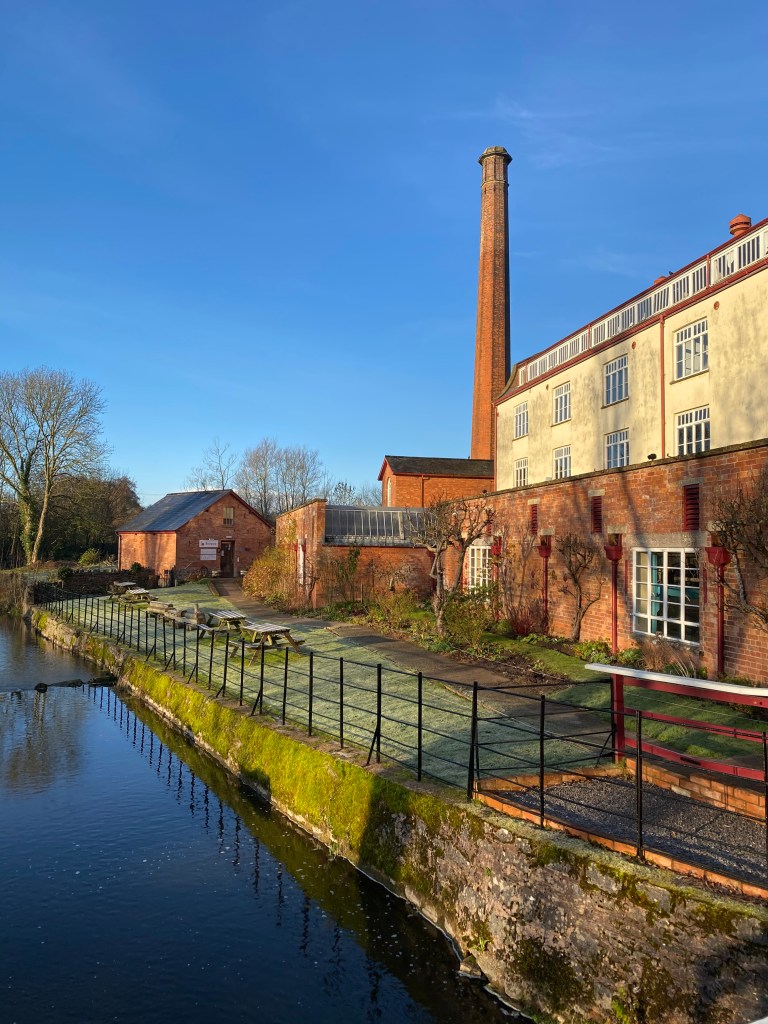
Coldharbour Woolen Mill, Devon. Image courtesy of the Coldharbour Mill Trust.
Coldharbour Mill Trust is seeking someone with a solid background and understanding of the heritage sector to take on a leading role on their board of trustees, who support Coldharbour Mill in their charitable mission. As the current chair retires this year – this provides an exciting opportunity for someone to join the committed board of trustees in creating a sustainable future for this heritage attraction.
Until 2020 the listed Coldharbour Mill in Devon had been on target to meet the objectives of their strategic plan and had done so in the previous two years. Then the pandemic hit and it was touch and go for their survival. However the Chief Executive, Martin Halse and a number of volunteers managed to secure over £300,000 of funding through to March 2021, with further applications in progress.
The impact of the pandemic has resulted in a complete review of the strategic plans for Coldharbour Mill and during the course of 2021 they are embarking on the charities biggest ever consultation on the future of Coldharbour Mill to ensure its resilience and relevance to stakeholders old and new.
The chair will be the leading voice of our board whose responsibility it is to secure a bright future for this nationally significant historic site. The Chair will lead the Board and the organisation externally at an exciting time in the 230 year history of the Mill as we prepare for the next 200 years. The Trust is now taking applications for the post of Chair. More information can be found at: Chair of Trustees – Coldharbour Mill Museum
Bursledon Windmill after removal of its sails in 2020. Image Courtesy of Hampshire Cultural Trust.
For over 200 years, Bursledon Windmill’s sails have turned over the village of Bursledon. Unlike many windmills built in the Victorian era, which featured cast-iron machinery, Bursledon Windmill, which is operated by charity Hampshire Cultural Trust, is a rare surviving example of a traditional tower mill with timber machinery.
Today, Bursledon Windmill is as much a symbol of local pride as it has been throughout its history, providing for the local community, supporting farmers and allowing villagers to mill their own flour. Surrounded by woodland, the windmill is more than just a local landmark: its ethos of supporting local people continues, providing a tranquil, safe space for visitors and residents to come together.
In May 2021 it will be 30 years since the windmill opened its doors to visitors, following major refurbishment work undertaken by Hampshire Buildings Preservation Trust.
Now the listed windmill faces a new challenge. The wear and tear that comes with being a working windmill has led to the stocks and sails being removed. Hampshire Cultural Trust is launching a campaign to raise money to support the vital work of repairing or replacing the stocks and sails so that they can be reinstated and the windmill can get back into full working order.
David Plunkett of Hampshire Building Preservation Trust commented, ‘Age and the ravages of the weather have taken their toll and repairs are now needed to get the sails turning once again. The Hampshire Building Preservation Trust support the worthy efforts of Hampshire Cultural Trust in progressing the fundraising and repairs.’
With the public’s support, staff and volunteers at Bursledon Windmill will continue to keep local heritage accessible and open to everyone, sharing heritage skills and techniques.
More information about Hampshire Cultural Trust’s campaign to keep Bursledon Windmill’s sails turning, ensuring this community treasure will be protected and restored for generations to come, is available at https://www.hampshireculture.org.uk/bursledon-windmill.
Want to know how to get your industrial archaeology and heritage work published and make an impact with your research? The Association for Industrial Archaeology Young Members Board are hosting a one hour seminar with speakers from Publishers Taylor & Francis alongside the Editors of the Industrial Archaeology Review on 23rd April 2021. This will be followed by a 30 minute Q & A where you get to ask the experts!
This free event is aimed at students and early-career professionals in the fields of history, heritage, archaeology, and engineering, but it will also be a great event for anyone, especially industrial archaeology and heritage volunteers, who wants to brush up on academic publishing best practice.










 Industrial Heritage Networks