Welcome to the Industrial Heritage Networks and Support website. This site is maintained and updated by the Ironbridge Gorge Museum Trust who run the project and the networks. We aim to support industrial heritage in England through networking, information exchange, guidance, and training. Please explore the website and please contribute! For more information you can … Read more Welcome to the IHNs website!
Sunderland City Council is seeking to appoint a design team for a £2.2 million upgrade of Washington’s F-Pit Museum. Following a consultation on regeneration plans for Washington F-Pit Museum and Albany Park in 2022, the Council has now developed a draft outline Masterplan for improvements to the Park and a concept sketch proposals for a new Heritage Centre and Café to enhance the heritage offer and visitor appeal of this unique site for residents and visitors.
The successful architect-led multi-disciplinary design team will oversee the details of the upgrade. Due for completion in 2027, the project aims to boost visitor numbers to the museum and to secure a ‘viable and sustainable long-term future’ for the site, drawing new visitors to Washington and Sunderland. The museum is currently on Historic England’s Heritage At Risk Register and only receives around 1,000 visitors a year
The F-Pit Engine House and attached headgear are a Scheduled Ancient Monument, and are the only surviving structures of New Washington Colliery. The Engine House was presented by the National Coal Board to the people of Washington as a monument, following its closure in 1968, and it has operated as a Museum since 1976. Albany Park was formed from land reclaimed from the former colliery.
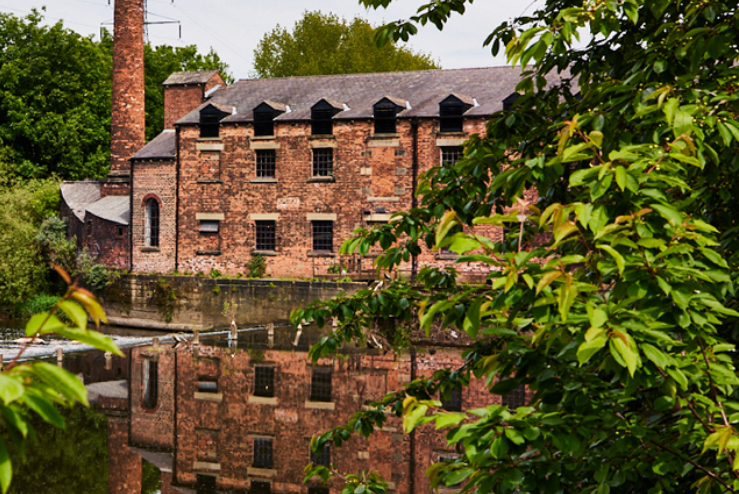
Thwaite Watermill Museum, in Leeds, may be faced with closure. The museum of Leeds’ milling industry is set in a former mill on an island in the River Aire. The site is owned by the Canal and River Trust, and run by Leeds City Council museums and galleries. The lease on the site is currently due to end in 2030, but as part of proposed budget cuts Leeds City Council is considering a proposal to end the lease in 2025.
The CRT confirmed that if the lease ends, it would not be able to afford to take over the running of the museum. A spokesperson said: “We are sorry to hear this update. If the council terminates the lease and closes their museum, we will have to look for alternative viable options for the use of the property that will help safeguard its future. In this difficult economic climate, our charity is facing the same financial challenges with the day-in day-out task of looking after and keeping open our 2,000 miles of waterways, including the hundreds of centuries-old locks, bridges, tunnels and aqueducts here in Yorkshire. Unfortunately, we do not have the funding to take on the council’s running of the Thwaite Watermill museum.”
Historic England released its annual Heritage at Risk Register in November 2023, marking the 25th anniversary of publicly recording neglected or imperilled heritage sites. In total, there are 4,871 entries on the 2023 register, 44 fewer than in 2022. However, heritage sites continue to be added to the Register every year. In 2023 there were 159 new entries, made up of 44 buildings and structures, 53 places of worship, 55 archaeology entries, 3 parks and gardens and 4 conservation areas.
Hunslet Mill, Leeds. Image courtesy of Historic England
Amongst those heritage sites conserved and so removed from the list are 13 industrial heritage sites. These are:
Bourn Mill, Caxton end, Bourn, Cambridgeshire, LB I, 1162375
Electricity Substation at junction with Sunnyside Passage, Sunnyside SW19, LB II*, 1358028
Lambeth uncovered coal store including tower and attached tunnels, Portsmouth Road, Surbiton, Greater London, LB II*, 1031864
Remains of iron works and gun foundry at North Park Furnace, Linchmere / Fernhurst, Chichester, West Sussex, SAM, 1021403
Surrey Iron Railway embankment, approximately 130m south west of Lion Green Road, Coulsdon, SAM, 1021441
Upminster Windmill, St Mary’s Lane, Upminster, LB II*, 1079878
Westlink House, Great West Road, Hounslow, LB II*, 1255218
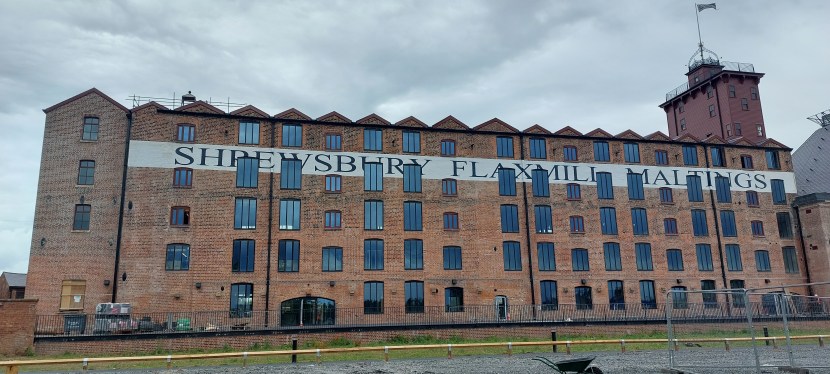
Ditherington Flax Mill: Spinning Mill, Shrewsbury, LB I, 1270576
Barnsley Museums and Barnsley Council have launched their new vision for the historic Elsecar Ironworks site, including the re-establishment of a heritage railway and much more. They would like to thank everyone who has shared ideas and thoughts already about this very special historic site with a proud history, which is now a Scheduled Ancient Monument, thanks to our Heritage Action Zone Partnership with Historic England.
The future vision for the former ironworks includes:
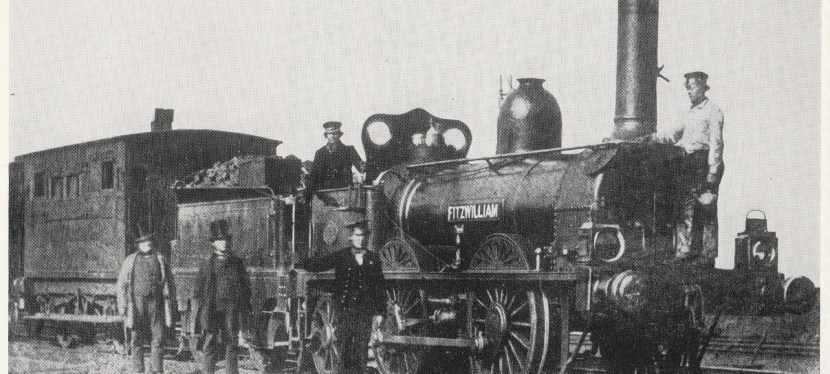
New heritage railway destination, including a reconstructed 1849 Fitzwilliam locomotive, powered by sustainable fuels
New rail college and rail technology test track, training more than 400 students each year
Advanced engineering workshops showcasing the region’s innovation
New ‘Cultural Canteen’ and outdoor events and performance area, against the spectacular backdrop of the ironworks furnaces and restored blast wall
Active Travel Hub and Cycle Hire, to enable families and visitors to travel to Elsecar, and explore the Elsecar Valley, on foot and by bike
Barnsley Museums and Barnsley Council look forward to inviting everyone, starting with local residents, to special events, activities and tours in the New Year to discuss how this vision could be taken forward. It will take time to make the new development a reality and to secure funding to make it happen, but they are confident of being able to do so, and all the positive benefits it will mean for our region.
The proposed development is in addition to works due to start in Spring 2024 to The New Yard and The Ironworks events building, for which funding has already been secured from the Cultural Development Fund.
For more information, to watch a film about these proposals, and read a vision document and frequently-asked questions, please see: www.elsecar-heritage.com/forging-ahead
13 tops of cast-iron beam in motion, Claymills Pumping Station, October 2023. Image courtesy of Catherine Nevell.
On Saturday 28th October 2023 I was privileged to be invited to help celebrate 30 years of conservation at Claymills Pumping Station. Claymills is a Victorian pumping station on the northern side of Burton-upon-Trent designed to pump effluent from the brewery industry in the town. Burton was the largest brewing centre in Victorian Britain, and the brewing processes generated a huge quantity of foul smelling, high temperature, sulphate rich effluent which also contained a lot of suspended matter. This was all discharged into local brooks and streams around the town. These became open sewers, until eventually the crude sewage ran into the River Trent at an outfall at Wallsitch. Claymills was was designed to pump this brewery effluent to a the sewage farm at nearby Egginton, built in the 1866.
The IHSO, Mike Nevell (centre with blue scarf), attempting the help start of the beam engines. Image courtesy of Catherine Nevell.
Claymills Pumping Station was built in the period 1884-86 to designs by James Mansergh, consulting engineer to Burton-upon-Trent Municipal Borough Council, with George Hodges of Burton-upon-Trent as the main contractor. It became operational in 1886, and continued to pump the sewage up to the farm until 1969, when the current treatment works was commissioned. The beam engines were then used to pump sludge to the farm until electric pumps were installed in 1971. Abandoned, but with all its machinery intact, by the the mid-1980s the site faced demolition. However, it was listed as a grade II* building in 1986 due to the completeness of the buildings and the machinery on the site. Thereafter, interest in saving the complex grew and in September 1993 The Claymills Pumping Engines Trust was formed. This has been entirely volunteer-run since its foundation.
The main pumping plant consists of four Woolf compound, rotative, bean pumping engines. These are arranged in mirror image pairs, in two separate engine houses, with a central boiler house (containing five Lancashire boilers) and chimney. The engines were built in 1885 by Gimson & Co of Leicester and represent the final technical development of the beam engine. All the engines are similar and typically have a high-pressure cylinder with a 24-inch bore by 6-foot stroke, and the low-pressure cylinder is 38-inch bore by 8-foot stroke. Steam is distributed by means of double beat ‘Cornish’ valves, mounted in upper and lower valve chests. The cylinders act on one end of the beam, via a parallel motion. The beams, which are rivetted together and hollow to reduce weight, are 26 feet 4 inches between end centres, 4 feet deep at the centre, and each weigh around 13 and are carried on 12-inch-diameter (300 mm) bearings.
The Trust has spent its first 30 years restoring the workshop, engine houses, chimney, boilers, and steam engines. 2023 marks the return to work of all four original beam engines. Thus, the highlight of the celebrations was the running of these four beam engines, steaming all at the same time. This included the recently restored engine A, which I got to help to start! The steam and heat in the engines houses were not surprising, but the quietness of the engine movements was a surprise, the beams whispering as they rose and fell as a rapid rate.
Although the site is now fully functioning the Trust have further plans to expanded their operations and to develop their visitor and learning facilities.
Guidance on Reinforced Autoclaved Aerated Concrete (RAAC) has been published by several organisations in the last month. The most relevant to Industrial Heritage Network members at the moment is that provided by the 20th Century Society.
AAC is the acronym for “autoclave aerated concrete”, first developed in the 1920s, RAAC, is AAC with added steel reinforcement-hence the “R” at the front. AAC is a special form of pre-cast concrete, that is concrete made in a factory, rather than cast on site. By aerating the mix to provide a bubbly structure, which has been accurately compared to an Aero chocolate bar, the overall weight of the concrete is hugely reduced. The aeration is caused by a chemical reaction initiated when water is added to the mix. Poor initial construction and a lack of maintenance appear to be the main problems, at the moment, leading to the potential collapse of structures using such concrete.
Since most Industrial Heritage sites preserved and open to the public in England pre-date the widespread use of this type of concrete (1920s to 1990s) its unlikely to be found in many industrial structures on display or in use. However, buildings added to industrial heritages as part of their conversion to visitor attractions in the later 20th century (such as interpretation centres or stores) might be affected.
Icon, the Institute of Conservation, has received funding from the National Lottery Heritage Fund, Heritage Innovation Fund programme to develop interventions which will support the development of skills in the workforce working to protect and preserve industrial heritage collections in the UK.
As part of this project Icon is running a survey to develop their understanding of the nature of industrial heritage collections which are held, who is caring for these collections, and specific workforce skills needs. Please take the time to fill in the survey – respondents will be entered into a prize draw to win a £50 voucher to attend an Icon Skills professional development event.
A new visitor centre has been opened at Masson Mills. Part of the mills complex, which sits within the Derwent Valley World Heritage Site, was previously occupied by a retail village which was forced to shut at the start of the pandemic in 2020 and never recovered. However, the textile museum remained open for tour bookings. The mills were bought by the Derwent Hydro group of companies, a business owned by the Needle family which has operated hydropower stations since the 1980s, in 2022.
The new visitor centre, which was once the manager’s officers, is accessible at the front, roadside, of the building and has an array of historic mill-related artefacts, photographs, and equipment, and is open Monday to Friday, 11am to 4pm. Guided tours of the mill and its working machinery are now available every weekday at 2pm. Visitors are encouraged to book in advance to avoid missing out but walk-ins will be possible subject to space.
Jamie Needle, director at Masson Mills and Derwent Hydro, said: “It’s really exciting to be able to welcome people back through the doors to learn more about the history of industry in the World Heritage Site. There is nothing like being able to hear and touch the old machinery to illustrate the realities of early factory working. Our business started with water power and it’s hugely significant to me that factories also began with water power, this museum brings the two together in a fantastically tangible way.”
The new owners are also improving the existing hydropower scheme at the mill, which was installed in 1995. The entire site is supplied with renewable energy produced by its hydroelectric turbines with any surplus fed into the National Grid. The hydroelectricity produced emits no emissions to air, land or water, thereby minimising the carbon footprint of Masson Mills and those visiting the site.
Port Sunlight Village Trust are looking to appoint a Collections Curator. This is a brand-new post and the holder will work with the Heritage Manager to care for, maintain and secure the future of the Port Sunlight Trust collections.
The post-holder will contribute to the exhibition programming of Port Sunlight Museum and the development of the Lyceum Hub as well as making the collections as accessible as possible to all visitors both physically and virtually. Candidates should be creative, people-focussed, an excellent communicator, and passionate about the difference museums and heritage can make to people’s lives.
To apply, please send your CV and a supporting statement of no more than 500 words using the form on PSVT’s website here to recruitment@portsunlightvillage.com by 10am on Monday 7th August.
The Industrial Heritage Support project is conducting research on the current state of stationary steam engines on industrial heritage sites and museums in England. In partnership with Keele University we are looking to establish how many sites in England run stationary steam engines, as op[posed to just static exhibits. We are also gathering data on the costs of maintenance, the types of fuel used to run these engines, and the skills required to keep them running.
Many sites have already been contacted individually to discuss how they run their machinery and this has helped to inform a questionaire which is now being emailed (early August 2023) to more than 30 sites. This research is a follow-up to the recent ‘Industrial Heritage and Climate Change’ seminar the project ran in July, where presentations from Claymills, Crofton Beam Engines, and The Arkwright Society showed how eco-fuels and water power are being used on industrial sites. This research will be published at a later date.
If you haven’t received a questionaire but think that your site could help with this research please email: mike.nevell@ironbridge.org.uk
Horizontal steam engine at Cambridge Technology Museum
















 Industrial Heritage Networks