Welcome to the Industrial Heritage Networks and Support website. This site is maintained and updated by the Ironbridge Gorge Museum Trust who run the project and the networks. We aim to support industrial heritage in England through networking, information exchange, guidance, and training. Please explore the website and please contribute! For more information you can … Read more Welcome to the IHNs website!
The next three in-person meetings of the Industrial Heritage Networks will be taking place on the 26, 27, & 28 July 2023. These will be for the Yorkshire, East of England, and East Midlands Networks. These free events will be the first in-person meetings for these networks, which were set up during the COVID pandemic.
Like the other seven IHN groups in England, these in-person events are designed to bring together those industrial heritage sites open to the public in each region, and local groups and individuals working or volunteering on industrial archaeology and heritage subjects and sites in the area. The format will be a round-table discussion in the morning with a tour of the site in the afternoon.
Details on how to book on Eventbrite can be found here:
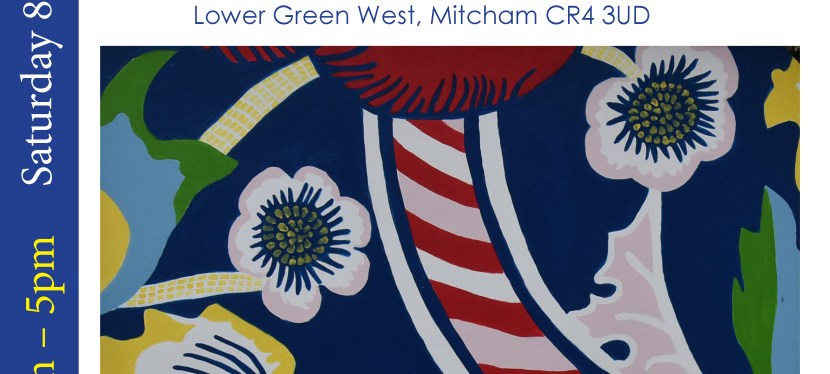
The Wandle Industrial Museum is hosting its third Wandle Arts Festival on Saturday 8th July between 11am and 5pm. Artist will be sharing their work alongside other art forms, photography, a variety of musical acts and environmental and community groups. You are invited to bring your picnic and enjoy a relaxing day of fun on the Lower Green West, Mitcham, Surrey.
The Wandle Arts Festival first took place in 2021 and was the first event to take place in Merton after the relaxing of the restrictions on outside activities and meeting following the pandemic. The museum will be open throughout the day. If you haven’t been before this day is a great time to do so.
Keele University and Ironbridge Gorge Museum Trust have joined forces in a new partnership that will develop student opportunities and open doors for new research into 300 years of industrialisation. To find out more, go online and watch a short video, which includes a few words from Nick Booth, IGMT Collections and Learning Director, and Dr Mike Nevell, Industrial Heritage Support Officer for England.
To coincide with the launch, a roundtable discussion will take place on the evening of Monday 3 July to discuss the lessons that our industrial heritage might hold for the world’s transition to a zero-carbon economy. It will be chaired by Professor David Amigoni, Professor of Victorian Literature, Director of the Keele Institute for Social Inclusion and a member of Ironbridge Gorge Museum Trusts Collections and Learning Committee; Abbie King, IGMT’s Chief Operating Officer, will be one of the speakers.
To attend the roundtable discussion online use the link below. Please register no later than 4.00pm on the day of the event.
Ironbridge, Innovation, and Imagination: Industrial Memory as Global Challenge Monday 3 July 2023 6.00 – 7.00pm Online only via Microsoft Teams
Heritage Open Days has released their events directory for the 2023 festival that will take place from 8-17 September. The events directory will enable interested individuals to search for events nearby during the festival, with more to be added in the run-up to it. In 2022 there were over 100 industrial heritage and archaeology sites open to the public.
2023 industrial heritage sites open to the public include the Armley Mills in Leeds, Finch Foundry in Devon, Forge Mill Needle Museum in Redditch, the 1900 cable station at Cuckmere Haven in Sussex, Quarry Bank Mill in Cheshire, Somerset brick & Tile Museum, Torr Vale Mill in Derbyshire, Thwaite Watermill in Leeds, Wheatley Windmill in Oxfordshire and many more.
After the success of the recent Friends of Bennerley Viaduct open day event, the Friends are hosting two more big events for the public this summer under the Iron Giant.
Nature Day at Bennerley Viaduct. 29th July 11am-3pmFamily fun exploring the amazing new paths and habitats created underneath Bennerley Viaduct. Fun science and nature themed activities. Ranger skills, wood art workshops and bug hunt. For further details email: info@bennerleyviaduct.org.uk
Family Fun Cycling Day at Bennerley Viaduct. 12th August 11am-3pm Join the Friends for a free fun day celebrating cycling. Borrow or bring a bike to try out the skills course or slalom fun zone. Bring your bike to Dr. Bike to get road worthy. Enjoy a fun trail in the nature paths. Browse stalls from local community groups, health and cycling groups and independent retailers. Get in touch if you want are a charity or community group who want a stall by emailing: info@bennerleyviaduct.org.uk
For the first time since 2019 the Industrial Heritage Support project (IHSO) will be holding in-person industrial heritage network meetings this summer and autumn. The first of these will be the IHN West Midlands which is scheduled to take place at Blists Hill, Ironbridge, on Wednesday 31st May, 11am to 3pm. The second will be the IHN South East which is scheduled to take part at Amberley Museum, West Sussex on 1st June, 11am to 3pm.
The meetings are open to Industrial Heritage Networks members and to all those interested in supporting and helping the industrial heritage and industrial archaeology sector in England. Each network meeting will be split into two parts. There will be a business meeting from 11am to 1pm looking at volunteer engagement since COVID, followed by a tour of the Blists Hill and Amberley sites, respectively. Each network meeting is free and tea, coffee, and water will be provided. Please bring your own lunch. To book please follow the links below:
Join the Ironbridge Gorge Museum Trust as they celebrate Blists Hill Victorian Town’s 50th Birthday with a day of entertainment, activities and lots of fun! The theme for the day is a traditional Mop (or Hiring) Fair.
Beginning back in the 14th century, Mop Fairs were an annual opportunity to match workers to employers, especially in rural areas.Farm workers, labourers, servants and craftsmen would congregate in their Sunday best displaying a symbol of their trade, so a farmer might display a piece of straw, housemaids held brooms or mops, hence the name mop fair. In Shropshire, young women employed to collect ironstone from the waste tips of local clay mines, known as Shroppies, often travelled to London to work from May until September during the fruit and vegetable season in order to earn extra money.
On Saturday 1 April, try your hand at different trades and decide which occupation you may have been employed in if you had lived in 1900 such as:
Tile making
Laundry
China Flower Making
Printing
Brick Making
Blacksmithing
Candle Dipping
Throughout the day you will also be able to join in in the parade to mark the departure of the Shroppies and enjoy the music of the Wellington Brass Band. The Town will be dressed for celebration with flags and bunting and the air will be filled with fun and laughter. Visitors will be able to see casting in the Iron Foundry and will have plenty of opportunity to hear about the town’s humble beginnings back in 1973. Activities are included in the admission fee. See: https://www.ironbridge.org.uk/events/
Applications to take part in a unique fully-funded PhD research project to examine the links between art and industry in the West Midlands have opened this week with applications being welcomed from students across the world for the research project which will be based at the Ironbridge Gorge Museum Trust (IGMT) and Birmingham City University.
The Arts and Humanities Research Council-funded Midland4Cities Collaborative Doctoral Award, is a partnership between Birmingham City University and the Ironbridge Gorge Museum Trust. The project, entitled ‘Common printed things: intersections of art and industry, the Coalbrookdale Collection, 1850–1930’ will use the extensive Coalbrookdale Collection at IGMT to illustrate the development of industrial life in the Midlands and the role of print in the manufacture and sale of the ironware items that made the company a household name the world over.
Highlighting the integral role that the Ironbridge Gorge played in the development of the Industrial Revolution, the successful applicant will have unique access to hundreds of historic documents, artefacts and business ledgers still housed in the Trusts archive at the Coalbrookdale Company’s original headquarters in Coalbrookdale.
The project will merge methods used by both printing and social historians to study not only the materials themselves but processes required to produce them as well as the craftspeople who made them to better understand the relationship between the manufacturer, the artefacts, the catalogues and the consumer.
Working with experts at sites across the Ironbridge Gorge over the course of 4 years the successful applicant will study and audit 40 original printed catalogues, the physical ironware products advertised within them, as well as over 1,000 wood engravings used to print the promotional materials in order to build a clearer picture of how they were produced.
Project supervisor Nick Booth, Collections and Learning Director at the Ironbridge Gorge Museum Trust said: “Coalbrookdale and the extensive collection that is housed there offers a truly unique chance to delve into what is such an important part of our history, not only on a regional scale but a global one. The developments that happened within the Ironbridge Gorge and Coalbrookdale specifically were truly world changing and this research project offers the opportunity to unpick another integral piece of the puzzle to help us better understand the important role that print had in the wider industrial story.
“With ten sites across the Ironbridge Gorge, including Blists Hill Victorian Town which houses working facilities including our Victorian print shop, it means that as well as the academic side of the project, the researcher will be able to gain hands-on experience of the processes used during the period under realistic, historically accurate circumstances.”
The Award will be jointly supervised by Professor Caroline Archer-Parré, Co-Director of the Centre for Printing History and Culture (CPHC) at Birmingham City University who added: “This is a rare opportunity to research the materials and processes used to create the printed catalogues in the location in which they were originally manufactured, and to provide new insights into how the various industries involved in their creation interacted and collaborated.”
Strutts North Mill, Belper, Derbyshire, which will be open for tours during Heritage Open Days 2022.
It has been confirmed that the 2022 version of Heritage Open Days will run as planned, from the 9th to the 18th of September, despite the Queen’s death on the 8th September. Hundreds of industrial heritage and archaeology sites run by local groups and communities feature on the list of venues open for free to the public.
The theme of ‘Astounding Inventions’ has helped to more than double the number of industrial heritage sites accessible this year, up from 113 in 2021 to 239 in 2022. There were no in-person events in 2020 due to the COVID pandemic. The largest group of industrial sites opening relate to transport, with 70 historic aircraft, canal, railway, and road sites available to explore. This includes small scale sites such as the Union Bridge and Warmley Signal Box, as well as many Heritage Railways and transport museums such as Locomotion, in Durham and the Greater Manchester Transport Museum.
The largest category of industrial sites to open their doors remains wind and watermills, as it was in 2021, with 51 sites. Larger industrial museums with entry charges are also offering free events, from the Ironbridge Gorge Museum Trust to the National Trust properties such as Quarry Bank Textile Mill. There are also private working or small heritage sites accessible, that are seldom open to the public, such as G H Hurt & Son’s Shawl Factory in Nottingham, The Harveys Brewery in Lewes, Sussex, and the RDF radar tower at Harwich in Essex.
For details of where to find venues and their opening times during Britain’s biggest annual heritage festival follow this link: https://www.heritageopendays.org.uk/
Taking place online from 26 July – 04 August 2022, Chance Conversations will explore some of the biggest current topics in industrial heritage, from the different ways it can revive communities, to how old industrial buildings can reveal the global foundations a town is built on. The talks are being hosted by Chance Heritage Trust and DigVentures as part of #MadeinSmethwick – a programme of public events inspired by stories from Chance Brothers glassworks in Smethwick, and the continuing mission to give this disused industrial building a new lease of life within its surrounding community.
Panellists include Simon Briercliffe (University of Birmingham), Lizey Thompson (Canal and River Trust), Graham Worton (Black Country UNESCO Global Geopark coordinator), Mary Lewis (Heritage Crafts Association), Malcolm Dick (University of Birmingham), Marianne Monro (Chance Heritage Trust), and many more. Each panel discussion will include a live Q&A.
You can see the whole series and join in the discussion by registering for FREE at:
Chance Conversations: The Future of Industrial Heritage Hosted by Chance Heritage Trust and DigVentures as part of #MadeinSmethwick
Global Smethwick: The history of a town in 10 buildings
Tue 26 July 2022, 6pm BST (via Zoom, recording available)
Smethwick isn’t just any old town: from the Red Cow pub to Marshall Street’s Malcolm X plaque and Guru Nanak Gurudwara, it has been built by people from all over the world. Our panel will discuss how the buildings you walk past every day can reveal the foundations of a town, and the global history it is built on.
Art of the Industrial Revolution and the Future of Heritage Crafts
Wed 27 July 2022, 6pm BST (via Zoom, recording available)
During the industrial revolution, artists created murals and paintings showing the skill and craft of its workers, like the dancer-like glassblowers painted by Mervyn Peake inside Chance Glassworks. What can we learn from images like this? And what’s being done to save the skills they depict today? Our panel will discuss the art of the industrial revolution, and introduce some of the people trying to save heritage crafts today.
Revival to Reuse: Can industrial heritage save us?
Tue 02 August 2022, 6pm BST (via Zoom, recording available)
Why is industrial heritage so popular right now? And can its ruins be used to heal some of the wounds created by the human and environmental impact of industrialisation? From museums to canals and even geoparks, our panel will discuss how industrial heritage can encourage revival, reuse, and renewal within our communities, particularly in the Black Country.
Working Class Life: From Industrial Revolution to the Future
Wed 03 August 2022, 6pm BST (via Zoom, recording available)
Working life has changed in so many ways over the last few hundred years, for men, women, children, and families – not just in the UK, but around the world. Our panel will discuss the history of work and working-class life, how it has changed (and how it hasn’t) from the industrial revolution to the present day, and even where we might possibly go from here…
Thu 04 Aug 2022, 4pm BST (Brasshouse Community Centre, Smethwick)
How do you bring an old industrial building back into use? And how do you make sure it contributes to community life? Our panel will discuss the journey, from the different options available and how to get started, to what can be learned along the way – all while hearing about Chance Heritage Trust’s ongoing plans to bring the former Chance Brothers Glassworks back into use in Smethwick.