Welcome to the Industrial Heritage Networks and Support website. This site is maintained and updated by the Ironbridge Gorge Museum Trust who run the project and the networks. We aim to support industrial heritage in England through networking, information exchange, guidance, and training. Please explore the website and please contribute! For more information you can … Read more Welcome to the IHNs website!
New research from Historic Englandshows that the average individual benefit of cultural heritage near individual residences to be £515, with a collective WELLBY (Wellbeing Adjusted Life Year) value of £29 billion across England. This research demonstrates that the very presence of nearby historic places benefits residents’ quality of life, whether or not they participate in heritage activities.
The research investigated the impacts of different types of heritage, including listed buildings (Grade I, Grade II* and Grade II buildings), scheduled monuments, protected wrecks, registered parks and gardens, battlefields and world heritage sites. The findings reveal a statistically significant, positive, relationship between the density of local heritage assets and self-reported life satisfaction, after adjusting for various socio-economic, neighbourhood and regional effects. The analysis also demonstrates that Grade II listed buildings, which represent 92% of England’s historic places on the National Heritage List for England, are the main drivers of life satisfaction increases.
The report concludes that these findings highlight the intrinsic value of cultural heritage in contributing to societal wellbeing, and provide a compelling argument for its preservation and integration into society development and wellbeing strategies.
Join textile artist and London National Park City Ranger Elly for a walk along South London’s River Wandle. The Wandle was a heavily industrialised river in the 18th and 19th centuries and was declared “dead” in the 1960s. It has been restored to life over the last 50 years and is now a beautiful chalk stream habitat and home to a wide variety of wildlife.
Travel back in time as you travel along the Wandle Trail and find out about the Wandle’s rich history as a site of textile production, and how this history is a microcosm of the global textile industry today. Learn about the challenges that the Wandle faces from single use plastic pollution and wastewater discharges, and how local activists have been working to improve this environment for years. The walk will take you from restored chalk stream to culverted urban river, from new housing developments to National Trust gardens, from modern industry to the repurposed buildings of the Liberty Print Works.
Start at 11am at Hackbridge Community Gardens, Nightingale Road, Carshalton SM5 2EN. Nearest station: Hackbridge (Southern, Thameslink)
Finish 1pm at Merton Abbey Mills, Watermill Way, London SM19 2RD. Nearest Station: Colliers Wood (Northern Line)
Access: this walk is over flat terrain, and most of the footpaths have hard surfaces. There are some sections that haven’t been surfaced and these can become muddy in wet weather so please wear appropriate footwear. There are toilets at the LIDL opposite Hackbridge station, at Morden Hall Park and Merton Abbey Mills.
Historic England and Civic Voice are collaborating in the launch of a survey to understand the impact of different local plaque schemes across England and the organisations behind them. As Historic England receives nominations from the public as a part of a new blue plaque scheme, they are seeking views from civic organisations on how to set up and develop them. You can fill out the Blue Plaques survey here
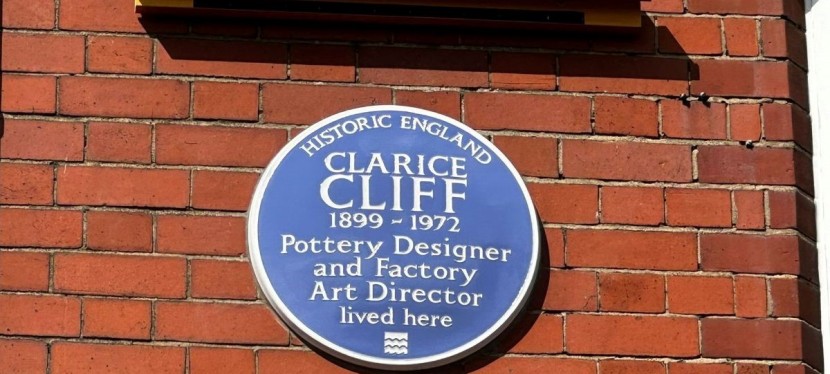
This survey comes as Historic England (HE) runs a new national blue plaque scheme on behalf of the Department for Culture, Media and Sport (DCMS). This summer, from mid-May to mid-July, you can submit your own nominations for a blue plaque. There will be advice on what HE are looking for in the nomination process, an online application form, and details on how it will be decided who gets a plaque. The unveiling of Historic England’s latest blue plaque, in April, to Clarice Cliff celebrated her enduring influence on the world of pottery. Born 125 years ago, Cliff’s journey from a young apprentice to a globally renowned ceramic artist is a testament to her talent and innovation. Her vibrant and unconventional “Bizarre-ware” designs captured the imagination of buyers worldwide, earning her a place among the most influential ceramic artists of the 20th century.
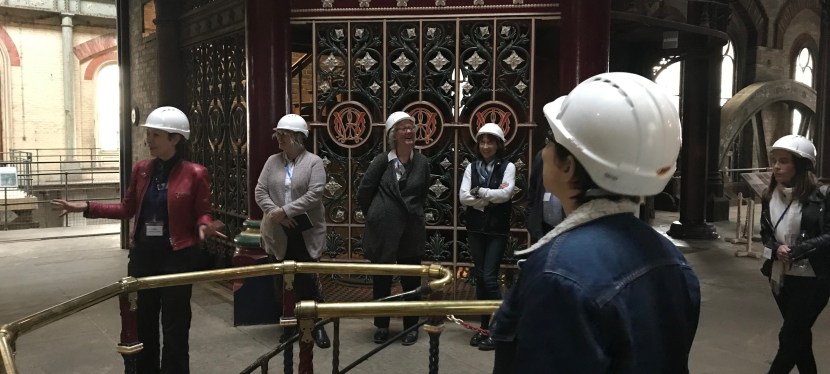
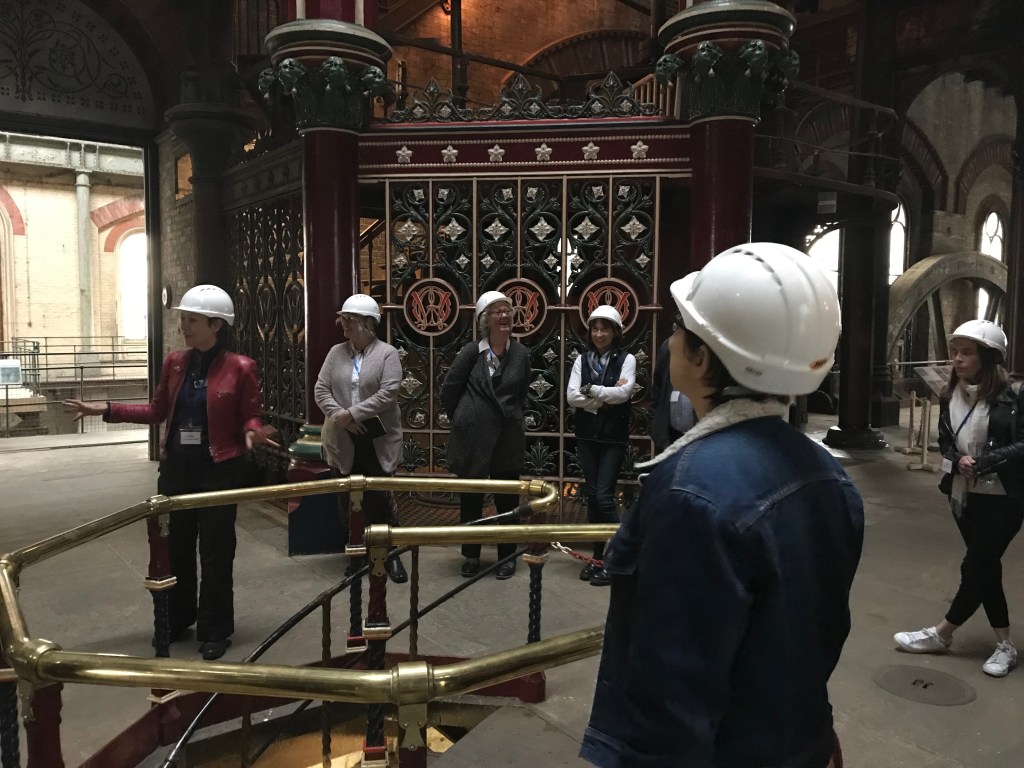
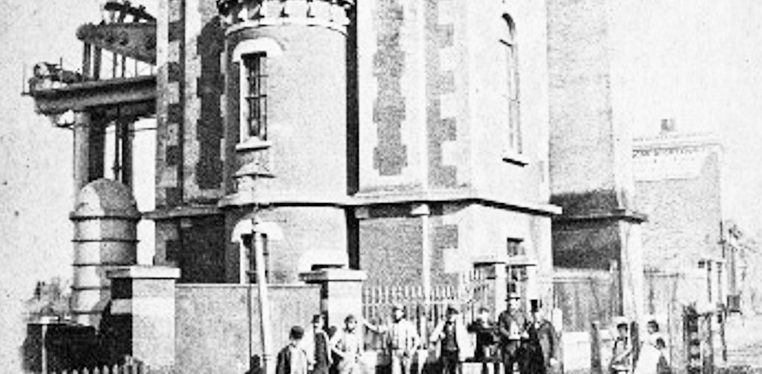
The May talk from the Greenwich Industrial History Society covers how Victorian engineers helped to solve the sanitary crisis in the nineteenth century, with a special focus on south-east London – the picture shows Charlton pumping station. The speaker is James Douet, an industrial archaeologist who was once with English Heritage listing division. Since 1996 he has been an exhibition curator based in Barcelona. He will he talking to GIHS via Zoom from Barcelona on Tuesday 14 May, starting at 19:15 for 19:30 UK time.
For details of how to register for your free place to see and hear James follow the instructions below. The free talk is open to members of Greenwich Industrial History Society and anyone else who is interested in the industrial history of our area. For this talk James will draw on his recent Historic England publication, The Architecture of Steam, published by Liverpool University Press, to reveal how sanitary engineers and steam engine builders worked out the technical and architectural solutions to the Victorian sanitary crisis. He shows how steam pumping stations were critical to pulling British cities back from the devastating living conditions caused by industrialisation, with pioneering developments in water supply and sewage disposal made in south London.
How to reserve your FREE place
· This free talk will be by Zoom only in the evening of Tuesday 14 May, starting at 19:15 for 19:30 UK time.
· You must book your free slot by sending an email to greenwichindustrial@gmail.com with the subject line “GIHS talk on 14 May” before 19:00 UK time on Tuesday 14 May.
· GIHS will send you Zoom log-in details before the talk starts. (Don’t chase us; we have to wait until we have all the registrations.)
GIHS will record the meeting and plan to put the recording on their YouTube channel (https://www.youtube.com/@GreenwichIndustrialHistorySoc) – though this might take a few weeks. You can already see some of their other talks here, dating back to 2020.
The Ironbridge Gorge Museum Trust and Heritage Innovation are undertaking a survey of the c.600 publicly accessible and protected industrial heritage sites in England. The ‘Designated Industrial Heritage Sites Open to the Public in England Project’ 2024 Survey is now live. It is open to all publically accessible Industrial Heritage Sites in England and the deadline is 10th May.
Funded by Historic England, the 2024 survey will gather data on these sites which can be compared with the earlier reports. The main focus will be visitor numbers, conservation and maintenance, funding models, and community engagement. The survey will also consider how sites are responding to the challenges of Covid-19, the cost-of-living crisis and climate change. Any parties who receive an invitation to complete the survey are urged to do so where possible, as this will help to build a truer picture of the experience of sites and people and can inform the subsequent management recommendations.
The survey deadline is 10th May. We want to hear from you – so if you haven’t received a link to the survey and wish to participate, please check your junk folder or email IHSO@ironbridge.org.uk for a direct link.
The Wandle Industrial Museum is organising an Industrial Heritage walk on 19th April 2024. The event is free and starts at 11am, meeting at Collliers Wood Station, and finishing around noon.
The walk will take in Miller’s Mead, Wandle Park, Merton Mill which was converted to flats having previously housed a flour mill, and then Connolly’s leather works, a housing estate where a calico printing works. The walk will then head to where Paxton’s patent leather factory once stood, Wandle Bank, William Morris’s works, and end at Merton Abbey Mills, where refreshments will be available in the former Liberty textile printing buildings.
Although the walk is free any donations to the Wandle Industrial Museum are most welcome. To book email: john.sheridan08@gmail.com
Historic England’s Everyday Heritage Grant programme aims to shine a light on the diversity of heritage and is part of Historic England’s commitment to ensuring that a wider range of people are able to connect with, enjoy and benefit from the historic environment. Building on the success of Historic England’s first round of Everyday Heritage Grants in 2022, they are funding an additional 56 projects that celebrate working class histories and the historic places that make up everyday life.
The grants are for creative projects that focus on heritage connecting people to historic places, specifically those people and places that are overlooked or underrepresented. The community-led projects will explore the diverse stories of people and places, such as homelessness in Waterloo, a pen factory in Newhaven, and roller-skating in Birmingham. The total amount of funding awarded by Historic England is £875,000, ranging from £6,800 to £25,000 per individual project.
Booking is now open for a major conference at Ironbridge looking at the life, work, and legacy of L T C Rolt on the 10th May 2024. L T C Rolt, also known as Tom, was a renowned practical engineer and prolific author who wrote books and articles on industrial history, canals, railways, and cars as well as fiction. Rolt was an early supporter of the work of the Ironbridge Gorge Museum Trust and is regarded as one of the founders of the 20th century waterways and railway preservation movements. He was also involved in helping to establish the Association for Industrial Archaeology.
To mark the 50th anniversary of his death, Ironbridge Gorge Museum Trust has partnered with academics from Keele University to host a conference on Friday 10th May which will celebrate his life and the continuing legacy of his work. There will also be conference-related events on the 9th and 11th May.
World Heritage UK, in conjunction with Bangor University, is delighted to be hosting the 2024 World Heritage workshop on the 10th and 11th April 2024. The workshop will explore aspects of Industrial World Heritage as well as broader topics that will be of interest to all World Heritage and heritage professionals.
The two-day workshop will cover topics such as regeneration, events, tourism, STEM, intangible heritage, slavery and more. Included are afternoon guided site visits to Dinorwig Quarry, the National Slate Museum, Penrhyn Castle and Quarry and the Slate Landscape of NW Wales WHS, refreshments and buffet lunches. There is a social event on Wednesday evening with local food and live local music. Tickets for this social night are sold separately.
In-person workshop tickets are £100 for National Trust members, £115 for non-National Trust members and £75 for digital tickets. The social night is £30 pp. Sadly there is no wheelchair access to the social night.
There you’ll also find details on how to get to Bangor, and suggestions on where to stay, including discounted accommodation at the university’s management centre.
The Working Industrial & Mobile Heritage (WIMH) platform is being developed by umbrella organisations from throughout the industrial and mobile heritage sector in Europe. The European Route of Industrial Heritage (ERIH) is one of the partners in this project. The group is appealing to ERIH members and other industrial heritage sites in the UK for help in collecting evidence to protect a hugely important element of our industrial museums across Europe – their heritage in operation.Other partners currently include: TICCIH – The International Committee for Conservation of the Industrial Heritage; FEDECRAIL – Federation of European Museum & Tourist Railways; FIVA – Federation Internationale des Vehicules Anciens; and the Europa Nostra Industrial & Engineering Heritage Committee.
The working industrial and mobile heritage sector embraces historic machinery at industrial heritage sites and museums, railways, steam ships, road vehicles, and aviation. These all constitute a “social testimony” which ensures that the essential “know how” for the operation of steam powered machinery and combustion engines should not be lost for future generations. Cultural heritage enriches the lives of people and plays a role in enhancing Europe’s social capital. Our sector is also an important resource for economic growth, employment and social cohesion. Working industrial and mobile heritage depends on the continued and limited availability of fossil fuels, like coal and oil-based derivatives. Such fuels remain necessary for the dynamics of heritage machines and vehicles.
As set out in in the 2014 document “Towards an Integrated Approach to Cultural Heritage for Europe”, the European Union is committed to promoting industrial heritage. Our sector is currently facing certain challenges, such as reliance on a limited availability of fossil fuels. The European Union, and other national governments such as the UK throughout Europe, need to take a balanced approach to the almost negligible environmental impact of limited fossil fuel usage by the sector and the legitimate objective of preserving this heritage. For example, assisted also by retaining a continued source of suitable coal at a location within Europe.
A key task of the WIMH partnership is to try to gather as much data as possible of the current annual consumption of our sector, especially of coal but also historic oil based fuels. Considerable efforts have already been made in particular by the railway heritage sector in several countries, including the UK, and research is being undertaken by the historic road transport sector.
Who should respond?
Working from this foundation, the next steps are to build up a picture of at least approximate fossil fuel usage from the industrial heritage sector. This survey is for museums and heritage sites for whom fossil fuel power is needed for continued operation of pumps and industrial machines which form such an important part of the interpretation to the public at our sites. Not only coal-fired boilers and equipment, but also other machinery which operate with petrol, diesel, or other traditional oil based fuels. Follow this link to fill in the survey: