Railway 200: Celebrating the Birth of the Modern Railway in 2025

2025 marks the bi-centenary of the opening of the Stockton & Darlington Railway in 1825 connecting places, people, communities, and ideas, and ultimately transforming the world. To celeberate the birth of the modern railway, three councils, Darlington, Durham, Stockton-on-Tees, and Tees Valley Combined Authority, have joined forces with a range of local, national, and international partners, to deliver a nine month festival of internationally significant projects throughout the bicentenary year.

The ‘Railway 200’ events are designed to showcase how the railway shaped and continues to shape national life, as well as inspiring a new generation of young pioneering talent to choose a career in rail. Events across the year will build to the main celebration on the 27th September, the 200th anniversary of the opening of the Stockton & Darlington Railway.

A Global ‘whistle-up’ on New Year’s Day 2025, with more than 50 hetritage railwys blowign the ihsiltew son their engiens at the same moment, signalled the start of rail’s 200th anniversary. From January to September a wide variety of activities and events are planned to celebrate rail’s remarkable past, its role today, and its importance to a sustainable future.

For more details on these events follow this link: https://railway200.co.uk/ 

West Somerset Railway Begin Moving Their Rolling Stock to Newly Purchased Engineering Shed

In February 2024, the West Somerset Railway Heritage Trust completed the purchase of the shed at track at Washford from the Somerset and Dorset Railway Trust and agreed a new 10 year lease of the site with the West Somerset Railway PLC. Since then, work has been continuing to bring all the heritage stock owned by the Trust to the Washford site, which is now the base for all the Trust’s restoration activities.

The planned move of the three carriages previously stored at Dunster sidings to Washford was successfully completed on Monday 9 September by a WSR PLC specialist team, while the railway was closed to passenger traffic. Carriages 5131, 7740 and 2578 have been located in a siding near Dunster station for many years awaiting restoration, leaving them exposed to the sea air despite being covered with tarpaulin covers. Coastal storms have periodically caused further deterioration to the carriages. 

Given the poor condition of the carriages, a comprehensive risk assessment was prepared in advance of the move. This included a 3 meter hard hat exclusion zone around the move, and even a camera wired up to one of the shunters, pointing underneath the carriages to check if anything fell between the tracks during the move.  The whole exercise was professionally executed by the PLC team, using two top and tail shunters, without incident. 

The following day, the Trust’s horse box was brought by road from its previous location at Bishops Lydeard. During the First World War, horses and mules were used extensively by the British army – nearly one million by 1918 – and were transported by rail, and it is believed that this is the only one horse box of the era to survive. It was built for the LNWR and found on a farm at Pershore. Following the move to Washford, restoration of the horse box will be completed.

The Washford Engineerign Shed was open to visitors on 14tth & 15th September, as part of the Heritage Open Days and the WSR 1940s weekend.

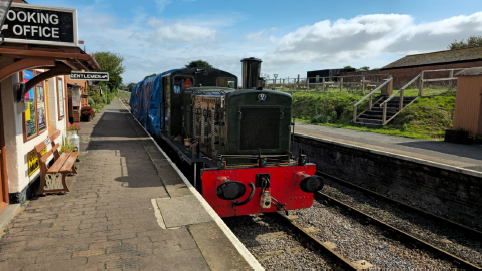
Carriage 7740 on the move at Blue Anchor platform. Copyright WSRHT.

Nene Valley Railway Launch ‘Back on Track’ Fund Raising Appeal to Secure Future

Image courtesy of the Nene Valley Railway.

The Nene Valley Railway has launched a fundraising campaign aimed at securing £300,000 to keep the railway running as a result of significant financial challenges. The current economic climate has placed immense strain on the railway’s finances, with reduced visitor numbers across the heritage sector and mounting running and maintenance costs. This has left the Nene Valley Railway facing unprecedented financial pressure.

Without immediate financial support there is a real risk that this popular heritage railway and working museum could face closure. Originally built by the London and Birmingham Railway in 1847, between 1900 and 1966 the line formed an important connection between Norwich, Cambridge and the Midlands. It closed to passengers in 1966 and to freight in 1972. This section was bought by Peterborough Development Corporation in 1974, and in 1977 the Nene Valley Railway was opened, and now runs for 7.5 miles through the north Cambridgeshire countryside. The heritage railway owns a variety of steam and diesel locomotives, historic carriages, and wagons. For more details visit their website: https://nvr.org.uk/

Follow this link to the fund raising page: https://www.gofundme.com/f/nene-valley-railway-raise-ps300000-to-keep-them-on-track

Rewley Road Swing Bridge Restoration Recognised

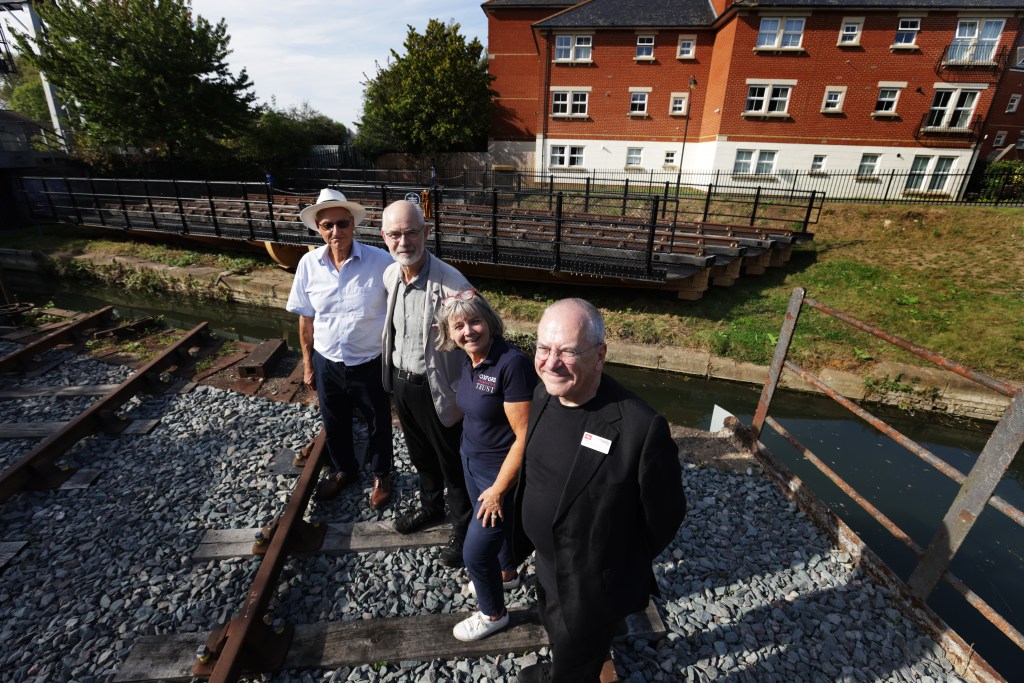
Tom Hassall (OPT Vice-President), Andy Savage, Debbie Dance, and Baron Hendy of Richmond Hill (Chair of Network Rail) at the opening ceremony for the newly restored Rewley Road Swing Bridge, in September. Image courtesy of Oxford Preservation Trust.

The Oxford Preservation Trust is celebrating receiving a National Railway Trust Award for its restoration of the Rewley Road Swing Bridge. A plaque commemorating the work of many individuals in saving and restoring the bridge was unveiled on 7 September 2023.

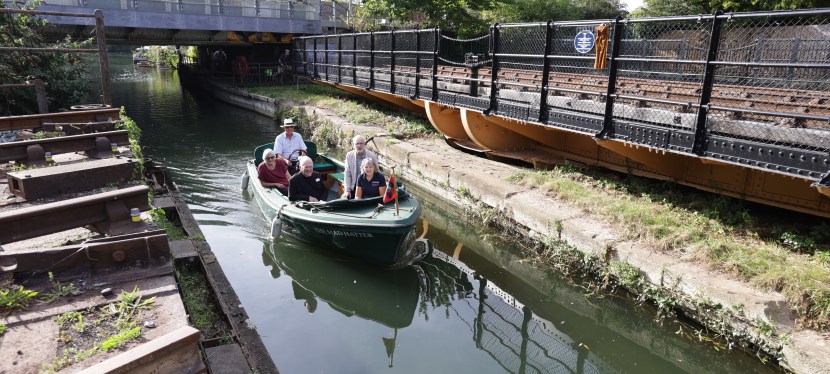
Debbie Dance, Director of OPT was joined by Andy Savage and Tim Hedley Jones from the Railway Heritage Trust, and representatives of Network Rail and Historic England together with the judges, funders, and the specialist experts all of whom made a significant contribution to the project. And so good was their work that OPT was awarded the top national prize for railway heritage conservation. Later in the day Debbie was also joined by the Baron Hendy of Richmond Hill, Chair of Network Rail taking to the water to see the mechanism from below.

The London Midland and Scottish Railway Swing Bridge is a disused railway bridge over Oxford’s Sheepwash Channel and is one of only two moving bridges on the Thames – the other being Tower Bridge in London. The bridge was designed by engineer Robert Stephenson and built in 1850. A Scheduled Monument, the bridge holds a unique place in the history of England’s first railways, narrow versus wide gauge, and the battle between giants Brunel and Stephenson.

By 1951, it was no longer in use and closed to passenger traffic, and to goods by 1984, which led to its suffering from severe decay of the plating and paintwork which were protecting its surviving parts, including the original mechanism. The bridge had fallen into disrepair and was added to the national Heritage at Risk Register in 2013 where it remained for nearly ten years, until it was removed last year, as the restoration progressed.

“We are so delighted to have been recognised in this way and cannot thank the team enough for their part. The fact that it was recognised at a national level shows the importance of the structure which could have been so easily lost with its significance somewhat lost beneath its rusty exterior” This winter we will make the final touches with interpretation boards to go up and the sowing of a wildflower meadow to increase
biodiversity.” Debbie Dance, OPT Director.

Further details of the work of the OPT can be found here: https://www.oxfordpreservation.org.uk/

Section of Historic Yorkshire Railway Line to be Removed Over Safety

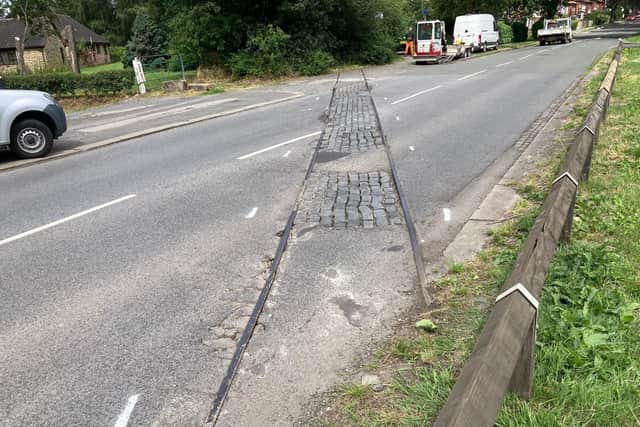
Part of the old ‘Nagger Line’ which runs across Lime Pit Lane, in Stanley, Yorkshire, is to to dug up over road safety fears. The narrowgauge track was part of a network of tramways dating back to the late 1700s that were used to transport coal from the many mines in the area. Matthew Morley, Wakefield Council’s cabinet member for highways, said the line is to be removed as its deteriorating condition is creating a traffic hazard. Residents have expressed concerns on social media over the loss of the much-loved piece of local history.

Councillor Morley added that it is hoped the some of the line can still be retained. The council had the lines independently assessed by civil engineers after receiving complaints of damage to passing cars. A report says the lines are twisted and badly damaged, causing them to move and lift parts of the road.

More details here:

https://www.yorkshirepost.co.uk/heritage-and-retro/heritage/section-of-historic-yorkshire-railway-line-to-be-removed-over-traffic-safety-fears-4208570

Part of the old ‘Nagger Line’ which runs across Lime Pit Lane, in Stanley, due for removal

Free Guided Walking Tour of the Former Ilfracombe Railway

As part of the Festival of Archaeology 2022, Historic England’s Historic Environment Advice Assistant apprentices, and local experts from Combe Rail, are leading a guided walking tour of the former Ilfracombe railway on Monday 8th August. The tour will look at the history and archaeology of the line and how it has evolved, visiting the old station and ending at the local museum.

The Ilfracombe-Barnstaple line was opened in 1874 by the London and South Western Railway. The line closed in 1970, and an attempt to buy the line for preservation in 1975 was unsuccessful. Much of the former trackbed has now been developed as the popular and attractive Tarka Trail cycle path. The tour will follow this path, led by local experts Glyn Pollington and John Burch.

For details on how to book follow this link: https://www.eventbrite.co.uk/e/festival-of-archaeology-2022-a-journey-down-the-old-ilfracombe-railway-tickets-382983021527