Welcome to the Industrial Heritage Networks and Support website. This site is maintained and updated by the Ironbridge Gorge Museum Trust who run the project and the networks. We aim to support industrial heritage in England through networking, information exchange, guidance, and training. Please explore the website and please contribute! For more information you can … Read more Welcome to the IHNs website!
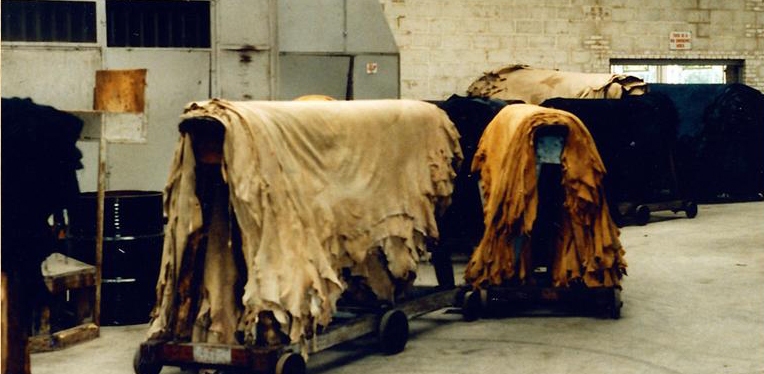
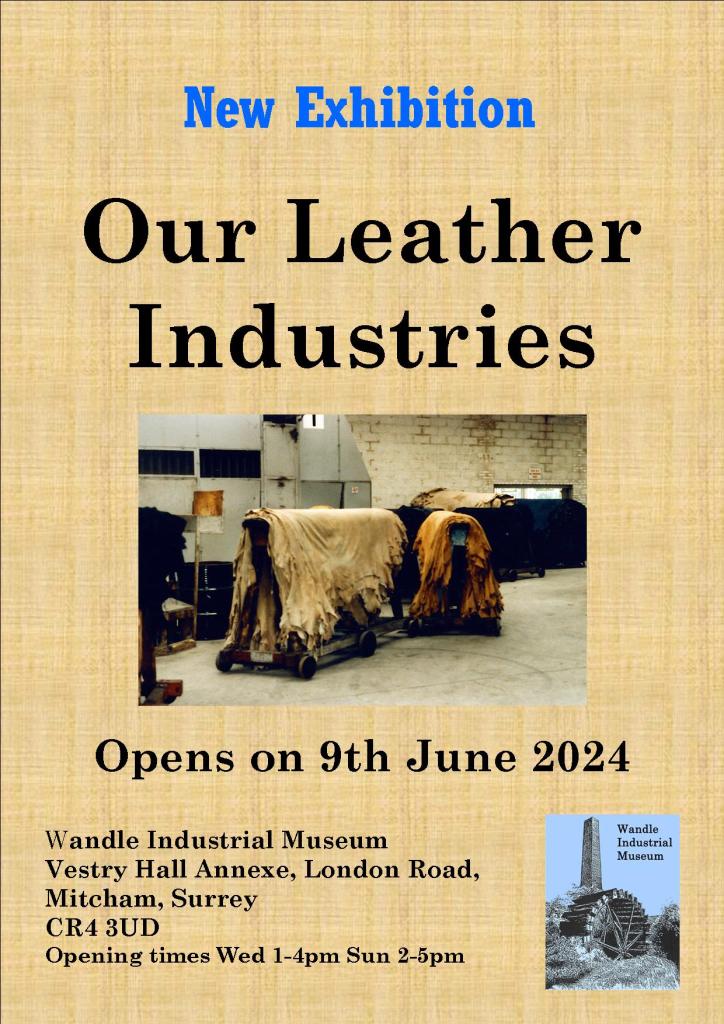
The latest exhibition by the Wandle Industrial Musuem opens on 9th June 2024. ‘Our Leather Industries’ looks at the history of leather making and some of the products produced in the Wandle Valleyin the 19th and 20th centuries.
The exhibition can be found at the Vestry Hall Annexe, London Road, Mitcham, Surrey. Open on Wednesdays, 1-4pm and Sundays 2-5pm, the exhibtion is free to enter.
Historic England’s Everyday Heritage Grant programme aims to shine a light on the diversity of heritage and is part of Historic England’s commitment to ensuring that a wider range of people are able to connect with, enjoy and benefit from the historic environment. Building on the success of Historic England’s first round of Everyday Heritage Grants in 2022, they are funding an additional 56 projects that celebrate working class histories and the historic places that make up everyday life.
The grants are for creative projects that focus on heritage connecting people to historic places, specifically those people and places that are overlooked or underrepresented. The community-led projects will explore the diverse stories of people and places, such as homelessness in Waterloo, a pen factory in Newhaven, and roller-skating in Birmingham. The total amount of funding awarded by Historic England is £875,000, ranging from £6,800 to £25,000 per individual project.
Historic England has added an interactive map to its Historic Gas Industry webpages. The new feature allows researchers to search for manufactured gas sites in England from the 19th and 20th centuries and to view summary details about each site. This new feature expands the resources already available for those wishing to research the local manufacture of gas, which already includes a detailed overview report on the history of the manufactured gas industry in England, a heritage assets guide, and advice on recording such sites.
The new interactive map shows the location of hundreds of sites including listed gasworks buildings and gasholders, non-designated surviving gasworks buildings and gasholders, possible surviving structures related to the industry, sites with only below ground evidence, and sites only known from map evidence. The map also has links to the relevant Aerofilms Collection of aerial photographs where these show these gas industry sites, a database which is held by Historic England.
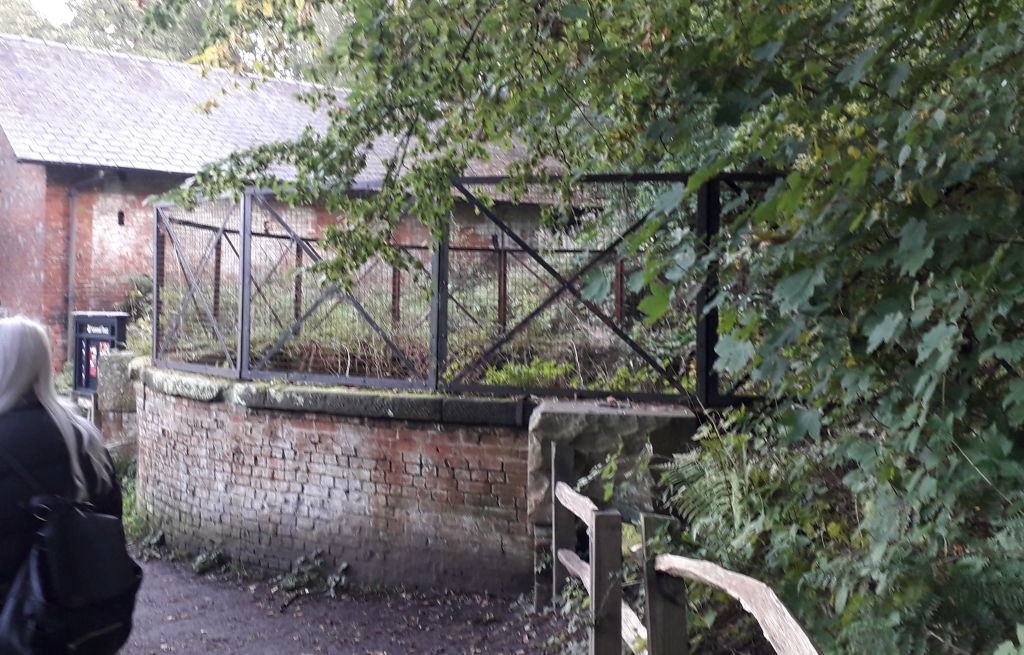
The base of the the 1864-5 gasholder at Quarry Bank Mill, Cheshire. Gas manufacture on the site ceased in 1904, but the gasholder was retained for several years thereafter to cope with periods of peak demand. Image copyright: Dr Michael Nevell.
Calling all family, social, and industrial historians! Together with Bluegrass Research, the Science Museum Group invite you to take part in-person in a free research workshop all about the Congruence Engine.
The Congruence Engine project uses the latest digital techniques to connect industrial history collections held in different locations. It aims to create a prototype ‘digital toolbox’ for everyone fascinated by industrial past, to connect items from the nation’s collection to tell the stories about history that they want to tell.
The free research event is being held at the Discovery Museum, Blandford Square, Newcastle- upon-Tyne, NE1 4JA, on Tuesday 13th February 6pm – 9pm. Attendees do not need to have any prior knowledge of the Congruence Engine project to participate, but active participation in event discussions will be required. As a thank you for time and participation, and to cover expenses, all registered attendees will receive £25 after the event.
As event numbers are limited, please register your interest by emailing lydia.neave@bluegrassresearch.co.uk with your phone number and a brief description of your area of historical interest. Following this, your place will be confirmed with a registration email on a first come first served basis.
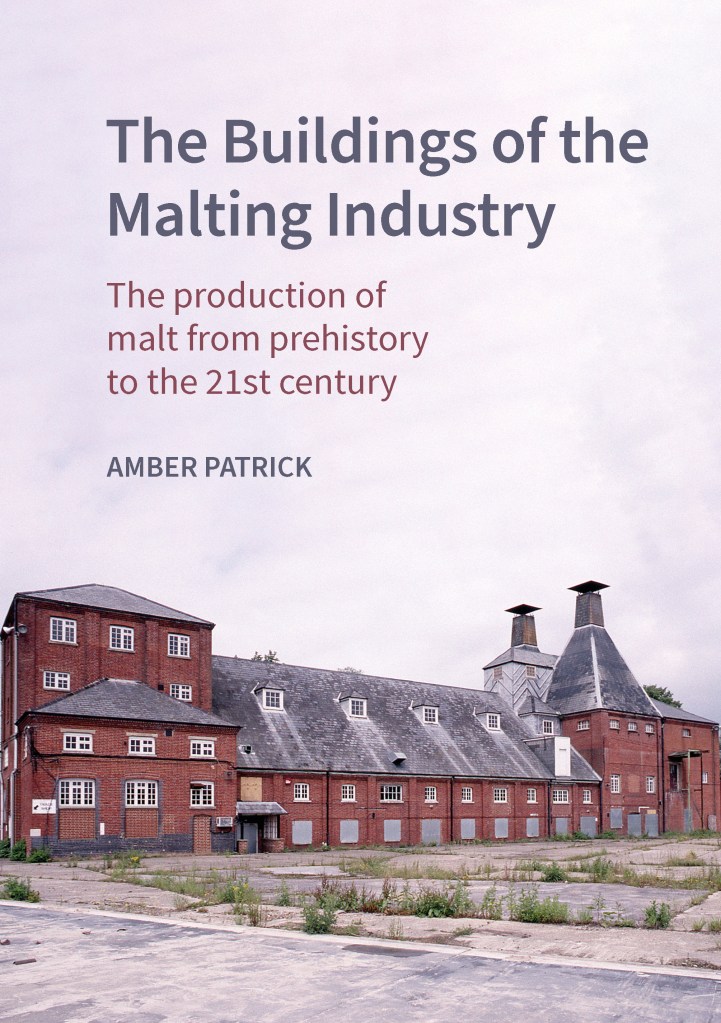
The latest industrial heritage title by Historic England/Liverpool University Press has recently been published: ‘The Buildings of the Malting Industry: The production of malt from prehistory to the 21st century’ by Amber Patrick.
Malt is one of the main ingredients of beer, yet the buildings in which it was and is now produced have received very little attention. Although most towns and many villages had their own malthouse and kiln, this is the first book to address this important building type. Today, evidence for a malthouse may just be a name on a building or street, but where they survive the pyramidal roofs clearly demonstrate the presence of a malthouse as do other less recognisable features. This book shows how they changed over the centuries with accompanying illustrations, including those that have been converted to new uses. Further details can be found here – https://liverpooluniversitypress.co.uk/doi/book/10.3828/9781837644285
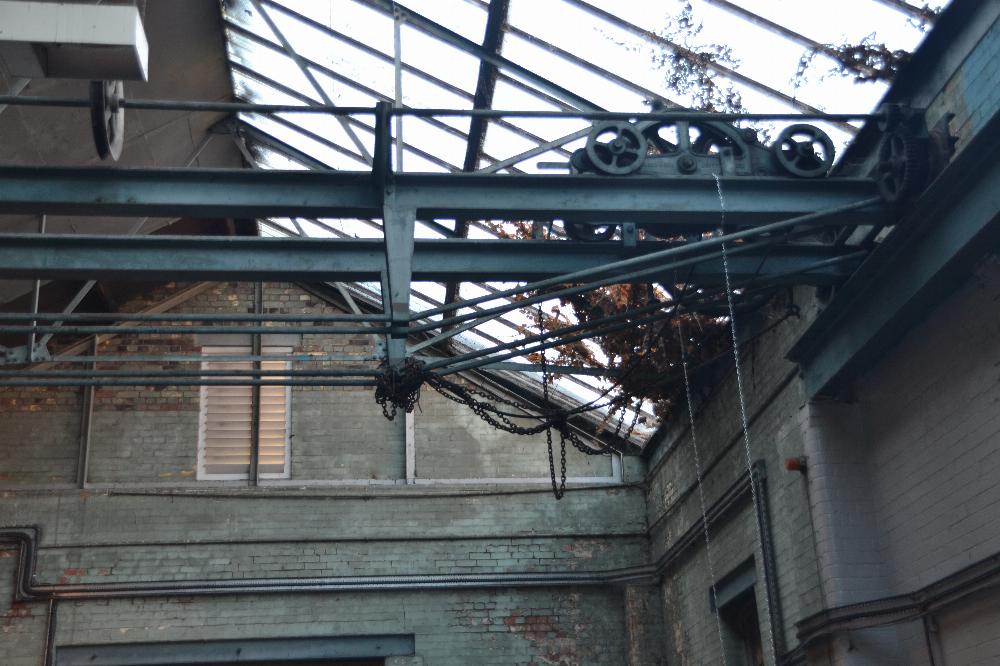
Somerset HER: Nautilus Works, Reckleford, Yeovil. First Erecting Shop of c. 1907 – Second Willcocks & Son Buckfastleigh gantry crane / trolley. HER Image 60244. Photography: Somerset Council, 14 November 2023.
A historic crane in a former engineeering works in Yeovil is in need of a new home.The site owners,First Bus, is preparing to demolish the Nautilus Works, an early 20th century complex built by the Petter family of engineers. The site includes the former erecting shop, engine house, and foundry. However, First Bus has committed to donating salvageable items to organisations with an interest in the historic machinery left within the complex. The main items are a gantry crane made by Willcocks and Son of Buckfastleigh, c. 1907, and a large workbench.
The Petters were internationally renowned for their oil engines for use in agriculture and light engineering, and the site can be said to be the genesis of Westland Aircraft. The Petters responded to government pleas in World War I for firms to help build aircraft and built Short seaplanes on a separate site in the town, known from the start as Westland. In 1933 two Westland biplanes became the first aircraft to fly over Mount Everest.
The crane can be seen, together with a full description of the works on South West Heritage Trust’s website at: https://www.somersetheritage.org.uk/record/32107# Demolition is to take place in the New Year (no precise date known at the time of writing). Any organisation interested in the crane or bench should contact Craig Leake, property projects director First Group at craig.leake@firstgroup.co.uk. Smaller items are expected to go to the South Somerset Heritage Collection. A photograph of the bench may be made available later in the new year.
Any organisation interested in the crane or bench is also asked to let Tina Rowe of the Yeovil Archaeological and Local History (sampepys@btinternet.com), so that the Society knows whether artefacts from this important site have a continuing life.
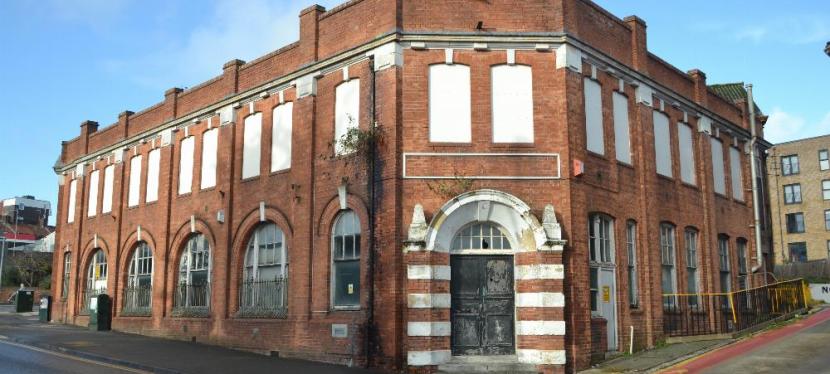
Somerset HER: Nautilus Works, Reckleford, Yeovil. Offices c. 1909 – Main entrance to Office building on s-e corner facing Reckleford. HER Image 60282. Photograph: Somerset Council, 14 November 2023.
Blists Hill Ironworks, IGMT, Coalbrookdale, Ironbridge
The annual festival of history and culture, Heritage Open Days, returns this month (September) with the theme of creativity. Founded in 1994, Heritage Open Days sees venues across the country open their doors to visitors for free, with help from volunteers. Coordinated nationally by the National Trust, it is supported by the People’s Postcode Lottery.
Hundreds of activities will adopt this year’s theme, Creativity Unwrapped, as it celebrates “the experts and enthusiastic amateurs whose passions and skills add something special to our daily lives.” The festival’s events will be hosted by locations that usually charge, alongside free sites and those that aren’t usually open to the public. Among the venues to open their doors to visitors are more than 100 industrial heritage sites from the M Shed in Bristol and the Ironbridge Gorge Museum Trust, to the Macclesfield Silk Museum and Wandle Industrial Museum. There are also more than 100 industrial-themed walks, talks and exhibitions.
The 2022 Heritage Open Days festival saw nearly 5,000 events across the country, attracting one million visits. This year, more than 5000 events are planned. Heritage Open Days says around one-third of visitors last year had not visited a heritage site or event in the past year, while 80% of festival-goers said their visit made them more proud of their local area.
The European Route of Industrial Heritage (ERIH)’s annual day of industrial culture, ‘WORK it OUT’, returns on 10th September 2023. The European-wide dance festival encompasses 30 industrial heritage sites spread across ten countries. ‘WORK it OUT” premiered in 2018 as ERIH’s main contribution to the European Year of Cultural Heritage. Due to its success and popularity, it has since become an annual event.
The event is aimed primarily at young people (children, teenagers, and young adults from school classes, sports clubs, dance and fitness studios) who can consciously experience industrial culture and its sites and discover their significance for their own past, their relevance for the present and their potential for the future. Of course, the young at heart of all ages who want to get moving can also take part.
All over Europe, on the day of the event at 3 pm, dancing will take place in front of, in, and even on imposing industrial sites, making industrial heritage an attractive place to experience. The Brick Museum at Bursledon, Southampton, https://thebrickworksmuseum.org/, is amongst the museums from all over Europe taking taking part this year.
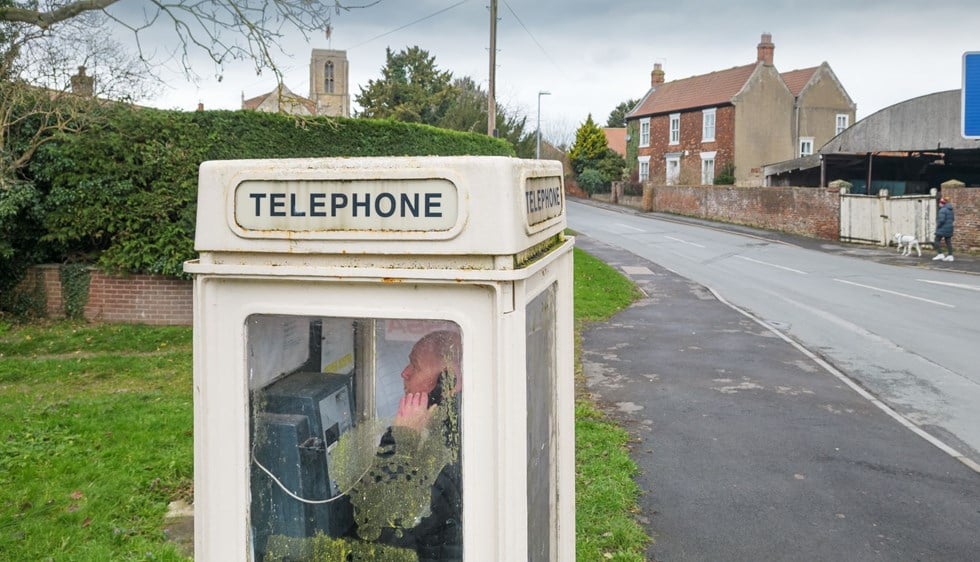
Nine rare K8 phone boxes in and around Hull have been listed at Grade II by the Department for Culture, Media and Sport (DCMS) on the advice of Historic England. The K8 was designed in 1965-66 by architect Bruce Martin who was commissioned by the General Post Office, owners of the public telephone network. In contrast to the intricate glass panelling of Giles Gilbert Scott’s iconic K2 and K6 boxes, it is notable for its modern and minimalist appearance, which made it simpler to repair and maintain.
The K8 kiosk is the last generation of the classic public telephone box. They were massed-produced between 1968 and 1983, when 11,000 K8s were installed across the UK. However, only around 50 remain in their original position. This is because most were removed by British Telecom following its privatisation in 1984 to be replaced by the sleek silver KX100 kiosk, and other variants. These in their turn have been made largely obsolete by the rise of mobile phone ownership in the early 21st century.
Most of the identified surviving K8s are in and around Hull and survived because they were not the property of British Telecom. Hull is the only place in England where the local council actively ran the public telephone network, having been granted a licence to operate from 1902 to 2007. Today, the network continues to be run by an independent company, Kingston Communications.
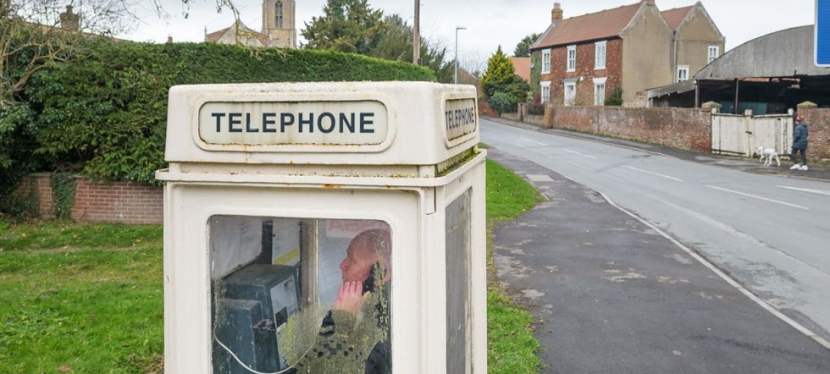
As a signal the network’s independence, the K8 phone boxes (and the earlier K1 and K6s) in Hull are painted cream, rather than the red used elsewhere in the country.
A white K8 phone box in Hull. Image courtesy of Historic England
In February 2023 the Swingate Water Tower, Kimberley, Nottinghamshire was awarded Grade II listed status through Historic England. The square-plan water tower was designed by Ritchie and Partners for the Corporation of Nottingham Water Department, in neo-classical style. It was built in the late 1940s and commissioned in 1950. It remained in use into the early 21st century. The water tower was topped with a tank capable of holding 80,000 gallons and the adjoining reservoir was built with a capacity of 4,000,000 gallons.
The listing describes the building as: “unusually architectural for a reinforced concrete water tower, and is designed with pleasing proportions in a striking neo-Georgian style”. It also noted that “the water tower forms an unusually architecturally-refined ensemble which goes far beyond what would be necessary merely for utility.” It has also been deemed as being historically interesting “as an expression of civic pride”.
This is in contrast with most post-war water towers, which were generally utilitarian structures of reinforced concrete, designed principally with practical considerations in mind.













 Industrial Heritage Networks