Welcome to the Industrial Heritage Networks and Support website. This site is maintained and updated by the Ironbridge Gorge Museum Trust who run the project and the networks. We aim to support industrial heritage in England through networking, information exchange, guidance, and training. Please explore the website and please contribute! For more information you can … Read more Welcome to the IHNs website!
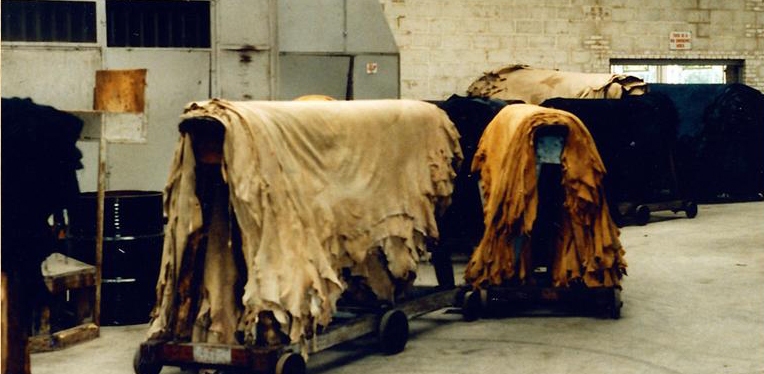
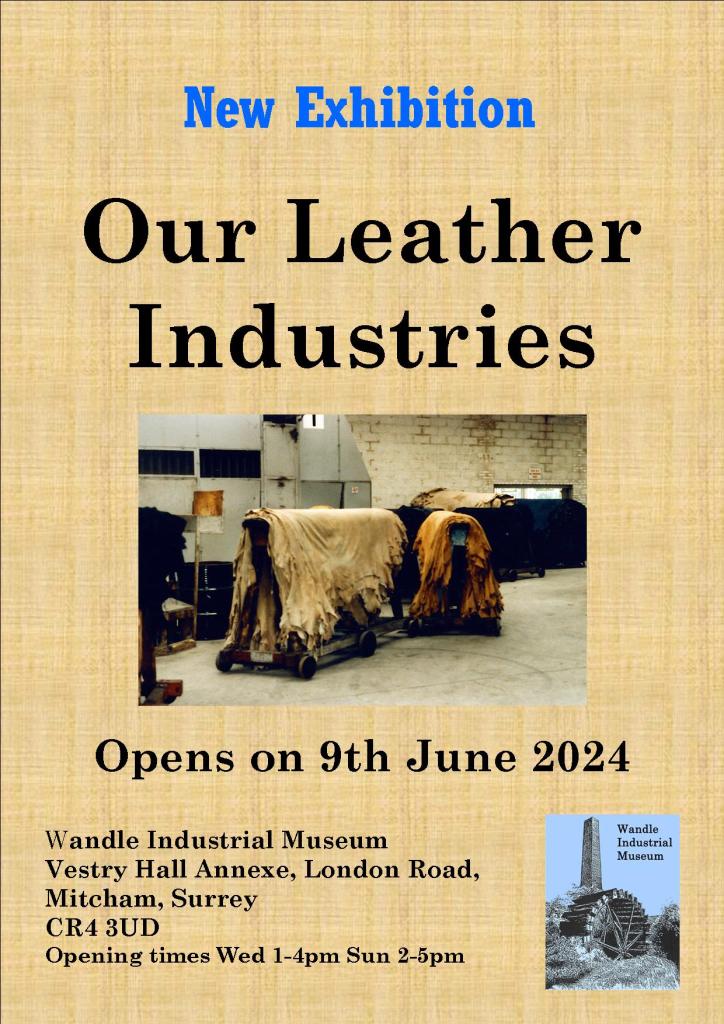
The latest exhibition by the Wandle Industrial Musuem opens on 9th June 2024. ‘Our Leather Industries’ looks at the history of leather making and some of the products produced in the Wandle Valleyin the 19th and 20th centuries.
The exhibition can be found at the Vestry Hall Annexe, London Road, Mitcham, Surrey. Open on Wednesdays, 1-4pm and Sundays 2-5pm, the exhibtion is free to enter.
The Lancashire and Cheshire Antiquarian Society are holding their annual conference on 11th May 2024. The theme is new research, with a focus on local history, family history, and industrial archaeology.It will be held at the friend’s Meeting House, Mount Street, Manchester, M2 5NS from 10am to 3pm.
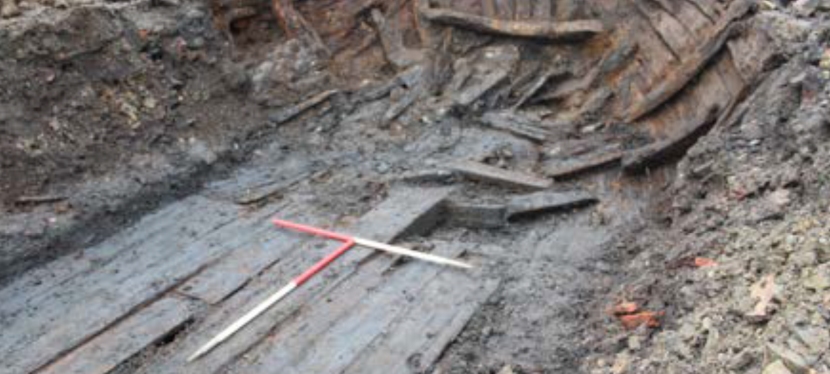
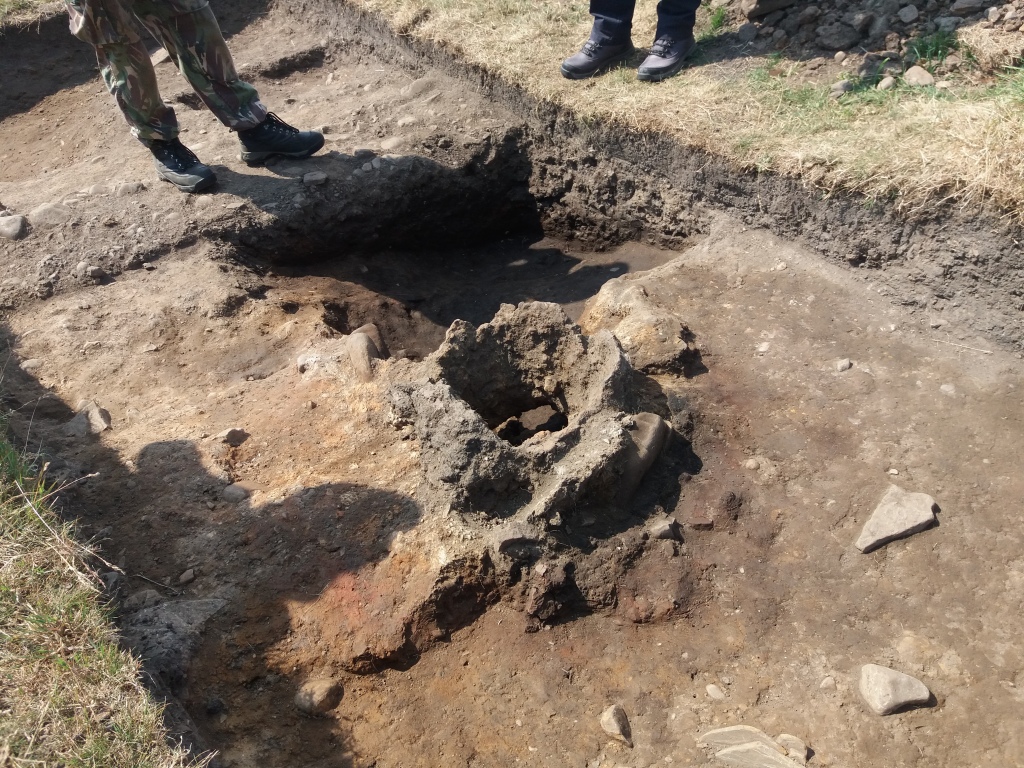
The talks will include presentations Helen Corlett talking about The Cooper at Old Bridge End: Finding a Place in Early 19c Manchester (a micro study of the experience of an artisan-tradesman family migrating to Manchester from the rural north); Neil Coldrick on Medieval Ironworking in Holcombe Valley; and Kelly Griffiths discussing Scuttled: Excavations on the Historic Canal Basin in Rochdale (looking at excavating late 19th century canal boats).
The conference is free to members of the Lancashire and Cheshire Antiquarian Society and the Manchester Local Family History Society, but donations are gratefully accepted. The fee for non members is £12.00 payable to Lancashire and Cheshire Antiquarian Society. Please email secretary@landcas.org.uk to book your place.
A canal boat being excavated at Rochdale.
Medieval bloomery during excavation at Holcombe in 2018.
Booking is now open for a major conference at Ironbridge looking at the life, work, and legacy of L T C Rolt on the 10th May 2024. L T C Rolt, also known as Tom, was a renowned practical engineer and prolific author who wrote books and articles on industrial history, canals, railways, and cars as well as fiction. Rolt was an early supporter of the work of the Ironbridge Gorge Museum Trust and is regarded as one of the founders of the 20th century waterways and railway preservation movements. He was also involved in helping to establish the Association for Industrial Archaeology.
To mark the 50th anniversary of his death, Ironbridge Gorge Museum Trust has partnered with academics from Keele University to host a conference on Friday 10th May which will celebrate his life and the continuing legacy of his work. There will also be conference-related events on the 9th and 11th May.
Historic England has added an interactive map to its Historic Gas Industry webpages. The new feature allows researchers to search for manufactured gas sites in England from the 19th and 20th centuries and to view summary details about each site. This new feature expands the resources already available for those wishing to research the local manufacture of gas, which already includes a detailed overview report on the history of the manufactured gas industry in England, a heritage assets guide, and advice on recording such sites.
The new interactive map shows the location of hundreds of sites including listed gasworks buildings and gasholders, non-designated surviving gasworks buildings and gasholders, possible surviving structures related to the industry, sites with only below ground evidence, and sites only known from map evidence. The map also has links to the relevant Aerofilms Collection of aerial photographs where these show these gas industry sites, a database which is held by Historic England.
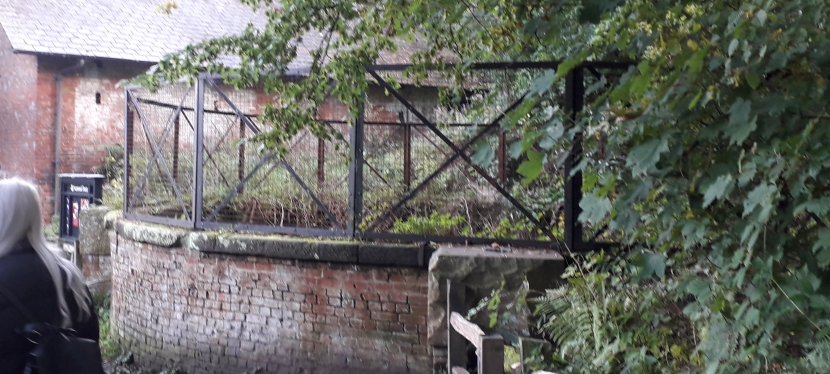
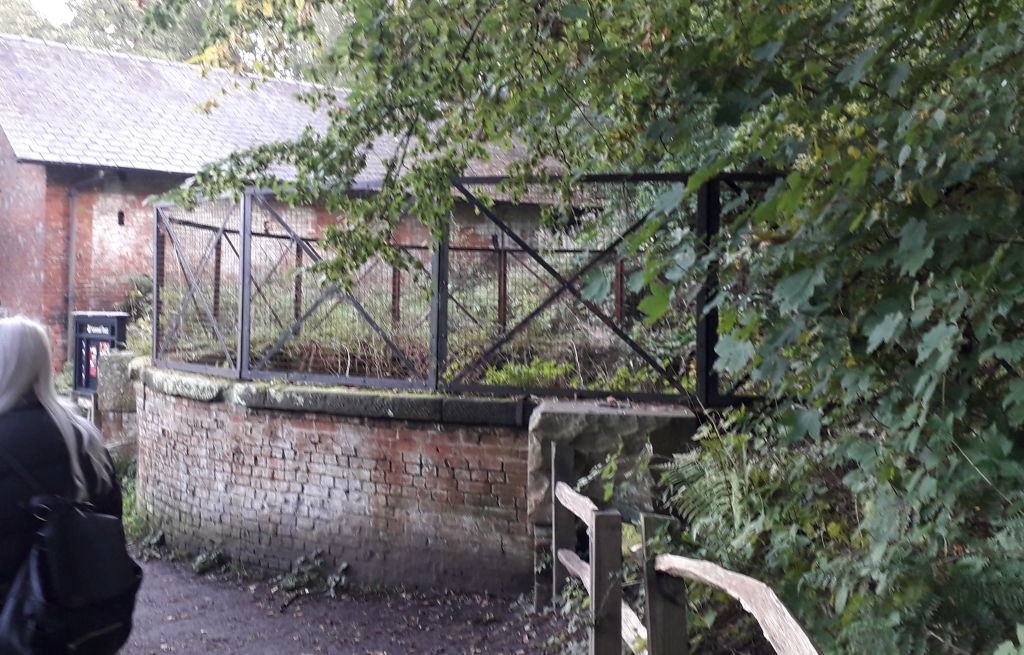
The base of the the 1864-5 gasholder at Quarry Bank Mill, Cheshire. Gas manufacture on the site ceased in 1904, but the gasholder was retained for several years thereafter to cope with periods of peak demand. Image copyright: Dr Michael Nevell.
Historic England has published (November 2023) a draft Advice Note that aims to provide clear and consistent advice on balancing climate action with building adaptation.Primarily aimed at local planning authorities, heritage consultants, and those involved in the planning process, the Historic England Advice Note (HEAN) is now open for consultation to ensure everyone can comment on the final advice.
Historic England has produced this Advice Note to provide clarity and to support consistent decision-making for proposals to reduce carbon emissions and improve the energy efficiency of historic buildings, whilst conserving their significance and ensuring they remain viable places to live in the future. It reflects current national planning policy, and whilst the Advice Note will largely be for a specialist audience, it will also be useful to building owners/occupiers once the final version is published, and so relevant to all organisations that run and/or own industrial heritage sites.
Amongst other points, the draft advice note states that solar panels and heat pumps can be fitted to listed buildings so long is it is done discreetly. Listed building consent will always be required for the installation of photovoltaic and solar thermal panels, but they will generally be acceptable on non-principal roofs. Likewise, the installation of heat pumps will possible, and will also require listed building consent, provided that they are sympathetically sited. Loft insulation, as long as not sprayed, and insulation under or between floors will also be usually acceptable.
Ian Morrison, Director of Policy and Evidence at Historic England, said: “The new Advice Note we are consulting on demonstrates how historic buildings can become more energy efficient and help to reduce carbon emissions in England. It’s not a question of ‘if’ change can happen, it’s a question of ‘how’, and this new advice will make it clearer for us all to ensure historic buildings are adapted appropriately to respond to the climate crisis. We welcome feedback on how the Advice Note will enable decision making to be more consistent.”
The Society for Lincolnshire History and Archaeology (SLHA) is running an industrial archaeology conference on ‘Lincoln’s Engineering History’ on the 18 November at Lincoln College, Lincoln. A series of talks will celebrate Lincoln’s remarkable engineering history – and its 100-year-old Engineering Society.
The programme includes talks on: ‘Commemorating Lincoln Engineering Society’s Centenary: It’s Origins and Early Years’; ‘Lincoln Engineering – Why and How? Factors leading to the start of engineering in the City of Lincoln’; and ‘ The Engineering Heritage of Lincoln’. Tickets cost £30 for the public and £25 for SLHA members, and the day includes lunch and refreshments.
SLHA promotes an interest in all aspects of Lincolnshire’s heritage. Details about the society can be found here: https://www.slha.org.uk/index.php
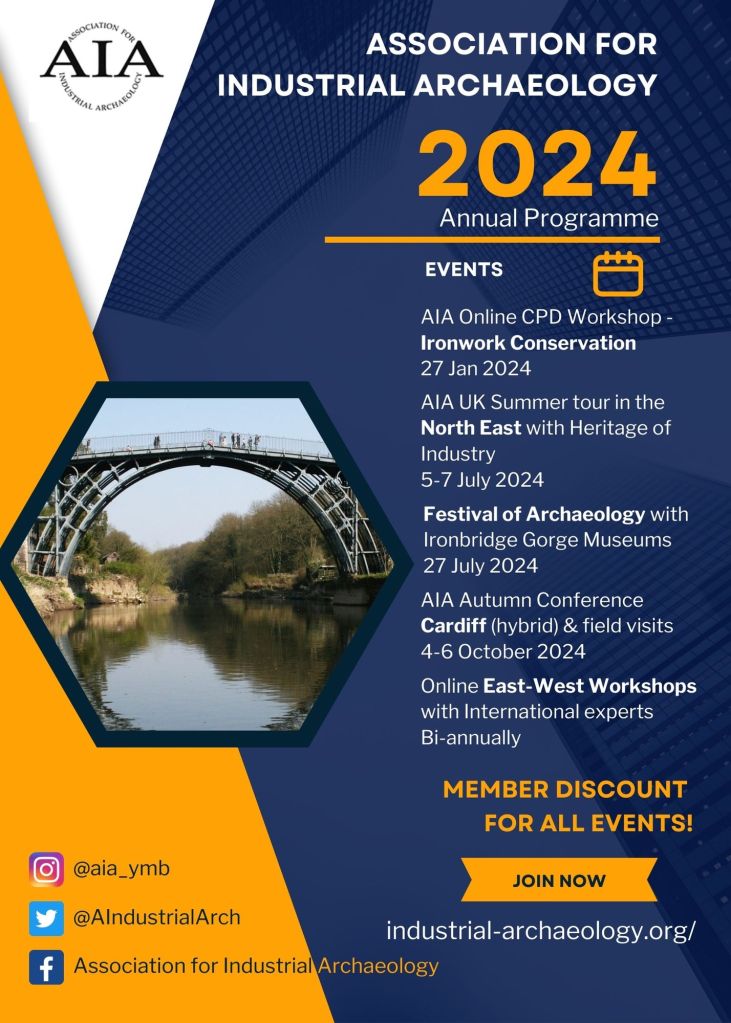
Following the Autumn 2023 Council meeting of the Association for Industrial Archaeology (AIA) at Ironbridge, the AIA are pleased to announce their events programme for 2024. There are some changes to their Conference provision compared with previous years, which the AIA hope will make it much more affordable and accessible to their members.
The revamped programme includes moving the conference and AGM to early October, which will be as Cardiff. This will avoid clashes with regional industrial archaeology events and Heritage Open Days in September, as well as the European Archaeology Association (EAA) and The International Committee for the Conservation of the Industrial Heritage (TICCIH) conferences. Importantly, the shorter, hybrid, AGM and conference will be more affordable for members.
There are also lots of exciting new online and in-person events on offer throughout the year including the AIA’s inaugural CPD workshop on ironwork conservation in January, a CBA Festival of Archaeology event with IGMT at Ironbridge in July, and a brand new offer of summer tours in partnership with Heritage of Industry which will take you behind the scenes at some of the best industrial sites in Newcastle and the North East.
The AIA is the leading UK and European specialist society on industrial archaeology and heritage. For more information about the Association, and details on how to join and secure your member’s discounts for 2024’s events, visit https://industrial-archaeology.org
Historic England’s Industrial Heritage Network is focusing attention on the knowledge and skills needed to care for our industrial heritage. They want to inform discussions on what training is needed and how Historic England can help.
If you work with industrial heritage or feel you need to upskill in this area, please share your thoughts in this short survey.
The Association for Independent Museum’s new grant scheme is now open. This offers grants of £15,000 – £100,000 to Accredited and non-Accredited museums delivering projects to improve community connections through volunteering opportunities and/or reducing loneliness and increasing social bonds. Museums will participate in a capacity-building programme that will support and upskill staff and volunteers, provide mentoring and help build partnerships with local organisations.
Specific locations in each region that are eligible to apply, many of which have industrial heritage sites, are as follows:
Historic England is organising a number of online roundtable discussions with different parts of the heritage sector to discuss the impact of reaching Carbon Net Zero. The project lead, Dan Miles, will be runnign two sessions for Industrial Heritage sites to bring people together to talk about some of the key issues they are encountering. These include how to start measuring emissions, setting out how to write a plan, or covering concerns that are associated more specifically with industrial heritage sites. To join one of the discussions on the 12th or 14th December, please fill in the registration form linked here: https://forms.office.com/r/TN0KiyHN5e
In addition, Historic England’s survey to find out what support small and medium size heritage organisations need to help them on their journey towards reaching carbon net zero is still open. The survey is live until 11th December. Follow this link to fill in the survey: https://www.smartsurvey.co.uk/s/X8E3CQ/.


















 Industrial Heritage Networks