Welcome to the Industrial Heritage Networks and Support website. This site is maintained and updated by the Ironbridge Gorge Museum Trust who run the project and the networks. We aim to support industrial heritage in England through networking, information exchange, guidance, and training. Please explore the website and please contribute! For more information you can … Read more Welcome to the IHNs website!
AIM (the Association of Independent Museums) has announced (December 2024) the latest recipients of their collections care and conservation grants, funded by the Pilgrim Trust. 20 organisations were offered grant funding totalling £63,750.50.
The Peak District Mining Museum has been offered funding for a conservator-led collections care audit to provide a report on the display and store environment and offer recommendations on how to improve collections care.
The Museum of Rail Travel/ Vintage Carriages Trust has been awarded £3,000.00 for conserving and making publicly accessible the Bradshaw map, whilst the Port Sunlight Village Trust has been awarded a grant of £7,325 for theConservation of the Gladstone Theatre Plaque.
In 2025 AIM will be offering a new grant called ‘Museum Fundamentals’, combining the familiar conservator support offered by the Pilgrim Trust funded grants, with new funding to support back of house activity and mentoring for larger projects. To hear about the forthcoming AIM Museum Fundamentals grant application process, and news on all other AIM activity, sign up for their newsletter here: weekly eNews.
Icon is hosting an industrial heritage conservation accreditation workshop at Imperial War Museum Duxford on 28 October. If you work in industrial conservation and are interested in finding out more about Icon accreditation, then this is the workshop for you.
This free workshop event will cover:
Learn about the basics of Icon accreditation, what it involves and how it can benefit your you and your organisation.
Listen to real examples of Industrial conservation projects and understand how these meet the Icon assessment criteria.
Discuss the unique challenges of industrial conservation and explore how these can be presented in an Icon assessment.
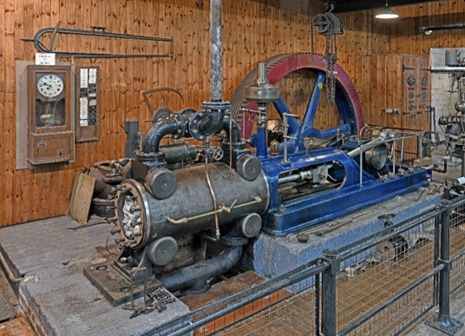
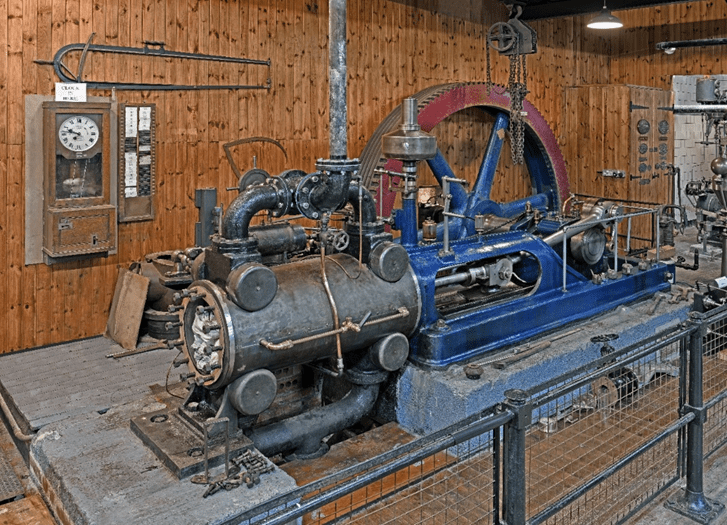
Calderdale Industrial Museum is working to bring life back to its beautiful steam engines and is seeking to raise funds to complete this exciting steam project. These engines include the early beam engine, the vertical steam engine, the Newton Bean and Mitchell horizontal engine, and the Belliss & Morcom twin cylinder steam generator set. Using steam to power these engines again will add a fantastic dimension to the visitor experience at the museum.
The museum has been lucky to have some very generous support from individuals who have donated a considerable amount of money to help fund this, but they are now looking to widen their Appeal, as they still need to raise more money. With the launch of the ‘Full Steam Ahead Appeal’ they hope to raise the final amount of funding to complete the project, which will allow them to refurbish the engines, install a smaller, more efficient boiler and carry out the necessary safety and operation training.
Bringing steam back to the power gallery will be integral to showing how these amazing steam engines drove the development of the Industrial Revolution in this area. Visitors will be able to see how these magnificent workhorses powered the industry of Calderdale, and many could even enjoy specialist experiences and steam days, which will bring enthusiasts from around the country to this vibrant area of West Yorkshire. The introduction of steam to the museum should make a significant addition to the overall visitor experience, further cementing the museum’s place as a major contributor to local heritage and the economy and driving their efforts to reach a wider audience.
Calderdale Industrial Museum
Calderdale Industrial Museum, an Arts Council accredited museum, sits at the heart of the historical quarter of Halifax and makes a considerable contribution to the heritage engagement and economy of this region of West Yorkshire. It tells the story of how the industry of the past grew as a direct consequence of the particular physical landscape and ingenuity of its local people, resulting in the rich heritage and exciting story, relevant to the history of the Industrial Revolution in Great Britain.
Since the local authority had to close the museum due to a shortage of funds in 2000, local enthusiasts and industry specialists have fought hard to save this nationally and regionally significant collection of industrial heritage. From the museum’s re-opening in 2017, this group of enthusiasts has continued to grow and now works hard to bring their combined knowledge and experience to deliver one of our region’s most popular visitor attractions. Sitting next to Halifax’s amazing and unique Piece Hall, the museum is central to telling this story of the town of one hundred trades. The museum is now run for the most part by this unpaid volunteer workforce, with all maintenance and conservation work funded by open day takings. Any special projects require additional funding sourced from a wide range of donors.
It has always been the ambition of these dedicated volunteers to bring life back to as many of the collections machines as possible. Work has been going on in many areas of the museum to show looms, sock knitting machines, and many of the worsted industry machines, in working order.
The Horizontal Newton Bean and Mitchell Engine known as Enid part way through restoration and recommissioning. This is just one of the engines that fill soon be powered by steam. Image copyright Calder Industrial Museum.
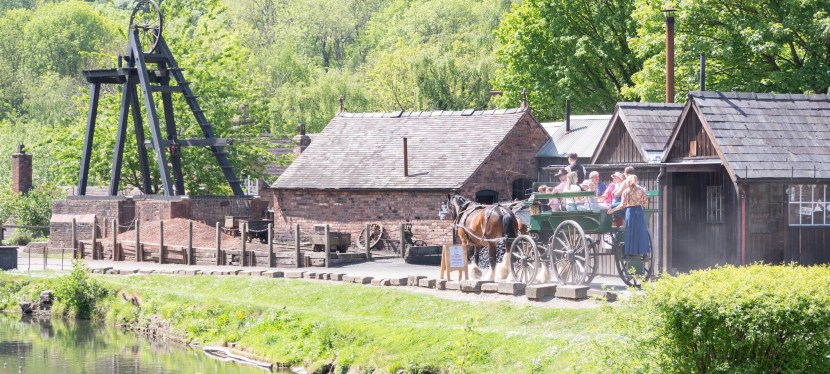
The Ironbridge Gorge Museum Trust has launched a new £100,000 fundraising appeal, Get Us Winding Again, to raise funds to repair the winding engine at Blists Hill Victorian Town. The steam-powered winding engine is one of the earliest and most significant exhibits in Blists Hill Victorian Town.
Winding engines were used to carry people, equipment and horses up and down a mine shaft. The museum’s winding engine dates to the mid-19th century and was originally used at Milburgh Tileries, a mine in nearby Jackfield. The cage on the end of the cable would have carried one tub of coal or clay at a time or six men at winding speeds of up to 30mph (44 feet per second) without men and about half that with men on.
Today the winding engine at Blists Hill Victorian Town is capable of winding empty tubs a short distance up and down the original mine shaft. However, due to normal wear and ageing (the winding engine ran most days from its installation in 1973 to 2018) and due to an overwind incident that occurred in 2018, it has not been in operation for the last six years.
The new Get Us Winding Again campaign aims to raise £100,000 to repair and restore the winding engine so that visitors can once again see it in action. Find out more about the campaign, as well as seeing a video of the winding engine in action, on the IGMT website.
The Blists Hill mining headstocks and centrte, the winding engine house. Image Coutesy fo IGMT.
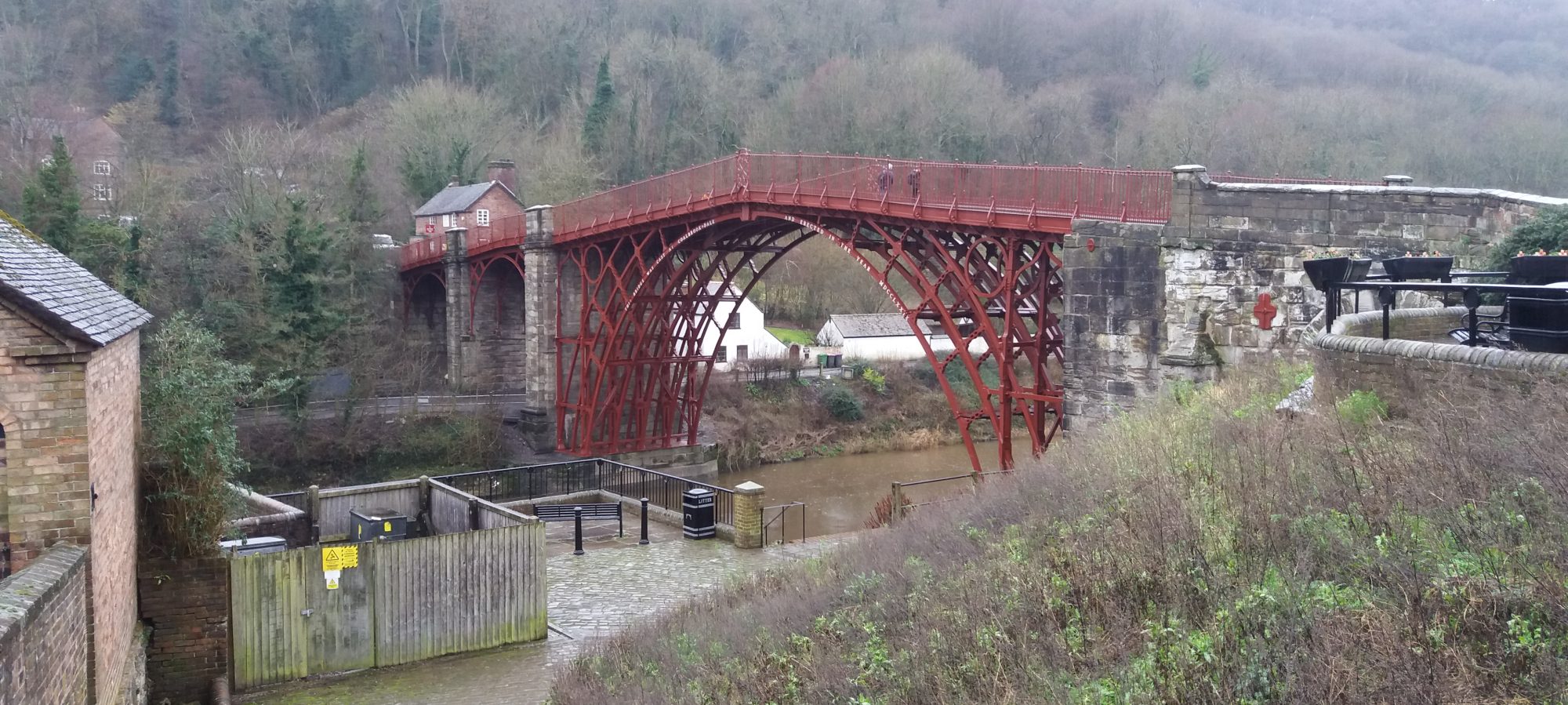
As part of the Conserving the Historic Estate project, funded by the National Heritage Memorial Fund, the Ironbridge Gorge Museum Trust will be undertaking conservation work on the Iron Bridge Tollhouse in August 2024. The Grade II listed tollhouse, first protected in 1974, lies at the southern end of the Iron Bridge and is built against its western side.
Travellers wishing to cross the bridge would pay a toll depending upon their mode of travel.Dating from the early 19th century, the three storey brick building is now entered from the bridge level, or the upper storey of the structure. The tollhouse contains an exhibition about the Iron Bridge and its history. IGMT will be redecorating the doors and windows, replacing roof tiles, and re-pointing brick work. However, the Tollhouse will remain open to the public as usual.
The money for the restoration work is part of the funding recieved by the Museum in March 2022 for the repair and maintenance of the historical buildings and monuments across the Museum’s sites. This funding is overseen by the National Heritage Memorial Fund (NHMF) on behalf of Department for Digital, Culture, Media and Sport (DCMS).
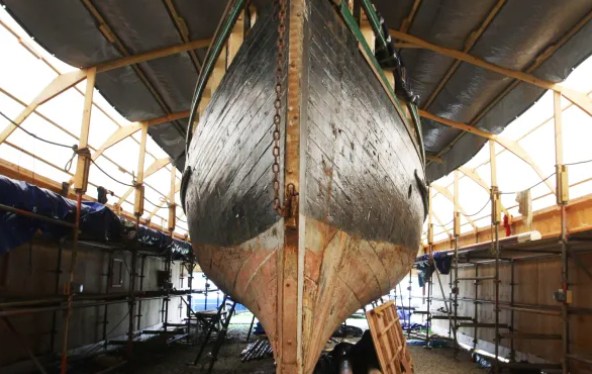
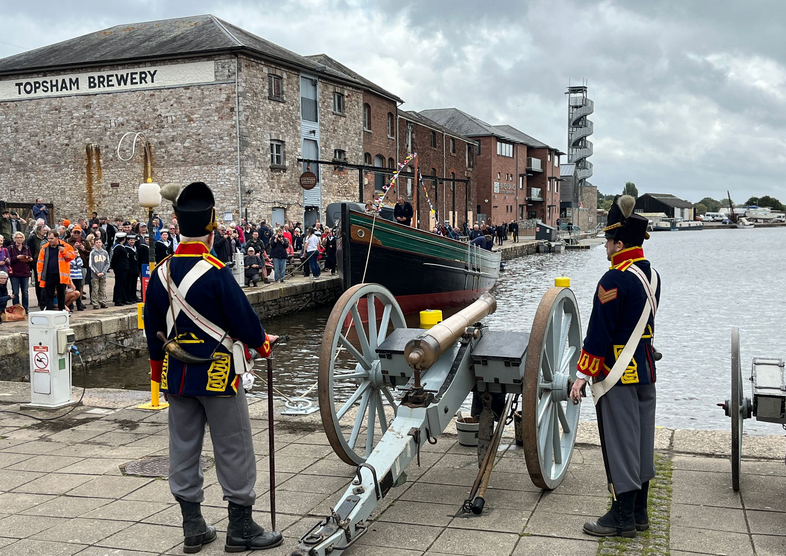
The Britannia Sailing Trust have launched an urgent appeal for funds to help them complete the restoration of the vessel. Fundraising through the Trust’s regular avenues has been difficult in 2024, and at the moment the money will run out in October. Without additional funding, the entire restoration project and the future of Britannia is currently at risk.
The Trust has the materials ready to re-rig the ship and prepare her for sea trials, but still needs to cover their many expenses, particularly the wages of their skilled boatbuilders and their trainees, which are currently the biggest expense.
Britannia Sailing Trust is a maritime heritage charity, centred around the restoration of a 108-year-old sailing vessel, Britannia, based in Exter. After a decade of dedication from the volunteer-led team, the restoration project is finally on the brink of completion.
Donate to the Crowdfunder page to support the the final stage of the restoration work and help keep Britannia afloat here: Donatation Page
The SS Britannia was returned to the waves in 2o23. Image courtesy of the Britannia Sailing Trust.
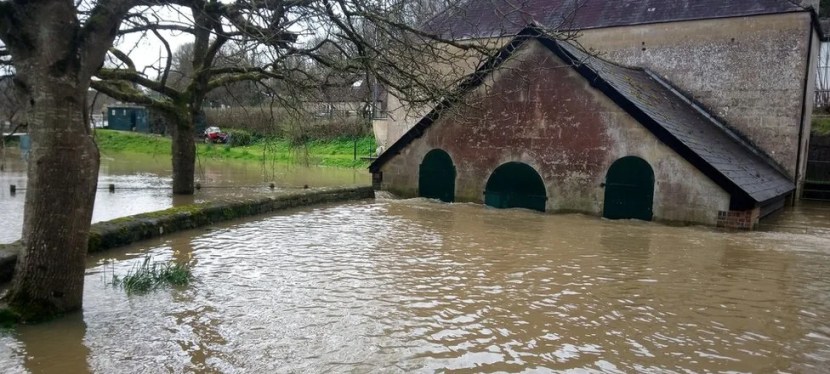
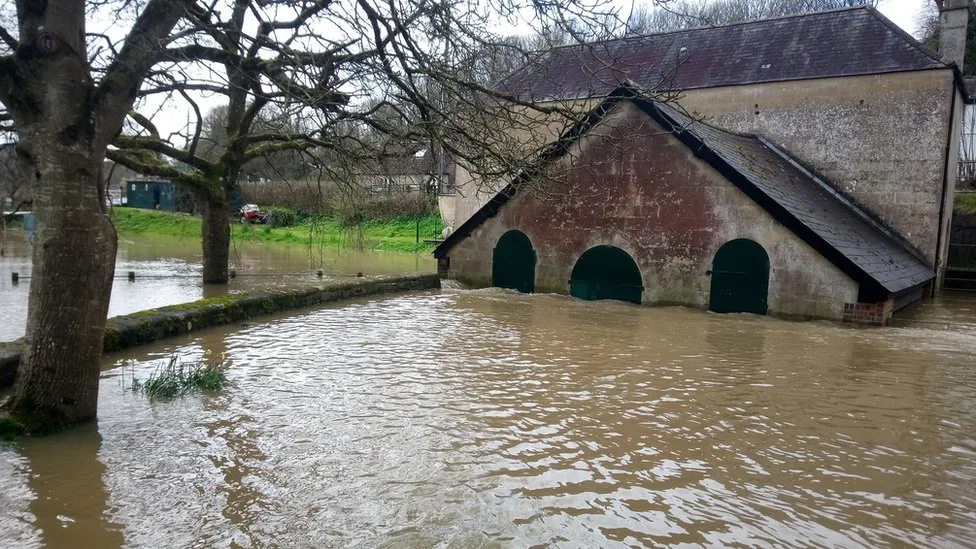
Flooding in the wheel pit at Claverton, 2024. Image courtesy of The Claverton Pumping Station Trust.
Claverton Pumping Station have launched an online appeal for funds after suffering 17 floods between October 2023 and April 2024. The aim of the appeal is to replace rotten timber, and to make the site’s operations more flood resilient. The Grade I listed building was restored by volunteers between 1969 and 1976, and is maintained and run by the volunteers of The Claverton Pumping Station Trust CIO, though it is owned by the Canal and Rivers Trust.
Claverton Pumping Station was built between 1809 and 1813, to a design by the engineer John Rennie, to overcome problems of water supply for the Kennet and Avon Canal near Bath. A 17 foot (5 m) diameter by 24 foot (7 m) wide water wheel powers a large beam engine that pump 50 gallons of water every two seconds from the River Avon up 48 feet into the Kennet and Avon canal. The pump operated from 1813 until 1952. It is the only working example of a waterwheel-driven pumping station on the national canal network.
The Claverton Pumping Station Trust observed that ‘as flooding is predicted to become more frequent and more severe having extra money ring-fenced for flood repairs and flood resilience will allow us to continue proactive maintenance and to make timely repairs when necessary.’
Historic England has published (November 2023) a draft Advice Note that aims to provide clear and consistent advice on balancing climate action with building adaptation.Primarily aimed at local planning authorities, heritage consultants, and those involved in the planning process, the Historic England Advice Note (HEAN) is now open for consultation to ensure everyone can comment on the final advice.
Historic England has produced this Advice Note to provide clarity and to support consistent decision-making for proposals to reduce carbon emissions and improve the energy efficiency of historic buildings, whilst conserving their significance and ensuring they remain viable places to live in the future. It reflects current national planning policy, and whilst the Advice Note will largely be for a specialist audience, it will also be useful to building owners/occupiers once the final version is published, and so relevant to all organisations that run and/or own industrial heritage sites.
Amongst other points, the draft advice note states that solar panels and heat pumps can be fitted to listed buildings so long is it is done discreetly. Listed building consent will always be required for the installation of photovoltaic and solar thermal panels, but they will generally be acceptable on non-principal roofs. Likewise, the installation of heat pumps will possible, and will also require listed building consent, provided that they are sympathetically sited. Loft insulation, as long as not sprayed, and insulation under or between floors will also be usually acceptable.
Ian Morrison, Director of Policy and Evidence at Historic England, said: “The new Advice Note we are consulting on demonstrates how historic buildings can become more energy efficient and help to reduce carbon emissions in England. It’s not a question of ‘if’ change can happen, it’s a question of ‘how’, and this new advice will make it clearer for us all to ensure historic buildings are adapted appropriately to respond to the climate crisis. We welcome feedback on how the Advice Note will enable decision making to be more consistent.”
Historic England has awarded a grant of £31,020 to the Forest of Dean Building Preservation Trust to help repair Gunns Mill furnace in Mitcheldean. Gunns Mill is considered to be the best-preserved charcoal blast furnace in Britain.
The current furnace structure dates from the mid-17th century when the Forest of Dean was one of the most important centres for iron production in the country. It was converted to a papermill in 1743 but had fallen out of use by the 20th century.
The Forest of Dean Buildings Preservation Trust took on the ownership of Gunns Mill in 2013 and since then has undertaken a number of repairs to the structure with support from Historic England. This most recent round of funding will enable architects and engineers to design a structural solution to repair the timber frame of the roof of the bridge house and provide a usable space within.
The surviving lower tier of the building is a blast furnace built in 1625 on the site of earlier fulling and corn mills. That furnace was destroyed in the Civil War and was rebuilt by 1682, evidenced by cast iron lintels with cast dates of 1682 and 1683. The charge house roof on the upper tier north side has been dendro-dated from this time. It continued as a blast furnace until 1738.
A pioneering partnership between the Science and Industry museum Manchester and the Landmark Trust will see the Station Agent’s House made available for overnight stay for up to eight people, alongside free public open days. This is one of Manchester’s oldest surviving Georgian houses, and adjoins the Museum’s Grade I listed 1830 Station.
The Station Agent’s House will be the Landmark Trust’s first property in the region, and will join a collection of 200 historic buildings once completed. A final £118,000 is needed to meet the costs of the repair and conversion work, which will include an improved environmental performance through the installation of heat pumps.
The building, on the corner of Liverpool Road and Water Street in Castlefield, was built in 1808 for John Rothwell, partner in a nearby dyeworks. The house then provided accommodation for the Station Agent at Liverpool Road Station before being converted for shop use in the mid 20th century. More recently, the former residential house was used as offices when the Science and Industry Museum opened on the site in 1983. The shop frontage was removed, and a replica of the historic doorway was reinstated. The adjacent 1830 Station is currently being repaired ahead of re-opening to the public in future years as part of the museum’s major conservation and redevelopment plans.
Sally MacDonald, Director of the Science and Industry Museum said “We are delighted that the Landmark Trust will be bringing their expertise in sensitively restoring incredible heritage buildings to enable Station Agent’s House to be experienced by the public for the first time.”
Anna Keay, Director of The Landmark Trust, said the Station Agent’s House “is an outstanding piece of industrial heritage. The building will be sensitively repaired and made available to all through self-catering stays and free public open days. As a charity, the Landmark Trust is committed to saving and sustaining outstanding heritage, and is thrilled to be playing a role in Manchester.’














 Industrial Heritage Networks