Welcome to the Industrial Heritage Networks and Support website. This site is maintained and updated by the Ironbridge Gorge Museum Trust who run the project and the networks. We aim to support industrial heritage in England through networking, information exchange, guidance, and training. Please explore the website and please contribute! For more information you can … Read more Welcome to the IHNs website!
Ten industrial heritage museums and sites have received a Sandford Award for 2026. This is a leading mark of quality for heritage learning, and is run by Lincoln Bishop University alongside the Heritage Education Trust. Applying for the Sandford Award is an opportunity to reflect on, strengthen, and gain independent recognition for the learning experiences sites offer.
The Award is respected because it is independently assessed, expert-led and based on on-site assessment visits, not paperwork alone. Holding one can also aid further grant applications. Applications for the 2027 awards open on 30 November.
The Tree Council and Defra are working in partnership to deliver the Trees Outside Woodland Fund for the 2026/27 planting season. The fund’s purpose is to establish trees outside woodland to create or enhance green spaces using a range of tree sizes, species, and planting types. This is the seond year of the fund, which has more than doubled from its first year. The fund offers grants to local authority and charity-led projects in England, including heritage sites.
The fund offers grants of between £10,000 and £40,000 for tree, hedgerow, and orchard establishment projects. It supports the planting of trees in locations including parks, playgrounds, and streets meaning that medium to large-sized industrial heritage charities, with an annual income or turnover of more than £100,000, and suitable spaces, are eligible to apply. Among the projects funded in the 2025/26 year was Avebury Manor Garden in Wiltshire, a National Trust heritage site, which received support to become more climate-resilient following flooding in 2024.
For 2026/27, applications must show clear benefit to communities and demonstrate how plantings will enhance biodiversity. Successful applicants must meet a Biosecure Procurement Requirement, ensuring newly planted trees are sourced from Plant Healthy certified nurseries or have a Ready to Plant assessment voucher. A one-stage application process has been introduced.
Applications will be reviewed on a rolling basis, with the fund open until 31 October 2026 or until all funding has been allocated. More details about the fund can be found here: Trees Outside Woodland Fund – The Tree Council
The UK Government has launched a call for evidence on National Lottery Good Causes funding to help shape its future investment priorities. The 12-week consultation, National Lottery Good Causes: Fund What Matters To You, is open to members of the public, organisations, and community groups across the UK. This is the first major review of National Lottery Good Causes funding in more than 20 years.
The National Lottery is a crucial source of funding for museums and heritage. Since being established in 1994 it has awarded £9.5bn to more than 53,000 projects across the UK via the National Lottery Heritage Fund. This includes hundreds of industrial heritage sites and projects in England alone.
The UK Government is asking lottery players, organisations, and communities for views on what is working and how funding could be improved in the future. The review aims to make funding more accessible and give local people a greater say in how money is used in their communities. Under legislation, heritage receives 20% of annual National Lottery Good Causes distributions.
Two funds, which can help restore and re-purpose industrial heritage sites, have been announced by the UK Government.Historic England will distribute the Heritage at Risk Capital Fund as in previous years. The Architectural Heritage Fund will distribute the Heritage Revival Fund in partnership with Historic England.
The Heritage at Risk Capital Fund has opened for a second round. The fund prioritises projects that restore heritage sites serving disadvantaged communities and which demonstrate local benefits. Up to £15 million in funding is available this year (2026), as part of a total £75 million fund. Following the successful first year of the fund, which saw £15 million invested in projects across England, up to £60 million remains available for allocation over the next 4 years, to 2030. Expressions of Interest are now open for the next round of funding. This fund gives grants for the conservation, repair, and conversion of listed buildings of all grades, historic buildings in conservation areas, registered parks and gardens and scheduled monuments.
The Heritage Revival Fund has also opened for a second round. The fund, worth £45 million in total, helps communities to rescue and repurpose historic buildings and transform them to meet modern needs, focusing on regenerating historic buildings in town centre locations. Delivered in partnership with DCMS and Historic England, the AHF will provide grants to hundreds of communities across England, supporting them to take control of and find sustainable new uses for derelict or neglected historic buildings. Focusing on town centres and areas of high deprivation, the Fund will help transform these local heritage assets into vibrant new spaces – ranging from arts centres to cultural and community hubs and affordable housing.
For further details on how to apply follow these links:
Three more industrial heritage sites are to recieve addtional funding to help secure their futures, with the funds coming from the DCMS, the UK Shared Prosperity Fund, and Historic England.
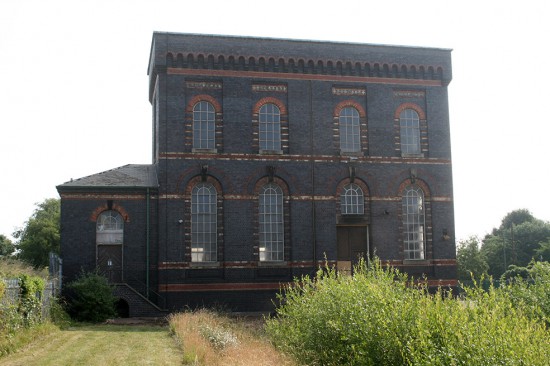
The Litchfield Waterworks Trust will receive more than £47,000 for a comprehensive architectural survey of Sandfields Pumping Station. The building is on Historic England’s Heritage at Risk register. Dr David Dimeloe, Trustee and lead on the funding bid, said: “This is the culmination of a great deal of hard work and determination. We’re very grateful to Historic England for this grant and look forward to working with BHB Architects and their colleagues to develop a solid roadmap for the future preservation of Sandfields Pumping Station.” More details here: Grant helping to secure future of historic pumping station in Lichfield
The Canal & River Trust has received a £113,000 grant from the UK Shared Prosperity Fund, a government programme aimed at improving pride in place and increasing life chances across the UK, for urgent repairs at the Ellesmere Yard on the Llangollen Canal in Shropshire. The still functioning boat yard was opened in 1806, and is one of the best‑preserved canal maintenance yards in the country. More details here: Vital conservation works underway at historic Ellesmere Yard
North Somerset Council has received an additional £62,120 for further restoration of Birnbeck Pier in Weston-super-Mare. This has been awarded by the Department for Digital, Culture, Media and Sport (DCMS) Heritage at Risk Capital Fund, delivered by Historic England. The additional funding will pay for the initial conservation of the Grade II Listed entrance gates and turnstiles. It will also enable further work on the Grade II Listed Toll House and its extension, known locally as the ‘shell shop’, at the southern side of the entrance. More details here: Extra £62k makes more Birnbeck Pier landside restoration possible
Sandfields Pumping Station. Image copyright Dr Michael Nevell.
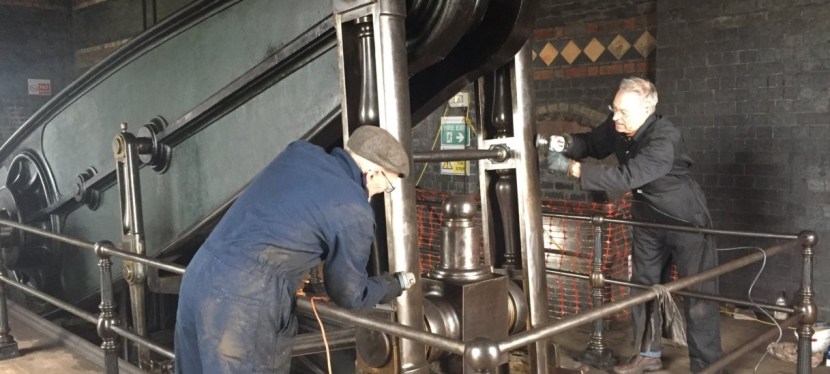
Kempton Steam Museum has been awarded a £90,000 grant from The National Lottery Heritage Fund (NLHF) to connect people of all ages with the role of clean water in London’s past and present. The project will enable an Audience Development Consultant to develop a strategy to increase visitor numbers and attract new audiences from the local community and beyond. It will also enable a Learning Consultant to develop digital learning materials targeted at Key Stage 1 and 2 that are accessible to all.
Kempton Steam Museum, located at the Kempton Park Pumping Station in southwest London, showcases the world’s largest operational triple-expansion steam engine and a rich collection of historical artifacts and technical drawings. Without this funding from the Heritage Fund, its stories would remain undiscovered by many.
Three new part-time members of staff will build capacity across the museum in a variety of ways. Firstly, to achieve Museum Accreditation by summer 2026, secondly, to implement strategies to increase visitor numbers and attract new audiences, and thirdly to manage volunteers. This initiative will expand our visitor demographic and foster stronger connections with underrepresented groups, local organisations, schools and families. In the long-term, the project will build a resilient and sustainable museum, strengthen the network of groups and organisations working together for the benefit of the local community in Hounslow and raise public awareness of the importance of clean water. Valerie Mills from Kempton Steam Museum said: “We are thrilled to have received this support from The National Lottery Heritage Fund to build a museum fit for the future!”
Kempton Steam Museum is an independent museum in London governed by the Kempton Great Engines Trust. The Trust, a registered Charity, was formed in 1995 with the aim to preserve the historic steam pumping engines at Kempton Park Pumping Station and make them accessible to the public. All restoration work and the running of the museum is undertaken entirely by a team of volunteers.
Kempton Steam Museum will be running Steam Weekends throughout the project. The museum is open from March to December offering special events throughout the year. You can follow @Kempton Steam Museum on Facebook, Instagram, and TikTok and or visit their website at https://kemptonsteam.org/
The Association for Industrial Archaeology have a variety of grants and awards for industrial archaeology and heritage available for 2026. These are to encourage improved standards of recording, research, conservation, and publication within the sector.
The grants support industrial heritage and archaeology conservation projects in the UK, and research projects on industrial archaeology. They are open to non-members as well as members of the Association.
The awards are presented to an individual or groups who have made a significant contribution to industrial archaeology, for example in research, publication, recording or conservation. The awards attract local and national publicity, and the recipients are encouraged to publish their projects. Most awards have cash prizes and are usually presented annually at the AIA Conference, at which winners will be encouraged to talk about their work and present posters or displays on it if appropriate.
The deadline for the following categories is 31st January 2026 (more details in the links):
Two mining industrial heriatge sites have recently received grants towards conservation and community engagement.
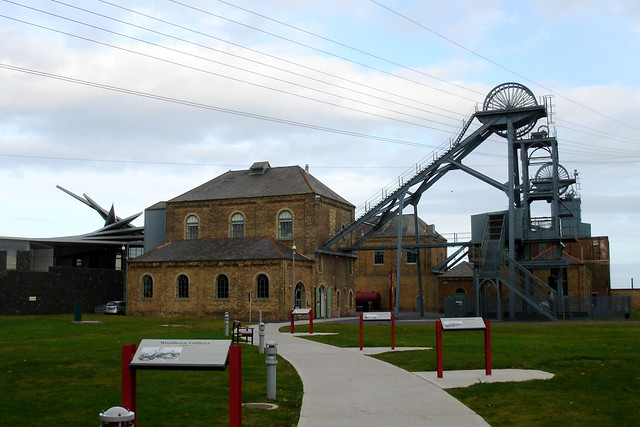
The headstocks at Woodhorn Museum, Ashington, has received extra money from Northumbrian County Council for the continuing conservation work at the industrial site. The £1.4m grant is in addition to earlier funds for the restoration of the site, including nearly £1m from the UK Government’s ‘Heritage at Risk’ support scheme. Further details can be found here: https://www.chroniclelive.co.uk/news/north-east-news/additional-14-million-agreed-save-32416167
The National Coal Mining Museum for England, Wakefield, has received a grant in the first round of the re-imagined Esmée Fairbairn Communities and Collections Fund. £98,561 will be used to celebrate the role of Miners’ Welfare by bringing together heritage, community, health, academic partners, and people living with marginalisation, mental and physical ill-health. This fund supports projects using museum collections to improve inclusion and equitable working with community partners. Further details can be found here: https://www.ncm.org.uk/news/funding-miners-welfare/
The headstocks at Woodhorn Museum. Image courtesy of North East Museums Development Trust.
The National Archives, in partnership with Leeds Museums & Galleries, The National Library of Wales, and the Community Archives & Heritage Group, is launching a new national grant progamme for libraries and museums called the ‘Spaces, Places and Belonging’ Community Hub.
Funded by the Arts & Humanites Research Council, the Community Hub will support inclusive, community-led, research across the UK’s galleries, libraries, archives, and museums and heritage sectors,so will be of interest to industrial heritage sites. There will be three grant schemes available, totalling £550,000 (click the blue links for more detail):
A programme of training, digital skills development, and network-building will run to support these grants. The Community Hub will also create a permanent digital platform to share resources, learning, and best practice.
Applications for Seed Corn Grants and Skills Bursaries open on the Monday 15 September 2025. There will be a launch webinar on Wednesday 17 September 2025 to take you through each grant scheme in detail, covering everything from eligibility, to assessment criteria, to budgets. There will also be a Q&A at the end to enable you to ask any extra questions you may have about this programme.
The Heritage Open Days team are offering two new micro-grants to support heritage sites and/or groups for the 2025 Festival. These are for the creation of new events that share stories highlighting under-represented histories, and to encourage people from under-represented backgrounds to participate.
These micro-grants are worth £350 each and come with one-to-one support from the national team. So, if your industrial archaeology or heritage site or group are planning a Heritage Open Day event why not consider widening its appeal with these support grants.
Applications are open to existing organisers who have participated for the last three years in HoDs, and to new organisers from under-represented backgrounds participating in the festival for the first time. The deadline for the micro-gants is Friday 4th April.
Full details and eligibility criteria can be found on the Heriotage open days website here