Welcome to the Industrial Heritage Networks and Support website. This site is maintained and updated by the Ironbridge Gorge Museum Trust who run the project and the networks. We aim to support industrial heritage in England through networking, information exchange, guidance, and training. Please explore the website and please contribute! For more information you can … Read more Welcome to the IHNs website!
MD North has three grant schemes available for museums. The Open Grant programme is now open until 7 June. The grant is available to the following types of museums: museums in the north of England which are Accredited, hold provisional status, or are formally Working Towards Accreditation; museums that are not Accredited, or not formally Working Towards it, can be part of a project involving a partnership of museums, but an Accredited museum must be the lead partner.
Museum are invited to apply for grants of up to £5,000 for projects that help your organisation meet or go beyond the requirements of the Accreditation Standard and deliver against the Arts Council England’s Investment Principles:
Ambition and Quality
Dynamism
Environmental Responsibility
Inclusivity & Relevance
For details on how to apply for this grant and for other MD North grants follow this link: Open Grant
Crofton Beam Engines has secured a grant of £6,120 from the Association of Independent Museums under its ‘New Stories New Audiences’ programme funded by the National Lottery Heritage Fund for their ‘Crofton for Kids’ project. The grant will fund the development and production of a class set of working models of the pumping station, buildable by children and designed by volunteers.
Visiting groups of children will visit the station to learn how it works. They will be helped to build the models and will then work in small groups to create short videos about the station. These videos will be made accessible to visitors to the station through the use of QR codes, taking advantage of the intranet installed around the site.
Whitney Cawley, the Learning and Community Engagement Officer at Crofton Beam Engines said: “This is an exciting opportunity to develop our activities with children. We have already signed up three local schools to work with us, and are talking to others. We will then be able to use the models created as part of the project in our existing learning sessions and incorporate them into a more regular family workshop which we hope to offer throughout the year”. Graham Snook, a Trustee and Chairman of the Crofton Branch, said: “This grant recognises the value of the work we are doing at Crofton to develop our learning and engagement programme. We are grateful to the Association of Independent Museums for their continuing support to small museums such as Crofton Beam Engines.”
The New Stories New Audiences programme is designed to support small museums to stay relevant to their audiences and to increase their impact by identifying new stories and by working with a new partner, to work differently and to try something new.
Crofton Beam Engines is owned by the Kennet and Avon Canal Trust, a registered charity. It is managed by the Crofton Branch of the Trust. For more information follow this link: https://www.croftonbeamengines.org/
Historic England’s Everyday Heritage Grant programme aims to shine a light on the diversity of heritage and is part of Historic England’s commitment to ensuring that a wider range of people are able to connect with, enjoy and benefit from the historic environment. Building on the success of Historic England’s first round of Everyday Heritage Grants in 2022, they are funding an additional 56 projects that celebrate working class histories and the historic places that make up everyday life.
The grants are for creative projects that focus on heritage connecting people to historic places, specifically those people and places that are overlooked or underrepresented. The community-led projects will explore the diverse stories of people and places, such as homelessness in Waterloo, a pen factory in Newhaven, and roller-skating in Birmingham. The total amount of funding awarded by Historic England is £875,000, ranging from £6,800 to £25,000 per individual project.
Arts Council England have announced the next stage of funding from the Cultural Development Fund. This is part of the wider Cultural Investment Fund which is funded by the Department for Media, Culture, and Sport and delivered by Arts Council England. In the past three rounds several industrial heritage sites and museums have been successful in applications, such as Elsecar Heritage Centre in Barnsley.
Stage Four has a total of £15.2 million on offer, with grants ranging between £2 million and £5 million. In order to be eligible for Round Four, you must be either a local partnership led by a local authority, a Local Enterprise Partnership, or another appropriate body. The Cultural Development Fund aims to ‘unlock local growth, productivity and regenerate communities through capital investment in culture’. This money will act as a ‘boost’ for cultural venues across the country and improve access to culture. The Arts Council encourages applications from ‘Places that have a strategic vision for their development and can demonstrate both cultural maturity and commitment to culture-led growth but need investment in physical and/or digital infrastructure or other assets to accelerate and maximise their impact.’
The window for expression of interest for these grants opened on Monday 5th February 2024. The deadline for expressions of interest closes at 12pm on Friday 15th March 2024. Thereafter, applications open on Monday 8th April 2024, and the final deadline for submission will be at 12pm Friday 17th May 2024. To view the full announcement and to check your eligibility visit the Arts Council England website.
AIM (Association of Independent Museums) has a range of grants available for collections care and conservation for their members. AIM members care for a huge and significant range of historic objects and collections. They range from fine art collections to locomotives, textiles to ships, decorative art and social and industrial history collections.
Grants for Collection Care Audits are run in partnership with Icon and enable small museums to undertake a basic 3-day collections care audit by a fully accredited conservator. The Collections Care Scheme provides grants for museums to receive specialist advice, purchase equipment, and train staff and volunteers. The Remedial Conservation Scheme provides grants for the conservation of objects from the museum’s permanent collection. Grants are £1,100 plus travel and VAT (if applicable) to cover the cost of a fully accredited conservator undertaking a three-day audit. These grants are a good starting point before making an application to the Collections Care or Remedial Conservation schemes if your museum has not previously had a professional conservation advice.
To be eligible for a collections care audit, your museum should:
Be an AIM member.
Be an Accredited Museum or awarded ‘Working Towards’ status.
Be a registered charity. An associated charity can receive the grant on the museum’s behalf if the museum itself is not a charity.
Have fewer than 20,000 visitors p.a. Please base your visitor figures on the visitors you have in an average year pre-2020 not those affected by Coronavirus and restrictions.
Application to this scheme does not prevent museums applying to the Pilgrim Trust for other, unrelated projects.
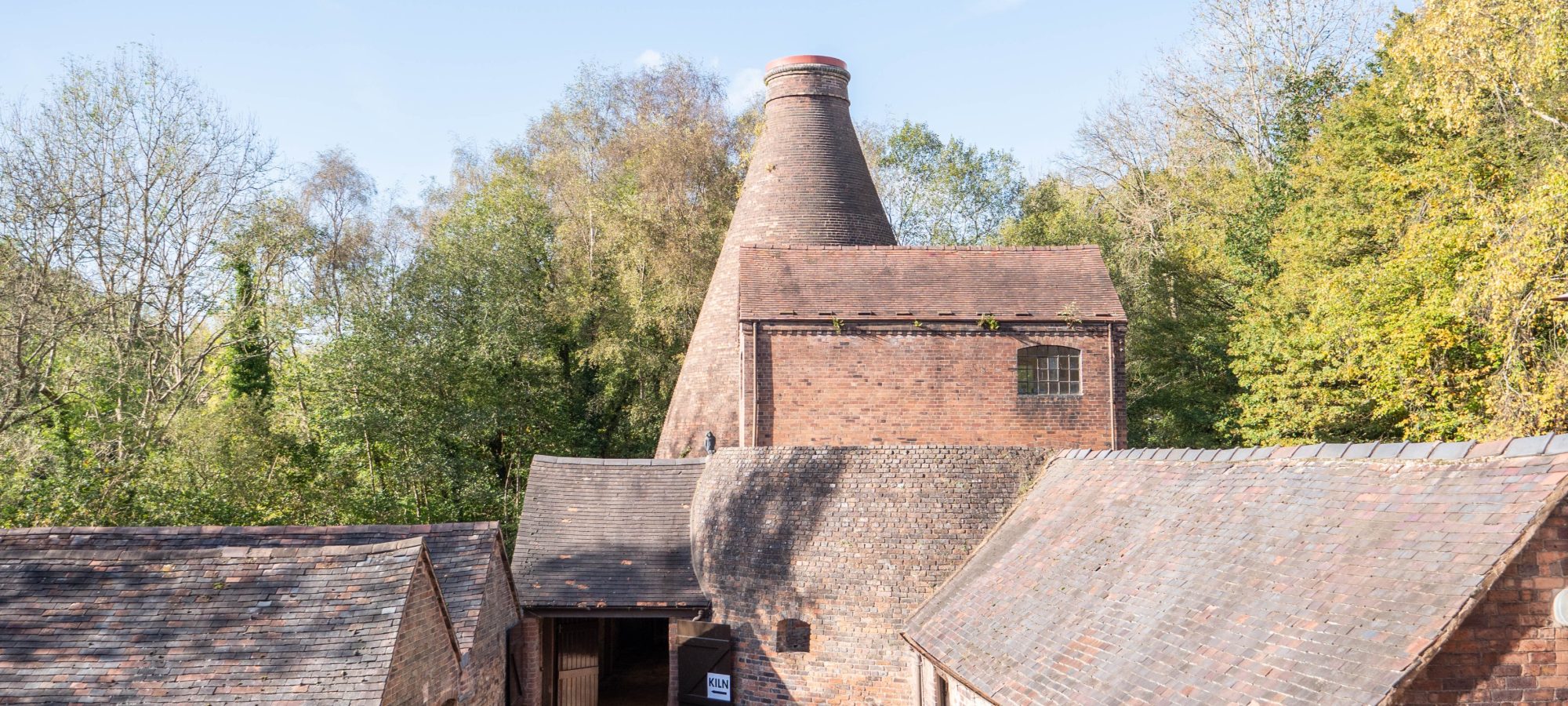
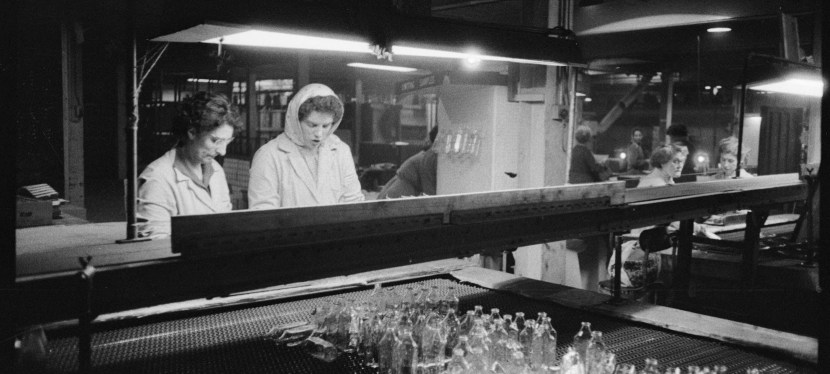
Men working at a Stoke-on-Trent bottle kiln, 1965-68. Copyright Historic England.
Historic England’s new ‘Everyday Heritage Grants: Celebrating Working Class Histories’ will fund community-led and people-focused projects that aim to further the nation’s collective understanding of the past. These pilot grants will focus on heritage that links people to overlooked historic places, with a particular interest in recognising and celebrating working class histories.
From palaces to terraced houses, stately homes to barns, our towns and landscapes are filled with symbols of our past. But not everyone’s stories are told and not everyone’s history is remembered. The Everyday Heritage Grants Scheme aims to engage with the widest possible range of heritage and helps to further the nation’s collective understanding of England’s past. Historic England are inviting applications from community or heritage organisations/museums to apply for grants up to £25,000 to fund projects that will celebrate the built or historic environment near them.
Each project should enable people to creatively share overlooked or untold stories of the places where they live andencourage communities, groups and local people to examine and tell their own stories in their own ways.
Historic England is also looking for projects that provide innovative volunteering opportunities for young people or people facing loneliness or isolation, as well as contribute positively to participants’ wellbeing.
As a result of these funded projects, heritage and stories that have been previously overlooked will be recognised and revealed, with buildings or historic sites acting as the inspiration. People will be able to tell their own stories, in their own way, and be encouraged to connect with others in their local communities.
The application window for the Emergency Resource Support Fund, through the Culture Recovery Fund, has been extended. This is designed to support arts and heritage organisations through the impact of the Omicron variant this winter. A further £30 million has been made available by the UK Government. This fund aims to provide emergency funding awards to organisations that were financially sustainable before Covid-19 but are now at imminent risk of failure and have exhausted all other options for increasing their resilience. Deadline extended to 18th January 2022 to submit a permission to apply
National Heritage Lottery
A variety of grant funding streams are now open through the National Heritage Lottery. These include the National Lottery Project Grants, which is an open access programme for arts, libraries, and museum projects. NLPG is a rolling programme, so applications can be made at any time. Decisions on applications for £30,000 or less take 8 weeks, decisions for over £30,000 take 12 weeks.
The Unlocking Collections grant stream is a time-limited priority fund within the National Lottery Project Grants portfolio aimed at enabling museums to develop their collections-based work and increase public engagement with, and use of, their collections. Applications accepted until November 2022.
The Let’s Create Jubilee Fund is designed to support voluntary and community organisations who want to deliver creative activity as part of Her Majesty the Queen’s Platinum Jubilee celebrations. Deadline 28th February 2022.
Association for Industrial Archaeology
The AIA’s annual round of grants and awards is open. There are a variety of grants available (including community, research, and travel bursaries), as well as awards ranging from conservation and adaptive re-use, to publications: see here: https://industrial-archaeology.org/aia-awards/ The deadline for most is 31st January2022. However, the Restoration Grants deadline is 31st March 2022.













 Industrial Heritage Networks