GLIAS to Show Historical Films of London’s Industrial History

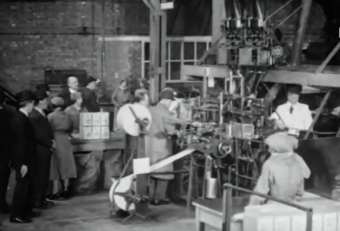
The Greater London Industrial Archaeology Society in conjunction with the Cinema Museum and Huntley Film Archives are running an evening showing films from the John Huntley Archive about London’s Industrial Heritage. The event will take place on the 27th November 2024, presented by Amanda Huntley, and there will be an optional tour of the museum afterwards.

John Huntley (1921 – 2003) was an English film historian, educator, and archivist. Born in Kew, London, he started in the the film industry as a teaboy at Denham Studios around 1938. He later worked for the British Filn Institute from 1952 to 1974, first for the information department, but from 1955 in distribution. In 1984 he and one of his daughters, Amanda, set up Huntley Film Archives. This is an archive of documentary, educational, industrial, medical, travelogue, and feature films, containing films of the lives of ordinary people around the world. For more details on the archive follow this link: https://www.huntleyarchives.com/aboutus.asp

To book your £10 ticket for the event follow this link: https://ticketlab.co.uk/event/id/28012.

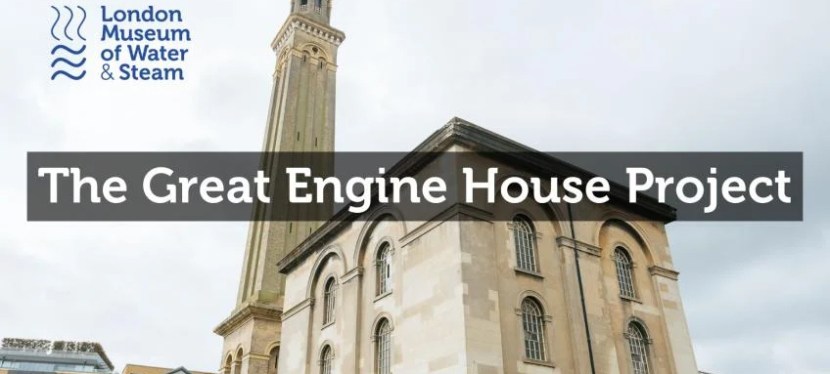
The Great Engine House Project: London Museum of Water & Steam

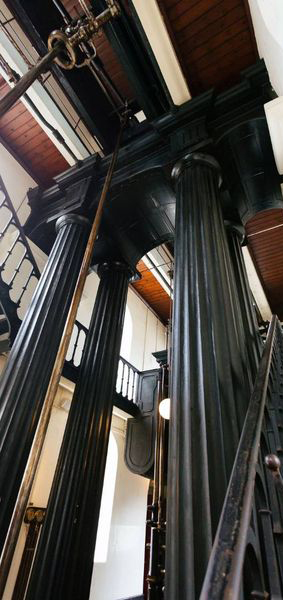
The London Museum of Water and Steam (LMWS) has launched a funding appeal for its ‘Great Engine House Project’. The Great Engine House is home to the Grand Junction 100 Inch and the 90 Inch beam engines which pumped clean water into the homes of millions of Londoners between 1838 and 1944. 

The Museum is based in a Georgian water pumping station in Brentford, West London, and is home to a large collection of steam engines. Described by DCMS as “the most important historic site of the water supply industry in Britain” the LMWS shares the history, science, and the stories behind London’s public water supply.

Now it needs public help to preserve this internationally important collection. The Museum has a funding and maintenance backlog due to the COVID lockdowns and lack of funds for expensive scaffolding. The Grade I listed Engine House and the two huge beam engines it contains have all suffered significant degredation over the last few years.

The ‘Great Engine House Project’ aims to return the engine house to a watertight state, remove damaging past repairs, conserve the engines and improve their environmental conditions, improve accessibility, remove any materials containing asbestos, and reduce carbon emissions from running the engines.

To donate follow this link: https://www.crowdfunder.co.uk/p/great-engine-house

Greenwich Industrial History Society’s Talks on Youtube

Over the past couple of years talks on Zoom for Greenwich Industrial History Society have been recorded on Youtube.  The talks listed below are now available and more will be added soon.  They can be accessed via Youtube.  The  general link is https://www.youtube.com/@GreenwichIndustrialHistorySoc The talks available are as follows:

  • Charlton and Woolwich’s role in building the Pipeline Under The Ocean (PLUTO) of WW2. Stewart Ash. How Siemens Operation PLUTO got fuel to the Normandy beach-head in the Second World War.
  • Deptford, Greenwich and the History of Enslavement.  Judith Hibbert, and Helen Paul (Museum of Slavery and Freedom). The sad role of our part of London in the trade in enslaved people.  Deptford is the original point of departure for the first slaving ships.
  • George England and the Hatcham Locomotive Works. Kevin Robinson.Hatcham Locomotive Works New Cross was where George England (1812–1885) built six engines for the Ffestiniog Railway
  • Greenwich and Woolwich became the Birthplace of the Global Telecoms Network. Alan Burkitt-Gray.  Workplaces in Greenwich and Woolwich began what is now the global network that lets people communicate by phone, WhatsApp, Facebook and other platforms.
  • Greenwich Marsh to Greenwich Peninsula, 300 years of Regeneration. Mary Mills. The Greenwich Peninsula, now home to the O2, has been the scene of industry for a thousand years.
  • Greenwich Riverside, from Deptford to Charlton. Mary Mills. What do we really know about the Greenwich riverside? How has it evolved and been used over the centuries?
  • Keeping the World Connected, with Greenwich’s High-tech Industry. Stewart Ash. About submarine telecommunication cables and the vital role our area has played.
  • Marie Celeste de Casteras Sinibaldi, the undefeated blacksmith of Deptford. Ann Dingsdale.  The extraordinary personality of Marie Celeste de Casteras Sinibaldi, whom she calls the “undefeated blacksmith”.
  • Peter Marshall’s photographs of Greenwich and Docklands history since 1970. Peter Marshall. Photographing London since the 1970s with a particular interest in industrial and commercial buildings.  
  • Progress Estate, Eltham, Munitions Workers’ Housing. John McGuinness. The Great War created a need to house the enlarged workforce. The Progress Estate in Eltham, was built in 1915 to house Woolwich Arsenal workers.
  • Royal Greenwich: Archaeological Sites, Past, Present and Future. Mark Stevenson. The Archaeological Advisor to the Borough on sites from the recent past, current sites and as sites soon to see — archaeologists hard at work.
  • South London’s Failed Canals. Alan Burkitt-Gray. There are still remains of canals in south London if you know where to look. Built to connect to the English Channel they ultimately failed, while north London’s canals thrive.
  • Tools of Empire? The International Landscapes of the People and Materials of Submarine Telegraphs. Cassie Newland. Deconstruct the cables into their messy constituent parts, and tease out the international landscapes of people and materials linked by them – from the colonial copper-smelters in Chile to the indigenous gutta-percha collectors of Sarawak; and the peasant tar-burners of rural Sweden
  • Was There Really a Victorian internet?  Bill Burns. Over 170 years of history of communication after the laying of Greenwich made cables began in the mid-19th century
  • What about the workers? The Social History of Greenwich Hospital. Jacky Robinson. The Royal Hospital for Seamen, 1705 -1869, and the nurses and officers who lived and worked there
  • When Doctor Who and the Cybermen Came to Greenwich. Nigel Fletcher  The 25th anniversary of the TV series 1988 was marked by Silver Nemesis, part-filmed in Greenwich, on the peninsula. 

GIHS continues to lobby Greenwich Council to restore a properly functioning archive and museum service in the borough. Follow this link to sign the petition:   https://chng.it/cS7TtpzyHj