Welcome to the Industrial Heritage Networks and Support website. This site is maintained and updated by the Ironbridge Gorge Museum Trust who run the project and the networks. We aim to support industrial heritage in England through networking, information exchange, guidance, and training. Please explore the website and please contribute! For more information you can … Read more Welcome to the IHNs website!
For several years Historic England has been running a very successful lunchtime learning webinar training series. The latest industrial heritage webinar case study on the work of the Canal & River Trust, held earlier this autumn, can now can be viewed online.
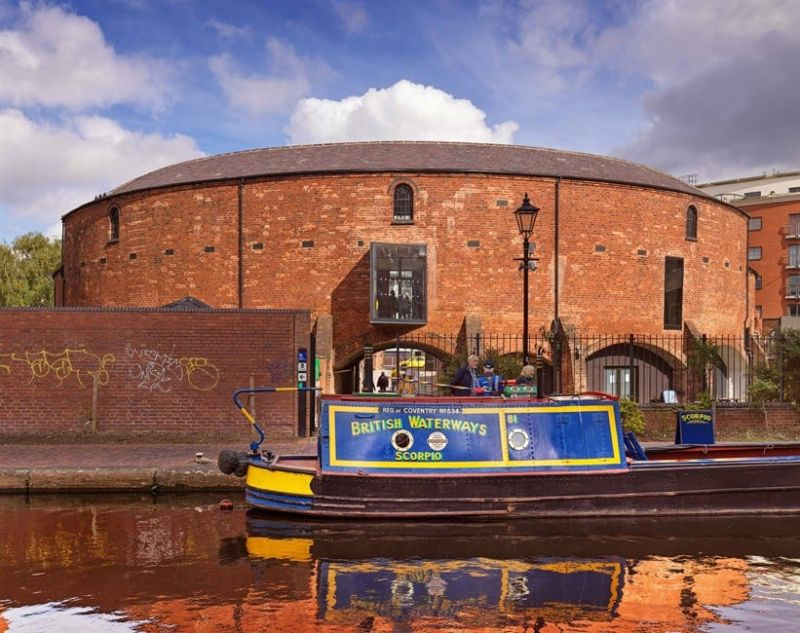
One example of the re-use and conservation of canal-related industrial heritage mentioned in the webinar was The Roundhouse, Sheepcote Street, Birmingham. This former horse-shoe shaped stables and stores was built as a mineral and coal wharf, around 1840. Listed Grade II* the site was removed from the Heritage at Risk Register in 2021, renovated with the help of NHLF and CRT, and is now being run as a heritage enterprise by the charity Roundhouse Birimgham providing office space, a visitor centre, and canal-related leisure and outreach activities.
The Roundhouse, Sheepcote Street, Birmingham. Image courtesy of Historic England.
The next Historic England free industrial heritage webinar will be on October 24th, from 13.00 to 14.00. It will focus on the canal network and the work of the Canal & River Trust in England and Wales.
Presented by the Canal & River Trust, it will describe the organisations establishment and role, the nature and significance of the canal network, its operation, management and maintenance, and how the Trust works in partnership with others.
The Canal & River Trust is seeking people to join its team of fantastic volunteers and help care for the historic Gloucester Docks and the Gloucester & Sharpness Canal. There are a wide range of opportunities on offer.
The Trust is seeking volunteers to join its Gloucester Task Force, which cares for the environment around Gloucester Docks, making it a special place to visit, popular with boaters, local people and visitors. People who have a passion for teaching and inspiring young people are needed to support the Trust’s Explorers education programme. This role offers the opportunity to bring the waterways and their heritage to life for children and schools through events, visits and the National Waterways Museum.
The National Waterways Museum Gloucester is a popular visitor destination in the heart of the docks. The museum needs volunteers to act as guides and talk to visitors, sharing their passion for local history, the docks and what the waterways has provided for people and wildlife for over two centuries.
The canal boasts 18 historic swing bridges running down its entire length from Gloucester to Sharpness. Volunteer bridge keepers are needed to keep these bridges open for boats to navigate the canal, speaking to people and keeping them safe while operating the bridges.
Once the broadest and deepest canal in the world, the Gloucester & Sharpness Canal still stands out from other navigations because of its sheer scale and impressive engineering. Its rich history in acting as a bypass to protect boats from a treacherous stretch of the River Severn is still alive today, with Gloucester Docks a stunning Victorian inland port, and home to the popular Tall Ships Festival. To discover more about the work of the Canal & River Trust, and how you can volunteer or donate, go to canalrivertrust.org.uk.
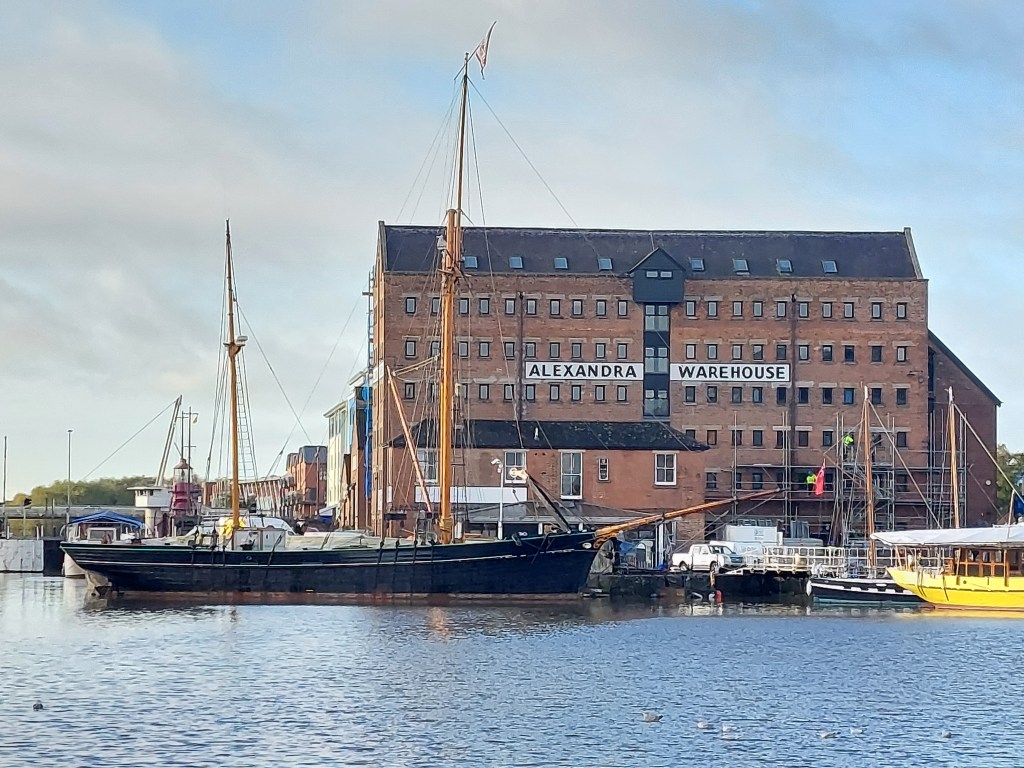
19th century canal warehouse at the Glouscester Docks. Image copyright Dr Michael Nevell.
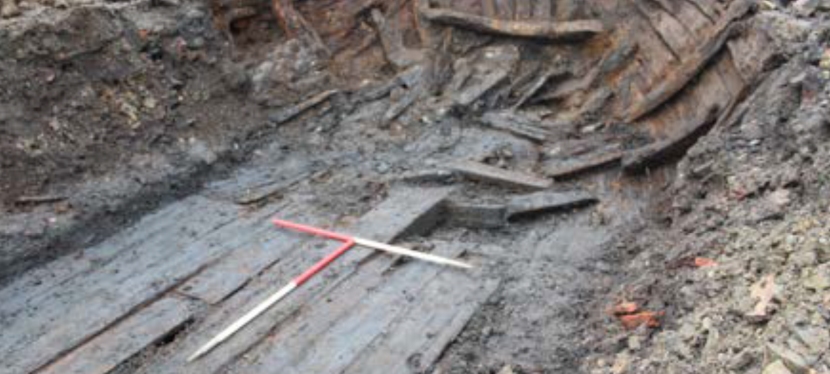
The excavation of the stern of Boat A at the Rochdale Canal Basin, October 2022. Image courtesy of MOLA.
An audio drama based on archival research and excavations of 19th century barges in the Rochdale Canal basin, and starring Christopher Eccleston & Joyce Branagh, is to be launched on the 4th September 2024. Five northern writers collaborated with the Museum of London Archaeology (MOLA) and North West production company Bamalam CIC to produce a professional audio drama entitled ‘Scuttled’ as 5×30 minute episodes. It tells the story of a single family living and working on the Rochdale Canal between 1840 and 1922.
‘Scuttled’ was produced by Bamalam Productions and one of the archaeologists involved in the dig, Kelly Griffiths. It is written by Ian Winterton with Neil Bell, Isabel Hague, Janine Lanek, Katie Moore and Paul Rigby, with input from Rochdale Local Studies and the children of St Edward’s School, Rochdale.
The drama is based upon the excavation of the Rochdale Canal basin undertaken in October 2022 by MOLA, ahead of redevelopment works. The partial remains of six vessels were excavated in the canal basin, with two types present; Mersey Flat Type flat dumb barges and a composite iron and wooden framed pontoon or float. The flats dated from the mid-19th century with the float likely from a later date. The vessels were abandoned in 1921 when the Rochdale Canal Company ceased to trade. The site demonstrated how vessels at the end of their life were abandoned and likely exploited for reusable parts.
The Lancashire Local History Federation, with the Leeds & Liverpool Canal Society, are running a day school on the 2nd November on theme ‘The canals and waterways of Lancashire’. This is to celebrate the 250th anniversary of the opening of the first section of the Leeds and Liverpool Canal from Parbold to Wigan.
Talks on the day will cover the historical importance of Lancashire’s industrial waterways, the construction of the Leeds & Liverpool Canal, the Douglas Navigation, canal traffic and traders, and the Lancaster Canal. The Day School will be held at the Preston Masonic Hall in Preston, Lancashire, from 10am to 4pm.
The booking form is below, or you can email the Day School organiser here: elizoelaw@gmail.com
The Lancashire and Cheshire Antiquarian Society are holding their annual conference on 11th May 2024. The theme is new research, with a focus on local history, family history, and industrial archaeology.It will be held at the friend’s Meeting House, Mount Street, Manchester, M2 5NS from 10am to 3pm.
The talks will include presentations Helen Corlett talking about The Cooper at Old Bridge End: Finding a Place in Early 19c Manchester (a micro study of the experience of an artisan-tradesman family migrating to Manchester from the rural north); Neil Coldrick on Medieval Ironworking in Holcombe Valley; and Kelly Griffiths discussing Scuttled: Excavations on the Historic Canal Basin in Rochdale (looking at excavating late 19th century canal boats).
The conference is free to members of the Lancashire and Cheshire Antiquarian Society and the Manchester Local Family History Society, but donations are gratefully accepted. The fee for non members is £12.00 payable to Lancashire and Cheshire Antiquarian Society. Please email secretary@landcas.org.uk to book your place.
A canal boat being excavated at Rochdale.
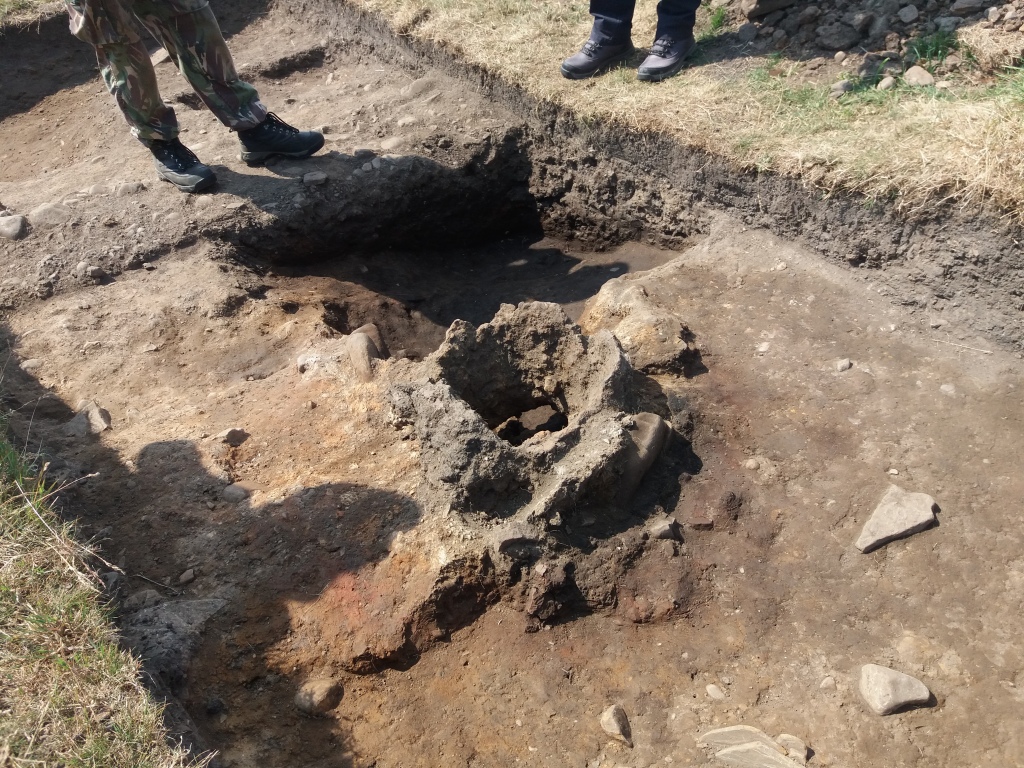
Medieval bloomery during excavation at Holcombe in 2018.
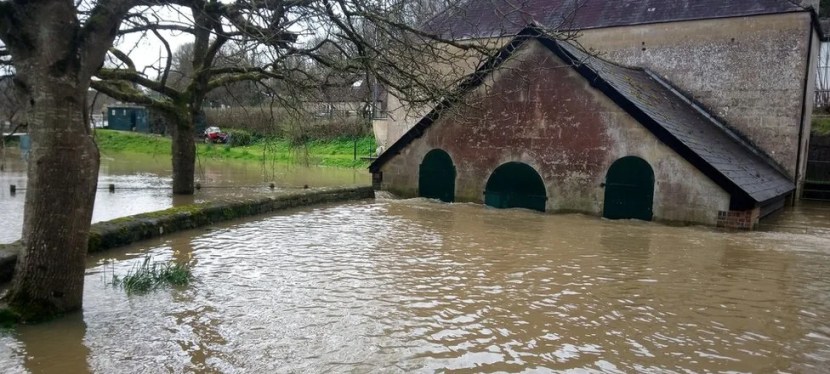
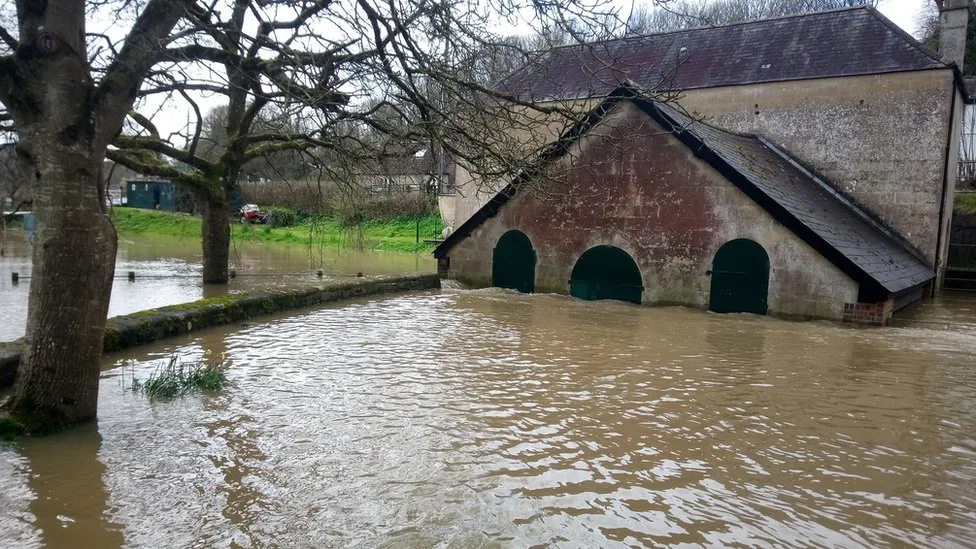
Flooding in the wheel pit at Claverton, 2024. Image courtesy of The Claverton Pumping Station Trust.
Claverton Pumping Station have launched an online appeal for funds after suffering 17 floods between October 2023 and April 2024. The aim of the appeal is to replace rotten timber, and to make the site’s operations more flood resilient. The Grade I listed building was restored by volunteers between 1969 and 1976, and is maintained and run by the volunteers of The Claverton Pumping Station Trust CIO, though it is owned by the Canal and Rivers Trust.
Claverton Pumping Station was built between 1809 and 1813, to a design by the engineer John Rennie, to overcome problems of water supply for the Kennet and Avon Canal near Bath. A 17 foot (5 m) diameter by 24 foot (7 m) wide water wheel powers a large beam engine that pump 50 gallons of water every two seconds from the River Avon up 48 feet into the Kennet and Avon canal. The pump operated from 1813 until 1952. It is the only working example of a waterwheel-driven pumping station on the national canal network.
The Claverton Pumping Station Trust observed that ‘as flooding is predicted to become more frequent and more severe having extra money ring-fenced for flood repairs and flood resilience will allow us to continue proactive maintenance and to make timely repairs when necessary.’
The Canal and River Trust (CRT) have announced how they are trialling an innovative AI CCTV system on the Lancaster Canal to catch hit-and-run motorists damaging 200-year-old stone bridges. Annually, vehicle strikes on CRT bridges cost up to £1 million in repairs, diverting vital funds away from work waterway conservation.
The new system is controlled by AI using a mobile phone signal and doesn’t continuously record but takes a few photos when it detects vehicle movement. The AI then assesses if the bridge has been impacted. If there is no strike, the photos are deleted and if damage has been caused, Trust staff receive a notification, allowing them to identify number plates to track down the offenders and claim full repair costs on their insurance.
Andy Dobson, CRT asset engineer, said: “Hump-back bridges, an iconic part of Britain’s canal network, were built for the passage of horse-drawn carts, not for today’s modern vehicles and HGVs. Due to the large number of rural, narrow roads crossing the Lancaster Canal, it has more bridge strikes than any other. The bridges are part of the canal’s special character and heritage, and each time one is hit a small piece of history is lost.”
Crofton Beam Engines has received a grant of £27,760 from the National Lottery Heritage Fund for a project to develop and test ideas for increasing the number and range of people engaging with Crofton. The ‘Crofton 2030’ project will help Crofton Beam Engines retain its position as a premier heritage attraction, worthy of its Grade 1 listed status, and ensure that they can keep the engines operating to 2030 and beyond.
The grant is made possible by money raised by National Lottery players, and builds on a previous Heritage Fund grant in 2018 which funded repairs to the historic buildings, new visitor facilities such as accessible toilets and improved interpretation around the site. The project has four main elements:
• to review engagement and ‘value added’ activities at similar heritage sites; • to carry out market research on potential opportunities to broaden audiences and increase income; • to develop a Site Master Plan, making best use of our existing facilities and developing new facilities where needed and possible (given the limitations of the site); and • to develop a business strategy for Crofton running to 2030, and a more detailed three year forward plan.
Crofton have now appointed two heritage experts to assist us in this work, Riah Pryor and David Tucker. The project is being managed by a project group headed by Chris Bolt, Treasurer of The Kennet and Avon Canal Trust and Vice-Chairman of the Crofton Branch. Chris commented that: “Crofton Beam Engines is one of the most significant industrial heritage sites in the UK and a fascinating visitor attraction. We want to increase the number and range of people who can enjoy and learn from our unique site. We are very grateful for the support of the Heritage Fund to help us do that.”
Riah Pryor said: “I am excited to be working with Crofton Beam Engines. There is great potential to expand its activities and I want to help find the best ways of doing this so that the future of this special part of Britain’s industrial heritage can be assured.” David Tucker added: “Having carried out some initial work for the Trust last year about ways Crofton Beam Engines could increase its appeal to visitors further, I am looking forward to helping the team develop clear plans which turn their ideas into reality.”
The Crofton 2030 project will be completed in the autumn. Crofton Beam Engines is owned by The Kennet and Avon Canal Trust, registered charity no 209206 Website – https://www.croftonbeamengines.org/
The recording of Historic England’s recent industrial heritage webinar on the Elsecar Heritage Action Zone is now available to view on-line. It provides an overview of the project, which ran from 2017 to 2020, including the research programme, protection and management strategies, community outreach and engagement, and how Barnsley Museums are building on this legacy with an ambitious programme and vision for the village.
Elsecar is an industrial estate village of the later 18th and 19th century near Barnsley. It retains important buildings relating to the coal and iron industries from this period, as well as extensive workers’ housing. The first major colliery, Elsecar Old, was sunk in 1750 and taken over by the Marquis of Rockingham in 1752. The small village next door was then transformed from the 1790s at the direction of the 4th Earl of Fitzwilliam of Wentworth Woodhouse, with the sinking of its first deep colliery (which retains its original Newcomen pumping engine in situ), the cutting of a canal, the building of two ironworks and associated housing designed by architect John Carr of York. Elsecar is thus one of the first model industrial villages in the UK.