Welcome to the Industrial Heritage Networks and Support website. This site is maintained and updated by the Ironbridge Gorge Museum Trust who run the project and the networks. We aim to support industrial heritage in England through networking, information exchange, guidance, and training. Please explore the website and please contribute! For more information you can … Read more Welcome to the IHNs website!
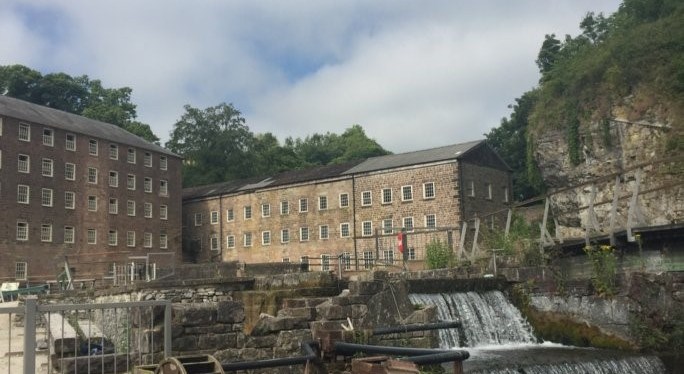
Bookings are now open for the next in-person East Midland’s Industrial Heritage Network meeting to be held at Cromford Mills, Derbyshire, on Friday 25 July, 11am to 3pm.
Established in 2018, these regional meetings are designed to bring together those industrial heritage sites open to the public in each region, and local groups and individuals working or volunteering on industrial archaeology and heritage subjects and sites in the area. The format is a round-table discussion in the morning, with a tour of the site in the afternoon.
All IHN members are very welcome to attend. You can turn up on the day or follow this link to book a place via Eventbrite:
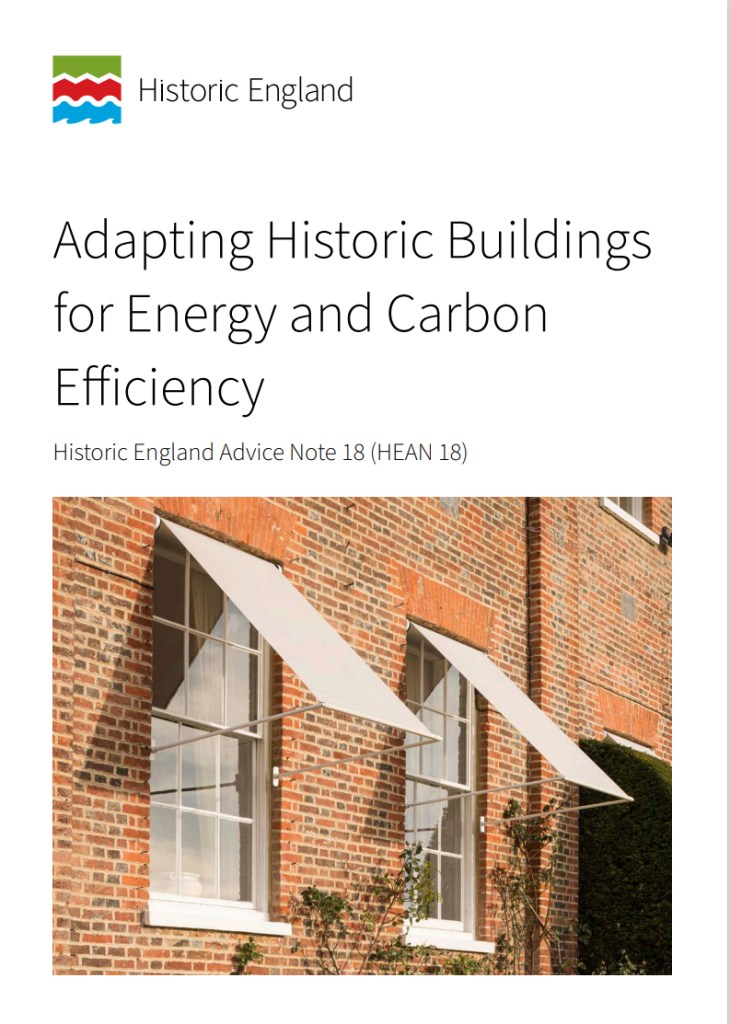
Historic England has published new advice on balancing climate action with building adaptation. The new advice note ‘Adapting Buildings for Energy and Carbon Efficiency’ is aimed primarily at local authorities, heritage consultants, and those involved in the planning process. It makes clear that historic properties can be retrofitted with energy-efficient measures such as heat pumps, solar panels, and insulation.
The guidance is intended to “provide clarity and support consistent decision-making” for proposals to reduce carbon emissions and improve the energy efficiency of historic buildings, while conserving their significance. It reflects current planning policy and covers:
Advice on what permissions, such as listed building consent, are needed for some of the common changes required to decarbonise and improve the energy efficiency of historic buildings
Advice to assist local planning authorities – and other parties involved in the planning process – in determining proposals to decarbonise and improve the energy efficiency of historic buildings to enable positive climate action. Some typical building adaptations in response to climate change impacts are also included
Signposting to other relevant information, advice, and guidance.
AIM and Historic England are hosting a roundtable discussion on Wednesday 25 Jan, 11-12.30 to understand what issues different orgs may be facing and what type of support they may need around working towards net zero.
Historic England is undertaking a piece of work to find out what stage organisations are at on their journey towards carbon net zero, what issues they may be facing and what type of support they may need. And they want to hear from you. Join AIM and Dan Miles, project lead for Historic England for this online roundtable to dive a bit deeper into some of the issues that may be affecting different parts of the sector.
This roundtable is open to non-members as well as AIM members, and is ideal for those with operational decision making at your museum.
To book your place on the Roundtable on 11am Wednesday 25 January click here>>
Sector net zero survey
A survey is also running to capture your feedback on the issues affecting your journey to net zero. If you can’t make the roundtable, you may want to share your input here instead.
This is a great opportunity to for organisations to learn and chat with each other, as well as helping AIM and Historic England understand how industrial heritage sites can be better support them.
As the heritage sector grapples with Lockdown 3, its worth remembering that there is a large amount of advice and help available for industrial heritage. For instance, the Association of Independent Museums has updated its Coronavirus resources page. There you can find links to the latest Government advice for museums, the second round of the Cultural Recovery Fund (closing on the 26 January 2021), financial support, and other funding packages available from Government for heritage businesses.
AIM also provides online training and detailed advice for museums during lockdown, from a COVID-19 Action Checklist, business resilience checklist, and good governance in a crisis, to insurance, business rates, and funding tips. There’s also details about how to improve your online and digital presence. Follow this link for more details: Coronavirus resources – AIM – Association of Independent Museums (aim-museums.co.uk)
A partial re-opening of the heritage sector is now underway in England with the ending of the second lockdown today (2 December 2020). However, industrial heritage sites, along with other cultural and museum venues, remain closed under the revised Tier 3 COVID-19 restrictions.
Re-opening guidance for museums were issued in July 2020 by the National Museum Directors’ Council (NMDC) Planning and Remobilisation Group, with support from the Department for Digital, Culture, Media and Sport, and contributions from across the museum sector, including AIM. They are intended for use by museums in England. Separate re-opening guidelines are available for Scottish and Welsh cultural and heritage sites. This is guidance will also be relevant for all industrial heritage sites planning to open early in 2021.
The Association of Independent Museums and the Museum Development Network have produced a checklist to be used in conjunction with the Guidelines, to help museums take a strategic, well informed, approach to making decisions on re-opening and implementing a safe and effective plan in conjunction with the national guidance for museums.
Applications are now open for the next round of free support from the Rebuilding Heritage programme. Rebuilding Heritage is a free support programme, funded by the National Lottery Heritage Fund, to help the heritage sector respond to the ongoing impacts of the COVID-19 pandemic.
Heritage organisations and businesses can apply for one-to-one support in business planning, fundraising, and communications and marketing, and for a place on group training in leadership and in managing staff wellbeing.Full details of the support on offer and the application process are available on the Rebuilding Heritage website. The closing date for applications is Wednesday 16 December and decisions on applications from the Rebuilding Heritage team will be confirmed before Christmas. Details here:
With around a third of industrial heritage sites re-opening in July and more in August it’s a good time to highlight the National Museum Directors’ Council (NMDC) guidelines on re-opening museums. These have been compiled with support from DCMS and the Museums and Galleries Working Group. The guidelines are intended to help employers, employees, and the self-employed, and volunteers in the museum sector in England in understanding how to work safely during the COVID-19 pandemic.
The guidelines provide a set of practical considerations for museums to work through before reopening, which should be used in conjunction with COVID-safe guidelines published by HM Government. These are intended to enhance, not supplant, existing regulations and to sit alongside and inform the existing business practices and standards museums already consider when managing risk and conducting business planning activities.
The intention is to periodically update these as and when new Government guidance becomes available during the different steps of adjustment to lockdown. To download the guidelines follow this link:
NMDC has also produced a timeline of possible stages of reopening, since there will be no single date on which all museums reopen. Rather, there is a range of different approaches depending on the individual museum. The timeline can be found here:





 Industrial Heritage Networks