Welcome to the Industrial Heritage Networks and Support website. This site is maintained and updated by the Ironbridge Gorge Museum Trust who run the project and the networks. We aim to support industrial heritage in England through networking, information exchange, guidance, and training. Please explore the website and please contribute! For more information you can … Read more Welcome to the IHNs website!
The 6th East-West Workshop on Industrial Archaeology, sponsored by the Association for Industrial Archaeology, brings together historians and archaeologists from the UK, China, and Brazil to examine the ruins of industry as sources of information (archaeological evidence), inspiration and aesthetic experiences. The workshop delves into the ancient and modern ruins of industry as particular archaeological sites that allow, and demand, different explorations. It will take place online on 11 May 2024, 10.00-12.00 GMT.
The East-West series of workshops aims to exchange ideas and knowledge among Western and Eastern colleagues to build a more international and diverse industrial archaeology. The activity is organised jointly by the Institute for Cultural Heritage and History of Science & Technology (USTB, China), the UK Association for Industrial Archaeology, and its Young Members Board. The speakers will be:
Hilary ORANGE (Swansea University, Wales): “Stuff Kicked Underfoot – The Surfaces of Industrial Ruination”
Xianping GAO (University of Science and Technology Beijing, China): “Excavating the Ruins of the Chinese Porcelain Industry: The Luomachiao Kiln Site in Jingdezhen”
Guilherme POZZER (University of Sheffield, England): “Words in Ruins: Sensorial, Affective and Creative Approaches to the Ruins of Industry”
The Lancashire and Cheshire Antiquarian Society are holding their annual conference on 11th May 2024. The theme is new research, with a focus on local history, family history, and industrial archaeology.It will be held at the friend’s Meeting House, Mount Street, Manchester, M2 5NS from 10am to 3pm.
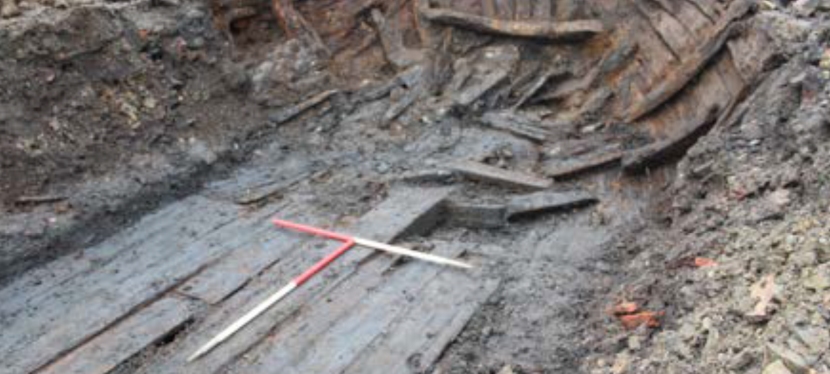
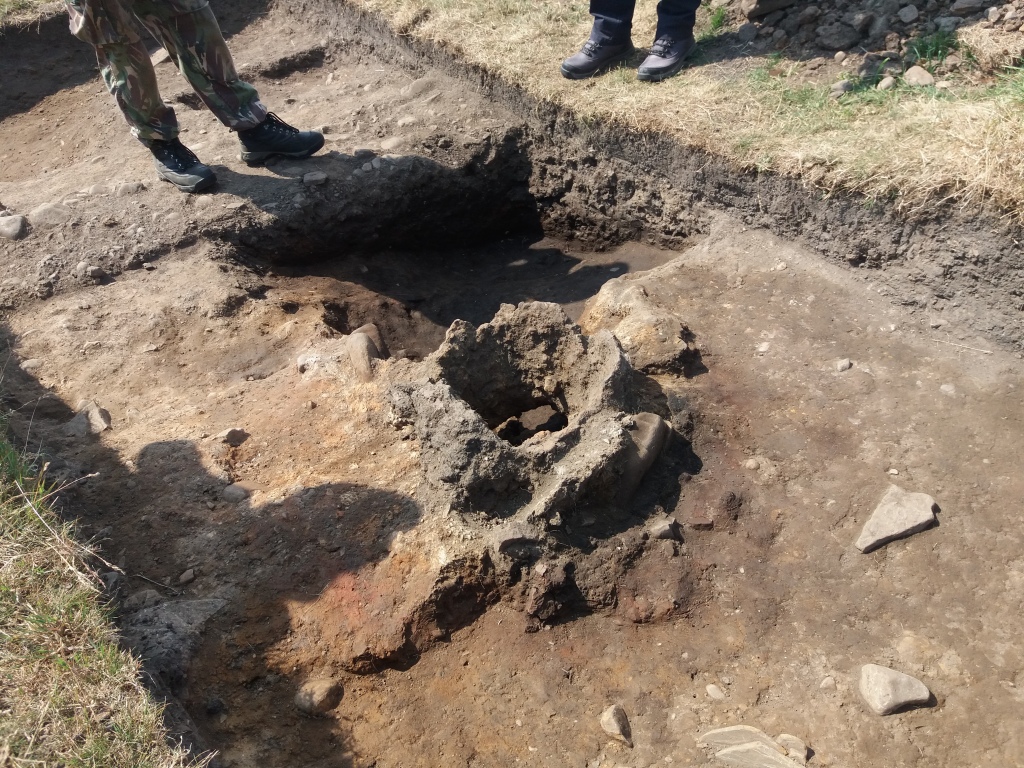
The talks will include presentations Helen Corlett talking about The Cooper at Old Bridge End: Finding a Place in Early 19c Manchester (a micro study of the experience of an artisan-tradesman family migrating to Manchester from the rural north); Neil Coldrick on Medieval Ironworking in Holcombe Valley; and Kelly Griffiths discussing Scuttled: Excavations on the Historic Canal Basin in Rochdale (looking at excavating late 19th century canal boats).
The conference is free to members of the Lancashire and Cheshire Antiquarian Society and the Manchester Local Family History Society, but donations are gratefully accepted. The fee for non members is £12.00 payable to Lancashire and Cheshire Antiquarian Society. Please email secretary@landcas.org.uk to book your place.
A canal boat being excavated at Rochdale.
Medieval bloomery during excavation at Holcombe in 2018.
Booking is now open for a major conference at Ironbridge looking at the life, work, and legacy of L T C Rolt on the 10th May 2024. L T C Rolt, also known as Tom, was a renowned practical engineer and prolific author who wrote books and articles on industrial history, canals, railways, and cars as well as fiction. Rolt was an early supporter of the work of the Ironbridge Gorge Museum Trust and is regarded as one of the founders of the 20th century waterways and railway preservation movements. He was also involved in helping to establish the Association for Industrial Archaeology.
To mark the 50th anniversary of his death, Ironbridge Gorge Museum Trust has partnered with academics from Keele University to host a conference on Friday 10th May which will celebrate his life and the continuing legacy of his work. There will also be conference-related events on the 9th and 11th May.
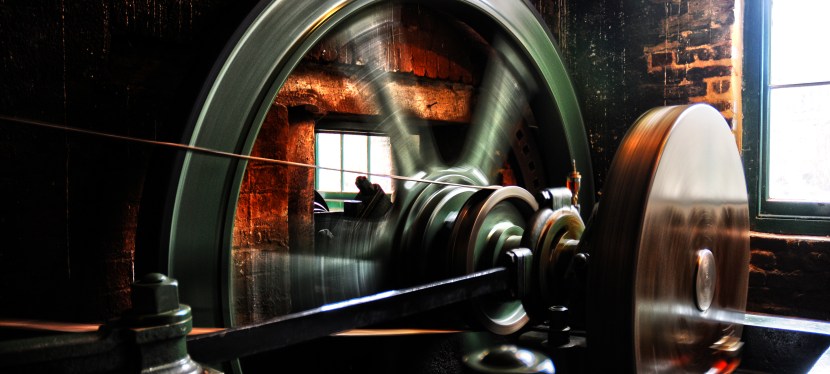
The Working Industrial & Mobile Heritage (WIMH) platform is being developed by umbrella organisations from throughout the industrial and mobile heritage sector in Europe. The European Route of Industrial Heritage (ERIH) is one of the partners in this project. The group is appealing to ERIH members and other industrial heritage sites in the UK for help in collecting evidence to protect a hugely important element of our industrial museums across Europe – their heritage in operation.Other partners currently include: TICCIH – The International Committee for Conservation of the Industrial Heritage; FEDECRAIL – Federation of European Museum & Tourist Railways; FIVA – Federation Internationale des Vehicules Anciens; and the Europa Nostra Industrial & Engineering Heritage Committee.
The working industrial and mobile heritage sector embraces historic machinery at industrial heritage sites and museums, railways, steam ships, road vehicles, and aviation. These all constitute a “social testimony” which ensures that the essential “know how” for the operation of steam powered machinery and combustion engines should not be lost for future generations. Cultural heritage enriches the lives of people and plays a role in enhancing Europe’s social capital. Our sector is also an important resource for economic growth, employment and social cohesion. Working industrial and mobile heritage depends on the continued and limited availability of fossil fuels, like coal and oil-based derivatives. Such fuels remain necessary for the dynamics of heritage machines and vehicles.
As set out in in the 2014 document “Towards an Integrated Approach to Cultural Heritage for Europe”, the European Union is committed to promoting industrial heritage. Our sector is currently facing certain challenges, such as reliance on a limited availability of fossil fuels. The European Union, and other national governments such as the UK throughout Europe, need to take a balanced approach to the almost negligible environmental impact of limited fossil fuel usage by the sector and the legitimate objective of preserving this heritage. For example, assisted also by retaining a continued source of suitable coal at a location within Europe.
A key task of the WIMH partnership is to try to gather as much data as possible of the current annual consumption of our sector, especially of coal but also historic oil based fuels. Considerable efforts have already been made in particular by the railway heritage sector in several countries, including the UK, and research is being undertaken by the historic road transport sector.
Who should respond?
Working from this foundation, the next steps are to build up a picture of at least approximate fossil fuel usage from the industrial heritage sector. This survey is for museums and heritage sites for whom fossil fuel power is needed for continued operation of pumps and industrial machines which form such an important part of the interpretation to the public at our sites. Not only coal-fired boilers and equipment, but also other machinery which operate with petrol, diesel, or other traditional oil based fuels. Follow this link to fill in the survey:
The cost of living crisis combined with cuts to Local Authority budgets in England are leading to the closure, or proposed closure, of industrial heritage sites and museums in 2024. Closures and threatened closures cover sites from Kent and Cornwall, to Hampshire and Yorkshire.
The Heartlands Trust and Cornwall Council have announced that the Heartlands Mining Heritage Centre, in Pool, Cornwall, is set to close, although the surrounding park, offices, and shops will remain open managed by the Council. The heritage centre opened in 2012. The Heartlands Trust said on its website (https://www.heartlandscornwall.com/) that it would cease trading at the end of January and “would like to express our gratitude to everyone for their support over the past 12 years”. A joint statement from the trust and the local council said: “Heartlands had never seen itself as a commercial operation but finance has always been precarious. Budget over-runs on the original build project meant vital units intended to provide rental streams were never built and intended developer contributions for playground maintenance were never received.” Further details here: https://www.bbc.co.uk/news/uk-england-cornwall-67924474)
In February 2023, Eastleigh Borough Council, which part funded the day-to-day operational costs of Bursledon Windmill, informed Hampshire Cultural Trust of their intention to withdraw their funding from the end of August 2023. Simultaneously, as part of a project to refurbish and replace the mill sails, Hampshire Cultural Trust commissioned a full health and safety report, the outcome of which was a requirement either to have staff available 24 hours a day, seven days a week to turn the mill, or to install a new tethering system for the sails. As of 14 November 2023, there has been no further decision regarding the long-term future of Bursledon Windmill and if it will continue to be open to the public after 1 April 2024. Hampshire Cultural Trust is continuing to work with HBPT and Hampshire County Council to seek clarity. Further details here: https://www.hampshireculture.org.uk/bursledon-windmill
Just before Christmas 2023 Kent County Council announced a consultation on proposals to change the ownership arrangements of the eight windmills that are currently owned by KCC for eight windmills across the county for which it is currently responsible. The windmills affected are Chillenden Mill, Union Mill, Herne Mill, Drapers Mill, Meopham Mill, Davison’s Mill, West Kingsdown Mill, and Stocks Mill. The move would save the council around £800,000 during the years 2024 to 2029. Several of the mills are run by local voluntary groups who open the sites to the public. The proposal would be a change to the current strategy set out in the Kent Heritage Conversation Strategy and as such needs to go to public consultation. The consultation ends on January 29th 2024. Further details here: https://www.kentonline.co.uk/kent/news/have-your-say-on-plans-to-sell-off-kent-s-windmills-297729/
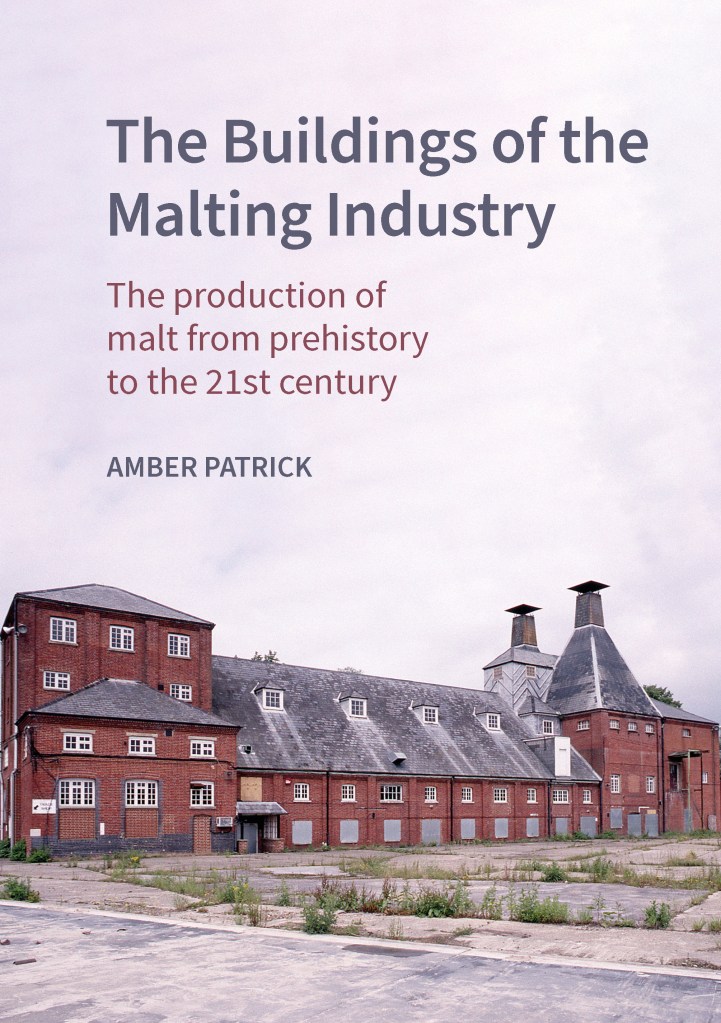
The latest industrial heritage title by Historic England/Liverpool University Press has recently been published: ‘The Buildings of the Malting Industry: The production of malt from prehistory to the 21st century’ by Amber Patrick.
Malt is one of the main ingredients of beer, yet the buildings in which it was and is now produced have received very little attention. Although most towns and many villages had their own malthouse and kiln, this is the first book to address this important building type. Today, evidence for a malthouse may just be a name on a building or street, but where they survive the pyramidal roofs clearly demonstrate the presence of a malthouse as do other less recognisable features. This book shows how they changed over the centuries with accompanying illustrations, including those that have been converted to new uses. Further details can be found here – https://liverpooluniversitypress.co.uk/doi/book/10.3828/9781837644285
Over the past couple of years talks on Zoom for Greenwich Industrial History Society have been recorded on Youtube. The talks listed below are now available and more will be added soon. They can be accessed via Youtube. The general link is https://www.youtube.com/@GreenwichIndustrialHistorySoc The talks available are as follows:
Charlton and Woolwich’s role in building the Pipeline Under The Ocean (PLUTO) of WW2. Stewart Ash. How Siemens Operation PLUTO got fuel to the Normandy beach-head in the Second World War.
Deptford, Greenwich and the History of Enslavement. Judith Hibbert, and Helen Paul (Museum of Slavery and Freedom). The sad role of our part of London in the trade in enslaved people. Deptford is the original point of departure for the first slaving ships.
George England and the Hatcham Locomotive Works. Kevin Robinson.Hatcham Locomotive Works New Cross was where George England (1812–1885) built six engines for the Ffestiniog Railway
Greenwich and Woolwich became the Birthplace of the Global Telecoms Network. Alan Burkitt-Gray. Workplaces in Greenwich and Woolwich began what is now the global network that lets people communicate by phone, WhatsApp, Facebook and other platforms.
Greenwich Marsh to Greenwich Peninsula, 300 years of Regeneration. Mary Mills. The Greenwich Peninsula, now home to the O2, has been the scene of industry for a thousand years.
Greenwich Riverside, from Deptford to Charlton. Mary Mills. What do we really know about the Greenwich riverside? How has it evolved and been used over the centuries?
Keeping the World Connected, with Greenwich’s High-tech Industry. Stewart Ash. About submarine telecommunication cables and the vital role our area has played.
Marie Celeste de Casteras Sinibaldi, the undefeated blacksmith of Deptford. Ann Dingsdale. The extraordinary personality of Marie Celeste de Casteras Sinibaldi, whom she calls the “undefeated blacksmith”.
Peter Marshall’s photographs of Greenwich and Docklands history since 1970. Peter Marshall. Photographing London since the 1970s with a particular interest in industrial and commercial buildings.
Progress Estate, Eltham, Munitions Workers’ Housing. John McGuinness. The Great War created a need to house the enlarged workforce. The Progress Estate in Eltham, was built in 1915 to house Woolwich Arsenal workers.
Royal Greenwich: Archaeological Sites, Past, Present and Future. Mark Stevenson. The Archaeological Advisor to the Borough on sites from the recent past, current sites and as sites soon to see — archaeologists hard at work.
South London’s Failed Canals. Alan Burkitt-Gray. There are still remains of canals in south London if you know where to look. Built to connect to the English Channel they ultimately failed, while north London’s canals thrive.
Tools of Empire? The International Landscapes of the People and Materials of Submarine Telegraphs. Cassie Newland. Deconstruct the cables into their messy constituent parts, and tease out the international landscapes of people and materials linked by them – from the colonial copper-smelters in Chile to the indigenous gutta-percha collectors of Sarawak; and the peasant tar-burners of rural Sweden
Was There Really a Victorian internet? Bill Burns. Over 170 years of history of communication after the laying of Greenwich made cables began in the mid-19th century
What about the workers? The Social History of Greenwich Hospital. Jacky Robinson. The Royal Hospital for Seamen, 1705 -1869, and the nurses and officers who lived and worked there
When Doctor Who and the Cybermen Came to Greenwich. Nigel Fletcher The 25th anniversary of the TV series 1988 was marked by Silver Nemesis, part-filmed in Greenwich, on the peninsula.
GIHS continues to lobby Greenwich Council to restore a properly functioning archive and museum service in the borough. Follow this link to sign the petition: https://chng.it/cS7TtpzyHj
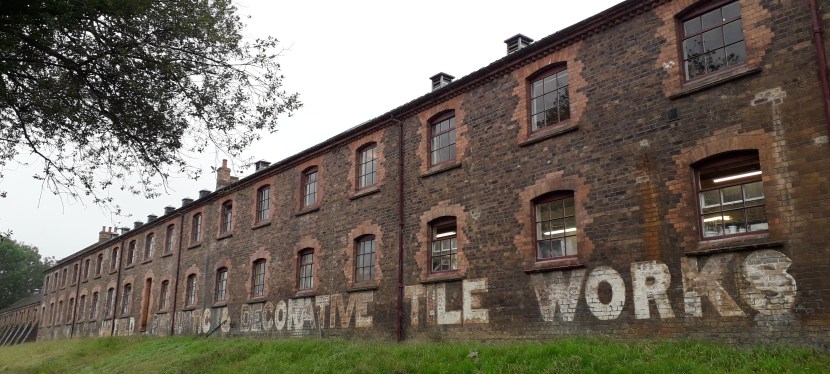
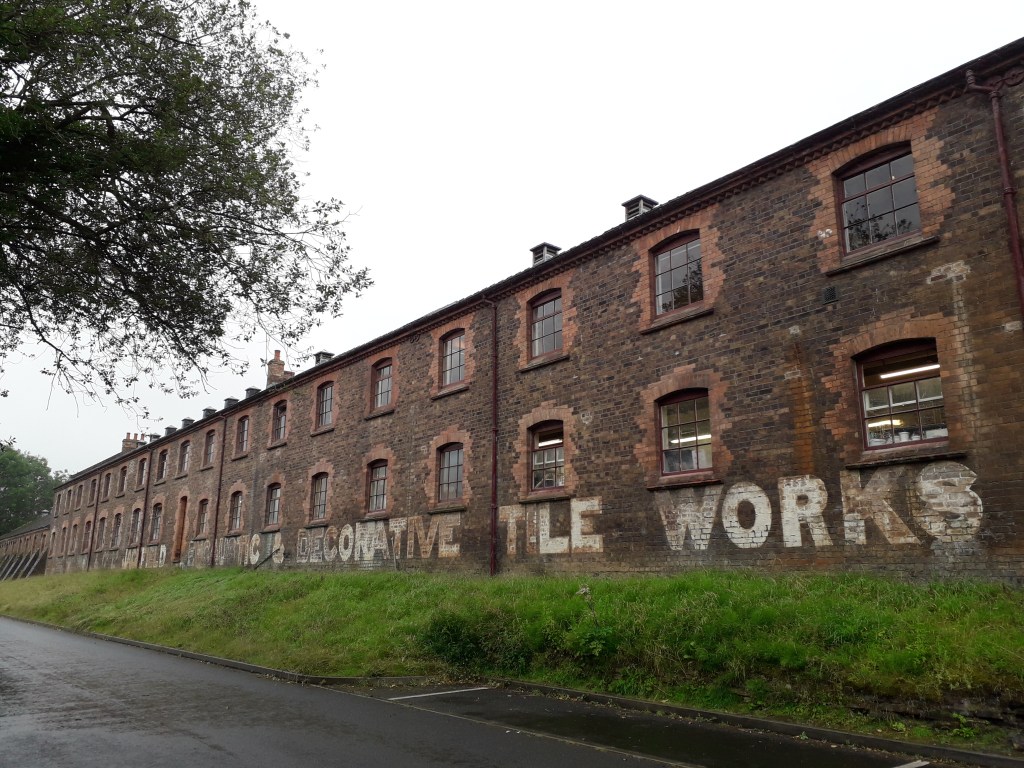
This image of the ghost sign at the Jackfield Tile Works, within the Ironbridge World Heritage Site, was recently add to the National Heritage List maintained by Historic England. Copyright Dr Michael Nevell.
Historic England is inviting the public to the share their pictures and stories of the unique, significant, and memorable places recorded on the National Heritage List for England. The List is a register of all nationally protected historic buildings and sites across England maintained by Historic England, and can be accessed via an interactive map on their website.
With thousands of industrial archaeology and heritage sites included on the List, this is a great opportunity to add material that will increase our understanding of the significance and importance of these sites to local communities and individuals. Historic England are encouraging two types of contribution:
Images: from phone snaps to scans of vintage photos and architects’ drawings, from wide angles to close-ups
Stories: from memories of holidays, school trips, and family events to information about grand openings and transformations
Any photographs included must be ones you took yourself, from public land or rights of way, or with the permission of the landowner. To add an historic image, you must have the rights to it.
Historic England released its annual Heritage at Risk Register in November 2023, marking the 25th anniversary of publicly recording neglected or imperilled heritage sites. In total, there are 4,871 entries on the 2023 register, 44 fewer than in 2022. However, heritage sites continue to be added to the Register every year. In 2023 there were 159 new entries, made up of 44 buildings and structures, 53 places of worship, 55 archaeology entries, 3 parks and gardens and 4 conservation areas.
Hunslet Mill, Leeds. Image courtesy of Historic England
Amongst those heritage sites conserved and so removed from the list are 13 industrial heritage sites. These are:
Bourn Mill, Caxton end, Bourn, Cambridgeshire, LB I, 1162375
Electricity Substation at junction with Sunnyside Passage, Sunnyside SW19, LB II*, 1358028
Lambeth uncovered coal store including tower and attached tunnels, Portsmouth Road, Surbiton, Greater London, LB II*, 1031864
Remains of iron works and gun foundry at North Park Furnace, Linchmere / Fernhurst, Chichester, West Sussex, SAM, 1021403
Surrey Iron Railway embankment, approximately 130m south west of Lion Green Road, Coulsdon, SAM, 1021441
Upminster Windmill, St Mary’s Lane, Upminster, LB II*, 1079878
Westlink House, Great West Road, Hounslow, LB II*, 1255218
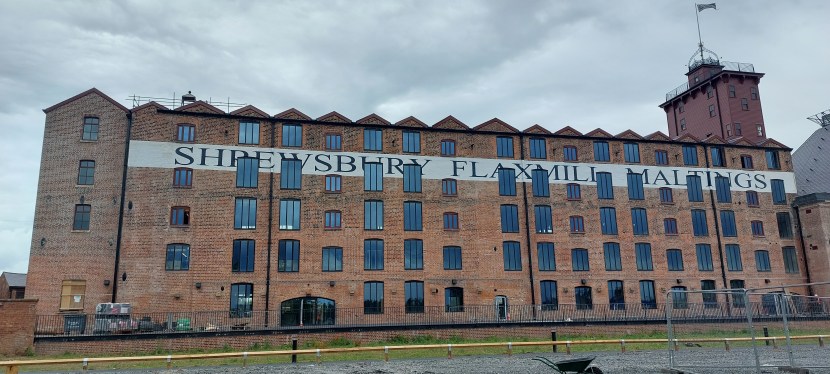
Ditherington Flax Mill: Spinning Mill, Shrewsbury, LB I, 1270576
In October 2023 the UK Government secured the final changes to the Levelling-up and Regeneration Bill, after 16 months of debate and drafting in Parliament. This means that several heritage provisions have now become law. The most significant for industrial archaeology and heritage sites, and archaeology in general, is a provision that secures statutory status for Historic Environment Records (HER).
Historic England describes HERs as ‘sources of, and signposts to, information relating to landscapes, buildings, monuments, sites, places, areas and archaeological finds spanning more than 700,000 years of human endeavour. Based mainly in local authorities, they are used for planning and development control but they also fulfil an educational role.’ The Levelling-up and Regeneration Act makes it a legal requirement that each local authorities in England maintains an HER for its area. Further detail can be found here: https://historicengland.org.uk/advice/hpg/heritage-assets/hers/
The passing of the Act concludes a long advocacy campaign by many archaeological bodies, including the Chartered Institute for Archaeologists (CIfA), Association of Local Government Archaeological Officers, and the Council for British Archaeology, supported by many others, such as the Association for Industrial Archaeology, to secure statutory HERs. This provision was first proposed in the failed 2008 Heritage Protection Bill. HERs were made statutory in Wales in 2016.
Thanks must be given to Historic England, who have advised Government on the relevance of HERs to levelling-up and the establishment of a more digital planning system during the Bill’s development.
You can read more about this story on the CIfA website: here.

















 Industrial Heritage Networks