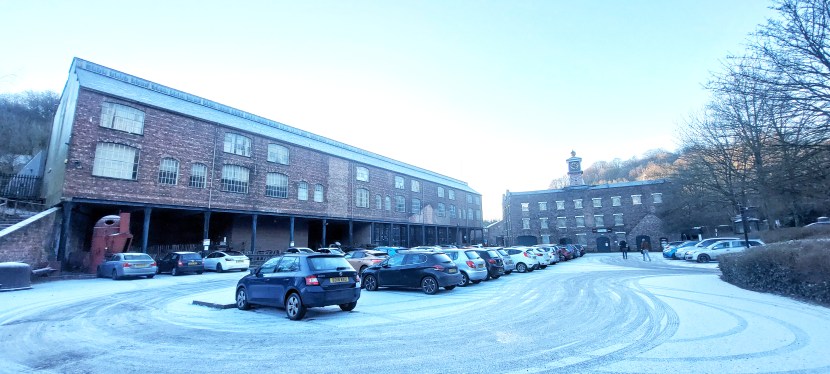
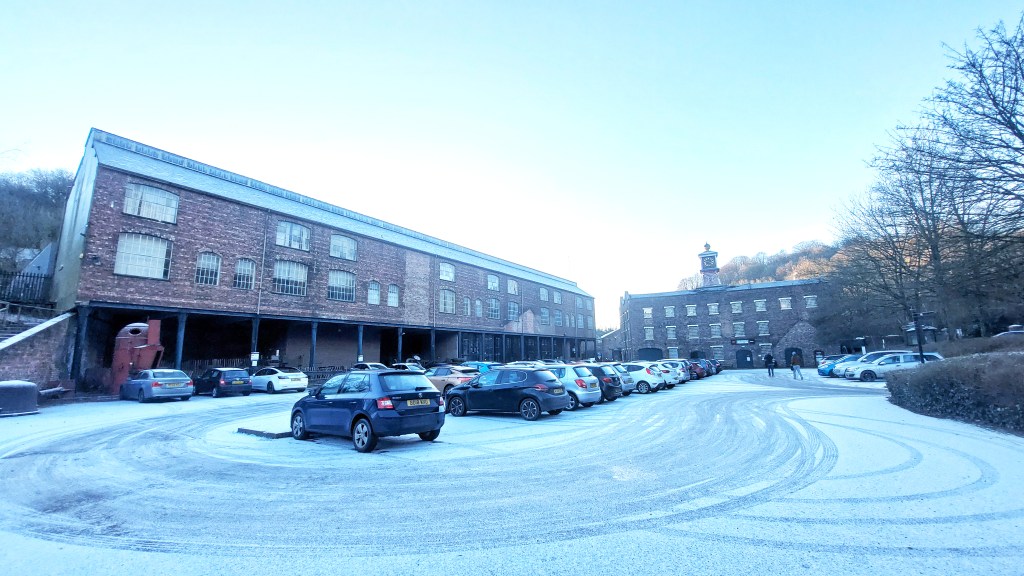
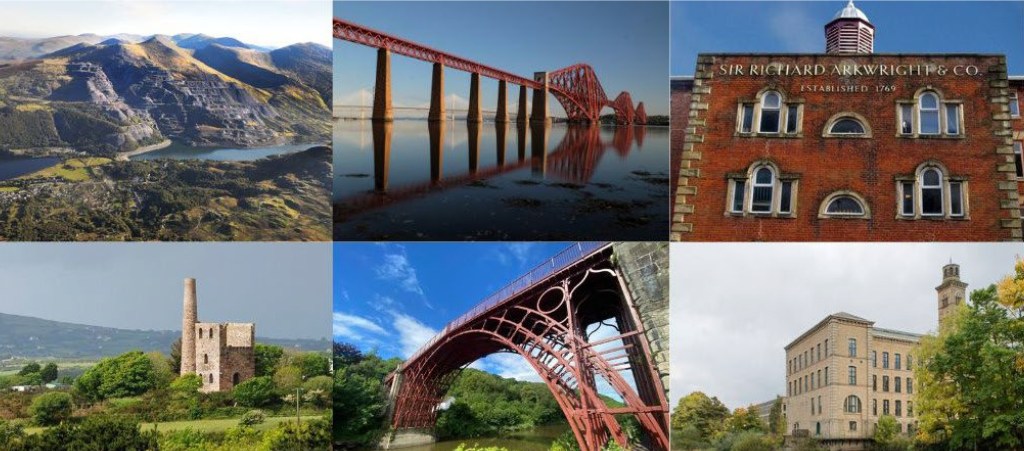
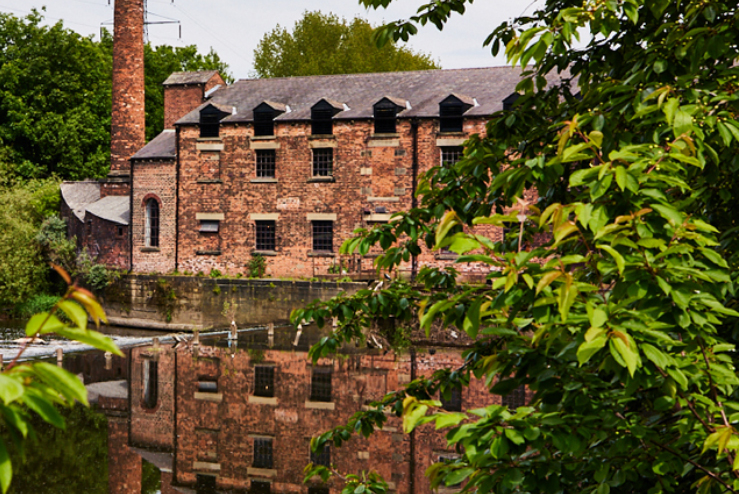
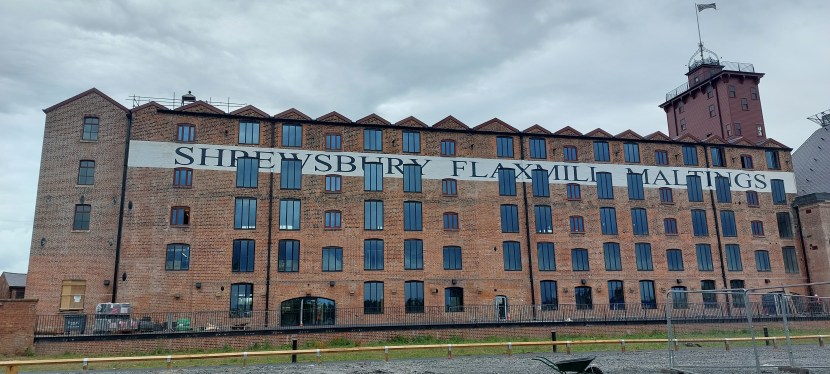
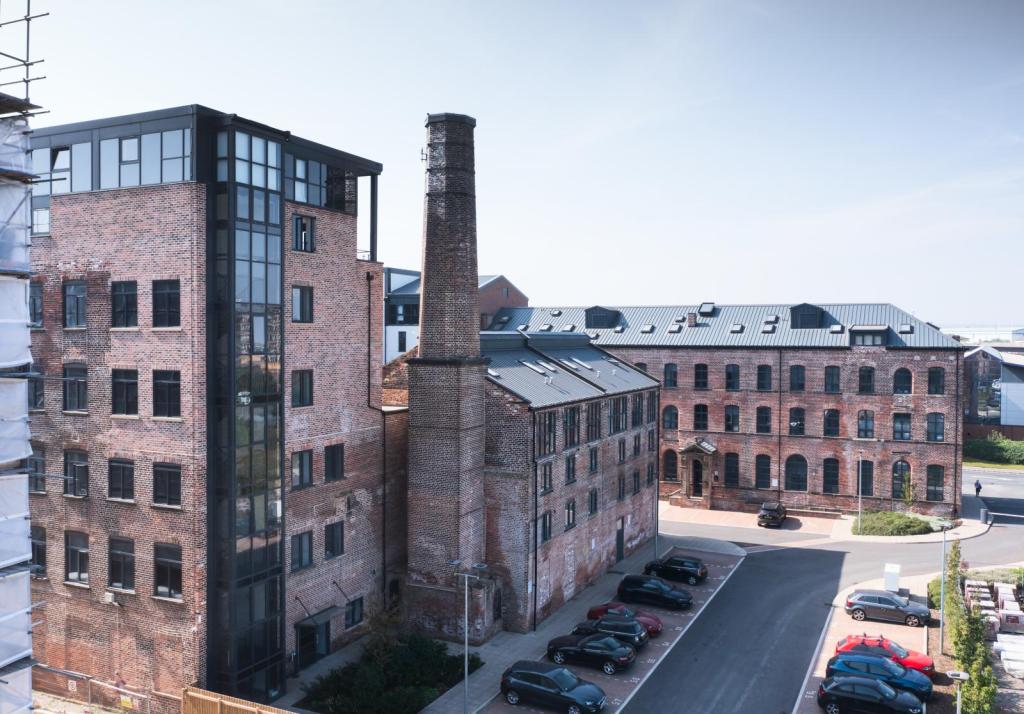
Welcome to the Industrial Heritage Networks and Support website. This site is maintained and updated by the Ironbridge Gorge Museum Trust who run the project and the networks. We aim to support industrial heritage in England through networking, information exchange, guidance, and training. Please explore the website and please contribute! For more information you can … Read more Welcome to the IHNs website!
As the UK is experiencing a particularly stormy winter, with excessive rainfall and cold spells, now is a good time to review the free advice and guidance from the Society for the Protection of Ancient Buildings (SPAB) regarding the winter maintenance of old buildings. Whilst much of this is framed around domestic structures, the advice is also applicable to industrial buildings.
SPAB advises regular checks and maintenance on structures, whether they are a home or an old industrial building, as a way of making a huge difference to a building’s condition, lifespan, and energy efficiency. Follow this link for advice on preparing your old industrial building for cold weather: https://www.spab.org.uk/news/how-protect-your-old-building-winter-weather
The cost of living crisis combined with cuts to Local Authority budgets in England are leading to the closure, or proposed closure, of industrial heritage sites and museums in 2024. Closures and threatened closures cover sites from Kent and Cornwall, to Hampshire and Yorkshire.
The Heartlands Trust and Cornwall Council have announced that the Heartlands Mining Heritage Centre, in Pool, Cornwall, is set to close, although the surrounding park, offices, and shops will remain open managed by the Council. The heritage centre opened in 2012. The Heartlands Trust said on its website (https://www.heartlandscornwall.com/) that it would cease trading at the end of January and “would like to express our gratitude to everyone for their support over the past 12 years”. A joint statement from the trust and the local council said: “Heartlands had never seen itself as a commercial operation but finance has always been precarious. Budget over-runs on the original build project meant vital units intended to provide rental streams were never built and intended developer contributions for playground maintenance were never received.” Further details here: https://www.bbc.co.uk/news/uk-england-cornwall-67924474)
In February 2023, Eastleigh Borough Council, which part funded the day-to-day operational costs of Bursledon Windmill, informed Hampshire Cultural Trust of their intention to withdraw their funding from the end of August 2023. Simultaneously, as part of a project to refurbish and replace the mill sails, Hampshire Cultural Trust commissioned a full health and safety report, the outcome of which was a requirement either to have staff available 24 hours a day, seven days a week to turn the mill, or to install a new tethering system for the sails. As of 14 November 2023, there has been no further decision regarding the long-term future of Bursledon Windmill and if it will continue to be open to the public after 1 April 2024. Hampshire Cultural Trust is continuing to work with HBPT and Hampshire County Council to seek clarity. Further details here: https://www.hampshireculture.org.uk/bursledon-windmill
Just before Christmas 2023 Kent County Council announced a consultation on proposals to change the ownership arrangements of the eight windmills that are currently owned by KCC for eight windmills across the county for which it is currently responsible. The windmills affected are Chillenden Mill, Union Mill, Herne Mill, Drapers Mill, Meopham Mill, Davison’s Mill, West Kingsdown Mill, and Stocks Mill. The move would save the council around £800,000 during the years 2024 to 2029. Several of the mills are run by local voluntary groups who open the sites to the public. The proposal would be a change to the current strategy set out in the Kent Heritage Conversation Strategy and as such needs to go to public consultation. The consultation ends on January 29th 2024. Further details here: https://www.kentonline.co.uk/kent/news/have-your-say-on-plans-to-sell-off-kent-s-windmills-297729/
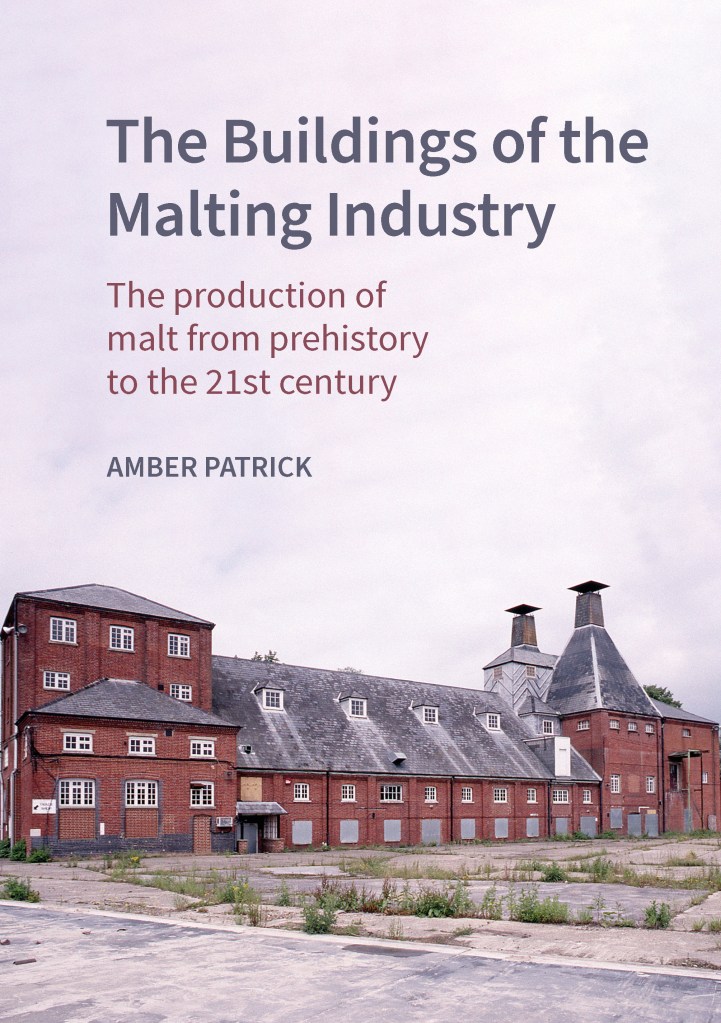
The latest industrial heritage title by Historic England/Liverpool University Press has recently been published: ‘The Buildings of the Malting Industry: The production of malt from prehistory to the 21st century’ by Amber Patrick.
Malt is one of the main ingredients of beer, yet the buildings in which it was and is now produced have received very little attention. Although most towns and many villages had their own malthouse and kiln, this is the first book to address this important building type. Today, evidence for a malthouse may just be a name on a building or street, but where they survive the pyramidal roofs clearly demonstrate the presence of a malthouse as do other less recognisable features. This book shows how they changed over the centuries with accompanying illustrations, including those that have been converted to new uses. Further details can be found here – https://liverpooluniversitypress.co.uk/doi/book/10.3828/9781837644285
In late 2023 The Mills Archive Trust was awarded a grant of £198,751, made possible by the money raised by National Lottery Players, for the Reading emPOWERed research project. With funding until September 2025, The Mills Archive Trust will expand learning opportunities in the Reading area, Berkshire, about the history of wind and water power, revealing their course from traditional mills to modern turbines.
Wind and water power have the potential to address present and future climate needs.With the help of local people, groups, and experts nationwide, Reading emPOWERed will explore the resurging significance of wind and water power in the Reading area. The Mills Archive Trust will collaborate with local schools, arts groups, entrepreneurs, cultural groups and academics to deepen the local understanding of these energy sources. More details on the project can be found here: https://new.millsarchive.org/reading-empowered/
The Mills Archive Trust was established in 2002 as a permanent repository for historical and contemporary material on traditional mills and milling. It has rescued over 2 million documents and images that might otherwise have ended up in a landfill site.
World Heritage UK is hosting a series of online talks in 2024, exploring the UK’s Industrial World Heritage. Each talk will be given by an expert closely associated with each World Heritage Site and will explore why that WHS is internationally important. Each webinar is recorded and ticket holders will be provided YouTube links for each talk, to revisit or catch-up with later.
The webinar topics, and dates, are as follows:
Thu 11th Jan – The Slate Landscape of NW Wales with David Gwyn, Heritage Consultant & Historian
Thu 8th Feb – Forth Bridge with Mark Watson from Historic Environment Scotland
Thu 7th Mar – Derwent Valley Mills with Adrian Farmer from Derbyshire County Council
Thu 4th Apr – Cornish Mining with Aynsley Cocks from Cornwall County Council
Thu 2nd May – Ironbridge Gorge with WHS Chair Marion Blockley
Thu 6th Jun – Saltaire with Sheena Campbell, Saltaire World Heritage Officer and Maggie Smith, Saltaire Collection
Thu 4th Jul – Reflecting on the UK’s Industrial World Heritage Sites with Ironbridge’s Brandi Hall-Crossgrove and Prof. Ian Wray from the Heseltine Institute, Liverpool University
Each webinar starts at 19.00 UK time and will run for approximately 60 minutes, including short Q&A sessions at the end. Tickets for individual webinars cost £5, or buy all seven for £25. For more details and to book, please go to https://worldheritageuk.org/events/
Over the past couple of years talks on Zoom for Greenwich Industrial History Society have been recorded on Youtube. The talks listed below are now available and more will be added soon. They can be accessed via Youtube. The general link is https://www.youtube.com/@GreenwichIndustrialHistorySoc The talks available are as follows:
Charlton and Woolwich’s role in building the Pipeline Under The Ocean (PLUTO) of WW2. Stewart Ash. How Siemens Operation PLUTO got fuel to the Normandy beach-head in the Second World War.
Deptford, Greenwich and the History of Enslavement. Judith Hibbert, and Helen Paul (Museum of Slavery and Freedom). The sad role of our part of London in the trade in enslaved people. Deptford is the original point of departure for the first slaving ships.
George England and the Hatcham Locomotive Works. Kevin Robinson.Hatcham Locomotive Works New Cross was where George England (1812–1885) built six engines for the Ffestiniog Railway
Greenwich and Woolwich became the Birthplace of the Global Telecoms Network. Alan Burkitt-Gray. Workplaces in Greenwich and Woolwich began what is now the global network that lets people communicate by phone, WhatsApp, Facebook and other platforms.
Greenwich Marsh to Greenwich Peninsula, 300 years of Regeneration. Mary Mills. The Greenwich Peninsula, now home to the O2, has been the scene of industry for a thousand years.
Greenwich Riverside, from Deptford to Charlton. Mary Mills. What do we really know about the Greenwich riverside? How has it evolved and been used over the centuries?
Keeping the World Connected, with Greenwich’s High-tech Industry. Stewart Ash. About submarine telecommunication cables and the vital role our area has played.
Marie Celeste de Casteras Sinibaldi, the undefeated blacksmith of Deptford. Ann Dingsdale. The extraordinary personality of Marie Celeste de Casteras Sinibaldi, whom she calls the “undefeated blacksmith”.
Peter Marshall’s photographs of Greenwich and Docklands history since 1970. Peter Marshall. Photographing London since the 1970s with a particular interest in industrial and commercial buildings.
Progress Estate, Eltham, Munitions Workers’ Housing. John McGuinness. The Great War created a need to house the enlarged workforce. The Progress Estate in Eltham, was built in 1915 to house Woolwich Arsenal workers.
Royal Greenwich: Archaeological Sites, Past, Present and Future. Mark Stevenson. The Archaeological Advisor to the Borough on sites from the recent past, current sites and as sites soon to see — archaeologists hard at work.
South London’s Failed Canals. Alan Burkitt-Gray. There are still remains of canals in south London if you know where to look. Built to connect to the English Channel they ultimately failed, while north London’s canals thrive.
Tools of Empire? The International Landscapes of the People and Materials of Submarine Telegraphs. Cassie Newland. Deconstruct the cables into their messy constituent parts, and tease out the international landscapes of people and materials linked by them – from the colonial copper-smelters in Chile to the indigenous gutta-percha collectors of Sarawak; and the peasant tar-burners of rural Sweden
Was There Really a Victorian internet? Bill Burns. Over 170 years of history of communication after the laying of Greenwich made cables began in the mid-19th century
What about the workers? The Social History of Greenwich Hospital. Jacky Robinson. The Royal Hospital for Seamen, 1705 -1869, and the nurses and officers who lived and worked there
When Doctor Who and the Cybermen Came to Greenwich. Nigel Fletcher The 25th anniversary of the TV series 1988 was marked by Silver Nemesis, part-filmed in Greenwich, on the peninsula.
GIHS continues to lobby Greenwich Council to restore a properly functioning archive and museum service in the borough. Follow this link to sign the petition: https://chng.it/cS7TtpzyHj
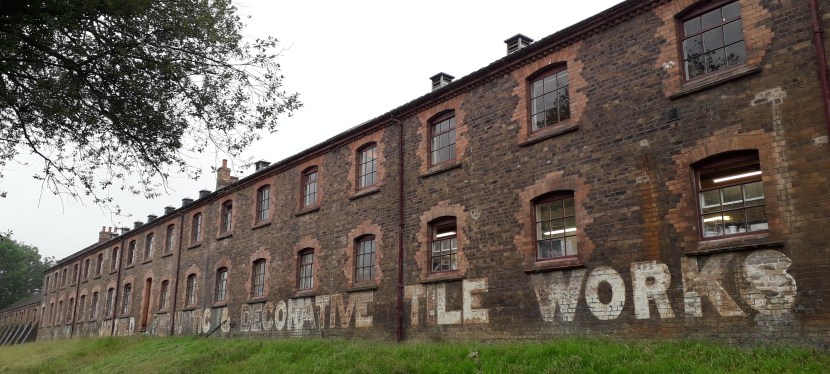
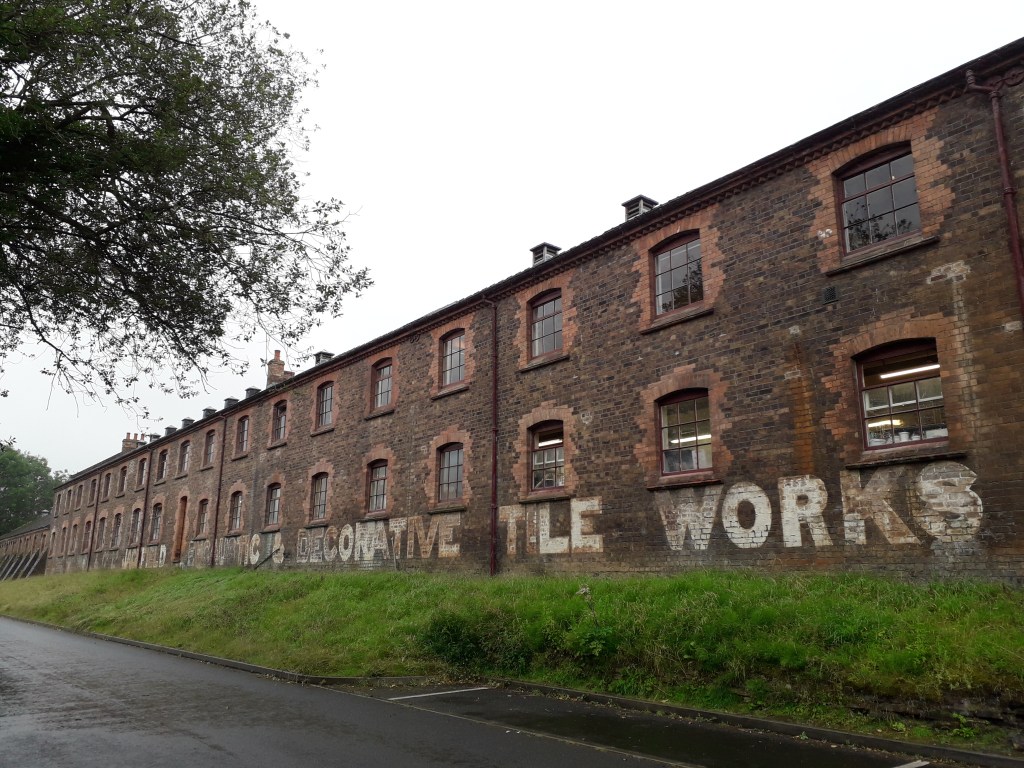
This image of the ghost sign at the Jackfield Tile Works, within the Ironbridge World Heritage Site, was recently add to the National Heritage List maintained by Historic England. Copyright Dr Michael Nevell.
Historic England is inviting the public to the share their pictures and stories of the unique, significant, and memorable places recorded on the National Heritage List for England. The List is a register of all nationally protected historic buildings and sites across England maintained by Historic England, and can be accessed via an interactive map on their website.
With thousands of industrial archaeology and heritage sites included on the List, this is a great opportunity to add material that will increase our understanding of the significance and importance of these sites to local communities and individuals. Historic England are encouraging two types of contribution:
Images: from phone snaps to scans of vintage photos and architects’ drawings, from wide angles to close-ups
Stories: from memories of holidays, school trips, and family events to information about grand openings and transformations
Any photographs included must be ones you took yourself, from public land or rights of way, or with the permission of the landowner. To add an historic image, you must have the rights to it.
Sunderland City Council is seeking to appoint a design team for a £2.2 million upgrade of Washington’s F-Pit Museum. Following a consultation on regeneration plans for Washington F-Pit Museum and Albany Park in 2022, the Council has now developed a draft outline Masterplan for improvements to the Park and a concept sketch proposals for a new Heritage Centre and Café to enhance the heritage offer and visitor appeal of this unique site for residents and visitors.
The successful architect-led multi-disciplinary design team will oversee the details of the upgrade. Due for completion in 2027, the project aims to boost visitor numbers to the museum and to secure a ‘viable and sustainable long-term future’ for the site, drawing new visitors to Washington and Sunderland. The museum is currently on Historic England’s Heritage At Risk Register and only receives around 1,000 visitors a year
The F-Pit Engine House and attached headgear are a Scheduled Ancient Monument, and are the only surviving structures of New Washington Colliery. The Engine House was presented by the National Coal Board to the people of Washington as a monument, following its closure in 1968, and it has operated as a Museum since 1976. Albany Park was formed from land reclaimed from the former colliery.
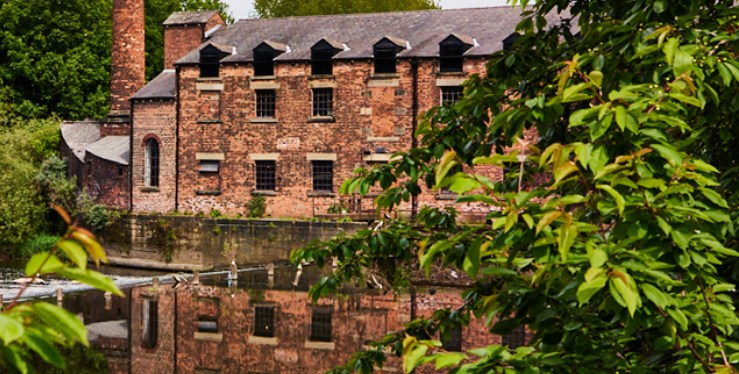
Thwaite Watermill Museum, in Leeds, may be faced with closure. The museum of Leeds’ milling industry is set in a former mill on an island in the River Aire. The site is owned by the Canal and River Trust, and run by Leeds City Council museums and galleries. The lease on the site is currently due to end in 2030, but as part of proposed budget cuts Leeds City Council is considering a proposal to end the lease in 2025.
The CRT confirmed that if the lease ends, it would not be able to afford to take over the running of the museum. A spokesperson said: “We are sorry to hear this update. If the council terminates the lease and closes their museum, we will have to look for alternative viable options for the use of the property that will help safeguard its future. In this difficult economic climate, our charity is facing the same financial challenges with the day-in day-out task of looking after and keeping open our 2,000 miles of waterways, including the hundreds of centuries-old locks, bridges, tunnels and aqueducts here in Yorkshire. Unfortunately, we do not have the funding to take on the council’s running of the Thwaite Watermill museum.”
Historic England released its annual Heritage at Risk Register in November 2023, marking the 25th anniversary of publicly recording neglected or imperilled heritage sites. In total, there are 4,871 entries on the 2023 register, 44 fewer than in 2022. However, heritage sites continue to be added to the Register every year. In 2023 there were 159 new entries, made up of 44 buildings and structures, 53 places of worship, 55 archaeology entries, 3 parks and gardens and 4 conservation areas.
Hunslet Mill, Leeds. Image courtesy of Historic England
Amongst those heritage sites conserved and so removed from the list are 13 industrial heritage sites. These are:
Bourn Mill, Caxton end, Bourn, Cambridgeshire, LB I, 1162375
Electricity Substation at junction with Sunnyside Passage, Sunnyside SW19, LB II*, 1358028
Lambeth uncovered coal store including tower and attached tunnels, Portsmouth Road, Surbiton, Greater London, LB II*, 1031864
Remains of iron works and gun foundry at North Park Furnace, Linchmere / Fernhurst, Chichester, West Sussex, SAM, 1021403
Surrey Iron Railway embankment, approximately 130m south west of Lion Green Road, Coulsdon, SAM, 1021441
Upminster Windmill, St Mary’s Lane, Upminster, LB II*, 1079878
Westlink House, Great West Road, Hounslow, LB II*, 1255218
Ditherington Flax Mill: Spinning Mill, Shrewsbury, LB I, 1270576