Welcome to the Industrial Heritage Networks and Support website. This site is maintained and updated by the Ironbridge Gorge Museum Trust who run the project and the networks. We aim to support industrial heritage in England through networking, information exchange, guidance, and training. Please explore the website and please contribute! For more information you can … Read more Welcome to the IHNs website!
The next round of online Industrial Heritage Network (IHN) meetings is taking place this Spring. The IHN networks are a chance to meet those working, volunteering, or researching in the industrial heritage sector.
Four lunchtime IHN meetings will be held in late March, and will run from 12noon to 1pm, and there will be an IHSO update followed by news and updates from members. The first round of 2025 IHN meetings will take place on the following dates and will include the following groups:
21 March – East of England
25 March – South East
26 March -North East
31 March – London
Zoom links for the meetings will be sent to each region nearer the dates. If you would like to join any of these Industrial Heritage Networks as a member please email the IHSO here: mike.nevell@mikenevell
Gloucester’s historic docks. Image copyright Dr Mchael Nevell.
Gloucester and Ramsgate officially become Heritage Harbours on Saturday 7th September 2024, joining twelve other locations across the UK already recognised for their contribution to saving our maritime heritage. The Heritage Harbours project is supported by National Historic Ships UK, Historic England and Maritime Heritage Trust.
Gloucester and Ramsgate join Bideford, Bristol, Buckler’s Hard, Chester, Exeter, Faversham and Oare Creeks, Ipswich, Maldon and Heybridge, Sandwich, Shardlow, Stourport, and Wells next the Sea in the Heritage Harbours National Working Group.
Gloucester, a Roman town in origin, will be celebrating its Heritage Harbour status on Gloucester Day, Saturday 7th September, with a procession through the city and proclamation by the town crier, rounding off with cannon fire from the Sealed Knot re-enactment society. Tony Conder, Chair of the Gloucester Docks Bicentenary Working Team, said: “Heritage Harbour designation is an amazing achievement for Gloucester, building on the work of the City Council, Canal & River Trust, previously British Waterways, in bringing new life to the waterfront. It offers fantastic opportunities for all the current partners engaged within the historic Port of Gloucester to celebrate the Bicentenary in 2027 and to go on to strengthen the Gloucester Docks businesses and enhance the enjoyment of visitors to this maritime heritage site into the future.”
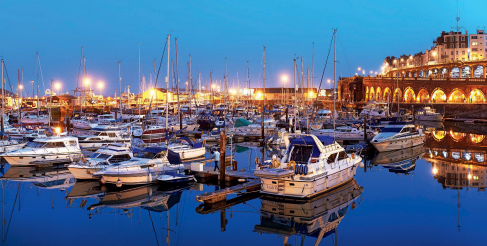
Ramsgate’s Royal Harbour is Grade II* listed and is the only royal harbour in the world, an honour bestowed by King George IV in 1821. “We are thrilled to receive the Heritage Harbour designation,” said John Walker, Chair of the Ramsgate Heritage Harbour Working Group. “It’s wonderful that our amazing maritime heritage, combined with the activities of a working harbour and thriving cafe culture, has been recognised nationally. Ramsgate is a great place to work and to visit.”
“We are very pleased to welcome on board Gloucester Docks, and Ramsgate’s Royal Harbour, during Heritage Open Days 2024, the largest festival of history and culture in the UK,” said Henry Cleary, Heritage Harbours’ convenor and chair of Maritime Heritage Trust. “Heritage Harbours are about capturing the interactions between navigable water and the land and buildings alongside it. No other designation does this and we now have locations which represent the main types of historic port from the Roman period to the 19th century.”
Many of the Heritage Harbours are staging maritime events during Heritage Open Days and deatils can be foundont he Heritage Open Days website here: https://www.heritageopendays.org.uk/
The Britannia Sailing Trust are thrilled to announce a recent generous donation from the Association for Industrial Archaeology of £6,600. This is the second time the AIA have funded restoration work on Britannia. The first time was in fact the first grant the Trust ever received and helped to kick-start the monumental restoration project.
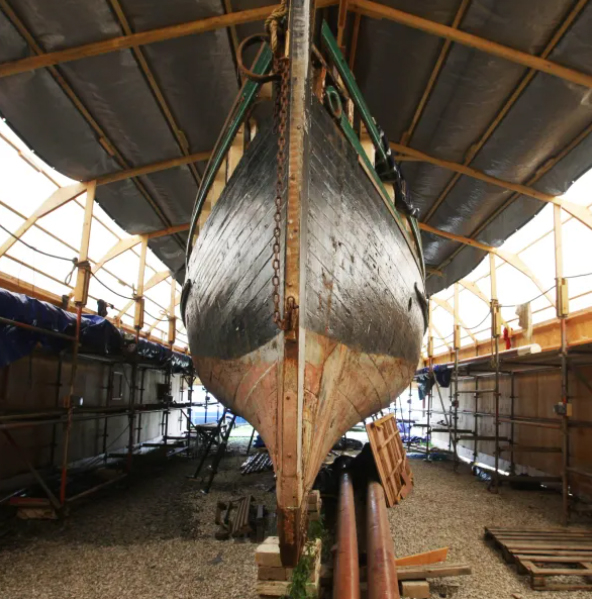
Britannia Sailing Trust cares for the last remaining Class 1 East Coast Smack. Britannia was built in 1914 in Kings Lynn, Norfolk, by a well-known and respected family of shipwrights, the Worfolk brothers. She is a Gaff Cutter, 58 feet long on the deck, with a 13 foot six inch beam and drawing eight feet. She has a beautiful hollow bow, making her a very fast vessel and giving her beautiful lines. Having discovered her in a state of severe disrepair, the Britannia Sailing Trust was formed in 2014 and has succeeded in saving her from destruction.
Vicki Samuels of the Trust said that ‘We are so grateful for the Association’s continued support. The money will go towards the completion of the restoration, helping us get Britannia back in the water on the 24th September this year!’
The Britannia Sail Trust have been selected for a National Transport Trust Restoration Award, and are in the running for a prestigious Founder Award, named after the founders of the National Transport Trust. This recognition of the work of the Britannia Sailing Trust, and the £1500 which comes with the Restoration Award, will go a long way to support the work of the Trust.
National Historic Ships UK, Historic England, and the Maritime Heritage Trust are working together on a ‘Heritage Harbours’ initiative to promote greater awareness and support for this maritime heritage. Heritage Harbours are places of historic maritime significance that retain original features, buildings, and facilities important for supporting historic vessels and maritime skills, which help connect the public to the UK’s maritime past.
‘Heritage Harbours’ is not a form of legal designation like listing a building or registering a park. Rather, the term underlines the historic importance and potential of harbours identified by this label. The Heritage Harbours concept emerged from a desire to safeguard and restore the infrastructure and skills necessary to support maritime heritage, including historic boats and ships still in use or preserved. All three organisations are committed to exploring how the Heritage Harbour concept might be developed and promoted in practice.
First introduced to the UK in 2019 by the Maritime Heritage Trust, working in partnership with National Historic Ships UK, the Heritage Harbours idea has been embraced and built upon by communities across the UK. This has seen the establishment of local steering groups, forums, and volunteer led initiatives, as well as investigatory work into what individual Heritage Harbours could offer in the future.









 Industrial Heritage Networks