AIA Restoration, Research, & Awards Grants for 2025

Applications are now open for the Association for Industrial Archaeology’s 2025 round of restoration, research, and other awards (including community, dissertaton, publication, and travel bursary). The deadline for most of these awards is the 31st Janaury 2025, although the deadline for the Restoration Grants is the 31st March 2025. Details and links can be found below.

Restoration Grants

The first of these grants were made in 2009, and from the initial modest beginnings we have, by 2024, been able to allocate nearly £1,500,000 since the scheme began. The industrial heritage sector, despite difficulties with volunteer projects during the Pandemic, has continued to be increasingly appreciative of this source of aid. A source which is entirely thanks to the continuing support of our anonymous donors.  A brief history of the scheme and details of many of those projects can be found below. Regular updates on progress with these projects appear in I A News, our quarterly bulletin. From 2020 onwards the available Grants pot is divided into two categories:

Major projects where the maximum grant that can be awarded is £30,000. The grant from the AIA must be a significant part of the total project cost, not just a small contribution to a very large project, so that the AIA grant has real impact. The AIA would not normally fund projects where their grant represents less than 20% of the total project costs. Small projects where the grant limit is £10,000, for which the total cost of the project, excluding the value of volunteer labour, must not exceed £12,500.

Download the Criteria and Guidance and a Restoration Grant Application Form

Research Grants

The AIA research grant scheme underpins the study aim of the Association. It does that by:

  • Encouraging individual researchers to study industrial archaeology subjects
  • Encouraging the development of industrial archaeology skills within commercial units, the main repository of professional skills in the subject
  • Supporting local industrial archaeology and industrial heritage societies in exploring and understanding their local areas
  • Helping to develop the next generation of industrial archaeologists

The total fund available in any single year is £1,500 and multiple grants may be given up to this maximum in a single year. The AIA may consider part-funding a wider grant application or project as long as the AIA grant is a significant part of the larger application / project.

Click to download full details and an application form: (.pdf) (.docx)

If you have any further questions please contact the coordinator:  research-grants@industrial-archaeology.org

Other Awards

A link to the other awads can be found here: https://industrial-archaeology.org/aia-awards/
In 2024 Claymills Pumping Station received a major grant for the restoration of boiler No 1 to fully working condition. Image courtesy of Claymills Pumping Station Trust.

Industrial Heritage Themed HE Research Magazine Published

The latest online issue of Historic England’s Research Magazine contains a number of articles on industrial heritage. Shane Gould, Historic England’s Head of Industrial Heritage Strategy, introduces Issue 26 of Historic England Research Magazine, which explores aspects of industrial heritage, as well as Palaeolithic landscapes, and the relationship between intertidal heritage and biodiversity.

The industrial heritage and archaeology articles are by authors who have recently had titles published by Historic England and Liverpool University. These are papers on the Soho Manufactory, Mint and Foundry in the West Midlands by George Demidowicz; steam-powered water and sewage works by James Douet; the built environment in Lancashire’s historic textile areas by Geoff Timmins; and oasts kilns, hop kilns, and maltings by Amber Patrick. They showcase Historic England’s strong and continuing record in undertaking research, and preparing advice, guidance and publications on England’s industrial heritage.

To read this latest issue follow this link: https://historicengland.org.uk/whats-new/research/introduction-to-issue-26/ Earlier issues can also be downloaded from the HE website.

AIA Industrial Archaeology Research Grants Now Open

The next round of the AIA’s research grant scheme, for 2023, is now open for applications. These grants are one of the ways in which the Association looks to deliver its aims. The scheme is designed to: encourage individual researchers to study industrial archaeology subjects; encourage the development of industrial archaeology skills within commercial units, the main repository of professional skills in the subject; to support local industrial archaeology and industrial heritage societies in exploring and understanding their local areas; and help to develop the next generation of industrial archaeologists.

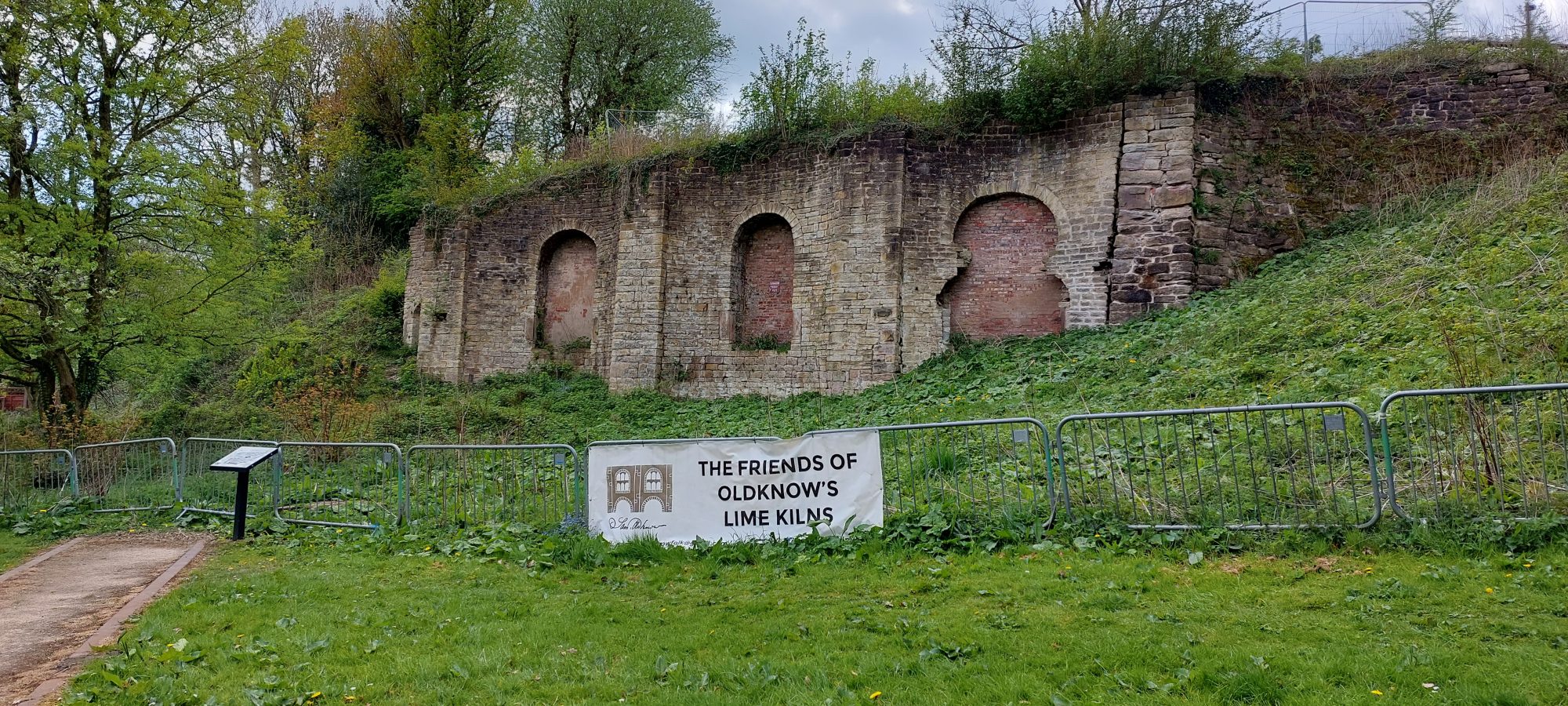
In previous years the AIA has supported local society and university researches studying subjects such as Caribbean plantations, 18th century workers’ grafitti, and lime kilns as ways of aiding the understanding, preserving, and presenting industrial archaeology and heritage. The latest round of applications is open until the 31st January 2023. The total fund available in any single year is £1,500 and multiple grants may be given up to this maximum in a single year. The AIA may consider part-funding a wider grant application or project as long as the AIA grant is a significant part of the larger application / project.

Click to download full details and an application form (.pdf 43kB)

If you have any further questions please contact the coordinator:  research-grants@industrial-archaeology.org

Historic England Launches Aerial Archaeology Mapping Explorer

Mining spoil heaps in North Yorkshire. Copyright Historic England.

For the first time ever, Historic England has made the results of over 30 years of aerial photograph mapping projects freely available online. The public can use the new research tool to explore heritage from ancient settlements to secret Cold War military installations, or to see the complex archaeological landscapes of Hadrian’s Wall, Stonehenge, and industrial landscapes.

The Aerial Archaeology Mapping Explorer lets you explore the layers of archaeology in and around your local place. You can browse the map and zoom in to the location you’re interested in or search by postcode, address or place name. Follow this link to explore the website: https://historicengland.org.uk/research/results/aerial-archaeology-mapping-explorer/

The map brings together the results of numerous projects undertaken by specialists at Historic England and its predecessor organisations since the late 1980s, as well as many partner organisations.  Hundreds of thousands of aerial photographs, ranging in date from the 1920s to the present, have been studied. More recently, innovative technologies such as lidar – airborne laser scanning – and web-based sources, such as Google Earth, have been added to the sources used. Every site has a simple description with links to the full Historic Environment records held online. For most of the areas there is also a free report detailing the highlights and new discoveries encountered in each project.

The Aerial Archaeology Mapping Explorer, alongside complementary resources such as Historic Environment Records available via Heritage Gateway, offers a springboard to further investigation, whether for research purposes or simply curiosity about the area where you live. It should be especially useful for researching industrial archaeology and heritage sites.

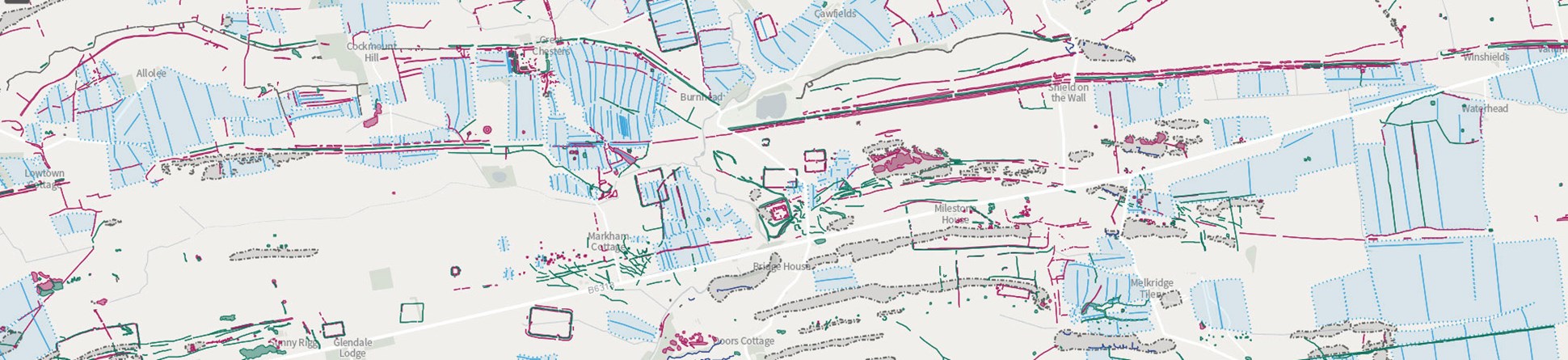
A screen shot of a GIS system displaying archaeological features around Hadrian's Wall mapped by aerial survey methods.

An example of how the aerial photographs and LIDAR data are interpreted on the new Historic England mapping explorer.