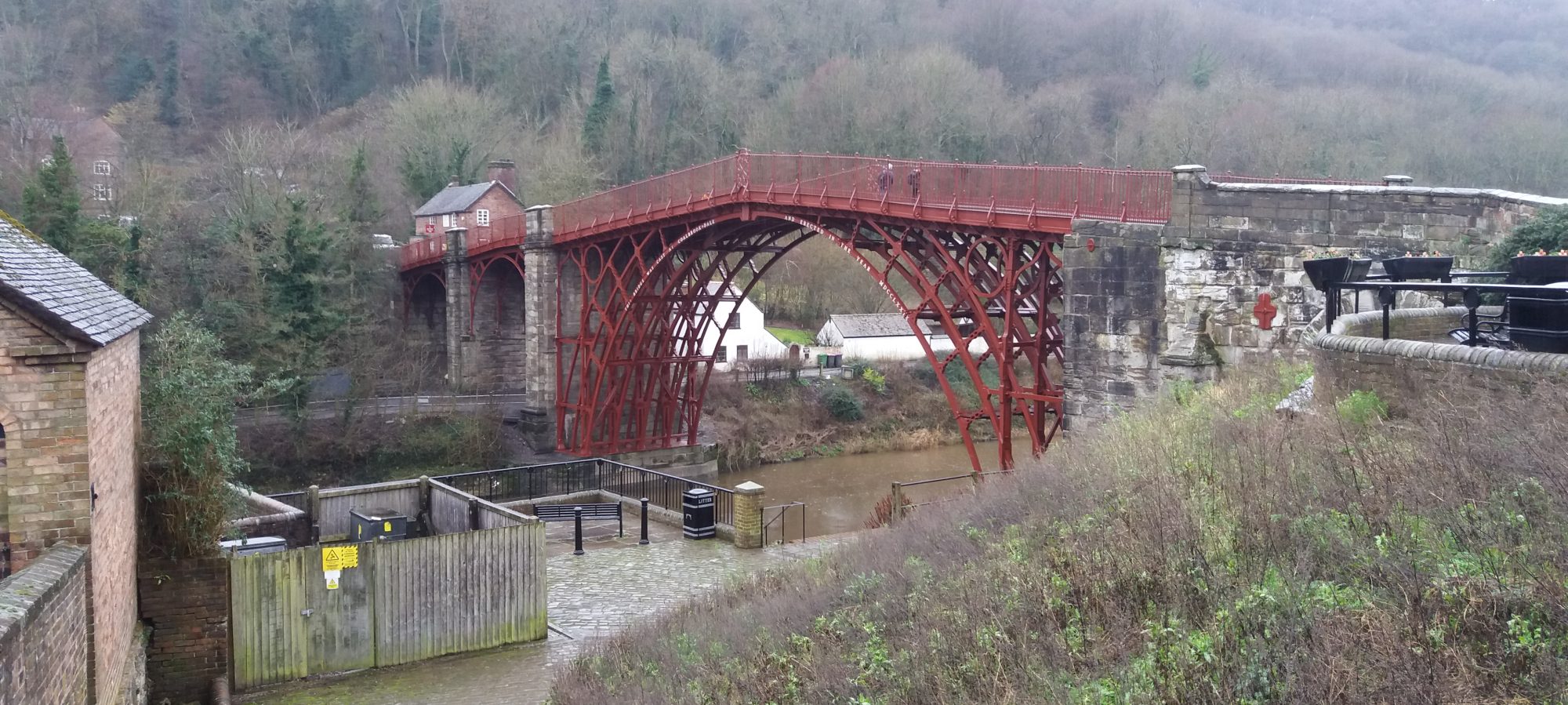
Welcome to the Industrial Heritage Networks and Support website. This site is maintained and updated by the Ironbridge Gorge Museum Trust who run the project and the networks. We aim to support industrial heritage in England through networking, information exchange, guidance, and training. Please explore the website and please contribute! For more information you can … Read more Welcome to the IHNs website!
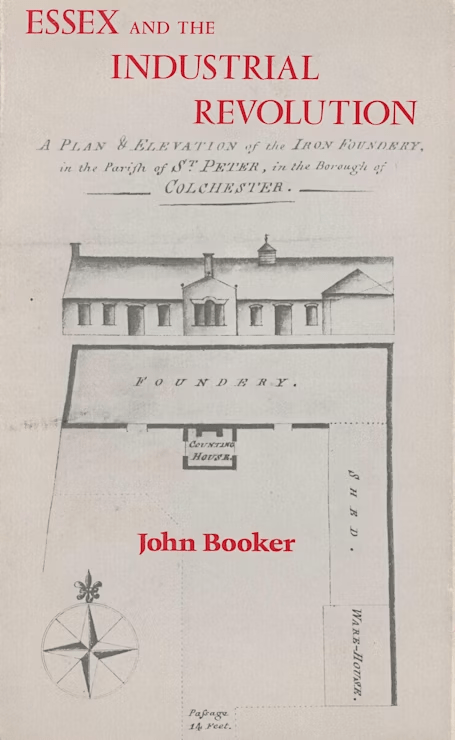
In 1974 Essex Record Office published John Booker’s ground breaking Essex and the Industrial Revolution. This highlighted the fact that significant industrial activity was going on in Essex, and not just those areas of the country traditionally associated with the Industrial Revolution, such as Ironbridge. To mark the 50th anniversary of its publication, Essex Record Office is running a series of short talks on various aspects of the industrial past of the county as well as celebrating this significant anniversary.
This event is run in conjunction with the Essex Society for Archaeology & History, Essex Industrial Archaeology Group, and Anglia Ruskin University. It is hoped that John Booker will be able to present one of the talks.
The South Wales and West of England Regional Industrial Archaeological Conference 2025 (SWWERIAC) will take place on 26th April at Walton Village Hall. SWWERIAC took place annually until the Covid Epidemic struck. Oxford House Industrial History Society’s initiative revived the event in 2024. The Somerset Industrial Archaeology Societty (SIAS: www.sias.me.uk)has volunteered to organize the 2025 conference.
SIASextends a cordial invitation to those interested in Industrial Archaeology to attend the conference in Walton Village Hall (http://www.waltonvillagehall.org). There will also be displays by the associated societies and publications will be on sale. The cost, including refreshments and lunch, is £25. Walton is situated on the A39 just west of Street and approximately 20 miles east of Junction 23 of the M5. The Village Hall is situated just north of the A39 at the end of Meadow Close.
PROGRAMME
09.15 – Registration opens. Tea, coffee, fruit juices and biscuits 10.00 – Welcome – Peter Daniel (President of SIAS) 10.10 – Peter Daniel – The Industrial Archæology of the Porlock Area 10.50 – Terry Stevens – The Unique Heritage of Coker Canvas 11.10 – Break. Tea, coffee, fruit juices and biscuits 11.30 – Stephen Miles – The Kilve Oil Shale Scandal 12.30 – Lunch: cold buffet. Please indicate any dietary requirements 13.50 – Samantha Cullen (Alfred Gillet Trust) – The New Shoemaker Museum 14.30 – Mary Miles – Clarke’s Influence on the Buildings of Street 15.10 – Break. Tea, coffee, fruit juices and biscuits 15.30 – Vanessa Ruhlig – Saving Fox’s Cloth and Dye Works at Tone Dale 16.10 – Close of Conference 16.15 – Visits(maps giving directions to the sites will be available on the day)
Choice of Post-conference Visits:
Street Buildings: A level walk around the centre of Street. We will see the development of industrial housing including grade II listed terraces which feature in books on the Arts & Craft Movement, public buildings, schools, a library, fire station, and swimming pool.
Glastonbury Fossick – Visiting the surviving buildings of Morland’s and Baily’s tanneries and sheepskin works. The walk will start by the Somerset & Dorset Joint Railway offices and will be just over a kilometre in length, all on the level. Morland’s and Baily’s were the major industrial employers in Glastonbury and there was a time just after WWII when they employed about 5000 people between them. The grade II listed buildings of Baily’s, including a landmark chimney, are about to be converted. There are also workers’ houses. Surviving buildings of Morland’s include the Red Brick Building and the Zig-zag Building.
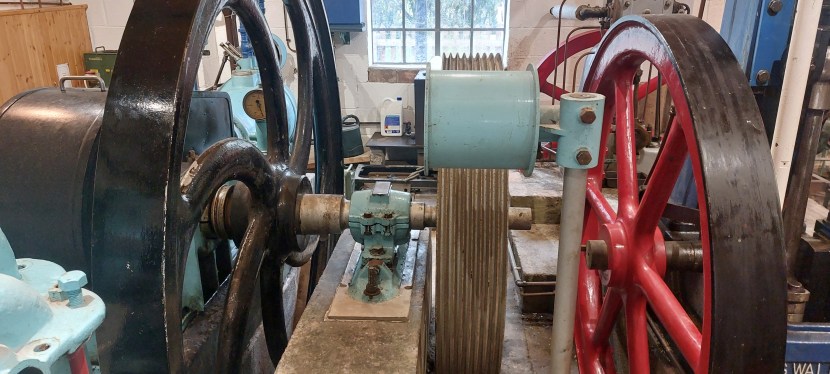
Westonzoyland Pumping Station and Museum of Steam Power and Land Drainage: The Museum is housed in the first steam pumping station to be built on the Somerset Levels. Dated 1830, it is grade II* listed as is one of the earliest in the country. The existing engine, an Easton and Amos machine built in 1861, replaced an earlier beam engine and scoop-wheel pump. The site is also home to a collection of historic engines and items used in the area, including a narrow gauge tramway.
Bridgwater Brick and Tile Museum: This exclusive visit will include a guided tour with particular reference to Industrial Archæology, and a tile-making demonstration.
The early new year is often a time for charities and musuems to undertake staff training and maintenance in the ‘off season’. Online, several organisation offer free training and briefing videos relevant for industrial heritage sites. Some of the recent offerings listed below provide an opportunity for armchair training.
The East-West Workshops on Industrial Archaeology aim to exchange ideas and knowledge among Western and Eastern colleagues to build a more international and diverse industrial archaeology. The workshops are organised jointly by the Institute for Cultural Heritage and History of Science and Technology (USTB, China), and the Association for Industrial Archaeology (AIA) together with its Young Members Board. Videos of all the workshops are available on the AIA’s YouTube Channel, including the latest event from November 2024 on ‘Weaving the Industrial Period’. Follow this link to view the workshops: https://www.youtube.com/channel/UCILr2TkRAOIfk_NKchshwZQ
On Thursday 21st November 2024 the ‘Craft of the Miller’ network held an online conference on ‘Managing Health & Safety Risks in Your Mill’. Jon Cook gave an introduction to highlight a number of key risks in a working mill, including hygiene, flour dust, vacuum equipment, and fire risks. Jippe Kreuning explored how to work with a stone crane and how to operate it safely to lift a set of millstones. You can catchup with the recordings from the conference here: https://network.molens.nl/
Finally, Historic England have a range of heritage webinars to watch with topics from flooding, embodied carbon, and renewabler energy, to heritage building skills, roofs, and windows. The Historic Environment Webinars strand includes a session on the role and work of the Canal & River Trust form November 2024. Follow this link to view the webinars: https://historicengland.org.uk/services-skills/training-skills/training/webinars/recordings/#technicaltuesdays
Booking is now open for the 2024 Devizes Industrial Archaeology Conference. It will be held on the 26th October at Devizes Town Hall (SN10 1BZt) and the theme will be the agricultural industrial heritage of the region.
The programme includes talks on:
Milk, Butter, cheese and churns from the farm to the table, by Mike Stone
Steam Ploughing in Wiltshire, by Doug Roseaman
Early Agricultural Engineers in Wiltshire, by Dr Tony Pratt
Farm Buildings, Construction and Use in South Wiltshire, by Tim Mayhew
Agricultural landscapes in Art and Film, by Mike Stone
On 13 September the Great Grimsby Ice Factory Trust (GGIFT) celebrated the completion of the Peterson’s Project on the Port of Grimsby. First conceived in 2017, the project was developed jointly by GGIFT, Associated British Ports (ABP), and North East Lincolnshire Council (NELC), and was instrumental in Great Grimsby becoming a Heritage Action Zone in 2018. Designed to be a catalyst for the regeneration of the historic dock, the Peterson’s Project has brought back into use two important buildings within the Kasbah Conservation Area.
The Grade II listed Peterson’s Smokehouse on Henderson Street had functioned as a kipper house since the 19th century, when the original building was first erected. By 2017 the building had been out of use for some time, and much of it was inaccessible. It will now have a new life as a fully functioning fish processing and smoking factory, using the unique cold smoking process that can only take place in a traditional smokehouse.
The second building, at 89 Wharncliffe Road, was most recently known as Fred’s Fisheries. Built by the Osborne family of fish merchants – again in the 19th century when the docks were developed following the arrival of the railway – it was in dire need of modernisation. Through the project the stunning architectural features, and the lovely proportions of the rooms have been revealed, and it awaits tenants for the offices and retail spaces that have been re-created.
The project has taken seven years to complete, including feasibility studies, appraisal and design, and has cost over £1.4 million. Thanks to National Lottery players, the majority of the funding was provided by The National Lottery Heritage Fund. Additional grant funding was from the Architectural Heritage Fund (AHF), Historic England (HE) and NELC.
This year’s AIA Conference will be taking place in Cardiff from the 4th to 6th October 2024. On the Saturday there will be sessions by four nationally recognised specialists, with the first three exploring elements of Welsh industrial heritage and the fourth sharing results of a wider survey of 600 publicly accessible industrial sites. There will alos be tours of South Wales’ impressive industrial archaeology and heritage remains on the Friday and Sunday.
The speakers for the Saturday of the conference are: Steph Mastoris, former Head of Museums, National Museum Wales; Dr Peter Wakelin, former Secretary of the Royal Commission on the Ancient and Historical Monuments of Wales and now a heritage consultant; Dr David Gwyn, former editor of Industrial Archaeology Review and lead of the Govannon Consultancy; and Dr Paul Belford, CEO of Heritage Innovation.
Their one-hour sessions and the short AGM of the AIA will be streamed live, separated by a 30-minute lunch break, and the afternoon will end with presentations by this year’s Award winners ahead of the Conference Dinner and prize giving.
Conference Tours
On the Friday afternoon and Sunday there are optional tours.
Friday afternoon 4th October
Optional tours – choose either TOUR A: National Waterfront Museum, Swansea or TOUR B: Industrial tour of the Lower Swansea Valley
Sunday 6th October
Optional tours – choose either TOUR C: Big Pit, the National Coal Museum of Wales Or, TOUR D: Blaenavon Ironworks
The Lancashire and Cheshire Antiquarian Society are holding their annual conference on 11th May 2024. The theme is new research, with a focus on local history, family history, and industrial archaeology.It will be held at the friend’s Meeting House, Mount Street, Manchester, M2 5NS from 10am to 3pm.
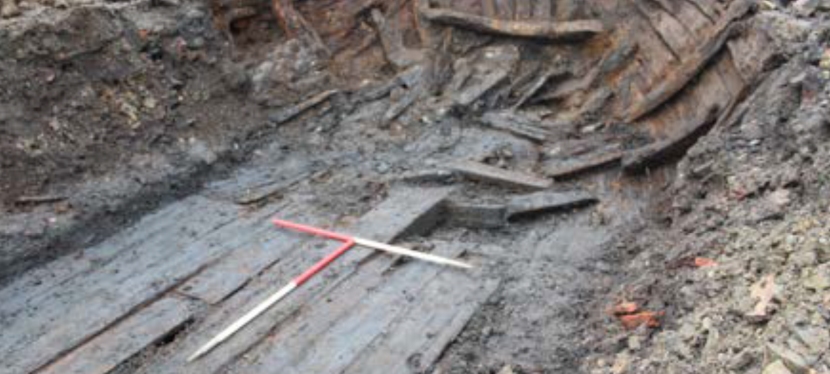
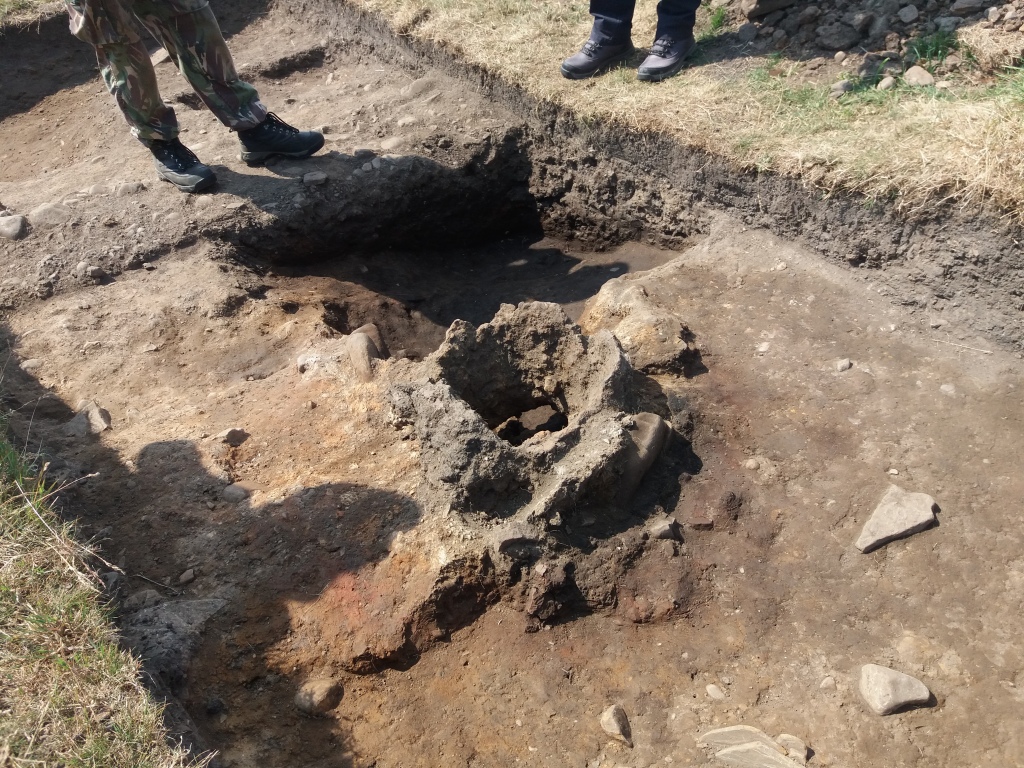
The talks will include presentations Helen Corlett talking about The Cooper at Old Bridge End: Finding a Place in Early 19c Manchester (a micro study of the experience of an artisan-tradesman family migrating to Manchester from the rural north); Neil Coldrick on Medieval Ironworking in Holcombe Valley; and Kelly Griffiths discussing Scuttled: Excavations on the Historic Canal Basin in Rochdale (looking at excavating late 19th century canal boats).
The conference is free to members of the Lancashire and Cheshire Antiquarian Society and the Manchester Local Family History Society, but donations are gratefully accepted. The fee for non members is £12.00 payable to Lancashire and Cheshire Antiquarian Society. Please email secretary@landcas.org.uk to book your place.
A canal boat being excavated at Rochdale.
Medieval bloomery during excavation at Holcombe in 2018.
Booking is now open for a major conference at Ironbridge looking at the life, work, and legacy of L T C Rolt on the 10th May 2024. L T C Rolt, also known as Tom, was a renowned practical engineer and prolific author who wrote books and articles on industrial history, canals, railways, and cars as well as fiction. Rolt was an early supporter of the work of the Ironbridge Gorge Museum Trust and is regarded as one of the founders of the 20th century waterways and railway preservation movements. He was also involved in helping to establish the Association for Industrial Archaeology.
To mark the 50th anniversary of his death, Ironbridge Gorge Museum Trust has partnered with academics from Keele University to host a conference on Friday 10th May which will celebrate his life and the continuing legacy of his work. There will also be conference-related events on the 9th and 11th May.
The sixth annual Post-Medieval Archaeology Congress will be hosted by Swansea University in Wales. The meeting will be supported by CHART (Centre for Heritage Research and Training) and CRAM (Conflict, Reconstruction and Memory Research Group), both part of the History, Heritage, and Classics Department (School of Culture and Communication).
The annual Congress is open to all researchers to report current and recent research on any aspect of post-medieval/later-historical archaeology. There is no geographical focus and we welcome papers from around the world. SPMA ask contributors to offer 15-minute papers, which the organisers will arrange into themed sessions, or poster displays. Organised sessions of papers set around a particular research interest or theme are also encouraged. All papers at PMAC24 will be delivered in person.
Please send paper or poster proposals with a title, abstract of up to 150 words, affiliation, and email address. Session proposals should include a title and abstract, as well as a list of speakers. Please send titles and abstracts to conference@spma.org.uk by 26 January.
The Wellbeing & Heritage Working Group is calling for papers, contributions, and activities from heritage practitioners, researchers, and participants in heritage health and wellbeing projects for a conference to be held on 20 – 21 March 2024 at Delapre Abbey, Northampton. Participation in the conference is free. Lunch and refreshments will be provided. Participants will need to cover their own travel and overnight accommodation. However, there is a small fund available to help participants whose expenses cannot be covered elsewhere.The deadline for submission of proposals is 15 January 2024.
The Wellbeing & Heritage Working Group is coordinated by the Council for British Archaeology and Historic England, and was set up to create an opportunity to share knowledge and experience from across the heritage and archaeology sector and other related sectors. It is part of the Council for British Archaeology’s collaborative work with a range of groups and organisations across the archaeology and heritage sector.















 Industrial Heritage Networks