
Welcome to the Industrial Heritage Networks and Support website. This site is maintained and updated by the Ironbridge Gorge Museum Trust who run the project and the networks. We aim to support industrial heritage in England through networking, information exchange, guidance, and training. Please explore the website and please contribute! For more information you can … Read more Welcome to the IHNs website!
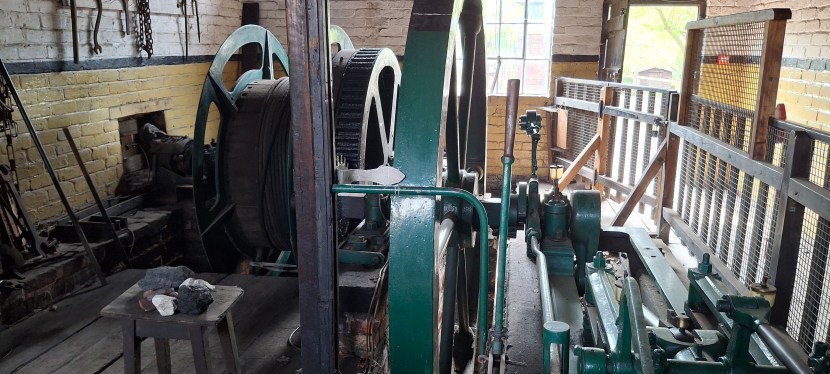
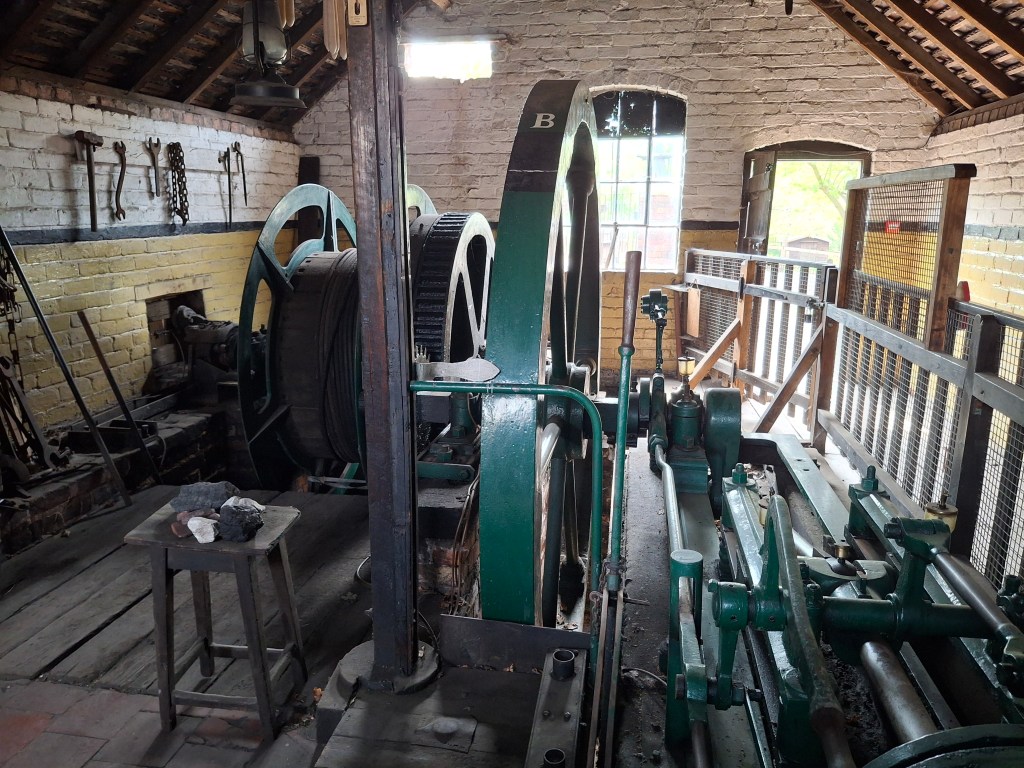
The Winding Engine at Blists Hill Victorian Town is one of the Ironbridge Gorge Museum Trust’s earliest and most significant exhibits. One of the very few preserved steam winding engines – and of even fewer able to wind up and down a historic mine shaft – it has been out of action since 2018. To repair and restore this machinery will cost £100,000. A fudn was setup in 2024 to raise this amount, and it has recently recieved a genrous donation from the 29th May 1961 Charitable Trust.
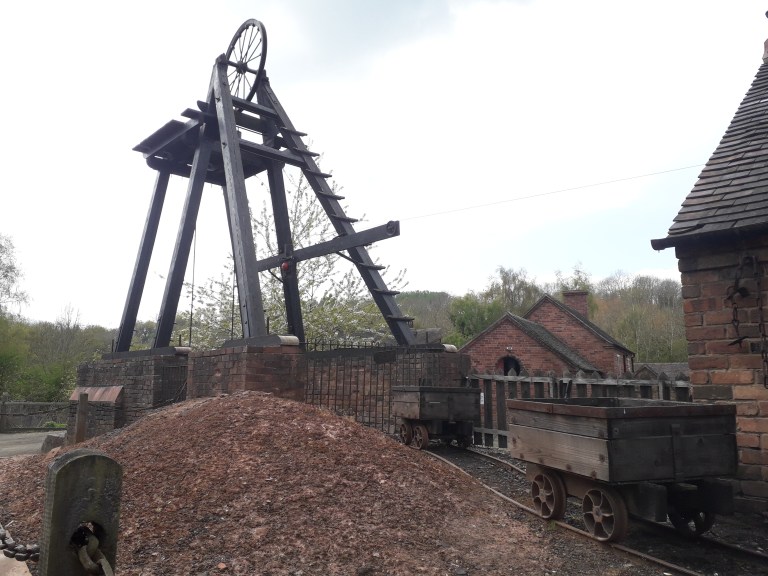
Winding head gear at Blists Hill, Ironbridge. Image copyright Dr Michael Nevell.
When it is working, the Winding Engine exhibit can bring the sounds, smells and sights of a working engine to life for our visitors. It helps us tell the story of the men, women and children who worked in Shropshire mines and the daily dangers they faced. It also demonstrates a vital feature of mining and the development of mining and engineering during the Industrial Revolution.
The phased plan for work will see the pit head, boiler house, and engine house refurbished, the mine shaft inspected and cage refit. The work will primarily be carried out by IGMT’s Steam Team, expert volunteers, supported by our Steam Engineer and outside contractors.
More money still needs to be raised, so if you would like to contribute to getting the engine winding again follow this link:
The Energy Resilience Fund (ERF) provides a blended funding package of loan (60%) and grant (40%) to bolster the energy resilience of eligible charities and social enterprises in England. The Fund is the successor to the pilot Energy Resilience Fund managed by Key Fund and its primary purpose is to enable the supply of renewable energy to an organisation’s own building (s). Many industrial heritage sites may find that they qualify and are suitable for such a fund.
Applicants must have fewer than 250 employees, £35m assets, or £40m turnover, but a turnover of more than £100,000, and be based primarily in England. For further details follow this link:
Arts Council England (ACE) want to hear from anyone who has an interest in, or a view about, the operation of the Arts Council England and what it delivers, by completing the ACE Review survey. The Review is an opportunity for a national conversation about the future of Arts Council England and how creativity is nurtured and developed.
Over the years ACE has supported many industrial heritage museums and sites, and continues to be an important source of support for the Industrial Heritage sector, from lcoal authority sites to independent museums.
The survey is one part of that conversation and will enable a broad range of people to share their views and ideas. It is an essential part of the evidence collection for this Review. The survey starts with a profile section consisting of up to 10 questions. The remaining questions are optional, consisting of 32 questions across 6 themed sections.
The Industrial Heritage Support project is running a free online seminar on 22 May 2025 focussing on climate change and Net Zero. The seminar is designed to give an overview of Net Zero adaptation strategies on industrial heritage sites in England. This is a follow-up seminar from an event on climate change and industrial heritage sites run in 2023.
The seminar will include a short presentation from Historic England covering their latest research and advice on reaching Net Zero in the Heritage sector. This will be followed by three industrial heritage site case studies from Cromford Mills, the National Mining Museum in Wakefield, and the Ironbridge Gorge Museum Trust discussing practical and future steps as these sites to achieve Net Zero. The seminar will finish with a discussion and questions.
The seminar is free and will run from 10:30am to 12 noon. To book via Eventbrite click here
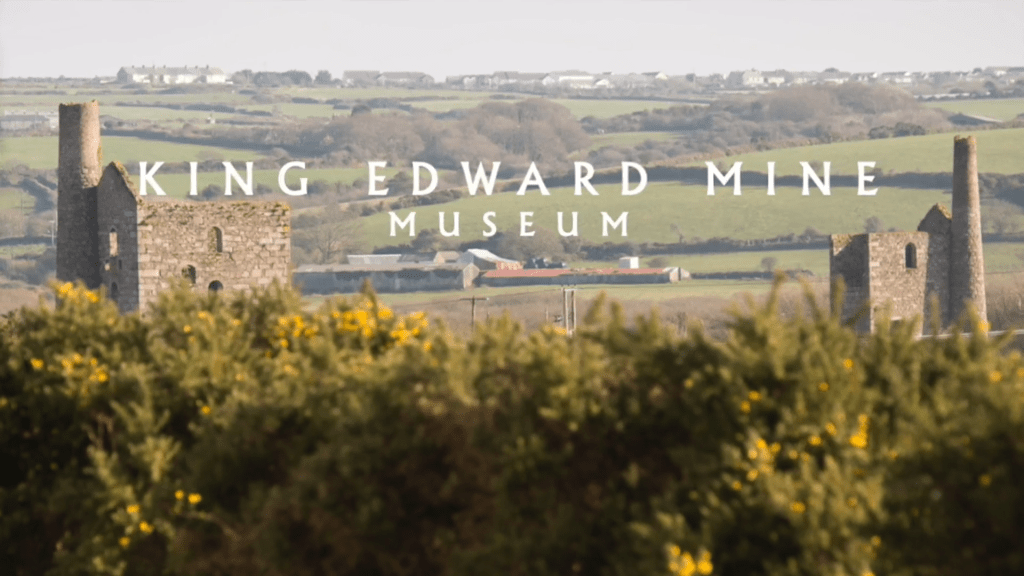
King Edward Mine Museum (KEM), a volunteer-led charity within the UNESCO Mining World Heritage Area of Cornwall, is looking for more tour guides when it re-opens for the new season on 20 April.
The site saw a significant rise in visitor numbers last year, many of whom travelled from overseas to explore the mine complex. The museum, which is dedicated to sharing the history of mining on the Great Flat Lode, and is Grade II* listed, lies in the village of Troon, near Camborne.
The mine tells the stories of Cornish miners and maintains a collection of historic mining equipment, including an operational Cornish tin mill, and a Holman winding engine. Originally worked under the name of Old Tye it was opened in 1844 together with Great Condurrow about 300m to the north, finally closing in 1921. However, the surface buildings continued in use for the teaching of mining, ore dressing, and surveying skills until 1974. In 1987 a volunteer group was formed with the aim of conserving the site as an educational resource for the future and the local community.
The National Trust, Cornwall Rural Community Charity, and Cornwall Voluntary Sector Forum are in discussions with Cornwall Council over the future of the Heartlands mining heritage site at Pool in Cornwall.
The site opened in 2012 after more than £20m in lottery funding was used to regenerate the derelict mining area and retsore the listed mining pumping engine house and surrounding buildings as a visitor attraction with retail units. It was run by the Heartlands Trust, and leased from Cornwall Council, before it ran into financial difficulty, closing in January 2024. The Trust was wound up and the Council has took over the maintenance of the site, and has been seeking a partner to lease the entire site from it.
The National Trust said: “The National Trust, with partners, Cornwall Rural Community Charity (CRCC) and Cornwall Voluntary Sector Forum (VSF) are in discussions with Cornwall Council to look at how a sustainable future could be secured for Heartlands, an important cultural heritage and community site in Cornwall.”
Walthamstow Pumphouse Museum and Markfield Beam Engine and Museum have merged under a new umbrella organisation, the Heritage and Communities Trust. The merger, which was finalised on 31st January 2025, brings together two of Greater London’s well-known industrial heritage sites.
Both museums will retain their individual names and distinct identities while benefiting from shared resources, expertise, and a unified governance structure. This strategic partnership creates the largest dedicated industrial heritage charity within Greater London in terms of public benefit and multi-site operation.
The flywheel of the pumping engine at Markfield. Image courtesy of Heritage & Comunities Trust.
The merger builds upon years of collaboration between the two listed Victorian-era sewage pumping stations, which are located approximately 45 minutes apart on foot along the River Lea. Both museums will continue to offer free entry to visitors, maintaining their commitment to accessibility and community engagement. “By joining forces, we’re creating a stronger, more resilient organisation that can better preserve and celebrate our shared industrial heritage,” said Abdullah Seba, Chief Executive of the Heritage and Communities Trust. “Our visitors will benefit from enhanced programming, improved facilities, and a more comprehensive understanding of London’s industrial past.”
The newly formed Heritage and Communities Trust will oversee both museums as well as two attractions at the Walthamstow Pumphouse Museum: The Tool House (a community maker space) and Supperclub.tube (a pop-up dining experience in a decommissioned Victoria Line carriage), with plans for further growth in the future. The Board of Trustees for the Heritage and Communities Trust includes representatives from both original museums to ensure continuity and balanced governance. Both museums will remain free to enter, continuing their position as the only free-entry industrial heritage museums in Greater London.
Walthamstow Pumphouse was built for Walthamstow Urban District Council and extended in 1896 to accommodate the current engine. It was closed around 1970. The museum opened in 1997 when a group of local enthusiasts came together to restore the Grade II listed Marshall engines and form the Friends of the Pumphouse. Markfield Beam Engine was built by the Tottenham Local Health Board in the 1880s and began its working life in 1888. It closed in 1964. In 1984 a Trust took on responsibility for the engine. In 2007 Haringey Council regenerated Markfield Park and restored the Grade 2 listed Engine Hall. The Trust restored the beam engine to full working order in 2008.
The Walthamstow Pumphouse Museum is open every Sunday from 10:30 am to 16:00 pm. Visit the website here. Markfield Beam Engine is open on selected Sundays and Bank Holiday Mondays. Visit the website here.
The Walthamstow Pumphouse. Image courtesy of Heritage & Communities Trust.
The next round of online Industrial Heritage Network (IHN) meetings is taking place this Spring. The IHN networks are a chance to meet those working, volunteering, or researching in the industrial heritage sector.
Four lunchtime IHN meetings will be held in late March, and will run from 12noon to 1pm, and there will be an IHSO update followed by news and updates from members. The first round of 2025 IHN meetings will take place on the following dates and will include the following groups:
21 March – East of England
25 March – South East
26 March -North East
31 March – London
Zoom links for the meetings will be sent to each region nearer the dates. If you would like to join any of these Industrial Heritage Networks as a member please email the IHSO here: mike.nevell@mikenevell
The National Lottery Heritage Fund has granted £164,000 for the Dean Heritage Centre’s “Investing in the Past, Future, and Present” project, and a grant of £99,932 to the Cambridge Museum of Technology for their ‘Full Steam Ahead’ project.
Horizontal stam engine, Cambridge Museum of Technology. Copyright: Dr Michael Nevell
Cambridge Museum of Tehcnology’s grant will fund the ‘Full Steam Ahead’ project. This will see two new heritage roles recruited to expand the Museum’s capacity for both general opening, and for increased education and community outreach work. The funding will also re-invigorate existing space in the Engineer’s House to be used as a space for community hires. Building on existing partnerships within the local Abbey community, the Museum will offer more opportunities for engaging with industrial heritage and their collections, through events and workshops. The Museum will be able to expand its schools programme, reaching more young people and engaging with teachers to form lasting links.
Dean Heritage Centre. Copyright: Dr Michael Nevell
The Dean Heritage Centre, which reflects the history of the Forest of Dean, is based in a listed cornmill and will use its grant for the “Investing in the Past, Future, and Present” project, which aims to “transform the museum”. Volunteers, local groups and schools will be able to take part in the project through “citizen science” activities, including sampling water that runs through the site. “We want to have new galleries, develop the site, and actually make it a viable place for the future,” Mark George, centre manager, said.
Avoncroft Museum has published their 2025 craft workshops programme. These workshops include a number of subjects relevant to industrial heritage sites, including blacksmithing, traditional signwriting, and basket weaving.
The workshop programme runs from Febraury through to November. During the workshops you’ll get expert guidance, all the materials needed, and free museum entry. No experience is needed. Costs vary, and there is a discount for Members of Avoncroft Museum. Follow this link for more details: