Welcome to the Industrial Heritage Networks and Support website. This site is maintained and updated by the Ironbridge Gorge Museum Trust who run the project and the networks. We aim to support industrial heritage in England through networking, information exchange, guidance, and training. Please explore the website and please contribute! For more information you can … Read more Welcome to the IHNs website!
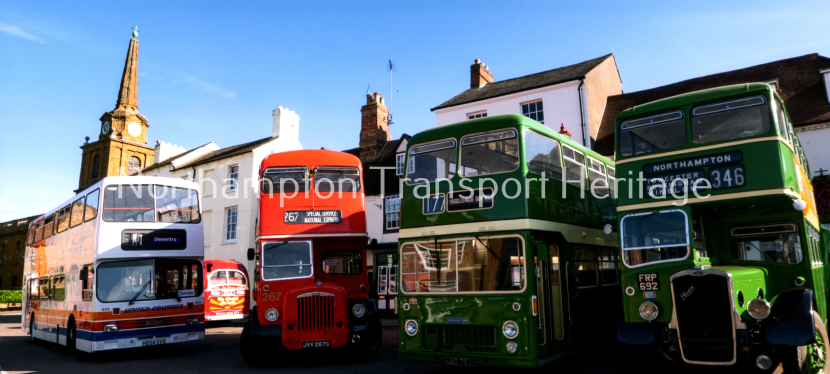
Northampton Transport Heritage is looking for volunteers to help keep their historic buses on the road, with increasing demand for its heritage vehicles at a variety of events running from April to November. However, they are constrained by a lack of volunteers – whether that’s helping to maintain the vehicles or assisting during events.
If you’re interested in old buses and want to help keep them on the road, or if you’d enjoy supporting Northampton Transport Heritage at the half dozen or so events they attend around Northamptonshire, please follow this link below:
Bookings are now open for the next in-person East of England Industrial Heritage Network meeting at the Royal Gunpowder Mill Mills, Waltham Abbey, on Thursday 7th August, 11am to 3pm.
Established in 2018, these regional meetings are designed to bring together those industrial heritage sites open to the public in each region, and local groups and individuals working or volunteering on industrial archaeology and heritage subjects and sites in the area. The format is a round-table discussion in the morning, with a tour of the site in the afternoon.
All IHN members are very welcome to attend. You can turn up on the day or follow this link to book a free place via Eventbrite:
Avoncroft Museum has published their 2025 craft workshops programme. These workshops include a number of subjects relevant to industrial heritage sites, including blacksmithing, traditional signwriting, and basket weaving.
The workshop programme runs from Febraury through to November. During the workshops you’ll get expert guidance, all the materials needed, and free museum entry. No experience is needed. Costs vary, and there is a discount for Members of Avoncroft Museum. Follow this link for more details:
The next round of in-person Industrial Heritage Network (IHN) regional meetings will be taking place this autumn. These regional network meetings take place twice a year in the spring (online) and in the autumn (in-person). They are a chance to bring together volunteers and professionals from industrial heritage sites around England to exchange experiences, catch up with the latest news and practices, and make or renew contacts. There are ten regional networks in England run by the IHSO project at the Ironbridge Gorge Museum Trust, and funded by Historic England, with the support of the Association for Industrial Archaeology.
The first four in-person IHN meetings will be held this autumn for the following regions:
North West England, Catalyst Museum, 25th October 2024.
Cornwall & Devon, East Pool Mine, Redruth, 7th November 2024.
South West, Westonzoyland, 8th November 2024.
West Midlands, Claymills, 22nd November, 2024
Further dates for other regions will be published in October. Regional network members will be emailed details of the venues and how to attend. For further details contact the Industrial Heritage Support Officer for England: mike.nevell@ironbridge.org.uk
The inaugural meeting of the Industrial Heritage Network East Midlands group took place online on the 30th July 2021. 18 people joined the meeting, representing 10 industrial heritage sites from across the region.
The current IHSO, Mike Nevell, introduced the project and talked about some of the impacts of COVID-19 since March 2020, and Shane Gould of Historic England discussed some of the wider recent strategic developments relating to Industrial Heritage. IHN East Midlands members then discussed how the COVID-19 pandemic has impacted their work from volunteering to maintenance and visitor numbers. Several East Midlands industrial heritage sites have received Cultural Recovery Fund monies, whilst others have received financial support from several local authorities. Volunteer support amongst those attending the meeting had remained strong. However, it was noted that not all East Midlands industrial heritage sites had re-opened by the end of July 2021.
Other topics discussed included the continued restoration of several sites (such as Wingfield Station), and growing problems from climate change, Strutts Mill on the River Derwent, for instance, having been recently flooded.
The next IHN East Midlands meeting will be in early 2022, and at some stage in person. A dedicate members directory page for the IHN East Midlands is now live, elsewhere on this website. If you would like to join the IHN East Midlands, add details to the members directory page, or highlight forthcoming events, please email the IHSO.
This year Heritage Open Days will run from 10-19 September 2021. The theme is Edible England, from forgotten recipes to food in the factory, why not hold an event to help audiences explore our culinary heritage?
Heritage Open Days is looking for ‘Edible England’ to encompass the broadest possible spectrum of events and stories, from revealing culinary tastes of the past to going behind-the-scenes of modern production methods. The theme will also explore the customs and quirks that have developed around what we eat and drink, as well as the fascinating history of some of our regional and national specialties.
You can get a range of extra resources by registering an event including marketing and evaluation materials to help inform future activity. For more details about how to get involved, visit the Heritage Open Days website.
Do you help run or volunteer at an industrial site open to the public in the East Midlands or East of England? Then now is the time to get involved with two new Industrial Heritage Networks being setup by the IHSO project. The Industrial Heritage Networks (IHN) are part of the Industrial Heritage Support project run by the Ironbridge Gorge Museum Trust, funded by Historic England, and support by a range of partners including the Association for Industrial Archaeology and the Association of Independent Museums.
Since 2018, seven regional Industrial Heritage Networks have been established in England. These are voluntary groups, organised with the support of the IHSO project, which meet twice a year. This is an opportunity to discuss and share the experiences of running and presenting to the public some of the most important industrial sites in the country.
With the onset of the pandemic in March 2020 the network meetings went online, providing support to those running and volunteering at hundreds of sites, and gathering the experiences of dozens of staff and volunteers in adapting to the global pandemic. With many industrial heritage sites re-opening this month (June 2021) and more planning to re-open over the rest of the summer the IHSO project is looking to establish the next two regional IHNs. The new East Midlands and East of England networks will meet online initially, although as the pandemic conditions ease the intention is to mix online meetings and in-person meetings at industrial sites.
If you want to get involved with these two new networks, sharing knowledge and experience, and discussing the current challenges and opportunities in the industrial heritage sector, then contact the Industrial Heritage Support Officer, Dr Mike Nevell, at Ironbridge, on the following email: mike.nevell@ironbridge.org.uk
The annual Festival of Archaeology, coordinated by the CBA in partnership with Historic England, showcases the very best of archaeology, with special events right across the UK. Many industrial heritage and industrial archaeology sites and groups take part each year.For 2021, the theme is Exploring local places. Discover the archaeology that is all around you by exploring your local area and the stories of the people and communities who lived there.
Join the CBA for the 2021 Festival of Archaeology from 17 July – 1 August. CBA wants you to help them celebrate local sites, stories, and the people who lived and shaped our local places. Archaeology is a great tool to help you do this and to find out more about places through time such as:
How have they changed and how do we use them today?
Who lived and worked there in the past and do we use them in the same way today?
What can you see today that would have been in the landscape 10, 100 or even a 1,000 years ago?
Want to know how to get your industrial archaeology and heritage work published and make an impact with your research? The Association for Industrial Archaeology Young Members Board are hosting a one hour seminar with speakers from Publishers Taylor & Francis alongside the Editors of the Industrial Archaeology Review on 23rd April 2021. This will be followed by a 30 minute Q & A where you get to ask the experts!
This free event is aimed at students and early-career professionals in the fields of history, heritage, archaeology, and engineering, but it will also be a great event for anyone, especially industrial archaeology and heritage volunteers, who wants to brush up on academic publishing best practice.
The Land Transport Archives Network (LTAN) was formed in 2020 as an informal mutual-support group for the creators, custodians, and users of archives relating to any aspect of any form of land transport. Historic objects relating to transport are covered by a number of Sector Support Organisations in the museums sector, but there is a noticeable gap in the support available for the related Archive collections. LTAN, alongside the Aviation, and Aerospace Archives Initiative (AAAI), aims to help address this gap.
To date, two virtual meetings have been held, with the next due in late February. The network is still in the early stages of its development, but has already decided on a series of aims moving forwards, including expanding on the work of the former TRAP project to map the location and extent of land transport collections.
A website for the network was launched in mid-January and can be viewed at https://ltan.info . This includes guidance for custodians of archives, which is aimed at non-professionals caring for the records of their own organisation and/or more general heritage material, so could be of great assistance to heritage railways, museums, and historical societies.













 Industrial Heritage Networks