Welcome to the Industrial Heritage Networks and Support website. This site is maintained and updated by the Ironbridge Gorge Museum Trust who run the project and the networks. We aim to support industrial heritage in England through networking, information exchange, guidance, and training. Please explore the website and please contribute! For more information you can … Read more Welcome to the IHNs website!
81 projects across 78 historic sites are set to receive a share of £4.5 million through Historic England, from Round 3 of the Government’s Culture Recovery Fund. This February 2022 further round of funding will ensure essential repairs and restoration can be completed and help bring heritage sites back to life by supporting major building programmes, safeguarding jobs, and generating employment.
The sites supported, which include 33 buildings supported for the first time, include additional monies for several industrial heritage buildings and structures. These include South Wingfield Station in Derbyshire and Wheal Betsy in Devon. The Canal and River Trust will receive further funds to help restore locks on the Ashton, Grand Union, Hertford Union, Leeds Liverpool, Peak Forest, and Walsall canals. For a full list of recipients from all three CRF rounds in England follow this link: https://historicengland.org.uk/coronavirus/culturerecoveryfund/map/recipients-list/
The deadlines for the relaunched SPAB Heritage Awards are rapidly approaching. In 2022 SPAB will be championing excellence in built heritage across the UK and Ireland, bringing established SPAB awards together with fresh new ones, and waving the flag for all the gifted craftspeople, dedicated custodians, and environmentally conscious practitioners that work tirelessly to ensure that our astonishing built heritage has a bright future.
The entry categories for 2022 are: Building Craftsperson of the Year; Best Loved Award; Sustainable Heritage Award; Philip Webb Award; John Betjeman Award; and the Scholarship & Fellowship Presentation. The deadlines are as follows:
Main entry deadline: 28 March 2022
Philip Webb Award entry deadline: 12 September 2022
Essex County Council are holding are holding a mini-conference on Industrial Heritage on the 5th April 2022 at the East Anglian Railway Museum. There will be a wide range of speakers plus a chance to look round the venue.
The day is aimed at anyone interested in industrial heritage and architecture, or those who are currently involved in the conservation or sustainable reuse of these kind of sites. The mini-conference will provide insight into a range of industrial typologies across Essex.
The venue, at the East Anglian Railway Museum, was part of the branch line from Marks Tey to Sudbury which crosses the impressive Chappel viaduct. This site is now run as a museum, and is still a working railway station. It is well known for its open days and events, which reveal a rich history. There will be time within the day to explore this impressive site.
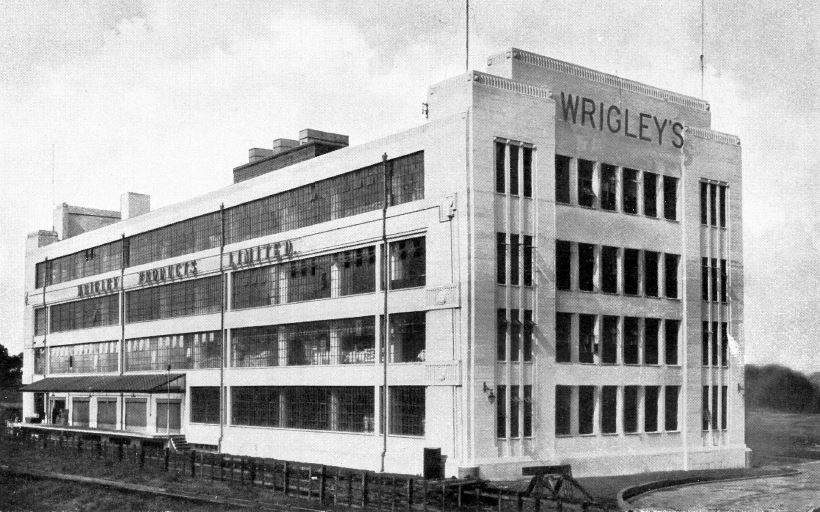
Talks will cover water, gas, electric industries, maltings, and breweries, daylight factories, and the challenges of recording and preserving 20th century industrial heritage. The speakers include: Wayne Cocroft of Historic England; Tony Crosby, Chairman of the Essex Industrial Archaeology Group; Tim Murphy, Historic Environment Manager at Place Services for Essex; Mike Tarbard of the Bata Heritage Centre and David Ridler manager of the former Bata factory site; and Elphin Watkin, presient of the Herts & Essex Architectural Society.
In January 2022, the Association of Independent Museums surveyed its members on the immediate impact of the Omicron variant and related strengthening of restrictions in all nations of the UK over the Christmas and New Year season. AIM received almost 200 responses.
These responses show a picture of a sector looking ahead to the rest of winter and the rest of the year largely expecting to survive financially, but with significant concerns about visitor figures and income throughout 2022, and a need for support with core funding, capital (including maintenance) projects, one-off projects, and particularly to support staff resilience and wellbeing.
As part of the National Lottery funded Digital Skills for Heritage initiative, Wikimedia UK is running free webinars to showcase what Wiki-based platforms and digital skills can offer organisations in a heritage context.
Heritage organisations of all sizes are invited to attend. These webinars will cover open knowledge, the digital skills gap, digital preservation and how WMUK is addressing those issues through this project. Participants will be provided with access to resources and materials to take back to their organisations, and the opportunity to follow up with the project and engage in partnership. You need only attend one webinar: sessions are free, open and no prior Wiki experience is required.
The AIM annual conference is returning to a physical event this summer, with the venue being Port Sunlight, on the Wirral peninsula. Supported by headline sponsors, Hayes Parsons Insurance Brokers, the conference will run over two days, Thursday 16 and Friday 17 June.
This year’s conference theme is ‘Making it happen’ with museum colleagues from across the UK exploring the vision for independent museums as we recover from the challenges of the pandemic. Sessions will highlight how to implement the changes sector debates call for, with practical and relevant examples from museums of all shapes and sizes. As ever with AIM Conference, delegates can look forward to a schedule packed with inspirational and practical advice, debate, and discussion.
The 2022 Essex Industrial Archaeology Group (EIAG) Industrial Heritage Fair will be on 1st October 2022, at the Silver End Village Hall. The Group’s aim is to have an exhibition of around 30 organisations related to Industrial Archaeology in Essex, with stands to display what they do to enable the public to find out more. This should be a good way of promoting the organisations after several years of restrictions.
In addition to the exhibition there will be talks by local experts on Industrial Archaeology along with the possibility of guided walks round the historic village of Silver End and visits to its Heritage Centre. EIAG are now taking bookings for stands. For further information please email your expression of interest to jgiffould@aol.com who will send out a booking form. Background details to the Group and copies of their Newsletter can be found here: https://www.esah1852.org.uk/eiag
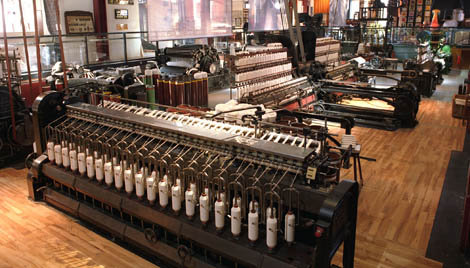
Written for the Science Museum Journal by Pippi Carty-Hornsby, ‘Preserving skills and knowledge in heritage machinery operations’, Science Museum Group Journal, Autumn 2021, Issue 16, details an approach to knowledge capture on a collection of working textile machinery at the Science and Industry Museum. The machinery collection dates between 1880 and 1955 and the knowledge capture process outlined in the case study was prompted by the retirement announcement of the last machine operator on staff with first-hand experience of the textile industry.
Heritage machinery demonstrations provide a unique opportunity for visitors to museums to experience the sights, smells and sounds of Britain’s industrial past. However, with many of the operating roles in the sector being staffed by an ageing population, heritage machinery demonstrations are at risk of substantial knowledge loss over the coming years. Without intervention, many of the tacit skills and knowledge that the operators hold will be lost, along with the opportunity for the public to learn from and experience the machinery first-hand.
The method outlined in this article includes a review of existing documentation, operation recording and interrogation of results, comparison and discussion with stakeholders, and production of documentation and resources. The results of this process included a set of documents that reflected both modern health and safety and conservation and collections care guidelines, as well as cross-media resources that can be used as a future training aid. Though the case study detailed here features textile machinery, it is applicable across many strands of heritage machinery and could provide a useful tool for similar ‘at-risk’ machinery operations in museums and other cultural institutions.
The application window for the Emergency Resource Support Fund, through the Culture Recovery Fund, has been extended. This is designed to support arts and heritage organisations through the impact of the Omicron variant this winter. A further £30 million has been made available by the UK Government. This fund aims to provide emergency funding awards to organisations that were financially sustainable before Covid-19 but are now at imminent risk of failure and have exhausted all other options for increasing their resilience. Deadline extended to 18th January 2022 to submit a permission to apply
National Heritage Lottery
A variety of grant funding streams are now open through the National Heritage Lottery. These include the National Lottery Project Grants, which is an open access programme for arts, libraries, and museum projects. NLPG is a rolling programme, so applications can be made at any time. Decisions on applications for £30,000 or less take 8 weeks, decisions for over £30,000 take 12 weeks.
The Unlocking Collections grant stream is a time-limited priority fund within the National Lottery Project Grants portfolio aimed at enabling museums to develop their collections-based work and increase public engagement with, and use of, their collections. Applications accepted until November 2022.
The Let’s Create Jubilee Fund is designed to support voluntary and community organisations who want to deliver creative activity as part of Her Majesty the Queen’s Platinum Jubilee celebrations. Deadline 28th February 2022.
Association for Industrial Archaeology
The AIA’s annual round of grants and awards is open. There are a variety of grants available (including community, research, and travel bursaries), as well as awards ranging from conservation and adaptive re-use, to publications: see here: https://industrial-archaeology.org/aia-awards/ The deadline for most is 31st January2022. However, the Restoration Grants deadline is 31st March 2022.
The National Trust staff at Dunham Massey are looking for volunteers for their water-powered mill. Built in the early 17th century as an estate corn mill, it was converted to a sawmill in 1860. The waterwheel still drives machinery including a frame saw, band saw, circular saw, boring machine, and a lathe.The mill volunteers play a vital role in bringing Dunham Massey to life. Working as a close team, you will inspire visitors by sharing your passion and knowledge for the Mill, the oldest building on the estate.
Dunham Massey is a National Trust estate close to Altrincham, in Trafford Greater Manchester. It comprises a Georgian mansion house, deer park, and seasonal gardens. Their staff team is supported by over 400 volunteers across the property. At Dunham Massey the NT is making the volunteering opportunities more vibrant, accessible, and diverse, and they’d like volunteers to help to achieve this.
What’s in it for you?
Being part of a friendly, supportive, and dedicated team
Expanding your knowledge about a fascinating part of the Dunham Massey estate
Meeting people from all walks of life and making new friends
Building your confidence and improving your communication skills
Anyone interested should apply through the National Trust website – follow the link here: