Welcome to the Industrial Heritage Networks and Support website. This site is maintained and updated by the Ironbridge Gorge Museum Trust who run the project and the networks. We aim to support industrial heritage in England through networking, information exchange, guidance, and training. Please explore the website and please contribute! For more information you can … Read more Welcome to the IHNs website!
Bookings are now open for the next in-person East of England Industrial Heritage Network meeting at the Royal Gunpowder Mill Mills, Waltham Abbey, on Thursday 7th August, 11am to 3pm.
Established in 2018, these regional meetings are designed to bring together those industrial heritage sites open to the public in each region, and local groups and individuals working or volunteering on industrial archaeology and heritage subjects and sites in the area. The format is a round-table discussion in the morning, with a tour of the site in the afternoon.
All IHN members are very welcome to attend. You can turn up on the day or follow this link to book a free place via Eventbrite:
There’s still time to book a place on the next in-person West Midland’s Industrial Heritage Network meeting to be held at the Ironbridge Gorge Museum Trust on Wednesday 25 June, at 11am in the Glass Glassroom behind the Museum of Iron, Coalbrookdale.
Established in 2018, these regional meetings are designed to bring together those industrial heritage sites open to the public in each region, and local groups and individuals working or volunteering on industrial archaeology and heritage subjects and sites in the area. The format is a round-table discussion in the morning, with a tour of the site in the afternoon.
The Association of Independent Museums(AIM) have announced the winners of the inaugural Museum Fundamentals grants. Funded by the Pilgrim Trust and The Julia Rausing Trust and launched in December 2024, the AIM Museum Fundamentals grant is designed to respond to the varied needs of AIM members.
Amongst the initial round of 12 grants is a succesful application from The Long Shop Muaseum in Suffolk to redesign and redisplay the ‘Made in Leiston’ gallery. The design and content of the new exhibition is based on audience research conducted over the last two seasons. The new displays will focus on unlocking the social history of the town and the people who lived and worked there over a 250-year span, and on technological change. The Long Shop Museum was founded in 1984. It is housed in a cluster of historic buildings in the Suffolk market town of Leiston. The buildings are survivors of the original 19th century engineering works site of Richard Garrett and Sons who specialised in famring machinery. Further details here:
The AIM Museum Fundamentals grant is funded by the Pilgrim Trust and The Julia Rausing Trust, and launched in December 2024. It combines the valued collections care and conservation funding supported by the Pilgrim Trust with new funding from The Julia Rausing Trust. AIM members can apply for up to £20,000 for funding to undertake a collections-based project. If you’re interested in applying to Museum Fundamentals, expressions of interest for the next round are welcome until Friday 8 August. Further details here: https://aim-museums.co.uk/news/first-aim-museum-fundamentals-awards-made/
Long Shop, Leiston, Suffolk. Image copyright The Long Shop Museum.
2025’s in-person Industrial Heritage Network (IHN) meetings will be taking place over the summer and autumn. Established in 2018, these regional meetings are designed to bring together those industrial heritage sites open to the public in each region, and local groups and individuals working or volunteering on industrial archaeology and heritage subjects and sites in the area. The format is a round-table discussion in the morning, with a tour of the site in the afternoon.
The first meeting for 2025 will be for the West Midlands IHN, which will be held at the Ironbridge Gorge Museum Trust in the Glass Classroom on the Coalbrookdale site on 25th June. After a general meeting in the morning, there will be an afternoon tour of current conservation works at Blists Hill.
These meetings are part of the Industrial Heritage Support project for England, run by the Ironbridge Gorge Museum Trust and funded by Historic England and the Association for Industrial Archaeology.
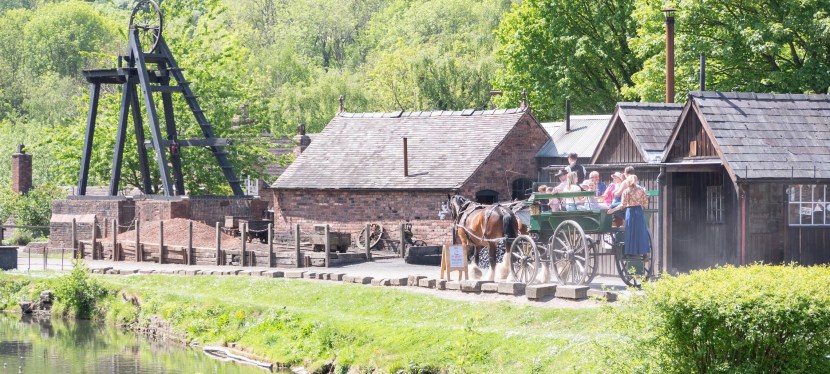
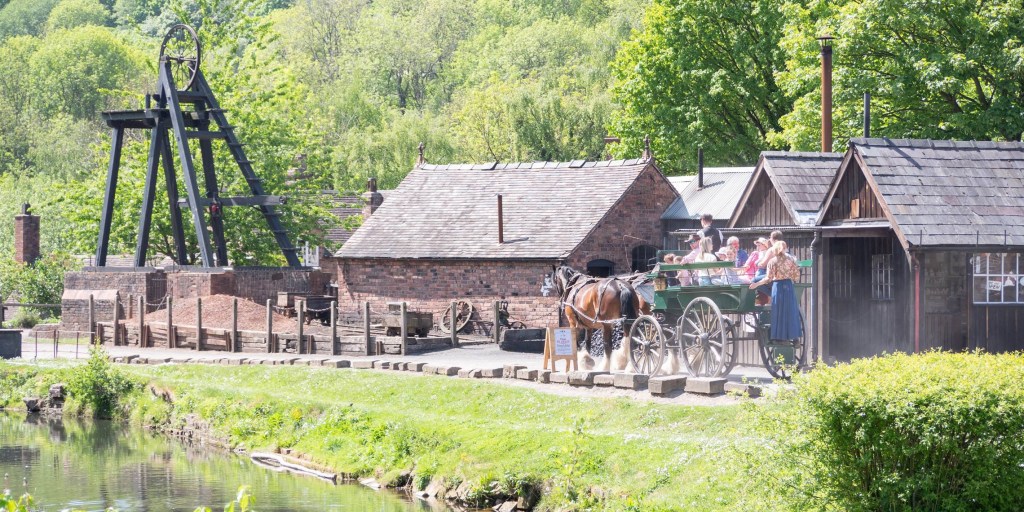
Colliery headgear and canal at Blists Hill, Coalbrookdale, Ironbridge. Image copyright Dr Michael Nevell.
The Industrial Heritage Support project is running a free online seminar on 22 May 2025 focussing on climate change and Net Zero. The seminar is designed to give an overview of Net Zero adaptation strategies on industrial heritage sites in England. This is a follow-up seminar from an event on climate change and industrial heritage sites run in 2023.
The seminar will include a short presentation from Historic England covering their latest research and advice on reaching Net Zero in the Heritage sector. This will be followed by three industrial heritage site case studies from Cromford Mills, the National Mining Museum in Wakefield, and the Ironbridge Gorge Museum Trust discussing practical and future steps as these sites to achieve Net Zero. The seminar will finish with a discussion and questions.
The seminar is free and will run from 10:30am to 12 noon. To book via Eventbrite click here
The National Trust, Cornwall Rural Community Charity, and Cornwall Voluntary Sector Forum are in discussions with Cornwall Council over the future of the Heartlands mining heritage site at Pool in Cornwall.
The site opened in 2012 after more than £20m in lottery funding was used to regenerate the derelict mining area and retsore the listed mining pumping engine house and surrounding buildings as a visitor attraction with retail units. It was run by the Heartlands Trust, and leased from Cornwall Council, before it ran into financial difficulty, closing in January 2024. The Trust was wound up and the Council has took over the maintenance of the site, and has been seeking a partner to lease the entire site from it.
The National Trust said: “The National Trust, with partners, Cornwall Rural Community Charity (CRCC) and Cornwall Voluntary Sector Forum (VSF) are in discussions with Cornwall Council to look at how a sustainable future could be secured for Heartlands, an important cultural heritage and community site in Cornwall.”
Walthamstow Pumphouse Museum and Markfield Beam Engine and Museum have merged under a new umbrella organisation, the Heritage and Communities Trust. The merger, which was finalised on 31st January 2025, brings together two of Greater London’s well-known industrial heritage sites.
Both museums will retain their individual names and distinct identities while benefiting from shared resources, expertise, and a unified governance structure. This strategic partnership creates the largest dedicated industrial heritage charity within Greater London in terms of public benefit and multi-site operation.
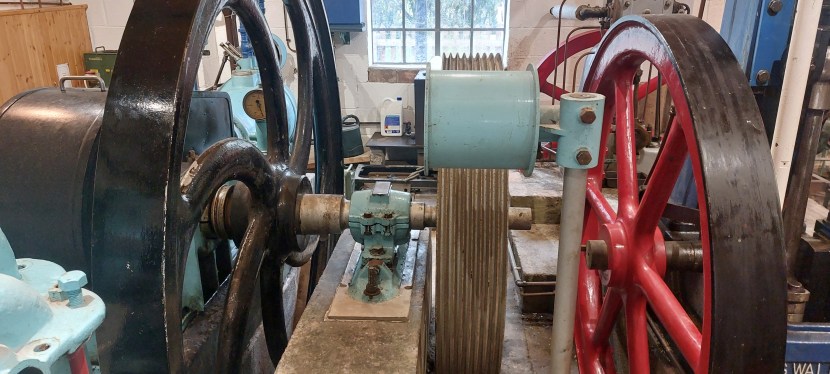
The flywheel of the pumping engine at Markfield. Image courtesy of Heritage & Comunities Trust.
The merger builds upon years of collaboration between the two listed Victorian-era sewage pumping stations, which are located approximately 45 minutes apart on foot along the River Lea. Both museums will continue to offer free entry to visitors, maintaining their commitment to accessibility and community engagement. “By joining forces, we’re creating a stronger, more resilient organisation that can better preserve and celebrate our shared industrial heritage,” said Abdullah Seba, Chief Executive of the Heritage and Communities Trust. “Our visitors will benefit from enhanced programming, improved facilities, and a more comprehensive understanding of London’s industrial past.”
The newly formed Heritage and Communities Trust will oversee both museums as well as two attractions at the Walthamstow Pumphouse Museum: The Tool House (a community maker space) and Supperclub.tube (a pop-up dining experience in a decommissioned Victoria Line carriage), with plans for further growth in the future. The Board of Trustees for the Heritage and Communities Trust includes representatives from both original museums to ensure continuity and balanced governance. Both museums will remain free to enter, continuing their position as the only free-entry industrial heritage museums in Greater London.
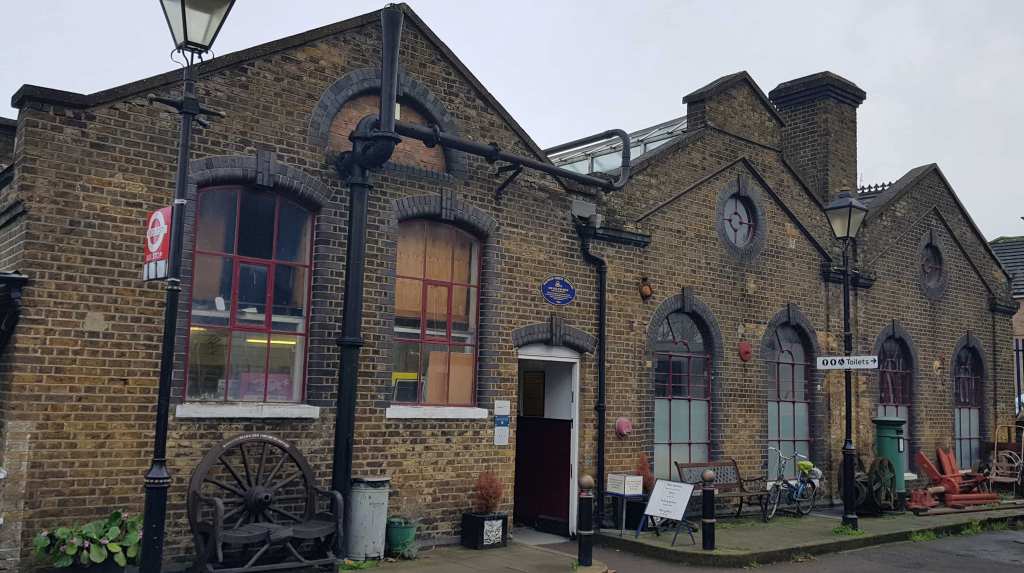
Walthamstow Pumphouse was built for Walthamstow Urban District Council and extended in 1896 to accommodate the current engine. It was closed around 1970. The museum opened in 1997 when a group of local enthusiasts came together to restore the Grade II listed Marshall engines and form the Friends of the Pumphouse. Markfield Beam Engine was built by the Tottenham Local Health Board in the 1880s and began its working life in 1888. It closed in 1964. In 1984 a Trust took on responsibility for the engine. In 2007 Haringey Council regenerated Markfield Park and restored the Grade 2 listed Engine Hall. The Trust restored the beam engine to full working order in 2008.
The Walthamstow Pumphouse Museum is open every Sunday from 10:30 am to 16:00 pm. Visit the website here. Markfield Beam Engine is open on selected Sundays and Bank Holiday Mondays. Visit the website here.
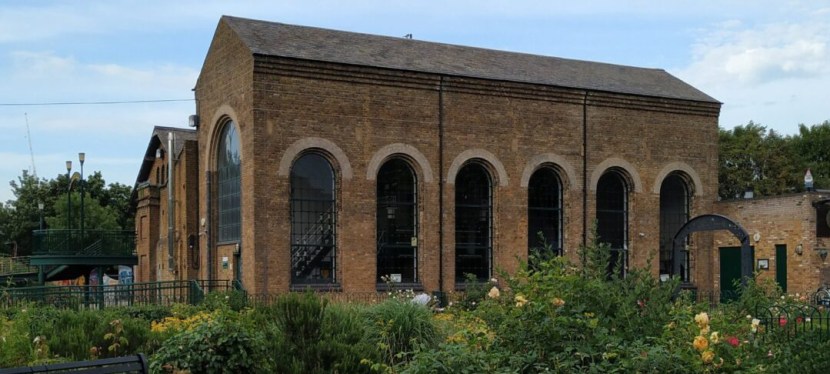
The Walthamstow Pumphouse. Image courtesy of Heritage & Communities Trust.
The Industrial Heritage Support Officer (IHSO) role, occupied by Dr Mike Nevell, has been awarded further funding to enable it to continue its work to preserve England’s industrial heritage. IGMT is delighted that our partners at Historic England and the Association for Industrial Archaeology have agreed to fund the post, which is vital for the support of the wider Industrial Heritage sector and a mark of the importance of IGMT as a leading Industrial Heritage organisation.
The IHSO project is funded by Historic England and the Association for Industrial Archaeology (AIA), and began in September 2012. It is managed by the Ironbridge Gorge Museum Trust. The project aims to support the approximately 600 industrial heritage sites preserved and open to the public in England by developing partnerships and promoting best practice, among other things.
In 2024 the project supported more than 400 sites through one-to-one advice, network meetings, site visits, seminars, websites, and social media. At the end of March the first round of Industrial Heritage Network meetings for 2025 will take place online, and on 25 April, Mike will be talking at an event hosted in Coalbrookdale, organised by the Boiler and Engineering Skills Training Trust, about the need for trained engineers to run industrial heritage sites.
Project highlights for 2025 to 2026 include a major report on the industrial heritage sector in England; more online training seminars to support the sector; and the continuation of the Industrial Heritage Networks. These are key to bringing together people working at industrial sites so that they can exchange experience and best practice.
The heritage sector faces many challenges but if it is to have a future it must commit to more and better engineering training. To that end BESTT (Bolier & Engineering Skills Trainign Trust) is holding a “New directions in Training” event for 25th April at the Ironbridge Gorge Museum in Coalbrookdale. The event is free and all concerned with training in the heritage sector at any level are welcome.
There will be a range of speakers across the sector and topics will include proposals to extend the current range of BESTT short courses to cover diesel locos, sustainability (eg energy and fuel) challenges, training for under 18s and other identified needs and solutions across the wider industrial heritage sector. There will be a brief outline of BESTT courses, a panel discussion and a Q and A session. The aim of the event which will run from 10am to 1pm is to look also at areas where there is a training gap and where BESTT could realistically do more.
It is hoped to include a tour of the operational heritage engineering at Blists Hill in the afternoon.
The South Wales and West of England Regional Industrial Archaeological Conference 2025 (SWWERIAC) will take place on 26th April at Walton Village Hall. SWWERIAC took place annually until the Covid Epidemic struck. Oxford House Industrial History Society’s initiative revived the event in 2024. The Somerset Industrial Archaeology Societty (SIAS: www.sias.me.uk)has volunteered to organize the 2025 conference.
SIASextends a cordial invitation to those interested in Industrial Archaeology to attend the conference in Walton Village Hall (http://www.waltonvillagehall.org). There will also be displays by the associated societies and publications will be on sale. The cost, including refreshments and lunch, is £25. Walton is situated on the A39 just west of Street and approximately 20 miles east of Junction 23 of the M5. The Village Hall is situated just north of the A39 at the end of Meadow Close.
PROGRAMME
09.15 – Registration opens. Tea, coffee, fruit juices and biscuits 10.00 – Welcome – Peter Daniel (President of SIAS) 10.10 – Peter Daniel – The Industrial Archæology of the Porlock Area 10.50 – Terry Stevens – The Unique Heritage of Coker Canvas 11.10 – Break. Tea, coffee, fruit juices and biscuits 11.30 – Stephen Miles – The Kilve Oil Shale Scandal 12.30 – Lunch: cold buffet. Please indicate any dietary requirements 13.50 – Samantha Cullen (Alfred Gillet Trust) – The New Shoemaker Museum 14.30 – Mary Miles – Clarke’s Influence on the Buildings of Street 15.10 – Break. Tea, coffee, fruit juices and biscuits 15.30 – Vanessa Ruhlig – Saving Fox’s Cloth and Dye Works at Tone Dale 16.10 – Close of Conference 16.15 – Visits(maps giving directions to the sites will be available on the day)
Choice of Post-conference Visits:
Street Buildings: A level walk around the centre of Street. We will see the development of industrial housing including grade II listed terraces which feature in books on the Arts & Craft Movement, public buildings, schools, a library, fire station, and swimming pool.
Glastonbury Fossick – Visiting the surviving buildings of Morland’s and Baily’s tanneries and sheepskin works. The walk will start by the Somerset & Dorset Joint Railway offices and will be just over a kilometre in length, all on the level. Morland’s and Baily’s were the major industrial employers in Glastonbury and there was a time just after WWII when they employed about 5000 people between them. The grade II listed buildings of Baily’s, including a landmark chimney, are about to be converted. There are also workers’ houses. Surviving buildings of Morland’s include the Red Brick Building and the Zig-zag Building.
Westonzoyland Pumping Station and Museum of Steam Power and Land Drainage: The Museum is housed in the first steam pumping station to be built on the Somerset Levels. Dated 1830, it is grade II* listed as is one of the earliest in the country. The existing engine, an Easton and Amos machine built in 1861, replaced an earlier beam engine and scoop-wheel pump. The site is also home to a collection of historic engines and items used in the area, including a narrow gauge tramway.
Bridgwater Brick and Tile Museum: This exclusive visit will include a guided tour with particular reference to Industrial Archæology, and a tile-making demonstration.













 Industrial Heritage Networks