Welcome to the Industrial Heritage Networks and Support website. This site is maintained and updated by the Ironbridge Gorge Museum Trust who run the project and the networks. We aim to support industrial heritage in England through networking, information exchange, guidance, and training. Please explore the website and please contribute! For more information you can … Read more Welcome to the IHNs website!
The Society for Lincolnshire History and Archaeology (SLHA) is running an industrial archaeology conference on ‘Lincoln’s Engineering History’ on the 18 November at Lincoln College, Lincoln. A series of talks will celebrate Lincoln’s remarkable engineering history – and its 100-year-old Engineering Society.
The programme includes talks on: ‘Commemorating Lincoln Engineering Society’s Centenary: It’s Origins and Early Years’; ‘Lincoln Engineering – Why and How? Factors leading to the start of engineering in the City of Lincoln’; and ‘ The Engineering Heritage of Lincoln’. Tickets cost £30 for the public and £25 for SLHA members, and the day includes lunch and refreshments.
SLHA promotes an interest in all aspects of Lincolnshire’s heritage. Details about the society can be found here: https://www.slha.org.uk/index.php
13 tops of cast-iron beam in motion, Claymills Pumping Station, October 2023. Image courtesy of Catherine Nevell.
On Saturday 28th October 2023 I was privileged to be invited to help celebrate 30 years of conservation at Claymills Pumping Station. Claymills is a Victorian pumping station on the northern side of Burton-upon-Trent designed to pump effluent from the brewery industry in the town. Burton was the largest brewing centre in Victorian Britain, and the brewing processes generated a huge quantity of foul smelling, high temperature, sulphate rich effluent which also contained a lot of suspended matter. This was all discharged into local brooks and streams around the town. These became open sewers, until eventually the crude sewage ran into the River Trent at an outfall at Wallsitch. Claymills was was designed to pump this brewery effluent to a the sewage farm at nearby Egginton, built in the 1866.
The IHSO, Mike Nevell (centre with blue scarf), attempting the help start of the beam engines. Image courtesy of Catherine Nevell.
Claymills Pumping Station was built in the period 1884-86 to designs by James Mansergh, consulting engineer to Burton-upon-Trent Municipal Borough Council, with George Hodges of Burton-upon-Trent as the main contractor. It became operational in 1886, and continued to pump the sewage up to the farm until 1969, when the current treatment works was commissioned. The beam engines were then used to pump sludge to the farm until electric pumps were installed in 1971. Abandoned, but with all its machinery intact, by the the mid-1980s the site faced demolition. However, it was listed as a grade II* building in 1986 due to the completeness of the buildings and the machinery on the site. Thereafter, interest in saving the complex grew and in September 1993 The Claymills Pumping Engines Trust was formed. This has been entirely volunteer-run since its foundation.
The main pumping plant consists of four Woolf compound, rotative, bean pumping engines. These are arranged in mirror image pairs, in two separate engine houses, with a central boiler house (containing five Lancashire boilers) and chimney. The engines were built in 1885 by Gimson & Co of Leicester and represent the final technical development of the beam engine. All the engines are similar and typically have a high-pressure cylinder with a 24-inch bore by 6-foot stroke, and the low-pressure cylinder is 38-inch bore by 8-foot stroke. Steam is distributed by means of double beat ‘Cornish’ valves, mounted in upper and lower valve chests. The cylinders act on one end of the beam, via a parallel motion. The beams, which are rivetted together and hollow to reduce weight, are 26 feet 4 inches between end centres, 4 feet deep at the centre, and each weigh around 13 and are carried on 12-inch-diameter (300 mm) bearings.
The Trust has spent its first 30 years restoring the workshop, engine houses, chimney, boilers, and steam engines. 2023 marks the return to work of all four original beam engines. Thus, the highlight of the celebrations was the running of these four beam engines, steaming all at the same time. This included the recently restored engine A, which I got to help to start! The steam and heat in the engines houses were not surprising, but the quietness of the engine movements was a surprise, the beams whispering as they rose and fell as a rapid rate.
Although the site is now fully functioning the Trust have further plans to expanded their operations and to develop their visitor and learning facilities.
Applications are now open for AIM’s next round of Connected Communities funding, from which several industrial heritage sites have already benefitted. Grants of £15,000 – £100,000 are available to museums delivering projects in the eligible areas that will improve community connections through high-quality volunteering opportunities and/or reducing loneliness and increasing social bonds. Expressions of Interest must be made by Monday 27 November.
Over the last few years nearly £3 million has been distributed on behalf of the Government by Arts Council England via partners Libraries Connected, Creative Lives and AIM, through the AIM Connected Communities programme. This has created more than 1,000 volunteering opportunities and support more than 4,000 people experiencing, or at risk of, chronic loneliness.
Who can apply? Museums and partnerships or consortia including a museum in one of the 27 eligible areas in England. Organisations do not need to be members of AIM to apply. The scheme is also open to Accredited and non-Accredited museums. Eligible areas include several industrial connurbations, such as Barnsley, Barrow-in-Furness, Burnley, Doncaster, Kingston-upon-Hull, Middlesborough, Rochdale, Sandwell, South Tyneside, Sunderland, Tameside, Wakefield and Wolverhampton.
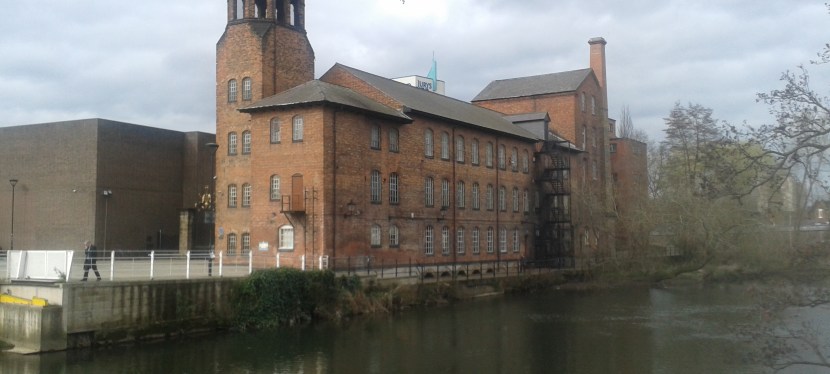
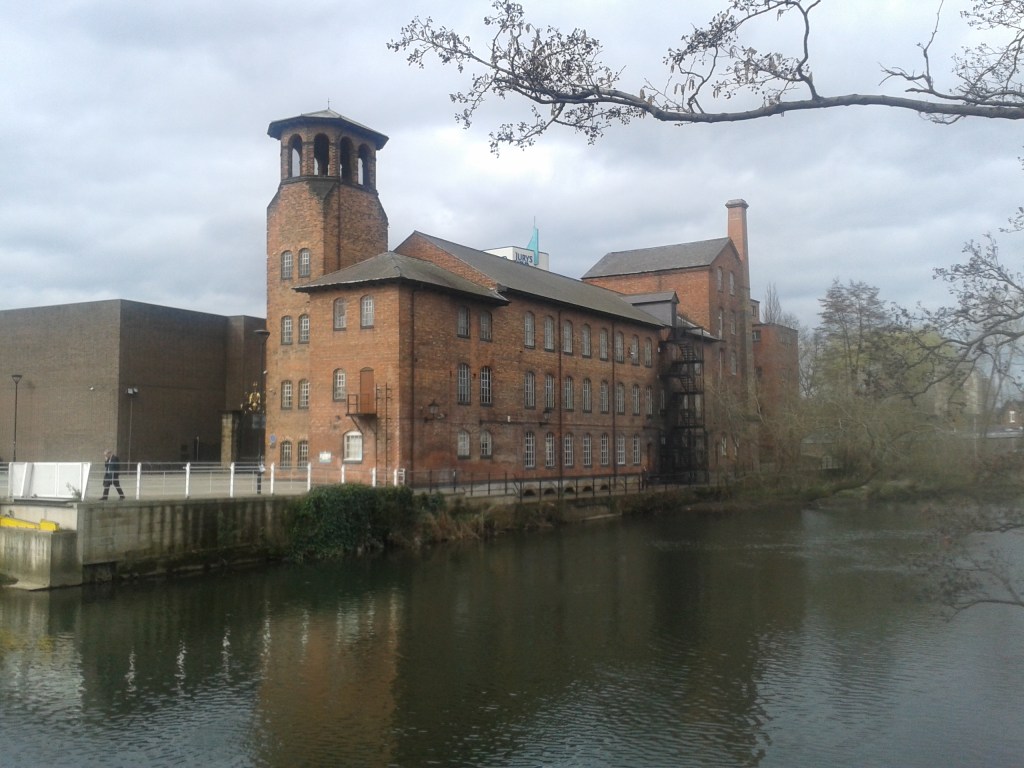
The Old Silk Mill, Derby, in 2014 before conversion to the Museum of Making
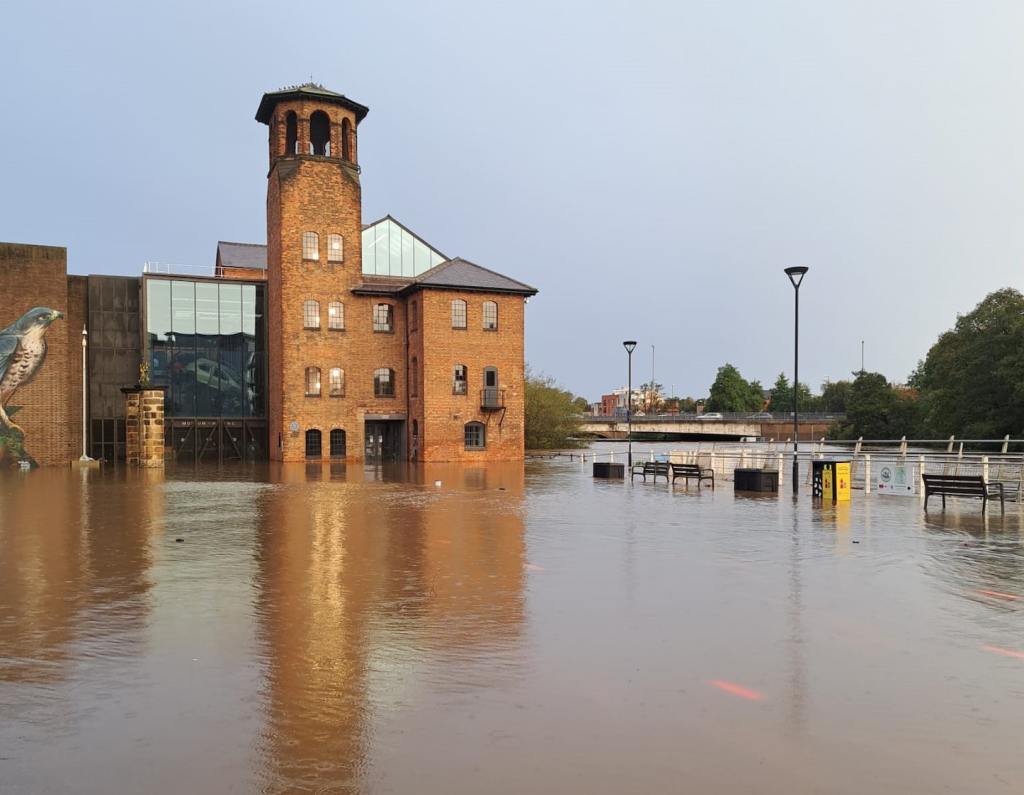
Flooding as a result of Storm Babet has caused significant damaged to the Museum of Making in Derby, housed in the former Old Silk Mill. The Grade II Listed pioneering mill includes remains from the original water-powered silk mill built in 1717-21 by Thomas and John Lombe. The current form of the building dates from a major rebuild in 1910 after a fire destroyed much of the early 18th century building, with additional elements added in the recent conversion to the Museum of Making.
The mill building was designed to withstand some flooding and the recently refurbished museum increased this resilience. However, the water levels in October 2023 reached far higher than predicted during the redesign of the museum structure. The museum’s staff worked tirelessly to move as much as possible off the ground floor before the flood hit, but the damage appears to be substantial. As a charity, Derby Museums relies heavily on donations and earned income through events and catering, which is currently affected by the flooding and its aftermath.
Derby Museums have said that they will be doing a full assessment of the damage as soon as the water has receded and it is safe to enter the building. However, they note that their museums are already in a precarious financial position. As a result, they have launched a public appeal to help raise funds for the restoration and repair of the Museum of Making.
Donations, big or small, can be made through the Derby Museums website here: Derby Museums Donation Page – please select ‘Museum of Making’ as the reason for your gift.
Flooding around the Museum of the Making, October 2023. Image Courtesy of Derby Museums.
AIM’s latest Spark! programme is aimed at supporting trustees of volunteer-run museums to strengthen shared problem solving and build networks of support. If your trustees and Board want to improve their governance and operational activities, then this is the programme for you. Specifically, it aims to strengthen shared problem solving, building networks of support, and working together, through a series of online workshops, action learning sets and individual coaching sessions.
Participants will work through a series of online workshops, action learning sets and individual coaching sessions. This programme is designed for Trustees of volunteer-run museums, though those from museums with a small number of paid staff will also be considered. It is being developed for trustees who have spent some time in role, as opposed to new Trustees who should consider the AIM Trustee Induction workshop.
For more information on this new programme or to make an application, contact Margaret Harrison, AIM Head of Programmes on margaret@aim-museums.co.uk with the following information:
Your name, role, and organisation
The number of Trustees on your Board
What you hope to get out of the programme with regard to your own and the Board’s governance effectiveness
Describe your Board’s working relationship with your Director
Outline your organisation’s key governance challenge over the last twelve months
The ‘Places of Science’ grant scheme, run by the Royal Society, is now open for applications. Applications will close at 12pm on Friday 17 November 2023. The scheme provides grants of up to £3,500 to small museums, funding projects that tell the stories of science and scientists relevant to communities across the UK.
Through the ‘Places of Science’ grant scheme in 2022, 36 small museums across the United Kingdom have received up to £3,500 to run projects that tell stories of science to their local community. This included Industrial Heritage Network members Coldharbour Mill, Head of Steam in Darlington, and the Brunel Museum, as well as the Moira Furnace. The Royal Society is particularly interested in projects that:
explore the experiences of historically underrepresented people
are led by organisations that don’t normally feature scientific content
involve partners that can enhance the project’s outcomes, impact or quality
reach audiences who do not normally engage with science
enable possibilities for digital engagement, either as a main feature or as part of a contingency plan
Guidance on Reinforced Autoclaved Aerated Concrete (RAAC) has been published by several organisations in the last month. The most relevant to Industrial Heritage Network members at the moment is that provided by the 20th Century Society.
AAC is the acronym for “autoclave aerated concrete”, first developed in the 1920s, RAAC, is AAC with added steel reinforcement-hence the “R” at the front. AAC is a special form of pre-cast concrete, that is concrete made in a factory, rather than cast on site. By aerating the mix to provide a bubbly structure, which has been accurately compared to an Aero chocolate bar, the overall weight of the concrete is hugely reduced. The aeration is caused by a chemical reaction initiated when water is added to the mix. Poor initial construction and a lack of maintenance appear to be the main problems, at the moment, leading to the potential collapse of structures using such concrete.
Since most Industrial Heritage sites preserved and open to the public in England pre-date the widespread use of this type of concrete (1920s to 1990s) its unlikely to be found in many industrial structures on display or in use. However, buildings added to industrial heritages as part of their conversion to visitor attractions in the later 20th century (such as interpretation centres or stores) might be affected.
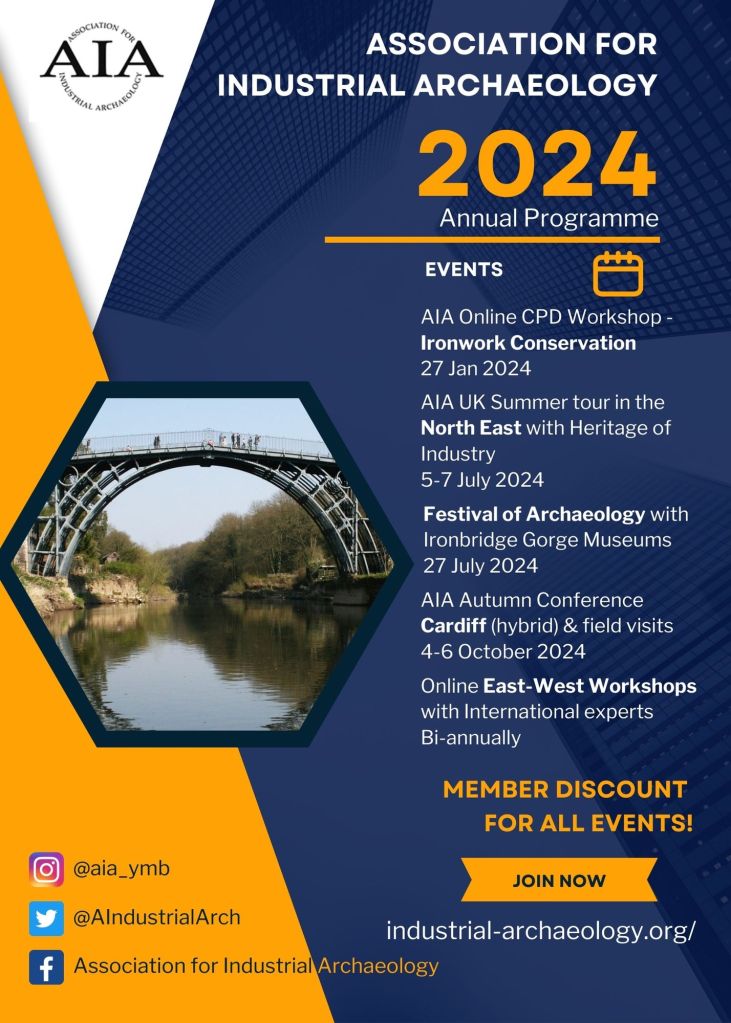
Following the Autumn 2023 Council meeting of the Association for Industrial Archaeology (AIA) at Ironbridge, the AIA are pleased to announce their events programme for 2024. There are some changes to their Conference provision compared with previous years, which the AIA hope will make it much more affordable and accessible to their members.
The revamped programme includes moving the conference and AGM to early October, which will be as Cardiff. This will avoid clashes with regional industrial archaeology events and Heritage Open Days in September, as well as the European Archaeology Association (EAA) and The International Committee for the Conservation of the Industrial Heritage (TICCIH) conferences. Importantly, the shorter, hybrid, AGM and conference will be more affordable for members.
There are also lots of exciting new online and in-person events on offer throughout the year including the AIA’s inaugural CPD workshop on ironwork conservation in January, a CBA Festival of Archaeology event with IGMT at Ironbridge in July, and a brand new offer of summer tours in partnership with Heritage of Industry which will take you behind the scenes at some of the best industrial sites in Newcastle and the North East.
The AIA is the leading UK and European specialist society on industrial archaeology and heritage. For more information about the Association, and details on how to join and secure your member’s discounts for 2024’s events, visit https://industrial-archaeology.org
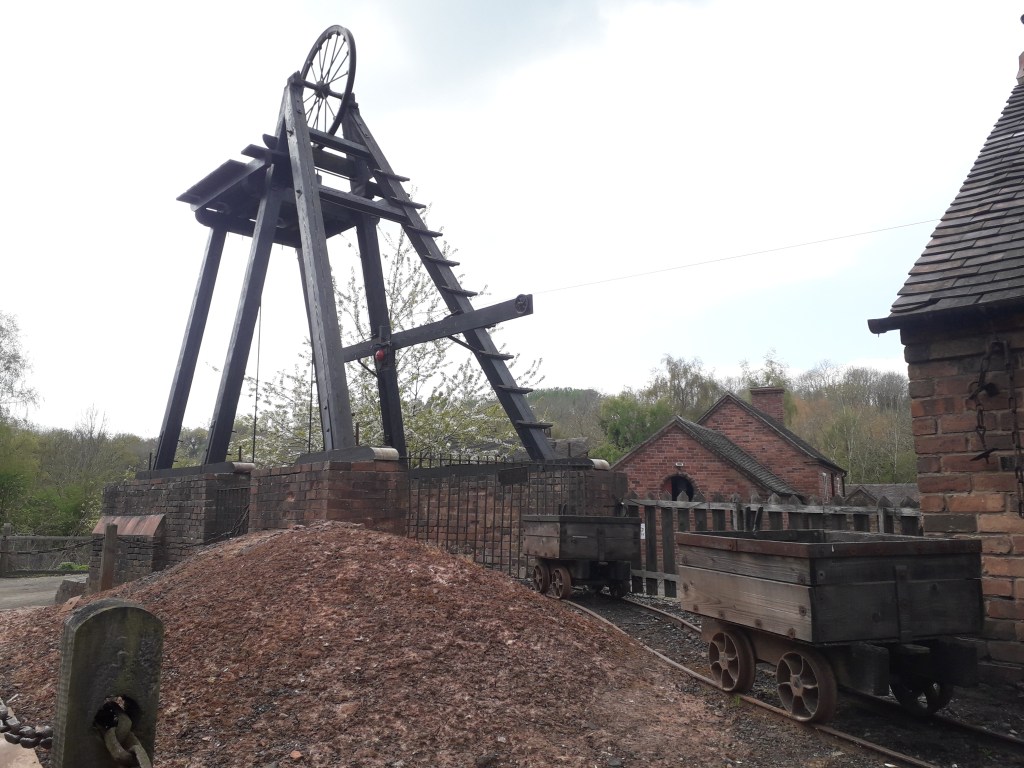
The mine headstocks at Blists Hill, Ironbridge. Copyright Dr Michael Nevell
The Ironbridge Gorge Museum Trust has announce that IGMT, in partnership with Leicestershire County Council, has been awarded the Arts Council England (ACE) contract to deliver the new region-wide Museum Development Midlands programme from 1 April 2024 to 31 March 2026.
Museum Development UK (MDUK) is a network of all national Museum Development providers and practitioners in England, Scotland, Wales, and Northern Ireland. MDUK’s overarching goal is to support diverse, inclusive, and innovative museums that welcome people from all backgrounds. The networks are an important resource for industrial heritage museums and sites.
IGMT are currently the providers of the West Midlands Museum Development programme. From April 2024 their team will join with the team at the East Midlands programme to create a new Midlands team, to provide continuity to the sector.
Arts Council England has said that it will give this new Midlands programme a grant of £571,420 per year for two years (2024-26)to fund its work providing business development support to museums and their workforces across the Midlands.
This is part of a wider re-organisation of the UK Museum Development Network that will see mergers of the existing services across England. The new Area programmes will be known as:
Museum Development London
Museum Development Midlands
Museum Development North
Museum Development South East
Museum Development South West
It will bring the various partner organisations together to share insights and learning through a national programme, known as Museum Development England.
Dartmouth’s latest exhibition is all about the Newcomen steam engine. This new exhibition adds another two rooms to Dartmouth Museum and increases permanent display space by almost a third, when it opens in October 2023. The new exhibition focuses on the evolution of atmospheric steam power at the birth of the Industrial Revolution, as experienced through the David Hulse Collection of eight atmospheric steam engine models.
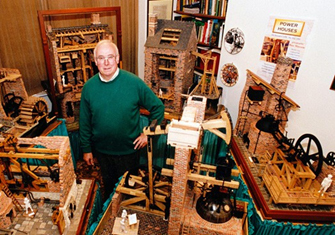
Each model has been chosen as it builds on Dartmouth engineer Thomas Newcomen’s installation of the first working “fire” engine in Dudley in 1712. There were no significant improvements in Newcomen’s design until James Watt’s Smethwick engine in 1779 , which precipitated others in the collection, ending with Trevithick’s 1804 engine which used high-pressure expanded steam and was small and light enough to enable steam-powered transport. David Hulse has spent 50 years bringing these engines to life in 1/16th scale models. David designed and manufactured every component in each engine, including the ceramic bricks for the buildings that housed the engines; each engine has taken about 6,000 hours of work. They are testament not only to David’s extraordinary skills as a model maker – and his inexhaustible patience – but also to his profound scholarship, as he has scrupulously researched every detail of their construction and operation in museums and archives throughout the country. The collection is known around the world for the quality of its modelling. David has generously donated the collection to Dartmouth Museum, where it will be on permanent display.
David Hulse and his steam model collection
This collection will be a wonderful resource and inspiration for students, specialist modellers, and those who simply want to know more about the machines that powered the industrial revolution and changed the world. The exhibition goes on to show the impact of steam power on Dartmouth and the lives of its people and opens on October 21st.
Dartmouth Museum is a community museum, committed to preserving and exhibiting the fascinating and rich history of Dartmouth and surrounding villages. It is housed in a merchant’s house in the historic Butterwalk and was built in the 1640s. The Museum welcomes over 7,000 visitors annually from all over the world and is one of the few museums in the South Hams that is open throughout the year. A charity, it is run entirely by volunteers, including 30 stewards, who keep the Museum open 7 days a week.













 Industrial Heritage Networks