Welcome to the Industrial Heritage Networks and Support website. This site is maintained and updated by the Ironbridge Gorge Museum Trust who run the project and the networks. We aim to support industrial heritage in England through networking, information exchange, guidance, and training. Please explore the website and please contribute! For more information you can … Read more Welcome to the IHNs website!
The date of the ABTEM 2023 seminar focussing on how transport collections are facing the challenge of climate change and sustainability, has been moved from October to November 14th 2023. This is to avoid any disruption from tube strikes in London.
The ‘Going Green: Carbon Reduction Challenges for Transport Museums & Collections’ seminar will run from 10:15am to 16:30pm at the London Transport Museum’s Depot at Gunnersbury Lane, London, W3 9BQ. The speakers will include Tim Bryan (Chair of ABTEM), Nicola Grahamslaw (SS Great Britian Trust), and Daniel Miles (Historic England). The emphasis of the day will be on best practice solutions that can inspire curators, volunteers and others to help address climate change and embed environmental sustainability into their operation and work.
The North-East Derbyshire Industrial Archaeology Society are a friendly Society discovering much about the rich industrial history and archaeology of the broader Chesterfield and north-east Derbyshire area. They hold monthly meetings with talks on fascinating local heritage, and members receive quarterly Newsletters and full of details about “What’s On”. They also run sites visits, and carry out surveys and limited excavation within the area.
NEDIAS meets on the second Monday of the month, at St. Thomas’ Church Centre, Chatsworth Road, Brampton, Chesterfield S40 3AW, at 7.30 from September to May, and visitors are warmly welcome to their regular talks. The Autumn 2023 meetings are as follows:
Monday 9 October 2023 at 7.30: “Riddings oil refinery, Derbyshire, 1848. 175 years ago this year” by Cliff Lea
Monday 13 October 2023 at 7.30: “The Iron Industry in the Rother Valley in the Canal Age, 1780—1840” by Philip Riden
Monday 11 December 2023 at 7.30: CHRISTMAS Meeting
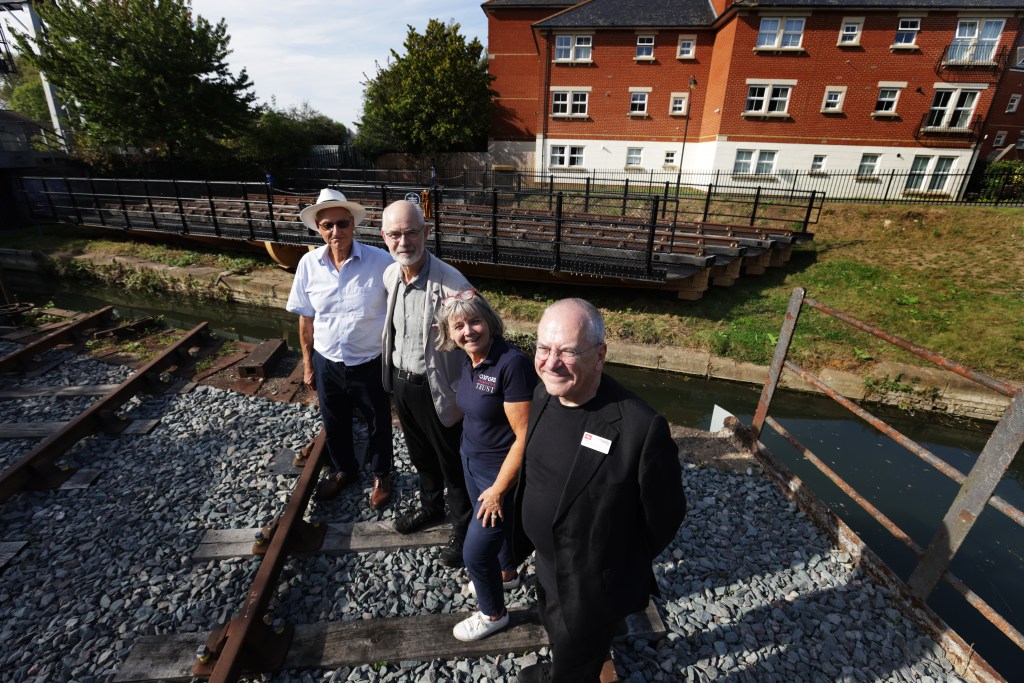
Tom Hassall (OPT Vice-President), Andy Savage, Debbie Dance, and Baron Hendy of Richmond Hill (Chair of Network Rail) at the opening ceremony for the newly restored Rewley Road Swing Bridge, in September. Image courtesy of Oxford Preservation Trust.
The Oxford Preservation Trust is celebrating receiving a National Railway Trust Award for its restoration of the Rewley Road Swing Bridge. A plaque commemorating the work of many individuals in saving and restoring the bridge was unveiled on 7 September 2023.
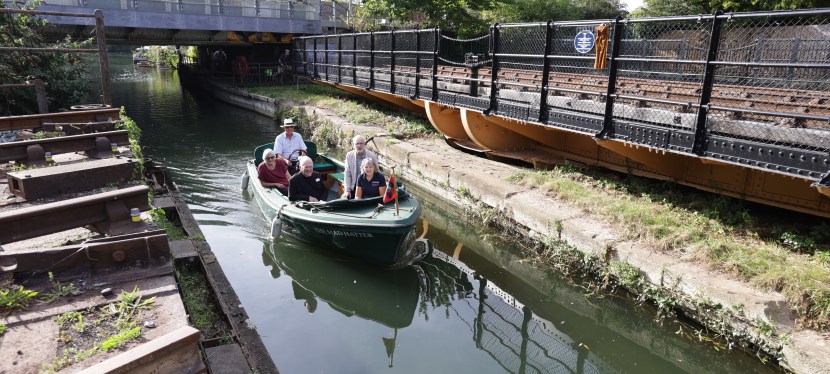
Debbie Dance, Director of OPT was joined by Andy Savage and Tim Hedley Jones from the Railway Heritage Trust, and representatives of Network Rail and Historic England together with the judges, funders, and the specialist experts all of whom made a significant contribution to the project. And so good was their work that OPT was awarded the top national prize for railway heritage conservation. Later in the day Debbie was also joined by the Baron Hendy of Richmond Hill, Chair of Network Rail taking to the water to see the mechanism from below.
The London Midland and Scottish Railway Swing Bridge is a disused railway bridge over Oxford’s Sheepwash Channel and is one of only two moving bridges on the Thames – the other being Tower Bridge in London. The bridge was designed by engineer Robert Stephenson and built in 1850. A Scheduled Monument, the bridge holds a unique place in the history of England’s first railways, narrow versus wide gauge, and the battle between giants Brunel and Stephenson.
By 1951, it was no longer in use and closed to passenger traffic, and to goods by 1984, which led to its suffering from severe decay of the plating and paintwork which were protecting its surviving parts, including the original mechanism. The bridge had fallen into disrepair and was added to the national Heritage at Risk Register in 2013 where it remained for nearly ten years, until it was removed last year, as the restoration progressed.
“We are so delighted to have been recognised in this way and cannot thank the team enough for their part. The fact that it was recognised at a national level shows the importance of the structure which could have been so easily lost with its significance somewhat lost beneath its rusty exterior” This winter we will make the final touches with interpretation boards to go up and the sowing of a wildflower meadow to increase biodiversity.” Debbie Dance, OPT Director.
Historic England’s Industrial Heritage Network is focusing attention on the knowledge and skills needed to care for our industrial heritage. They want to inform discussions on what training is needed and how Historic England can help.
If you work with industrial heritage or feel you need to upskill in this area, please share your thoughts in this short survey.
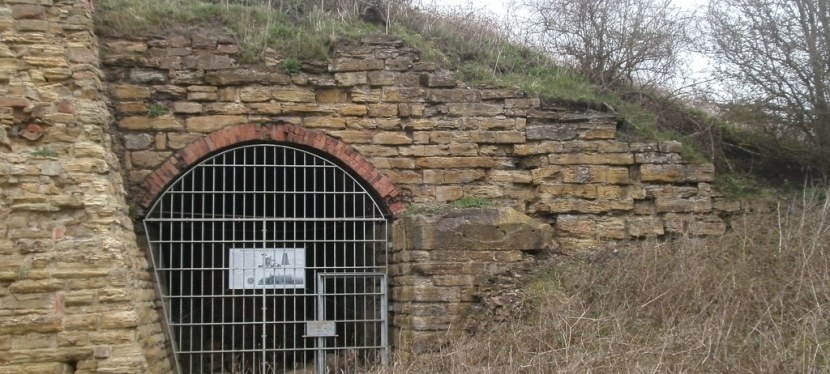
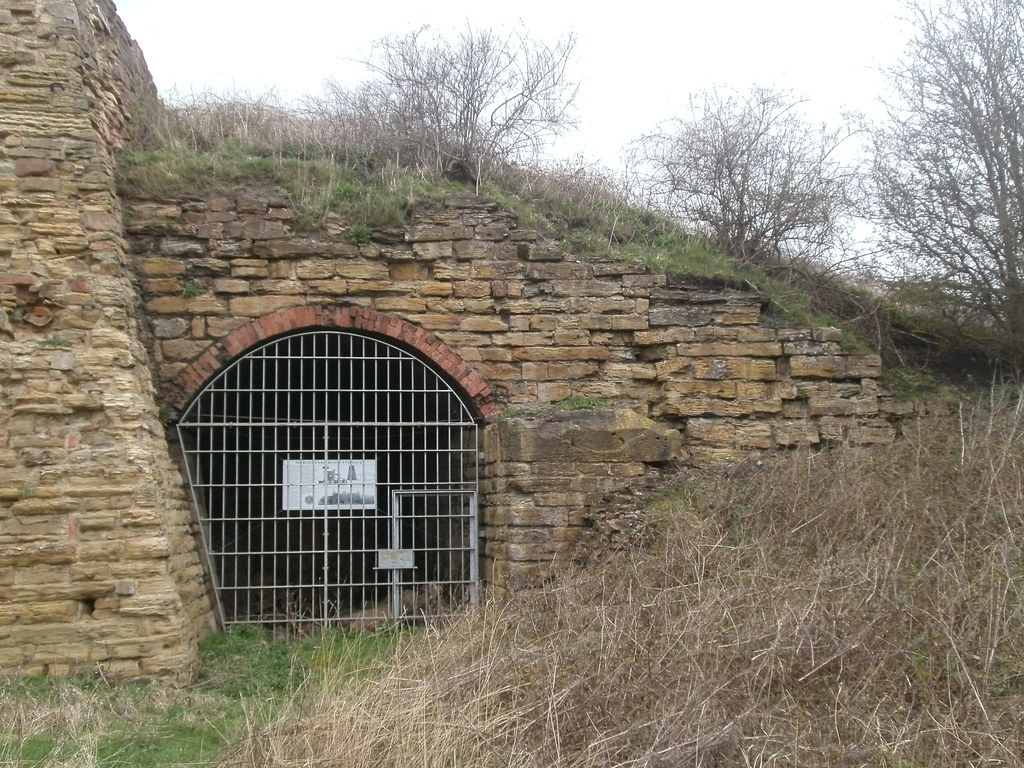
Historic England has awarded a grant of £31,020 to the Forest of Dean Building Preservation Trust to help repair Gunns Mill furnace in Mitcheldean. Gunns Mill is considered to be the best-preserved charcoal blast furnace in Britain.
The current furnace structure dates from the mid-17th century when the Forest of Dean was one of the most important centres for iron production in the country. It was converted to a papermill in 1743 but had fallen out of use by the 20th century.
The Forest of Dean Buildings Preservation Trust took on the ownership of Gunns Mill in 2013 and since then has undertaken a number of repairs to the structure with support from Historic England. This most recent round of funding will enable architects and engineers to design a structural solution to repair the timber frame of the roof of the bridge house and provide a usable space within.
The surviving lower tier of the building is a blast furnace built in 1625 on the site of earlier fulling and corn mills. That furnace was destroyed in the Civil War and was rebuilt by 1682, evidenced by cast iron lintels with cast dates of 1682 and 1683. The charge house roof on the upper tier north side has been dendro-dated from this time. It continued as a blast furnace until 1738.
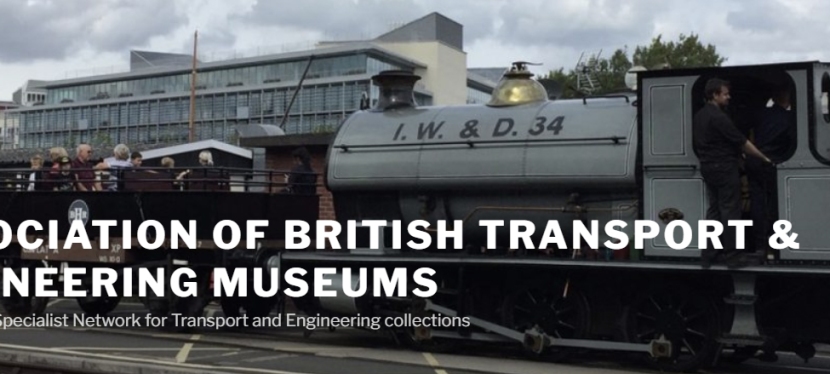
The Association of British Transport & Engineering Museums (ABTEM) is holding its 2023 seminar on 4 October at the London Transport Museum Depot and London Museum of Water & Steam. The seminar will focus on how transport collections are facing the challenge of climate change and sustainability and how carbon reduction and environmental impacts are being tackled by museums large and small.
The emphasis of the day will be on best practice solutions that can inspire curators, volunteers, and others to help address climate change and embed environmental sustainability into their operation and work. We have assembled a great selection of speakers from a variety of organisations; the morning session will be held at the LT Museum Depot (with a chance to tour the collections) and then a heritage bus will transport delegates to the London Museum of Water & Steam for an afternoon walk and talk session.
Blists Hill Ironworks, IGMT, Coalbrookdale, Ironbridge
The annual festival of history and culture, Heritage Open Days, returns this month (September) with the theme of creativity. Founded in 1994, Heritage Open Days sees venues across the country open their doors to visitors for free, with help from volunteers. Coordinated nationally by the National Trust, it is supported by the People’s Postcode Lottery.
Hundreds of activities will adopt this year’s theme, Creativity Unwrapped, as it celebrates “the experts and enthusiastic amateurs whose passions and skills add something special to our daily lives.” The festival’s events will be hosted by locations that usually charge, alongside free sites and those that aren’t usually open to the public. Among the venues to open their doors to visitors are more than 100 industrial heritage sites from the M Shed in Bristol and the Ironbridge Gorge Museum Trust, to the Macclesfield Silk Museum and Wandle Industrial Museum. There are also more than 100 industrial-themed walks, talks and exhibitions.
The 2022 Heritage Open Days festival saw nearly 5,000 events across the country, attracting one million visits. This year, more than 5000 events are planned. Heritage Open Days says around one-third of visitors last year had not visited a heritage site or event in the past year, while 80% of festival-goers said their visit made them more proud of their local area.
The European Route of Industrial Heritage (ERIH)’s annual day of industrial culture, ‘WORK it OUT’, returns on 10th September 2023. The European-wide dance festival encompasses 30 industrial heritage sites spread across ten countries. ‘WORK it OUT” premiered in 2018 as ERIH’s main contribution to the European Year of Cultural Heritage. Due to its success and popularity, it has since become an annual event.
The event is aimed primarily at young people (children, teenagers, and young adults from school classes, sports clubs, dance and fitness studios) who can consciously experience industrial culture and its sites and discover their significance for their own past, their relevance for the present and their potential for the future. Of course, the young at heart of all ages who want to get moving can also take part.
All over Europe, on the day of the event at 3 pm, dancing will take place in front of, in, and even on imposing industrial sites, making industrial heritage an attractive place to experience. The Brick Museum at Bursledon, Southampton, https://thebrickworksmuseum.org/, is amongst the museums from all over Europe taking taking part this year.
After 10 years or restoration work SS Britannia will be relaunched in Exeter in late September 2023. A significant moment, but she needs further support to get there. Britannia’s restoration journey has been a labour of love for over ten years, driven by the dedication of volunteers and maritime enthusiasts. Now, the Britannia Trust is launching a crowdfunding appeal to raise the funds needed to complete the remaining restoration work ahead of that launch.
Britannia’s grand arrival at the Quay in Exeter is scheduled for the 24th September, and preparations are well advanced. The Trust noted that ‘this historic occasion will be a celebration of maritime tradition, community spirit, and the indomitable human will to preserve our heritage.’
The Wiltshire Archaeological and Natural History Society are running a one day conference on Industrial Archaeology on the 21st October 2023 at the Town Hall, St John’s Street, Devizes. For those interested in industrial archaeology the Society acts as a focal point in the county. Its biennial symposium attracts leading speakers and visitors from all over the southwest and Wales.
The topics and speakers for 2023 are as follows:
‘Building Georgian Chippenham – architects, builders and materials’ by Mike Stone
‘Iron stone and Steam: Brunel’s Railway Kingdom’ by Tim Bryan, Director of the Brunel Institute
‘Bath in the 1970s: Industrial Heritage, Environmental Conservation and Festivals’ by Stuart Burroughs, Director of the Bath at Work Museum
‘Restoring the Wilts and Berks Canal’ by John Farrow
‘Taking to the road in Georgian Wiltshire’ by John Chandler
The aims of the Wiltshire Archaeological and Natural History Society are to educate the public by promoting, fostering interest in, exploration, research and publication of the archaeology, art, history and natural history of Wiltshire for the public benefit. The Society was formed in 1853. The Society has an extensive Archive and Library held at Wiltshire Museum in Devizes, which is open to visitors and researchers and holds a comprehensive collection of printed material relating to all aspects of the archaeology, topography, genealogy, history, industrial history and natural history of Wiltshire. The Wiltshire record of milestones is held here and the society are the county co-ordinators for the Milestone Society.













 Industrial Heritage Networks