National Brewery Centre, Burton, Threatened with Closure

The National Brewery Centre in Burton-upon-Trent is being threatened with closure. The Grade II Listed brewery building is owned by Molson Coors, which is proposing to re-use the museum building as the new headquarters for its 500 staff in Burton. The intention is to switch from their current HQ in High Street to the brewery centre site. The museum is housed in the former Joiner’s shop of Bass’s Middle Brewery, which was built in 1866. The three-storey, brick-built structure, is 12 bays long.

Molson Coors’ High Street building will be demolished to make way for a new waterside development in the town centre. The waterside development is being led by the Burton Town Deal Board, which will spend £5 million in Government grants to create the development fronting the River Trent as part of the regeneration of the town centre. Molson Coors commented that ‘We’re committed to working with Planning Solutions Limited, the National Brewing Heritage Trust and the council to manage the closure of the site as sensitively as possible and finding the right new home for our industry’s important heritage.’

The Heritage Brewery Trust, which runs the centre, has said that a “selection” of its half-a-million brewing artefacts housed at the museum will be moved to Bass House, on the High Street. Currently 5,000 items including machinery are on display at the centre.

Further details can be found here: https://www.staffordshire-live.co.uk/news/burton-news/campaign-launched-save-burtons-national-7579458?utm_source=sharebar&utm_medium=email&utm_campaign=sharebar

The National Brewery Centre’s website site can be found here: https://nationalbrewerycentre.co.uk/

A campaign has been launched to save the Brewery Centre on its current site. The petition can be found here: https://www.change.org/p/save-burton-s-national-brewery-centre?recruiter=161984374&recruited_by_id=1f2fbeae-b677-488b-9e39-654f3351841a&utm_source=share_petition&utm_campaign=share_petition&utm_medium=copylink&utm_content=cl_sharecopy_34423556_en-GB%3A6
 

Heritage Open Days 2022 Features Industrial Sites

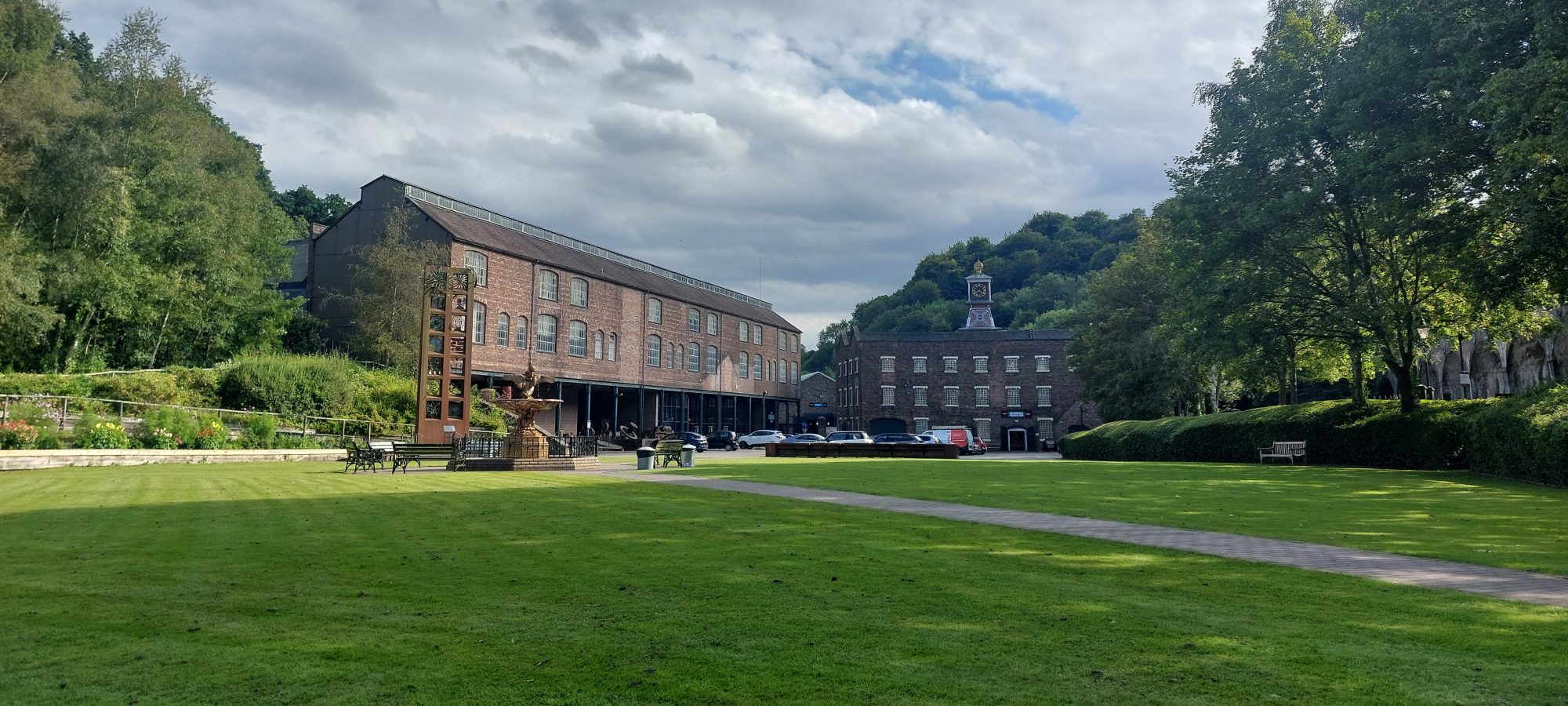
Strutts North Mill, Belper, Derbyshire, which will be open for tours during Heritage Open Days 2022.

It has been confirmed that the 2022 version of Heritage Open Days will run as planned, from the 9th to the 18th of September, despite the Queen’s death on the 8th September. Hundreds of industrial heritage and archaeology sites run by local groups and communities feature on the list of venues open for free to the public.

The theme of ‘Astounding Inventions’ has helped to more than double the number of industrial heritage sites accessible this year, up from 113 in 2021 to 239 in 2022. There were no in-person events in 2020 due to the COVID pandemic. The largest group of industrial sites opening relate to transport, with 70 historic aircraft, canal, railway, and road sites available to explore. This includes small scale sites such as the Union Bridge and Warmley Signal Box, as well as many Heritage Railways and transport museums such as Locomotion, in Durham and the Greater Manchester Transport Museum.

The largest category of industrial sites to open their doors remains wind and watermills, as it was in 2021, with 51 sites. Larger industrial museums with entry charges are also offering free events, from the Ironbridge Gorge Museum Trust to the National Trust properties such as Quarry Bank Textile Mill. There are also private working or small heritage sites accessible, that are seldom open to the public, such as G H Hurt & Son’s Shawl Factory in Nottingham, The Harveys Brewery in Lewes, Sussex, and the RDF radar tower at Harwich in Essex.

For details of where to find venues and their opening times during Britain’s biggest annual heritage festival follow this link: https://www.heritageopendays.org.uk/

Digital Development Training Seminars for Autumn 2022

Booking is now open for new dates for these popular development sessions with Culture24. All courses are delivered online via Zoom in 3 x 2hr sessions – one session per week for three weeks. 

There are 18 places on each course – 2 places for each of 9 museums. All sessions are being delivered for museums across the Museum Development North East, North West, and Yorkshire regions. 

For more information about booking a place please contact: alexander.bird@manchester.ac.uk / bria.cotton@manchester.ac.uk

Port Sunlight Village Seeking New Trustee

The Port Sunlight Village Trust are seeking a new voluntary trustee board member with expertise in global heritage conservation. This is following the announcing of their World Heritage ambitions for Port Sunlight.

Port Sunlight is the world’s finest planned working-class community, and was founded by ‘Soap King’ William Hesketh Lever in 1888. The village was built to house Lever’s ‘Sunlight Soap’ factory workers.

The closing date for applications for this voluntary position is 12th September. For more details follow this link: https://www.portsunlightvillage.com/psvt-seeks-new-board-members/

Funding Opportunity: Esmee Fairbairn Collections Fund

The Esmée Fairbairn Collections Fund supports a range of projects that bring collections closer to people. They award the fund on behalf of the Esmée Fairbairn Foundation to projects that demonstrate the significance, distinctiveness, and power of collections to people. The fund has awarded over £11m to 170 projects since it launched in 2011.

The Esmée Fairbairn Collections Fund supports museums to use their collections to become relevant and sustainable organisations that are connected to, and valued by, their communities. All applications to the fund must focus on existing collections, typically held by an Accredited museum or partnership of museums and other organisations. The funded work must engage and involve audiences to achieve public benefit. In 2022 they have simplified the grants offered, recognising the challenge of the pandemic and seeking ways to build on the great work undertaken in the last two years. This year they are offering grants of up to £90k over two years for museums to test new, ambitious, creative collections engagement that has a social impact. These grants are for museums to innovate, kick-start, or develop their collections engagement practice where there is a strong link between a relevant collection and audience.

The last expression of interest deadline this year is 14 September 2022 for awards in December, following a two-stage process. In total £1.3m will be awarded in 2022 across an anticipated seven to ten projects in each funding round. All applicants will meet a set of essential requirements relating to using existing collections to engage, involve and inspire audiences. You can find out more about what they want to see in their guidance for applicants.

For more information and download applicant information packs, please click here to visit their website.

New Resources from Historic England on the Industrial Heritage of the Gas Industry

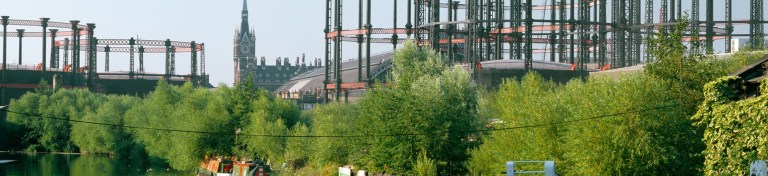
Gas holders near Kings Cross, London. Image courtesy of Historic England.

A new Historic England web page provides links to a recently published detailed history of the manufactured gas industry with a comprehensive gazetteer, an Introduction to Heritage Assets document, and guidance on recording gas works and holders.

The works for the manufacture of town gas from coal were once widespread in the 19th and 20th centuries, and their distinctive gas holders are some of the most recognisable historic industrial structures in Britain. These manufacturing sites produced lighting and energy for industry, as well as providing domestic lighting, heating, and energy for cooking. Visually, gas works dominated the skylines of many villages, towns, and cities until the end of the 20th century.

To explore this extensive resource further follow this link:

https://historicengland.org.uk/research/current/discover-and-understand/industry-and-infrastructure/manufactured-gas-industry/

#AskACurator Returns as #AskAMuseum in September 2022

The annual social media day #AskACurator, which began in 2010 as a way for the public to ask questions directly to museums, galleries and archives around the world, has been renamed #AskAMuseum. This is in order order to better represent all those working in museums.

The 2022 event will take place on Wednesday 14 September, coinciding with Heritage Open Days in the UK, across social media platforms. You can post your question on the day using the hashtag #AskAMusuem. You can also encourage people to send their questions as comments or replies. Answers will then be posted and insider knowledge shared!

AIM: Pilgrim Trust Collections Care and Conservation Grants

AIM (Association of Independent Museums) has a range of grants available for collections care and conservation for their members. AIM members care for a huge and significant range of historic objects and collections. They range from fine art collections to locomotives, textiles to ships, decorative art and social and industrial history collections.

Grants for Collection Care Audits are run in partnership with Icon and enable small museums to undertake a basic 3-day collections care audit by a fully accredited conservator. The Collections Care Scheme provides grants for museums to receive specialist advice, purchase equipment, and train staff and volunteers.  The Remedial Conservation Scheme provides grants for the conservation of objects from the museum’s permanent collection. Grants are £1,100 plus travel and VAT (if applicable) to cover the cost of a fully accredited conservator undertaking a three-day audit. These grants are a good starting point before making an application to the Collections Care or Remedial Conservation schemes if your museum has not previously had a professional conservation advice.

To be eligible for a collections care audit, your museum should:

  • Be an AIM member.
  • Be an Accredited Museum or awarded ‘Working Towards’ status.
  • Be a registered charity. An associated charity can receive the grant on the museum’s behalf if the museum itself is not a charity.
  • Have fewer than 20,000 visitors p.a. Please base your visitor figures on the visitors you have in an average year pre-2020 not those affected by Coronavirus and restrictions.
  • Application to this scheme does not prevent museums applying to the Pilgrim Trust for other, unrelated projects.

The full guidance and eligibility criteria is included on the application form. Click here for the collections care audit application form>>

Hydro-electric Power Returns to Cromford Mills

The Arkwright Society has secured £330,000 from Severn Trent Water and Derbyshire County Council to install a new green energy system at Cromford Mills, Derbyshire. The original mill, restored and owned by the Society, was built in 1771 by Sir Richard Arkwright and was the world’s first successful water-powered cotton spinning mill. It is a key part of the Derwent Valley Mills World Heritage Site.

The project will involve reinstating a waterwheel and installing a 20kW hydro-turbine to power the buildings. Water heat pumps will also be installed in the structure and an old turbine in nearby Cromford village will be restored. Work on the new power systems is due to begin in September 2022 with the aim of being fully operational by June 2023.

Simon Gill, the society’s operations director, said: “It’s probably the most significant thing that’s going to happen here to return water power to the original mill that created the first factory system at the start of the Industrial Revolution.” He added that an aspect of the scheme which was “close to his heart” was the reduction of the site’s carbon footprint and emissions. When complete the project will also be used to educate people visiting the site about renewable energy sources. For further details on the site follow this link: https://www.cromfordmills.org.uk/about/

Free Guided Walking Tour of the Former Ilfracombe Railway

As part of the Festival of Archaeology 2022, Historic England’s Historic Environment Advice Assistant apprentices, and local experts from Combe Rail, are leading a guided walking tour of the former Ilfracombe railway on Monday 8th August. The tour will look at the history and archaeology of the line and how it has evolved, visiting the old station and ending at the local museum.

The Ilfracombe-Barnstaple line was opened in 1874 by the London and South Western Railway. The line closed in 1970, and an attempt to buy the line for preservation in 1975 was unsuccessful. Much of the former trackbed has now been developed as the popular and attractive Tarka Trail cycle path. The tour will follow this path, led by local experts Glyn Pollington and John Burch.

For details on how to book follow this link: https://www.eventbrite.co.uk/e/festival-of-archaeology-2022-a-journey-down-the-old-ilfracombe-railway-tickets-382983021527