Latest Heritage Grants Update for Industrial Sites, January 2022


Arts Council England

The application window for the Emergency Resource Support Fund, through the Culture Recovery Fund, has been extended. This is designed to support arts and heritage organisations through the impact of the Omicron variant this winter. A further £30 million has been made available by the UK Government. This fund aims to provide emergency funding awards to organisations that were financially sustainable before Covid-19 but are now at imminent risk of failure and have exhausted all other options for increasing their resilience.
Deadline extended to 18th January 2022 to submit a permission to apply

National Heritage Lottery

A variety of grant funding streams are now open through the National Heritage Lottery. These include the National Lottery Project Grants, which is an open access programme for arts, libraries, and museum projects. NLPG is a rolling programme, so applications can be made at any time. Decisions on applications for £30,000 or less take 8 weeks, decisions for over £30,000 take 12 weeks.

The Unlocking Collections grant stream is a time-limited priority fund within the National Lottery Project Grants portfolio aimed at enabling museums to develop their collections-based work and increase public engagement with, and use of, their collections. Applications accepted until November 2022.

The Let’s Create Jubilee Fund is designed to support voluntary and community organisations who want to deliver creative activity as part of Her Majesty the Queen’s Platinum Jubilee celebrations. Deadline 28th February 2022.

Association for Industrial Archaeology

The AIA’s annual round of grants and awards is open. There are a variety of grants available (including community, research, and travel bursaries), as well as awards ranging from conservation and adaptive re-use, to publications: see here: https://industrial-archaeology.org/aia-awards/ The deadline for most is 31st January 2022. However, the Restoration Grants deadline is 31st March 2022.

Volunteer Opportunity at Dunham Massey Watermill in 2022

The National Trust staff at Dunham Massey are looking for volunteers for their water-powered mill. Built in the early 17th century as an estate corn mill, it was converted to a sawmill in 1860. The waterwheel still drives machinery including a frame saw, band saw, circular saw, boring machine, and a lathe. The mill volunteers play a vital role in bringing Dunham Massey to life. Working as a close team, you will inspire visitors by sharing your passion and knowledge for the Mill, the oldest building on the estate.

Dunham Massey is a National Trust estate close to Altrincham, in Trafford Greater Manchester. It comprises a Georgian mansion house, deer park, and seasonal gardens. Their staff team is supported by over 400 volunteers across the property. At Dunham Massey the NT is making the volunteering opportunities more vibrant, accessible, and diverse, and they’d like volunteers to help to achieve this.

What’s in it for you?

  • Being part of a friendly, supportive, and dedicated team
  • Expanding your knowledge about a fascinating part of the Dunham Massey estate
  • Meeting people from all walks of life and making new friends
  • Building your confidence and improving your communication skills

Anyone interested should apply through the National Trust website – follow the link here:

https://myvolunteering.nationaltrust.org.uk/opportunity-view?preview=1&id=cc52a132-792b-4f48-bafa-880bb434a5f3

The brick-built Watermill at Dunham Massey. Two millstones lean against the wall beside the entry door.

AIA Research Grants Application Now Open for 2022

Applications for the 2022 Association for Industrial Archaeology Research Grants scheme is now open. The AIA exists to promote the study, preservation and presentation of Britain’s industrial archaeology and heritage, and the research grant scheme underpins key aims of the Association. It does that by:

  • Encouraging individual researchers to study industrial archaeology subjects
  • Encouraging the development of industrial archaeology skills within commercial units, the main repository of professional skills in the subject
  • Supporting local industrial archaeology and industrial heritage societies in exploring and understanding their local areas
  • Helping to develop the next generation of industrial archaeologists

The total fund available in any single year is £1,500 and multiple grants may be given up to this maximum in a single year. The AIA may consider part-funding a wider grant application or project as long as the AIA grant is a significant part of the larger application / project.

Applicant Requirements:

· Anyone working in industrial archaeology in the UK – volunteer, student, academic or professional.

· Societies or organisations can apply but need to nominate an individual as the lead.

· The kind of work supported includes excavation, field survey, and documentary analysis but does NOT include conference attendance (we have separate funds for such support).

· The grant must form a significant part of the overall research funding being sought or must support a distinct and discrete element of a wider research project.

· The researcher must acknowledge the role of the AIA in supporting their work in any publicity.

The deadline for applications is 31 January 2022. Follow this link to download full details and an application form (.docx 40kB). If you have any further questions please contact the coordinator:  research-grants@industrial-archaeology.org

AIA Community Engagement Award Open

The Association for industrial Archaeology’s Community Engagement Award application process is now open. This award is given to projects anywhere in the world which promote, preserve, or interpret industrial archaeology or heritage and demonstrate an element of Community Engagement. Nominations can be made by anyone, including those who have been involved in the project.

In judging nominations and identifying the winning application, the adjudicators will consider:

  • The degree to which the organisation/project has successfully identified and targeted communities that might be interested in the project
  • The size and diversity of the community which has engaged with the project
  • The impact of the project on community members, including their knowledge and wellbeing
  • The impact of community involvement on the industrial heritage project or asset/s

The Award is £500. The winners will be given the opportunity to apply for a further £500 in funding to carry out follow-up community engagement relating to the same project. The winners will also be invited to the AIA’s Annual Conference to receive their Award and to speak about their project. Details of the winning entry will be published in IA News and will be publicised through the AIA’s communication channels.

One person nominated by the winners will also receive one years’ free membership of the Association for Industrial Archaeology.

The deadline for the current round is the 31 January 2022. You can download the guideline and nomination forms by following these links:  Guidelines (.pdf) Nomination form (.docx)

Forms should be returned to:
AIA, 4 Column House Gardens, Preston Street, Shrewsbury SY2 5GY UK
email: secretary@industrial-archaeology.org.uk

All About TikTok: Charity Digital’s Latest Guide to Using Social Media

Throughout 2021 Charity Digital has been providing introductory guides for charities who want to use social media to boost their reach and interaction with the public. Their latest guide is to the TikTok platform, which many IHN members may know from the Black Country Living Museum’s very successful and, in terms of industrial heritage, pioneering use of the platform in 2020 and 2021.

The popularity of social media app TikTok has rocketed in the past few years. It offers a mix of video content aimed at young adults and teenagers, such as lip syncing and dancing. The app is a topic of discussion in the charity sector because it offers plenty of scope for interesting fundraising ideas. You can find out more about using TikTok by following this link: https://charitydigital.org.uk/topics/topics/a-charity-guide-to-tiktok-8245?utm_source=newsletter&utm_medium=email&utm_campaign=Marketing%20Newsletter

Charity Digital also provides short guides to these other Social Media platforms. Just follow the links below for further details:

Facebook: https://charitydigital.org.uk/topics/topics/social-media-for-charities-101-facebook-8741

Instagram: https://charitydigital.org.uk/topics/topics/social-media-for-charities-101-instagram-8777

LinkedIn: https://charitydigital.org.uk/topics/topics/social-media-101-for-charities-linkedin-9294

Reddit: https://charitydigital.org.uk/topics/topics/social-media-for-charities-101-reddit-9326

Snapchat: https://charitydigital.org.uk/topics/topics/social-media-101-for-charities-snapchat-9029

Twitter: https://charitydigital.org.uk/topics/topics/how-charities-should-use-twitter-8597

View Historic England’s Fourth ‘Mills of the North’ Webinar Online

Historic England’s fourth industrial heritage webinar ‘Textile Mills of the North – the impact of Reuse and Regeneration’ is now free to view on-line. Follow this link: https://historicengland.org.uk/services-skills/training-skills/online-training/webinars/recordings/webinar-on-industrial-heritage-part-4-textile-mills-of-the-north-the-impact-of-reuse-and-regeneration/.  

The three speakers considered how mill reuse is driving the regeneration of whole areas, building meaningful communities, and helping sites to become more environmentally sustainable. A second complementary mills webinar is now in development which will look more closely at delivering high-quality design in mill reuse and details will be posted soon. The webinar also referenced the recent Historic England publication ‘Driving Northern Growth through repurposing Historic Mills’ – available to download this following this link: https://historicengland.org.uk/images-books/publications/driving-northern-growth-repurposing-mills/. This document re-assesses the re-use potential of under-used and vacant mills, identifies their possible contribution to rebalancing the country’s economy, and improving environmental sustainability, and highlights regeneration success stories since 2017.

Heritage Digital Fundraising Seminar, 30 November 2021

On the 30th November Heritage Digital will be running its latest business support session, a webinar on ‘Developing a fundraising strategy for your heritage organisation’. Digital methods are now the most popular way to give money to charitable causes in the UK, yet conservation, environment, and heritage charities took only 4% of online giving in the UK in 2019, the year before the pandemic hit. 

This free session will specifically benefit those small and mid-sized heritage organisations receiving under £1 million per year in income, and those within heritage organisations responsible for digital/fundraising. The session will provide participants with: 

  • The basic principles of digital fundraising
  • The main methods of effectively fundraising with digital
  • The core elements of a digital fundraising strategy

To read more details and sign up follow this link: https://charitydigital.org.uk/heritage-digital-academy-modules-page/webinar-developing-a-fundraising-strategy-for-your-heritage-organisation?utm_source=newsletter&utm_medium=email&utm_campaign=Heritage%20Digital%20Academy%20aq%2E

Heritage Railways and COVID-19: Getting Back on Track

A new report from Historic England (November 2021) reviews the impact of COVID-19 on heritage railways and some of the valuable lessons learned which are relevant to the rest of the heritage sector.

Heritage railways experienced wide-ranging challenges due to the Covid-19 pandemic in 2020 and 2021. However, some have demonstrated notable resilience in face of these difficulties, benefiting from strategies that they have employed themselves or that have been implemented by the heritage railway sector at large.

The study draws upon primary evidence generated by interviews with seven representatives of heritage railways across England and a set of contextual secondary sources. The report highlights a selection of the approaches adopted during the pandemic in order to support individual railways and the sector as whole, from accessing public funds, fundraising through online donations, and philanthropy, to investment in IT infrastructure, outdoor opportunities and developing flexible revenue streams, effective crisis management, and engaging with supporters and volunteers.

Finally, the study discusses the wider applicability of these approaches across the heritage sector to support better resilience to known and unexpected challenges in the future.

The full report can be downloaded here: https://historicengland.org.uk/research/results/reports/8449/HeritageRailwaysandCovid-19_GettingBackonTrack

Claverton Pumping Station Appeals for Funding Support

Claverton Pumping Station is preparing for more flooding over the coming winter months and is appealing for funds. The volunteer-run museum lies just outside Bath, where a group maintains the Grade I listed pumping station, dating from 1813.

Using a water-wheel, the station pumps 100,000 gallons of water an hour into the Kennet & Avon Canal to keep it topped up from the nearby River Avon. Unfortunately, as the pumping station is built next to the river the site floods on a yearly basis. From October-March, the lowest floor needs to be cleared to minimise any flood damage. With little space in the pumphouse itself the group relies on an outbuilding to store signs, benches, and parts of machines for the winter. The outbuildings are up the bank from the pumphouse, thus getting them away from all but the worst floods. However, their largest outbuilding has all but collapsed. They are looking to raise £2,500 towards helping the group to build a strong raised outbuilding that can survive even the worst floods. This new winter storage will help keep the pumping station preserved for future generations.

Details on how to donate can be found here: https://www.justgiving.com/crowdfunding/claverton-pumping-station

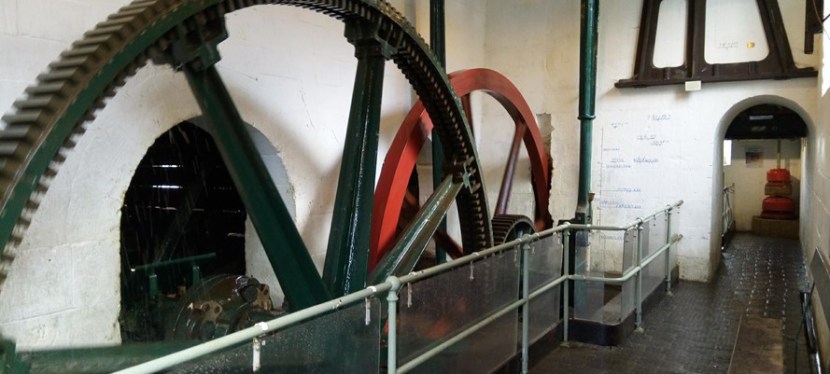
Claverton pumping engine.

HTN 2021 Conference: Recovery, Sustainability, Wellbeing

Join the Heritage Trust Network for their 2021 Conference in person as part of the Coventry City of Culture and online, on the 11th, 19th & 20th November 2021. The Heritage Trust Network are a membership organisation for community heritage across the UK and their members come together once a year to discuss their projects. This year the speakers will focus on how sites and organisations can develop their projects and approaches to heritage regeneration whilst thinking about our environmental impact, our people, and our long term survival.

The event will include four elements, an online day of talks, an in-person day of workshops, the annual conference dinner, and a day of tours with site visits. You can join them for any and all parts of the conference. In order to provide a fully engaged experience for all attendees, the online event (11th November) will be 100% online, and the in-person events (19th to 20th November) will be 100% in-person. You will be contacted before the event to select your workshop and tour choices.

There are free tickets for students and apprentices and funded bursaries to help anyone who would find travel/accommodation costs prohibitive, particularly young people, those at the start of their career, changing career and those who are out of work. #HTNConf21

Details on how to book can be found here: https://htnconference.eventbrite.co.uk