Welcome to the Industrial Heritage Networks and Support website. This site is maintained and updated by the Ironbridge Gorge Museum Trust who run the project and the networks. We aim to support industrial heritage in England through networking, information exchange, guidance, and training. Please explore the website and please contribute! For more information you can … Read more Welcome to the IHNs website!
Join the Friends of Bennerley Viaduct to see the sun rise on the longest day of the year, 21st June, on the Iron Griant and mark the arrival of astronomical summer when the northern hemisphere tilts towards the sun. If you thought you were an early bird for the dawn chorus, try this 03:00 start!
The event is quickly filling up, so Hadley Trueman urges you to book your place. “Although our events are always free, please consider making a suggested donation of £3 per person,” says Hadley. “Due to the early start time of this event we ask you to find your own way up onto the viaduct from the Cotmanhay/Ilkeston, Derbyshire side. The FoBV team will be there to greet you.”
To find out more, or to book your place, follow the link:
The 2025 East of England Regional Industrial Archaeology Conference (EERIAC) will take place on Saturday 7th June at the Prickwillow Engine Museum, Ely, Cambridgeshire. This year’s conference is being organised by the Cambridge Industrial Archaeology Group.
The Outline Programme is as follows:
10.00 Free Tea, Coffee, and Biscuits on arrival.
10:30 to 12.30 Lectures on waterways transport in Cambridgeshire and on rescuing the Black Prince, a Fenland lighter.
12.45 to 13.30 Buffet Lunch.
13.30 to 17.00 A tour of the Prickwillow Engine Museum, and a visit to the Stretham Old Pumping Engine, Green End, Stretham.
Costs: £15 (no lunch) and £23 with lunch. Drop-ins on the day are welcome but booking in advice is advised. The booking form is below.
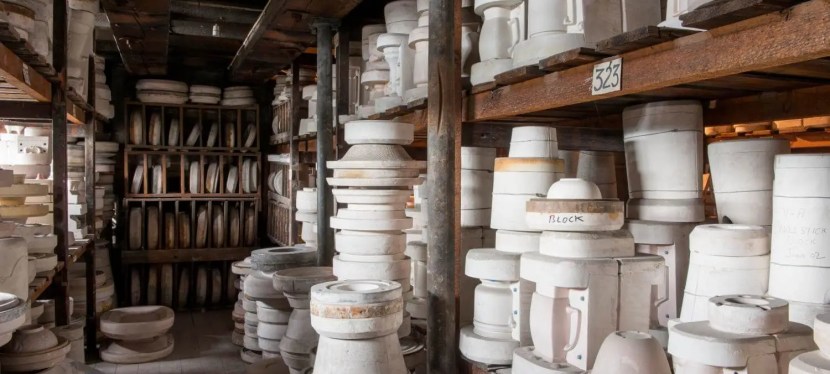
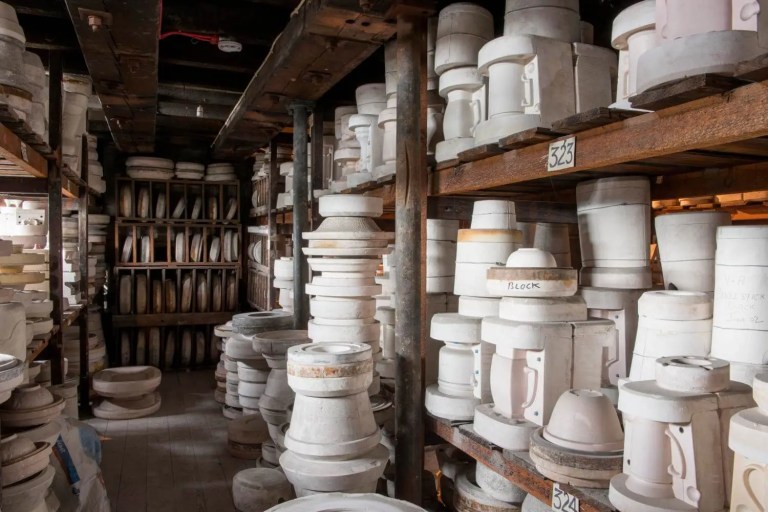
The latest Historic England blog, under their ‘Heritage Calling’ banner, looks at the historic and industrial heritage of Stoke-on-Trent.
The Potteries encompassed the towns of Burslem, Fenton, Hanley, Longton, Stoke, and Tunstall. Together, these towns created the world’s leading centre for ceramics production, with famous names such as Wedgwood, Royal Doulton and Spode centring their work there.
Eight site shave been chosen to highlight this industrial history. These are: Middleport Pottery; Chatterley Whitfield Pottery; Bethesda Methodist Chapel; the Former Wedewood Institute; Trentham Mausoleum; Hanley Park; Stoke-on-Trent townhall; and Price and Kensington Teapot Works.
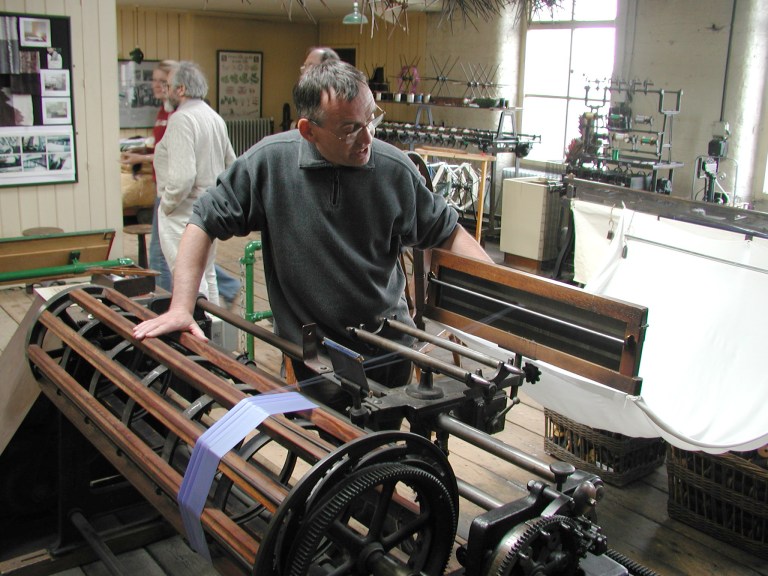
Silk macinery in operation, Paradsie Mill. Image courtesy of Paradise Mill.
This spring, the National Lottery Heritage Fund awarded £227,000 to The Silk Heritage Trust to develop Paradise Mill and the Silk Museum in Macclesfield into a vibrant campus of economic activity, skills development, and heritage participation. This grant will help keep alive the stories of Macclesfield as the centre of the nation’s silk heritage.
The three year project ‘A Stronger Future: Developing the Silk Heritage Trust’s vision for culture and heritage in Macclesfield’ aims to improve the training of the museum’s staff and volunteers. It also intends to help preserve endangered collections, the museum’s silk weaving skills, and extend the museum’s audience reach.
Paradise Mill, Macclesfield. Image copyright Dr Michael Nevell
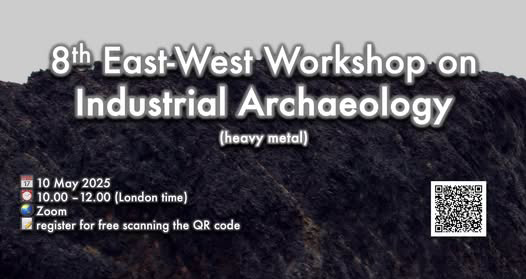
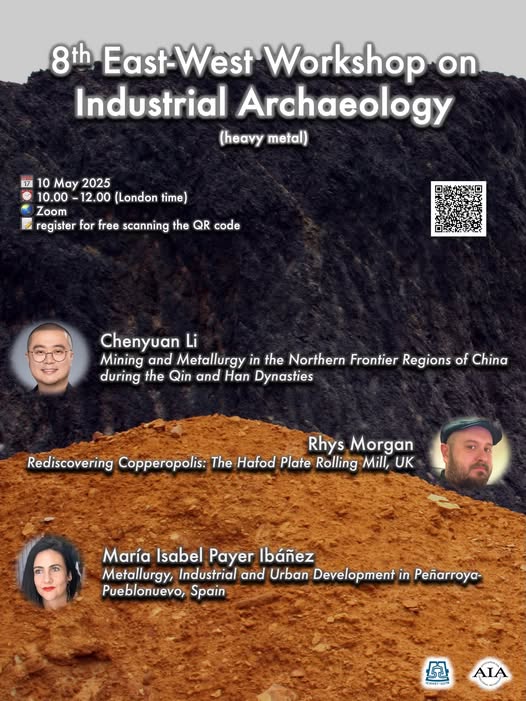
The East-West Workshops on Industrial Archaeology aim to exchange ideas and knowledge among Western and Eastern colleagues to build a more international and diverse industrial archaeology. The workshops are organised jointly by the Institute for Cultural Heritage and History of Science and Technology (USTB, China), and the UK Association for Industrial Archaeology (AIA). The 8th Workshop on 10 May will look at Heavy Metals.
Metallurgy is one of the oldest human activities and was one of the first sectors to embrace modern industrialisation. The production of metals and their alloys has strongly influenced the development of most societies throughout history, and played a key role in the construction of the modern world. The latest Workshop on Industrial Archaeology brings together archaeologists and architects to delve into the long history of metal production, its multiple contexts (technological, economic, social, and its heritage.
SPEAKERS
Chenyuan LI (University of Science and Technology Beijing, China): “The Evolution of Mining and Metallurgical Production Technologies in the Northern Frontier Regions of China during the Qin and Han Dynasties: A Perspective from Archaeometallurgy”
Rhys MORGAN (Black Mountains Archaeology, Britain): “Rediscovering Copperopolis: The Hafod Plate Rolling Mill, Swansea”
María Isabel PAYER IBÁÑEZ (Payer Arquitectura / University of Seville, Spain): “Metallurgy as Industrial and Urban Development in Peñarroya-Pueblonuevo, Spain”
DATE & TIME
10 May 2025, Saturday. 10.00-12.00 (London time)
BOOKING
Zoom (online meeting). More info and free registration:
Videos of all the workshops are available on the AIA’s YouTube Channel, including the latest event from November 2024 on ‘Weaving the Industrial Period’. Follow this link to view the workshops: https://www.youtube.com/channel/UCILr2TkRAOIfk_NKchshwZQ
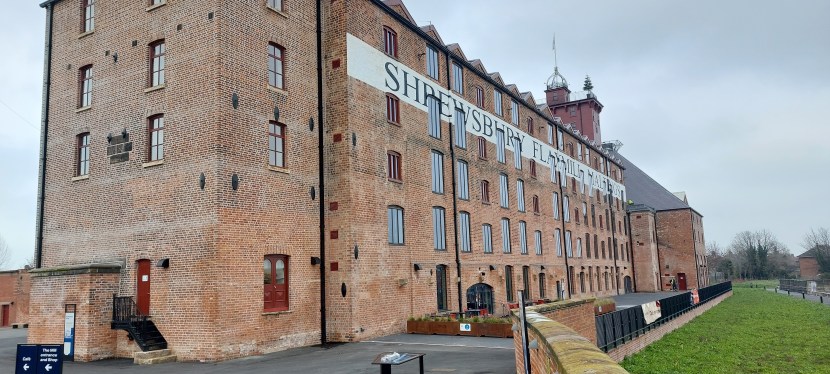
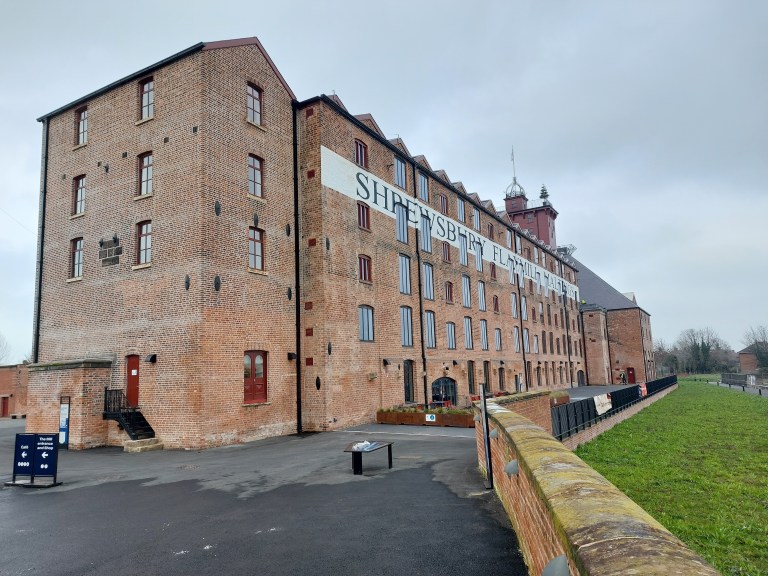
Shrewsbury Flaxmill Maltings recently won a European Heritage Award/ Europa Nostra Award 2024 for Conservation and Adaptive Reuse. A free webinar has been orginsed with the architects who led the project, Geoff Rich and Tim Greensmith, who will share with the fascinating story of the project.
Established as a Flax mill in 1797, the site of Shrewsbury Flaxmill Maltings includes the world’s first iron-frame building which has been described as the ‘grandparent of skyscrapers’. Its combination of cast iron beams and columns, brick arches, and cast iron ties made its construction fireproof, while large windows admitted natural light for its numerous employees. A century later, it was converted into a maltings through a second state-of-the-art design, with windows either blocked up or made smaller, boiler houses demolished, a timber hoist and new tower added, and a large kiln built.
The brief for this project called for an exemplar of sustainable refurbishment to support the next 100 years of use for a building with a particularly innovative design heritage. Feilden Clegg Bradley Studios (FCBStudios) have conserved the enduring elements of both uses to provide four floors of flexible working space, while weaving in a contemporary layers to accommodate a visitor centre and café.
The online meeting will end with a Q&A session. Please find more information about the project and the speakers below. To register please follow the link on Eventtbrite (though hurry as the webinar is at 5pm on the 24 April!):
The Council for British Archaeology is partnering with the Marsh Charitable Trust in delivering this year’s Marsh Community Archaeology Awards. The deadline for the Awards is noon on Monday 26 May 2025. The Trust supports organisations and people who make a difference within the charity sector. The Marsh Community Archaeology Awards celebrate the outstanding contributions of these people who are committed to social, cultural, and environmental causes.The Awards have two categories.
• Community Archaeologist of the Year – This award recognises an individual volunteer or professional who is going above and beyond their role to contribute to community archaeology.
• Community Archaeology Project of the Year – This award recognises and promotes the results of research and/or fieldwork led by community groups which have made a substantial contribution to knowledge and wellbeing.
Museum professionals and projects that work with communities are eligible, which of course includes industrial heritage sites. You can find out more about the upcoming awards here:
The Marsh Charitable Trust was founded in 1981 with the sum of £75,000 by its current Chairman, Mr Brian Marsh OBE. His aim was to create a sustainable way to give something back to society, by supporting the organisations and people who are making a difference, as best he could. From the outset the Trust has aimed to create long-standing relationships with the organisations it supports and partners through both its principal areas of work; the Grants Programme and the Awards Scheme. The Trust supports around 350 charities every year through the Grants Programme and gives around 80 different Awards to individuals and groups from across the charity sector, who make a difference to a cause that they believe in.
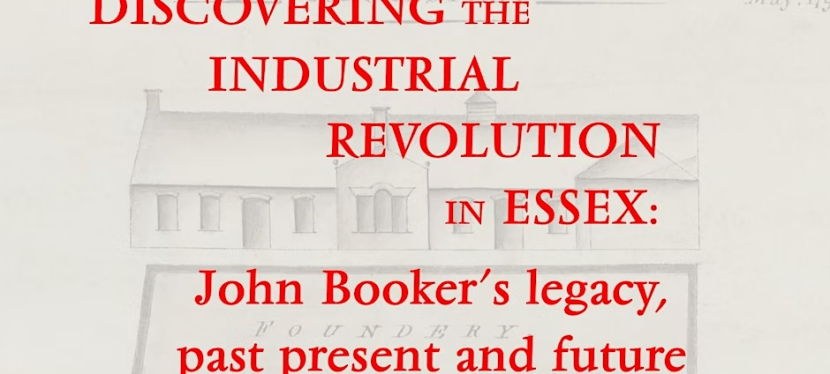
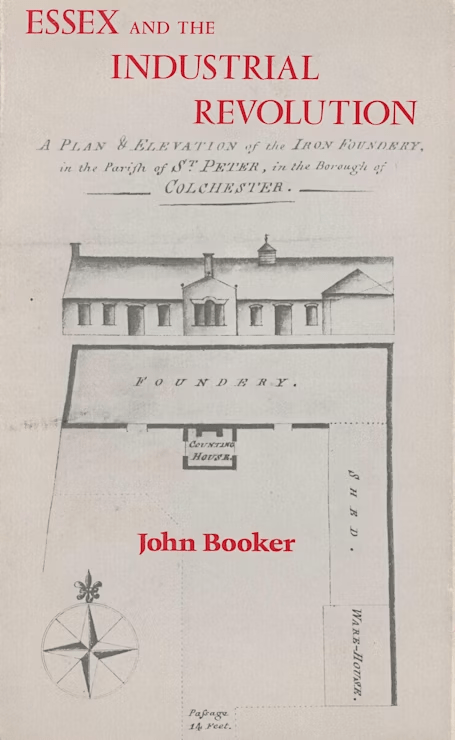
In 1974 Essex Record Office published John Booker’s ground breaking Essex and the Industrial Revolution. This highlighted the fact that significant industrial activity was going on in Essex, and not just those areas of the country traditionally associated with the Industrial Revolution, such as Ironbridge. To mark the 50th anniversary of its publication, Essex Record Office is running a series of short talks on various aspects of the industrial past of the county as well as celebrating this significant anniversary.
This event is run in conjunction with the Essex Society for Archaeology & History, Essex Industrial Archaeology Group, and Anglia Ruskin University. It is hoped that John Booker will be able to present one of the talks.
As English Heritage prepares to welcome visitors to the Flaxmill Maltings building in Shrewsbury, Shropshire, a hunt for the missing bell has been launched.Matt Thompson, the curatorial director of English Heritage, commented that “we believe the bell went missing in the late 1980s or early 1990s, when Shrewsbury Flaxmill Maltings was left derelict. Whilst it is possible that the bell could have been melted down, it is more likely that someone took it as a souvenir of this imposing, historic building which – at the time – looked close to ruin”
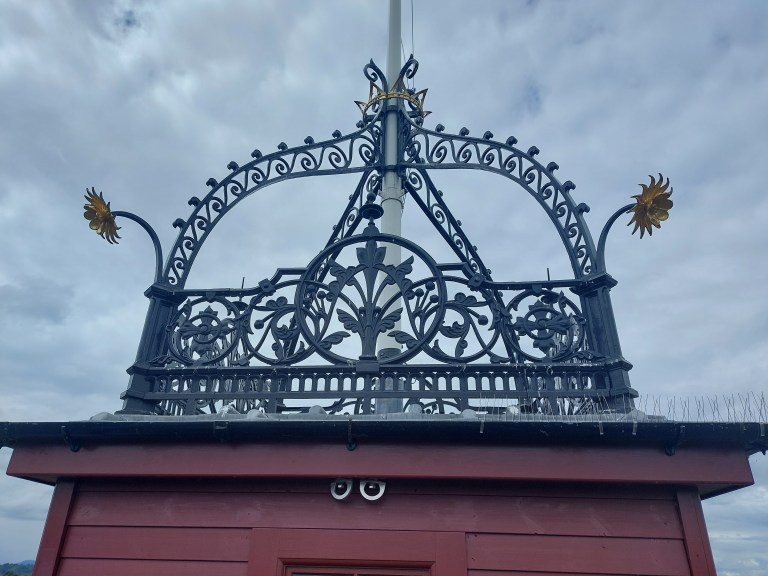
The empty bellcoate at Shrews Flaxmill Maltings. Image copyright Dr Michael Nevell.
Shrewsbury Flaxmill Maltings is known as the grandparent of the skyscraper, the building being the world’s first multistorey, iron-frame building, with the design paving the way for modern high-rise buildings. The site opened in 1797 as a flax mill and then, from 1897 to 1987, was used as a maltings. It also served as a temporary army training unit and barracks during the second world war. A third of the 800 workers at the flax mill were under 16 and some as young as nine. Shrewsbury itself was too small to provide that number, so children were brought in from as far afield as London and Hull, mostly from the workhouses. Often orphans, the children were given housing, food and clothes but not paid wages. The missing bell would have called the children in from the apprentice house nearby.
Originally operated by a pull rope, the bell changed to an electric chiming mechanism after the second world war, but was lost when the building was left derelict after the closure of the business in 1987. Believed to be around 60cm (24in) high, the bell is cast with the year “1797” on it. The bellcote has been restored but remains, for the moment, empty.
Shrewsbury Flaxmill Maltings opened on 1st April 2025 as English Heritage’s first new paid-for site in 21 years.
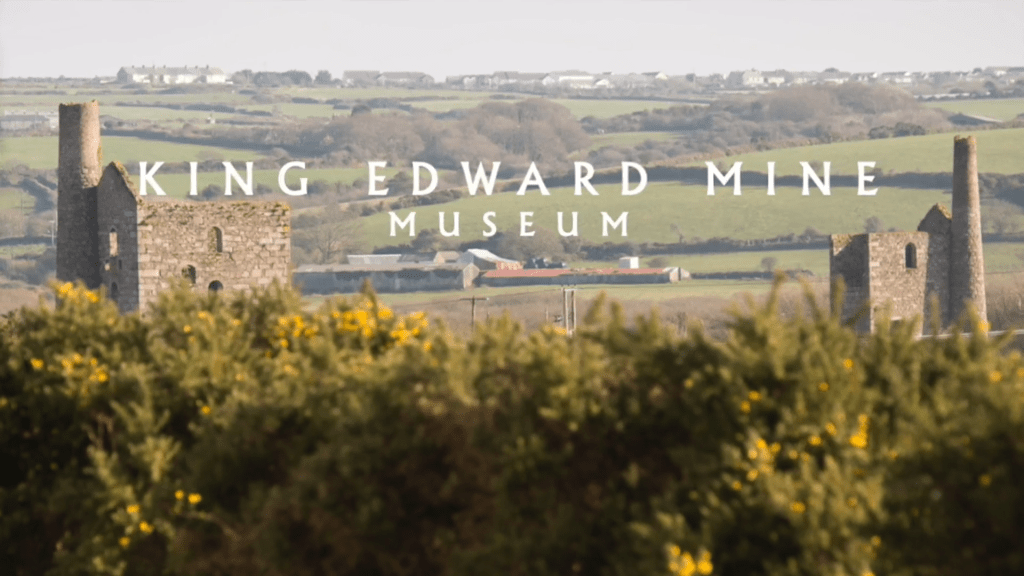
King Edward Mine Museum (KEM), a volunteer-led charity within the UNESCO Mining World Heritage Area of Cornwall, is looking for more tour guides when it re-opens for the new season on 20 April.
The site saw a significant rise in visitor numbers last year, many of whom travelled from overseas to explore the mine complex. The museum, which is dedicated to sharing the history of mining on the Great Flat Lode, and is Grade II* listed, lies in the village of Troon, near Camborne.
The mine tells the stories of Cornish miners and maintains a collection of historic mining equipment, including an operational Cornish tin mill, and a Holman winding engine. Originally worked under the name of Old Tye it was opened in 1844 together with Great Condurrow about 300m to the north, finally closing in 1921. However, the surface buildings continued in use for the teaching of mining, ore dressing, and surveying skills until 1974. In 1987 a volunteer group was formed with the aim of conserving the site as an educational resource for the future and the local community.














 Industrial Heritage Networks