New Job Opportunity at Catalyst Science Discovery Centre & Museum

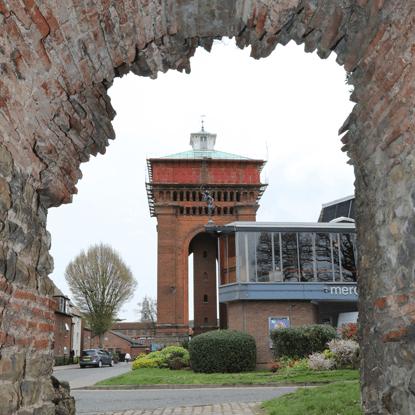
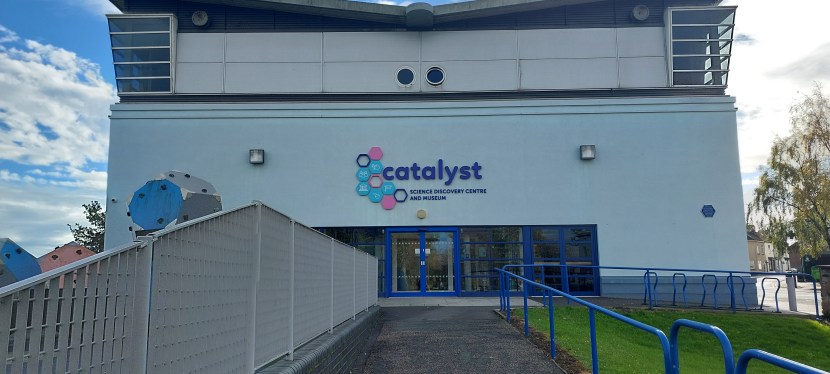
Catalyst Science Discovery Centre and Museum is undertaking an exciting new project and are seekign to appoint a manager for the Synergy Project. In 2022, the National Lottery Heritage Fund awarded Catalyst the funding for the Development Stage of the Synergy Project which aims to make our heritage accessible to new and underrepresented audiences in an entertaining and meaningful way. The project will physically redevelop the heritage galleries and transition spaces, as well as implement a heritage education offer to complement our already successful STEM programme. In September 2024, Catalyst was awarded the funding for the Delivery Phase of the Synergy Project which will see the physical implementation of the new heritage galleries and heritage offer.

Details of the post can be found here:

To apply please send a covering letter and CV to Nikki Burton Mallett, Chief Executive Officer at nikki@catalyst.org.uk by Tuesday 11 th February. In the event of a large volume of applications Catalyst reserve the right to close applications ahead of this date. Interviews will take place the week beginning 24th Feb.

Historic England Consultation on Draft ‘Tool Kit for Managing the Ownship of Archaeological Finds’

Historic England has developed a draft Toolkit for Managing the Ownership of Archaeological Finds in England, as part of the Future for Archaeological Archives Programme. It has benefitted from initial advice from members of the programme’s Advisory Panel and from Queens Counsel legal advice.

The new toolkit is designed as a resource for individuals involved in the management, recovery, and archiving of archaeological materials. It offers guidelines to ensure the secure and legal transfer of ownership of archaeological material, thereby supporting effective archival practices and planning policy. The toolkit consists of a model deed of transfer and guidance covering principles of ownership, advice on transferring ownership of the material archive, procedures for arranging transfer of ownership, guidance for planners, landowners and planning applicants/developers and guidance where landowner consent cannot be obtained.

The Toolkit includes sections on:

  • Ownership – the principles of ownership of archaeological finds
  • Advice on transferring ownership of the material archive from an archaeological project
  • Procedures for arranging transfer of ownership
    • for a development project
    • for a research or community project
  • Guidance for planners, landowners and planning applicants/developers
  • Guidance where landowner consent cannot be obtained
  • Objects already in museum/repository collections
  • Material assemblages stored by archaeological contractors

The draft toolkit is subject to a consultation period of nine months between January and September 2025. Historic England very much welcomes all feedback, which can be submitted via this short form https://forms.office.com/pages/responsepage.aspx?id=RG4RMHlNwESowevAcH2jyWGl58Stc09CpJPQVx986upURTJWV0hYSEZURzFQMFFEQTJCNE5TMEpSVy4u&route=shorturl

or by emailing FAAP@historicengland.org.uk.

Results of the survey will be analysed in Autumn 2025 and will inform the toolkit’s further development.

Small Grants Available in 2025 for Industrial Heritage Museums & Sites

The dealines for several grant streams suitable for Industrial Heritage museums and sites occur in early 2025. To catch up with what is available for industrial heritage sites and museums explore the following websites.

Foyle Foundation Small Grants The Small Grants Scheme is provided by the Foyle Foundation to support smaller, grass-roots, and local charities in the UK with projects that have the potential to make a significant difference to their work. Grants range from £2k to £10k and the closing date for applications is 31 January. Find outr mor eby followign this link: https://foylefoundation.org.uk/how-to-apply/small-grants-scheme-guidelines/

The Heritage Alliance, whilst not a funding body in itself, co-manages the Heritage Funding Directory  with the Architectural Heritage Fund. This free resource for the sector includes a directory listing funding sources for heritage projects across the UK (and internationally), and includes some helpful guidance on fundraising.  It is regularly updated, so its worth visiting regularly.

Finally, the Association for Industrial Archaeology runs several annual grant and award schemes specifically for industrial archaeology and heritage, with closing dates at the end of January and the end of March. Follow this link for further details: https://industrial-archaeology.org/aia-awards/

Anderton Boat Lift Celebrates 150 Years of Use in 2025

In 2025 the Anderton Boat Lift celebrates 150 years of use. Designated one of the Seven Wonders of the Waterways, the boat lift was designed by engineer Edwin Clark to connect the Trent & Mersey Canal with the River Weaver Navigation fifty feet below and opened on 26 July 1875. Although it has been re-engineered several times, the lift has successfully carried boats between the two waterways for most of its 150 years, with only a couple of decades out of action in the 1980s and 1990s due to safety concerns caused by corrosion. At the turn of the Millenium, more than £7 million was raised to fund a major restoration and the boat lift began operating again on 26 March 2002. 

The Canal and River Trust, who now run the Lift, will be transporting visitors back in time to 1875 by hosting a spectacular Victorian Fair over the anniversary weekend of July 25-27. During the rest of the summer season, as well as boat trips through the Lift, visitors will be able to enjoy other events, including Steam at the Lift (May 10/11), Pirates Weekend (June 21/22), Old Time Sailors Concert (July 4), and Steampunk Lift Off Weekender (September 27/28).

A generation on from the 2002 re-opening, the Lift needs a major upgrade to keep it operational. The Canal and River Trust are thus currently working to develop an ambitious ‘Engineering the Future’ project to revitalise the Anderton Boat Lift and Visitor Centre, supported by the National Lottery Heritage Fund. The whole structure requires blast cleaning, repairing and re-painting, the timber control cabin replacing, and IT operating system updating. This is expected to take 12 to 18 months, with a total estimated cost of £13.5 – £15 million.

For more details of the anniversary events and the proposed renovations follow this link: https://canalrivertrust.org.uk/news-and-views/news/lift-off-for-a-special-150th-anniversary-year-at-anderton-boat-lift-in-2025

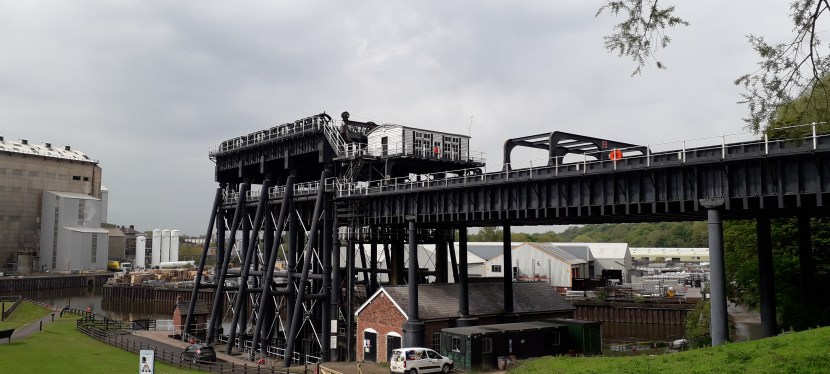
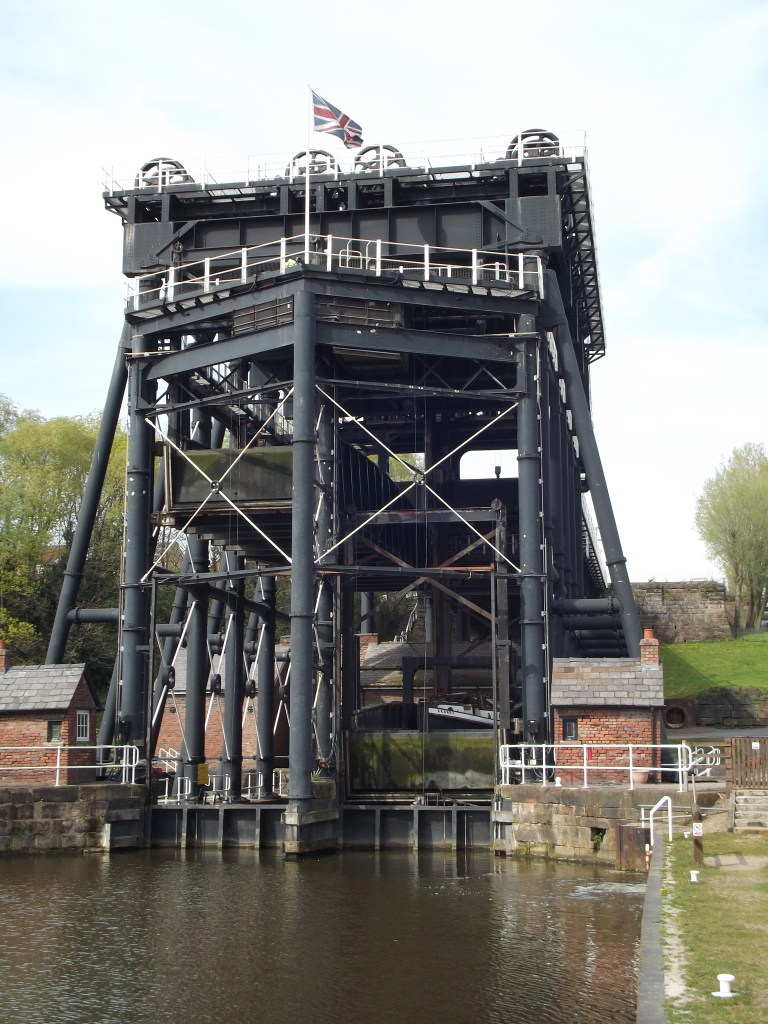
The Anderton Boat Lift, connecting the Trent & Mersey Canal and the Weaver Navigation. Image copyright: Dr Michael Nevell

Getting Involved With the Oral History of Birmingham’s Canal Restoration

The Canal and River Trust (CRT) is looking at gathering oral histories about the people who were involved in the post-Second World War restoration of canals in Birmingham and the Black Country.

The aim is to record this important period in the history of Britain’s canals by talking to the people who worked on the restoration projects. CRT are looking to record personal stories to find out which canals people worked on, what they did to restore the canals, their motivations for being involved, the impacts the restoration work had on them, and information about restoration techniques.

This work is being undertaken with inHeritage. inHeritage is a heritage interpretation consultancy delivering innovative and accessible opportunities to communicate your key messages to your target audiences through a range of traditional and new media. They also manage interpretation, community archaeology, and oral history projects.

If you would like to get involved with this project please email Bill Bevan at: bill@inheritage.co.uk

Birmingham canals post restoration. Image courtesy of CRT.

Gas Holders – A History In Pictures from Historic England

Historic England’s latest industrial heritage publication, produced in partnership with Liverpool University Press and National Grid, is ‘Gas Holders – A History in Pictures’ – https://historicengland.org.uk/images-books/publications/gasholders-history-in-pictures/.

Using a combination of archive and contemporary photographs, engineering drawings, prints, paintings, adverts and diagrams, it looks at the history and evolution of gas holders, engineers and manufacturers, their place in society and impact on the English landscape. The final chapter considers the future redevelopment of these sites, including those where gas holders are being successfully re-purposed’.  

Online Petition Started to Save Museum of Cannock Chase

The news that Cannock Chase Council is proposing the closure of the Museum of Cannock Chase in April 2025, as part of proposed budgets cuts for 2025/2026, has led to the establishment of an online petition against the closure.

The Council is holding a public consultation on the closure of the museum, and the council’s Prince of Wales theatre, which runs from the 29 November 2024 to the 2nd January 2025. The council released a report in November regarding the closure of the msuem and theatre which estimated that closing the two cultural venues would save £350k per annum. This report can be download by following this link (see pages 179 – 187):
https://www.cannockchasedc.gov.uk/council/meetings/agendas-reports-minutes/cabinet/2024-11-28

The Museum of Cannock Chase first opened in 1989 on the site of the former Valley Pit, a training pit for young coal miners. It covers the history of the Cannock Chase area across four galleries and also hosts a number of temporary exhibitions throughout the year. Although council-owned, it is operated by the charity Inspiring Healthy Lifestyles (IHL), who who also run the theatre, with a contract until 2027. Vistor numbers to the free musuem, before COVID, reached 46,500 in 2018/19. The number of visitors since the pandemic initially fell to 10,500 in 2021/22, but partially recovered to 21,000 in 2023/24.

The online petition notes that: ‘The museum’s collections tells over 300 years of history of the district and wider area and have become cherished resources. They have collected and safeguarded not only our industrial history but our social history, presenting and preserving the stories of people past and present – of those people who worked to create and shape our communities, and of the people who continue to do so. This entire collection is now at risk of being lost.’

The petition can be found here: https://www.change.org/p/save-the-museum-of-cannock-chase-protect-our-mining-heritage

AIA Restoration, Research, & Awards Grants for 2025

Applications are now open for the Association for Industrial Archaeology’s 2025 round of restoration, research, and other awards (including community, dissertaton, publication, and travel bursary). The deadline for most of these awards is the 31st Janaury 2025, although the deadline for the Restoration Grants is the 31st March 2025. Details and links can be found below.

Restoration Grants

The first of these grants were made in 2009, and from the initial modest beginnings we have, by 2024, been able to allocate nearly £1,500,000 since the scheme began. The industrial heritage sector, despite difficulties with volunteer projects during the Pandemic, has continued to be increasingly appreciative of this source of aid. A source which is entirely thanks to the continuing support of our anonymous donors.  A brief history of the scheme and details of many of those projects can be found below. Regular updates on progress with these projects appear in I A News, our quarterly bulletin. From 2020 onwards the available Grants pot is divided into two categories:

Major projects where the maximum grant that can be awarded is £30,000. The grant from the AIA must be a significant part of the total project cost, not just a small contribution to a very large project, so that the AIA grant has real impact. The AIA would not normally fund projects where their grant represents less than 20% of the total project costs. Small projects where the grant limit is £10,000, for which the total cost of the project, excluding the value of volunteer labour, must not exceed £12,500.

Download the Criteria and Guidance and a Restoration Grant Application Form

Research Grants

The AIA research grant scheme underpins the study aim of the Association. It does that by:

  • Encouraging individual researchers to study industrial archaeology subjects
  • Encouraging the development of industrial archaeology skills within commercial units, the main repository of professional skills in the subject
  • Supporting local industrial archaeology and industrial heritage societies in exploring and understanding their local areas
  • Helping to develop the next generation of industrial archaeologists

The total fund available in any single year is £1,500 and multiple grants may be given up to this maximum in a single year. The AIA may consider part-funding a wider grant application or project as long as the AIA grant is a significant part of the larger application / project.

Click to download full details and an application form: (.pdf) (.docx)

If you have any further questions please contact the coordinator:  research-grants@industrial-archaeology.org

Other Awards

A link to the other awads can be found here: https://industrial-archaeology.org/aia-awards/

In 2024 Claymills Pumping Station received a major grant for the restoration of boiler No 1 to fully working condition. Image courtesy of Claymills Pumping Station Trust.

Festival of Archaeology – 5 Year Impact Report From the CBA

The Councicl for British Archaeology (CBA), who have run the Festival of Archaeology for many years, have published an overview of results and impact for the years covering 2020 to 2024. The Impact Study represents five years of data collection and analysis drawn in large part from those who responded to the evaluation surveys over the years. It was undertaken by Resources for Change.

Over the last five years, the Festival saw over a million engagements (people directly engaging with CBA content) with a reach of 359 million (number of people exposed to a social media post). There were nearly 2,000 activities, some delivered more than once, which resulted in 3,401 individual sessions. The Feitval was also able to adapt to the impact of the COVID-19 pandemic.

To download the executive summary follow this link:

Festival of Archaeology 2020-2024 Impact – Executive Summary

7th East-West Workshop on Industrial Archaeology: Weaving the Industrial Period

The production of fabric and its transformation into clothes was worldwide one of the first sectors to embrace modern industrialisation, even though continuities (of domestic working spaces, traditional production processes, manual technologies, etc.) often coexisted with changes (the factory, the factory system, the power loom). The 7th East-West Workshop on Industrial Archaeology revisits the capital importance of the textile sector in the development of the industrial period.

The East-West series of workshops aims to exchange ideas and knowledge among Western and Eastern colleagues to build a more international and diverse industrial archaeology. This edition focuses on the heritage and archaeology of the textile industry from the East, the West, and the world to explore its commonalities (transfer of technology, building materials, typologies, etc) and singularities (chronological disparities, heritage practices, etc.)

The event is organised jointly by the Institute for Cultural Heritage and History of Science & Technology (USTB, China), and the UK Association for Industrial Archaeology with its Young Members. IOt will trake place on Staurday 23rd Novemebr, between 10am and 12pm (GMT). The speakers are:

  • Yiping Dong (Xi’an Jiaotong-Liverpool University, China): “Complexity of the Conservation of Textile Heritage in China”
  • Ian Miller (The University of Salford, Britain): “Salford Twist Mill: Uncovering an Iconic Textile Factory”
  • Mark Watson (Historic Environment Scotland, Britain): “Global Textile Industries and their Built Heritage”

To register for FREE workshop and to get the Zoom link for the event, follow this link:
https://www.eventbrite.co.uk/e/7th-east-west-workshop-on-industrial-archaeology-tickets-1072988229679