Welcome to the Industrial Heritage Networks and Support website. This site is maintained and updated by the Ironbridge Gorge Museum Trust who run the project and the networks. We aim to support industrial heritage in England through networking, information exchange, guidance, and training. Please explore the website and please contribute! For more information you can … Read more Welcome to the IHNs website!
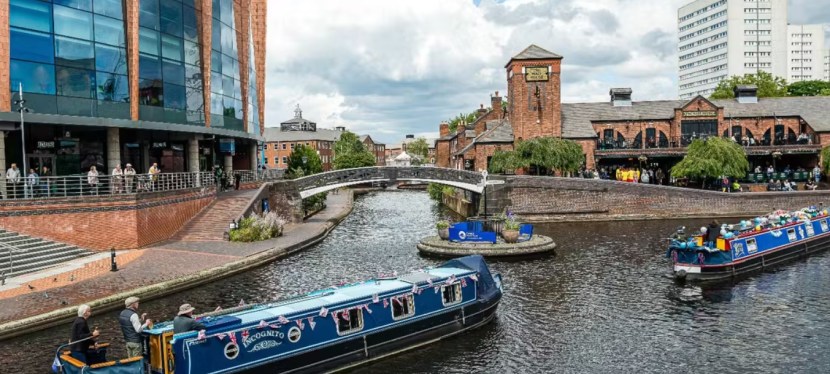
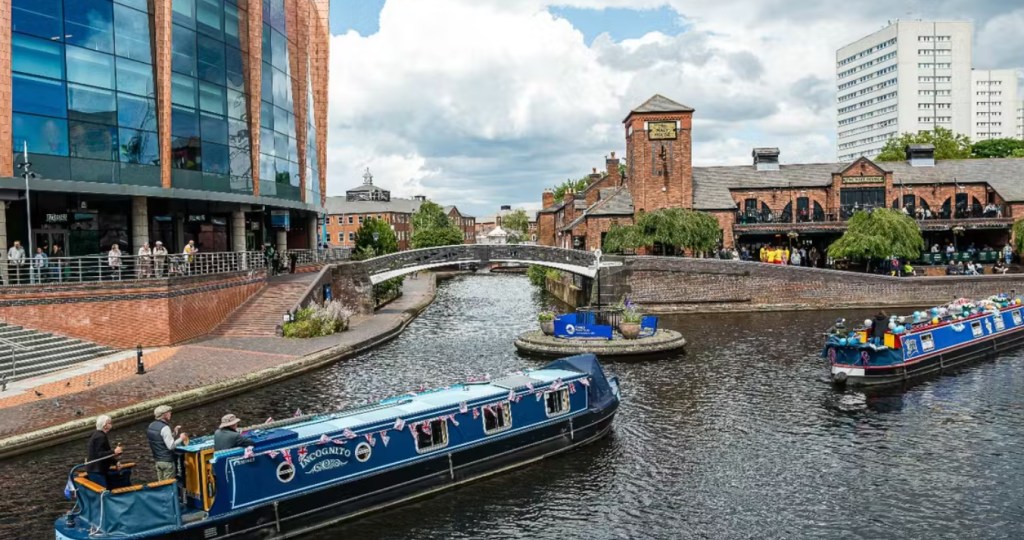
The Canal and River Trust (CRT) is looking at gathering oral histories about the people who were involved in the post-Second World War restoration of canals in Birmingham and the Black Country.
The aim is to record this important period in the history of Britain’s canals by talking to the people who worked on the restoration projects. CRT are looking to record personal stories to find out which canals people worked on, what they did to restore the canals, their motivations for being involved, the impacts the restoration work had on them, and information about restoration techniques.
This work is being undertaken with inHeritage. inHeritage is a heritage interpretation consultancy delivering innovative and accessible opportunities to communicate your key messages to your target audiences through a range of traditional and new media. They also manage interpretation, community archaeology, and oral history projects.
If you would like to get involved with this project please email Bill Bevan at: bill@inheritage.co.uk
Birmingham canals post restoration. Image courtesy of CRT.
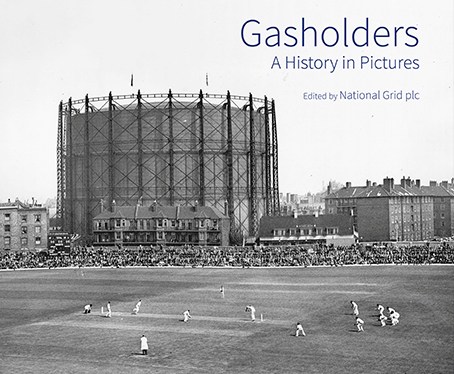
Using a combination of archive and contemporary photographs, engineering drawings, prints, paintings, adverts and diagrams, it looks at the history and evolution of gas holders, engineers and manufacturers, their place in society and impact on the English landscape. The final chapter considers the future redevelopment of these sites, including those where gas holders are being successfully re-purposed’.
The news that Cannock Chase Council is proposing the closure of the Museum of Cannock Chase in April 2025, as part of proposed budgets cuts for 2025/2026, has led to the establishment of an online petition against the closure.
The Council is holding a public consultation on the closure of the museum, and the council’s Prince of Wales theatre, which runs from the 29 November 2024 to the 2nd January 2025. The council released a report in November regarding the closure of the msuem and theatre which estimated that closing the two cultural venues would save £350k per annum. This report can be download by following this link (see pages 179 – 187): https://www.cannockchasedc.gov.uk/council/meetings/agendas-reports-minutes/cabinet/2024-11-28
The Museum of Cannock Chase first opened in 1989 on the site of the former Valley Pit, a training pit for young coal miners. It covers the history of the Cannock Chase area across four galleries and also hosts a number of temporary exhibitions throughout the year. Although council-owned, it is operated by the charity Inspiring Healthy Lifestyles (IHL), who who also run the theatre, with a contract until 2027. Vistor numbers to the free musuem, before COVID, reached 46,500 in 2018/19. The number of visitors since the pandemic initially fell to 10,500 in 2021/22, but partially recovered to 21,000 in 2023/24.
The online petition notes that: ‘The museum’s collections tells over 300 years of history of the district and wider area and have become cherished resources. They have collected and safeguarded not only our industrial history but our social history, presenting and preserving the stories of people past and present – of those people who worked to create and shape our communities, and of the people who continue to do so. This entire collection is now at risk of being lost.’
AIM (the Association of Independent Museums) has announced (December 2024) the latest recipients of their collections care and conservation grants, funded by the Pilgrim Trust. 20 organisations were offered grant funding totalling £63,750.50.
The Peak District Mining Museum has been offered funding for a conservator-led collections care audit to provide a report on the display and store environment and offer recommendations on how to improve collections care.
The Museum of Rail Travel/ Vintage Carriages Trust has been awarded £3,000.00 for conserving and making publicly accessible the Bradshaw map, whilst the Port Sunlight Village Trust has been awarded a grant of £7,325 for theConservation of the Gladstone Theatre Plaque.
In 2025 AIM will be offering a new grant called ‘Museum Fundamentals’, combining the familiar conservator support offered by the Pilgrim Trust funded grants, with new funding to support back of house activity and mentoring for larger projects. To hear about the forthcoming AIM Museum Fundamentals grant application process, and news on all other AIM activity, sign up for their newsletter here: weekly eNews.
Applications are now open for the Association for Industrial Archaeology’s 2025 round of restoration, research, and other awards (including community, dissertaton, publication, and travel bursary). The deadline for most of these awards is the 31st Janaury 2025, although the deadline for the Restoration Grants is the 31st March 2025. Details and links can be found below.
Restoration Grants
The first of these grants were made in 2009, and from the initial modest beginnings we have, by 2024, been able to allocate nearly £1,500,000 since the scheme began. The industrial heritage sector, despite difficulties with volunteer projects during the Pandemic, has continued to be increasingly appreciative of this source of aid. A source which is entirely thanks to the continuing support of our anonymous donors. A brief history of the scheme and details of many of those projects can be found below. Regular updates on progress with these projects appear in I A News, our quarterly bulletin. From 2020 onwards the available Grants pot is divided into two categories:
Major projects where the maximum grant that can be awarded is £30,000. The grant from the AIA must be a significant part of the total project cost, not just a small contribution to a very large project, so that the AIA grant has real impact. The AIA would not normally fund projects where their grant represents less than 20% of the total project costs. Small projects where the grant limit is £10,000, for which the total cost of the project, excluding the value of volunteer labour, must not exceed £12,500.
The AIA research grant scheme underpins the study aim of the Association. It does that by:
Encouraging individual researchers to study industrial archaeology subjects
Encouraging the development of industrial archaeology skills within commercial units, the main repository of professional skills in the subject
Supporting local industrial archaeology and industrial heritage societies in exploring and understanding their local areas
Helping to develop the next generation of industrial archaeologists
The total fund available in any single year is £1,500 and multiple grants may be given up to this maximum in a single year. The AIA may consider part-funding a wider grant application or project as long as the AIA grant is a significant part of the larger application / project.
Click to download full details and an application form: (.pdf)(.docx)
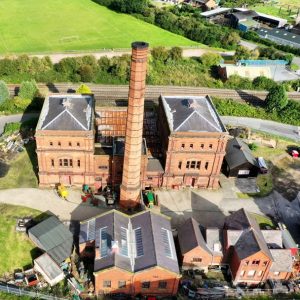
In 2024 Claymills Pumping Station received a major grant for the restoration of boiler No 1 to fully working condition. Image courtesy of Claymills Pumping Station Trust.
Historic England has announced (November 2024) new funding for 21 creative, youth-led, place-marking projects across England. The ‘History in the Making’ programme empowers under-represented young people to explore and celebrate their local hidden histories, finding original ways to commemorate them, helping to improve young people’s wellbeing, and increase pride in their local area.Amongst the 21 grants are several to industrial heritage themed projects.
‘Summat Creative’, in Bradford, focusses on the overlooked history of people with Learning Disabilities who worked in Bradford’s mills in the 1800s and 1900s. After historical research and creative exploration, Learning Disabled young people will help create a model of a mill and fill it with their own creative responses to the stories they’ve unearthed.
The ‘Multi-sensory accessible place marker for the Shipley Glen Tramway – Moor Time’ project will see young people with additional needs from across the Bradford district explore the social history around the oldest cable tramway in Britain, which still takes passengers from Saltaire/Baildon to Shipley Glen. Their findings will create a full accessible, multi-sensory, place marker to celebrate these histories.
‘Canal to Garden: Unearthing Greater Mamnchester’s Green Heritage’ project will engage young people in Greater Manchester to uncover and celebrate the hidden history of local canals and flora through hands-on gardening, historical research, and creative expression. It will result in a heritage garden that tells the story of our local environment.
A new piece of research has been launched by the Association of Independent Museums (AIM) to better understand how museums and heritage venues with outdoor space of any size are approaching land management in order to diversify their income streams, broaden their audiences, and contribute to sustainability goals.
The research will explore how museums and heritage organisations (including industrial heritage sites) with outdoor space of any size, from rooftop terraces to those with thousands of acres, are using these spaces. The research will also consider the appetite for further support and funding for developing such outdoor spaces. The intended outcome is to compile some broad data about land ownership in the sector along with a set of robust case studies that can exemplify how organisations of varied size and resource are approaching land management.
A core element is an online survey, which is open to those in the museums and heritage sector with experience managing land or owning land. The survey is being carried out by marketing research company M·E·L Research for the Association of Independent Museums (AIM), National Museum Directors’ Council, Arts Council England, and the Welsh Government.
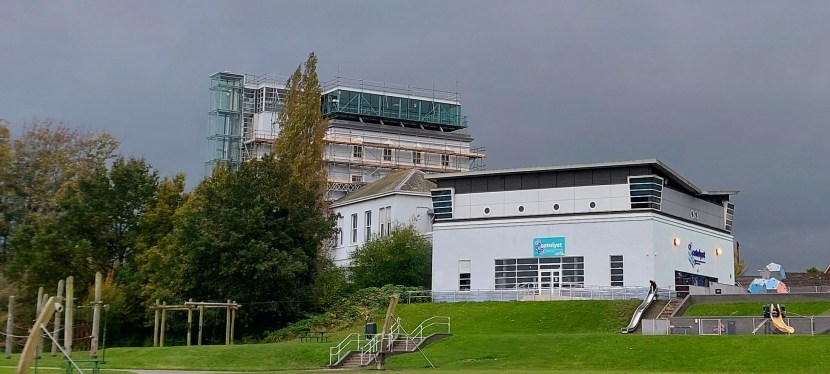
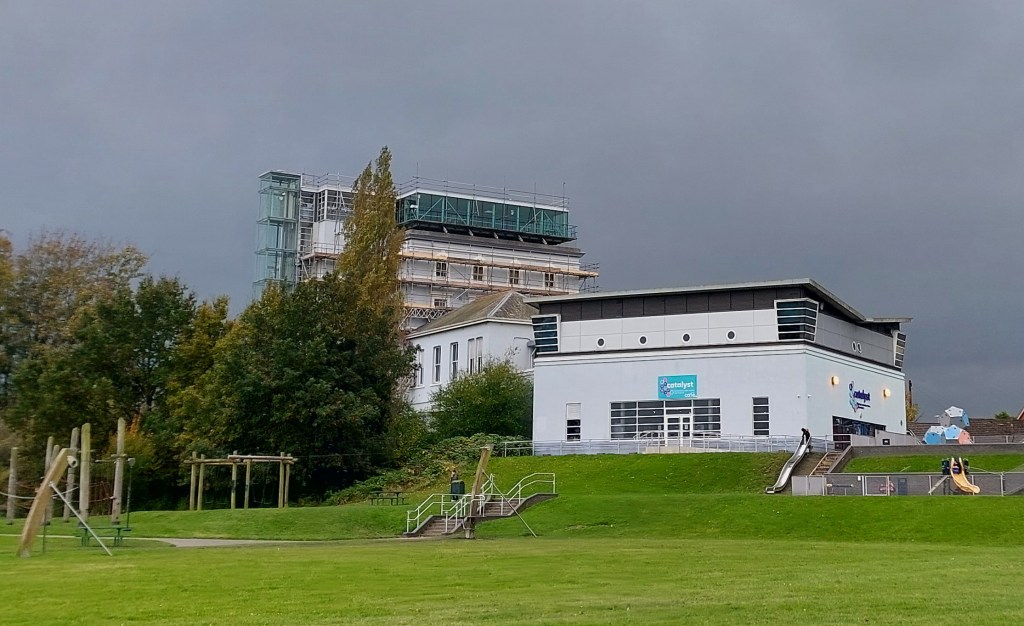
The Catalyst Science Discovery Centre and Museum in Widnes has been awarded a £1 million grant from The National Lottery Heritage Fund. This is to help it educate and excite an even wider audience about the relevance of chemistry, the town’s chemical heritage, and how this has shaped modern life today.
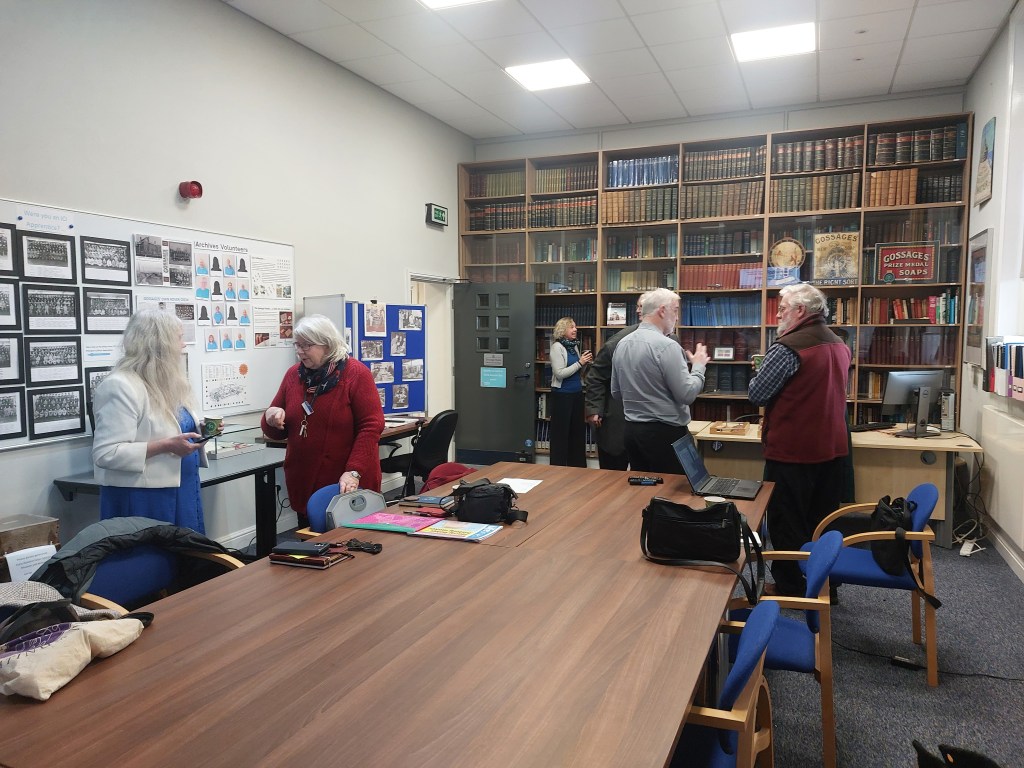
Delegates catching up at the North West IHN, October 2024. Copyright: Dr Michael Nevell
Half of the £1,009,930 National Lottery Heritage Fund grant will be used to refurbish two floors of the museum in order to showcase the history and heritage of the chemical industry from the 1800s to the present in a fresher, more engaging, and more accessible way. This includes the top floor Observation Gallery with its 360° views of the surrounding area including the River Mersey and two Halton bridges, which will be revamped with brand new interactive exhibitsd and audio handsets.
A proportion of the grant will be used to digitise the museum’s nationally important, and extensive, archive to both protect and make it more widely available. The remainder of the grant has been earmarked for an extensive activity plan including workshops, events, open days, and resources aimed at connecting audiences to the chemical industry in a new and meaningful way.
The Catalyst charity was launched in 1987. It celebrates the local chemical industry heritage and its influence at home and around the world with unique initiatives, hands-on experiences, and rich industrial heritage archives. The Discovery Centre and Museum welcomes visitors from the local area and beyond, with special events for schools, families, and SEN groups all year round. The museum hosted the North West Industrial Heritage Network meeting in October 2024.
Join SPAB on Saturday 30 November, 10am – 4.45pm , for a day of online talks about windmills and watermills that are currently or have been in the past listed on the Heritage at Risk Register.
What happens when a mill is added to the Heritage at Risk Register? What steps can you take to protect a mill from different risks? And why do some restored mills remain at risk? This is a unique opportunity to hear from a range of mill professionals – including volunteers and millwrights. You’ll have a chance to have your questions answered and will receive a recording of the talks after the event.
For several years Historic England has been running a very successful lunchtime learning webinar training series. The latest industrial heritage webinar case study on the work of the Canal & River Trust, held earlier this autumn, can now can be viewed online.
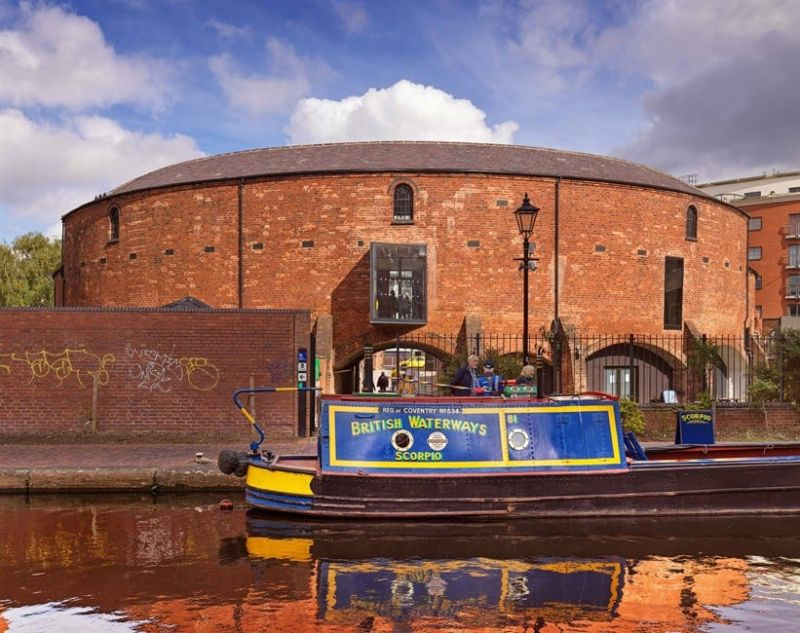
One example of the re-use and conservation of canal-related industrial heritage mentioned in the webinar was The Roundhouse, Sheepcote Street, Birmingham. This former horse-shoe shaped stables and stores was built as a mineral and coal wharf, around 1840. Listed Grade II* the site was removed from the Heritage at Risk Register in 2021, renovated with the help of NHLF and CRT, and is now being run as a heritage enterprise by the charity Roundhouse Birimgham providing office space, a visitor centre, and canal-related leisure and outreach activities.
The Roundhouse, Sheepcote Street, Birmingham. Image courtesy of Historic England.













 Industrial Heritage Networks