Welcome to the Industrial Heritage Networks and Support website. This site is maintained and updated by the Ironbridge Gorge Museum Trust who run the project and the networks. We aim to support industrial heritage in England through networking, information exchange, guidance, and training. Please explore the website and please contribute! For more information you can … Read more Welcome to the IHNs website!
Join Museum Development Midlands (MDM) and Anita Hollinshead for this session exploring extreme environments and their impact on conditions in museums, collections, visitors, and staff on 5th November. The free workshop will include a number of case studies and measures that can be put in place to minimise risks.
Delegates will be encouraged to share their own experiences of extreme weather conditions, including high temperatures, flooding, and storms and the impact of climate change on collections management, all issues familiar on for industrial heritage sites. This workshop is part of MDM’s Emergency and Risk Management Network, helping museums prepare for emergency situations and develop skills in risk management and mitigation.
Places are limited to a maximum two delegates per organisation. Priority will be given to delegates from non-NPO and non-National museums in the Midlands which are Accredited or officially Working Towards Accreditation. You’re welcome to book a place if you are not from a priority museum, including non-Accredited museums, on the understanding we may ask you to release your place if the event becomes oversubscribed. Fololow this linbk to book the free trainbign session: https://www.eventbrite.co.uk/e/emergency-and-risk-management-network-extreme-environments-tickets-1028753909637?aff=oddtdtcreator
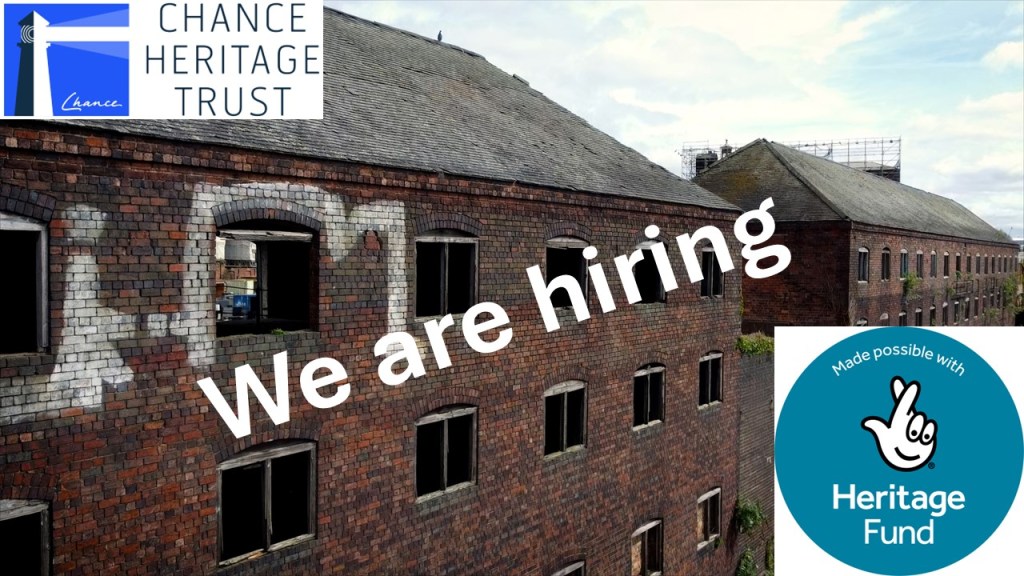
Thanks to the support of National Lottery players, Chance Heritage Trust are looking to appoint a Heritage & Culture Coordinator to drive their community engagement activities over the next 3 years. The Trust want to make sure the community are front and centre as they take forward the regeneration of the Chance Glassworks.
Following a grant from The National Lottery Heritage Fund they are seeking to employ an experienced Heritage and Culture Coordinator. As the Community and Culture Coordinator, the role will be to develop and drive their heritage, culture, and enterprise offer using the rich industrial history and legacy of the Chance Glassworks and other heritage projects as a source of material. Coordinating all strands of the Trust’s community engagement activities, managing their social media and external communications, will all be part of the role.
If this challenge appeals to you, a detailed job description and contact information can be found on their website here: www.chanceht.org
Please include a covering letter detailing your past experience and telling the Trust why you think you can fulfil the role and include a current CV.
The Mills Archive Trust are hosting a two-part webinar on fundamental archiving skills on Saturday 23 and 30 November, between 2:00 pm and 4:00 pm GMT. Whether you are an individual collector or part of an organisation, caring for old documents or digital files, their professional archivist will guide you through protecting and sharing your records.
The Mills Archive Trust is an accredited Archive and award-winning educational charity dedicated to caring for the history of mills and milling. They care for records ranging from centuries-old manuscripts to digital files. Their professional archivist, along with their archival volunteers, will help your industrial heritage site do the same in these two webinars.
Icon is hosting an industrial heritage conservation accreditation workshop at Imperial War Museum Duxford on 28 October. If you work in industrial conservation and are interested in finding out more about Icon accreditation, then this is the workshop for you.
This free workshop event will cover:
Learn about the basics of Icon accreditation, what it involves and how it can benefit your you and your organisation.
Listen to real examples of Industrial conservation projects and understand how these meet the Icon assessment criteria.
Discuss the unique challenges of industrial conservation and explore how these can be presented in an Icon assessment.
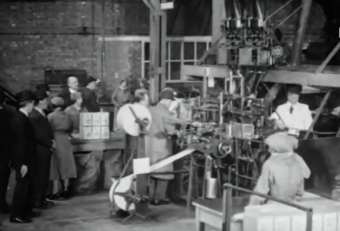
The Greater London Industrial Archaeology Society in conjunction with the Cinema Museum and Huntley Film Archives are running an evening showing films from the John Huntley Archive about London’s Industrial Heritage. The event will take place on the 27th November 2024, presented by Amanda Huntley, and there will be an optional tour of the museum afterwards.
John Huntley (1921 – 2003) was an English film historian, educator, and archivist. Born in Kew, London, he started in the the film industry as a teaboy at Denham Studios around 1938. He later worked for the British Filn Institute from 1952 to 1974, first for the information department, but from 1955 in distribution. In 1984 he and one of his daughters, Amanda, set up Huntley Film Archives. This is anarchive of documentary, educational, industrial, medical, travelogue, and feature films, containing films of the lives of ordinary people around the world. For more details on the archive follow this link: https://www.huntleyarchives.com/aboutus.asp
Tees Valley Museums Consortium has won one of this year’s ‘Kids in Museums’ awards for Best Museum Youth Group. The consortium’s Young People initiatives include their Young Producers strand. These are a group of 16-25 year olds who have a say and plan events and exhibitions at their museums. They currently have two active Young Producers groups – based at Hartlepool Art Gallery and Preston Park Museum. Further Young Producers are planned for the Stockton and Darlington Railway route and in Middlesbrough.
The Tees Valley Museums Consortium consists of the museum services of Stockton-on-Tees, Darlington, Hartlepool, Middlesbrough and Redcar & Cleveland. It was formed in 2017 to develop collaborative working for the purpose of delivering better services to the public. The five museum services of Tees Valley Museums Consortium hold extensive collections of art, archaeology, social, industrial and maritime history, as well as a wide array of world cultures. The museums work together to promote pride in the history of the Tees Valley.
Kids in Museums is an award-winning charity dedicated to making museums open and welcoming to all children, young people, and families. They support and champion family friendly organisations through wide-ranging initiatives, including the Family Friendly Museum Awards and Takeover Day. They invite heritage organisations to sign up to their Manifesto, which sets out simple guidelines for making museums easy to reach for all ages. For further details visit their website: www.kidsinmuseums.org.uk
The next Historic England free industrial heritage webinar will be on October 24th, from 13.00 to 14.00. It will focus on the canal network and the work of the Canal & River Trust in England and Wales.
Presented by the Canal & River Trust, it will describe the organisations establishment and role, the nature and significance of the canal network, its operation, management and maintenance, and how the Trust works in partnership with others.
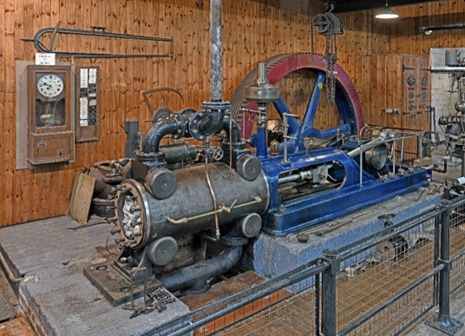
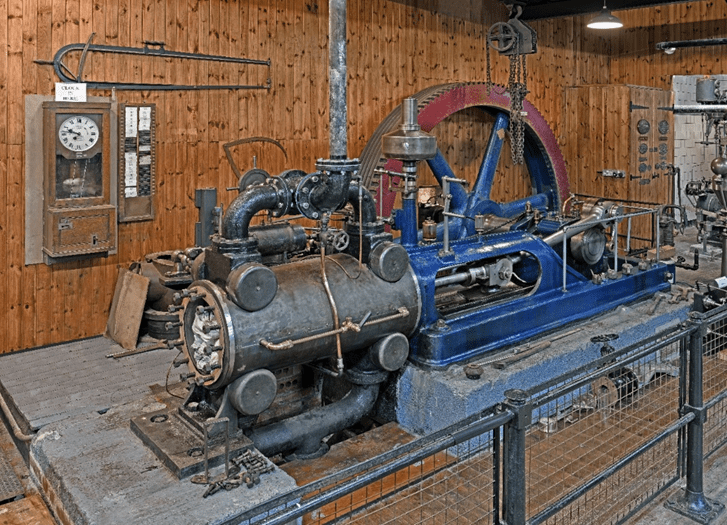
Calderdale Industrial Museum is working to bring life back to its beautiful steam engines and is seeking to raise funds to complete this exciting steam project. These engines include the early beam engine, the vertical steam engine, the Newton Bean and Mitchell horizontal engine, and the Belliss & Morcom twin cylinder steam generator set. Using steam to power these engines again will add a fantastic dimension to the visitor experience at the museum.
The museum has been lucky to have some very generous support from individuals who have donated a considerable amount of money to help fund this, but they are now looking to widen their Appeal, as they still need to raise more money. With the launch of the ‘Full Steam Ahead Appeal’ they hope to raise the final amount of funding to complete the project, which will allow them to refurbish the engines, install a smaller, more efficient boiler and carry out the necessary safety and operation training.
Bringing steam back to the power gallery will be integral to showing how these amazing steam engines drove the development of the Industrial Revolution in this area. Visitors will be able to see how these magnificent workhorses powered the industry of Calderdale, and many could even enjoy specialist experiences and steam days, which will bring enthusiasts from around the country to this vibrant area of West Yorkshire. The introduction of steam to the museum should make a significant addition to the overall visitor experience, further cementing the museum’s place as a major contributor to local heritage and the economy and driving their efforts to reach a wider audience.
Calderdale Industrial Museum
Calderdale Industrial Museum, an Arts Council accredited museum, sits at the heart of the historical quarter of Halifax and makes a considerable contribution to the heritage engagement and economy of this region of West Yorkshire. It tells the story of how the industry of the past grew as a direct consequence of the particular physical landscape and ingenuity of its local people, resulting in the rich heritage and exciting story, relevant to the history of the Industrial Revolution in Great Britain.
Since the local authority had to close the museum due to a shortage of funds in 2000, local enthusiasts and industry specialists have fought hard to save this nationally and regionally significant collection of industrial heritage. From the museum’s re-opening in 2017, this group of enthusiasts has continued to grow and now works hard to bring their combined knowledge and experience to deliver one of our region’s most popular visitor attractions. Sitting next to Halifax’s amazing and unique Piece Hall, the museum is central to telling this story of the town of one hundred trades. The museum is now run for the most part by this unpaid volunteer workforce, with all maintenance and conservation work funded by open day takings. Any special projects require additional funding sourced from a wide range of donors.
It has always been the ambition of these dedicated volunteers to bring life back to as many of the collections machines as possible. Work has been going on in many areas of the museum to show looms, sock knitting machines, and many of the worsted industry machines, in working order.
The Horizontal Newton Bean and Mitchell Engine known as Enid part way through restoration and recommissioning. This is just one of the engines that fill soon be powered by steam. Image copyright Calder Industrial Museum.
On 13 September the Great Grimsby Ice Factory Trust (GGIFT) celebrated the completion of the Peterson’s Project on the Port of Grimsby. First conceived in 2017, the project was developed jointly by GGIFT, Associated British Ports (ABP), and North East Lincolnshire Council (NELC), and was instrumental in Great Grimsby becoming a Heritage Action Zone in 2018. Designed to be a catalyst for the regeneration of the historic dock, the Peterson’s Project has brought back into use two important buildings within the Kasbah Conservation Area.
The Grade II listed Peterson’s Smokehouse on Henderson Street had functioned as a kipper house since the 19th century, when the original building was first erected. By 2017 the building had been out of use for some time, and much of it was inaccessible. It will now have a new life as a fully functioning fish processing and smoking factory, using the unique cold smoking process that can only take place in a traditional smokehouse.
The second building, at 89 Wharncliffe Road, was most recently known as Fred’s Fisheries. Built by the Osborne family of fish merchants – again in the 19th century when the docks were developed following the arrival of the railway – it was in dire need of modernisation. Through the project the stunning architectural features, and the lovely proportions of the rooms have been revealed, and it awaits tenants for the offices and retail spaces that have been re-created.
The project has taken seven years to complete, including feasibility studies, appraisal and design, and has cost over £1.4 million. Thanks to National Lottery players, the majority of the funding was provided by The National Lottery Heritage Fund. Additional grant funding was from the Architectural Heritage Fund (AHF), Historic England (HE) and NELC.
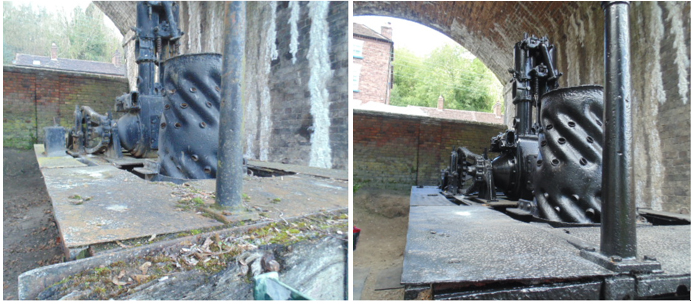
Before (left) and after (right) shots of one of the conserved Sentinel locomotive, Coalbrookdale. Image copyright: Ironbridge Gorge Museum Trust.
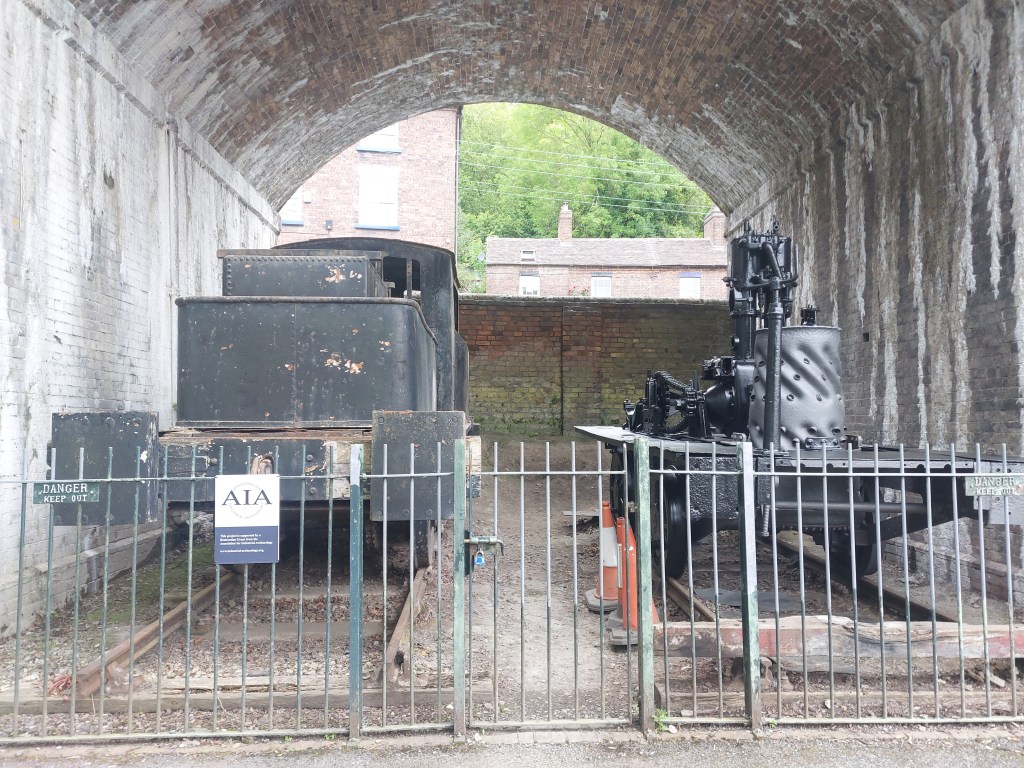
The Ironbridge Gorge Museum Trust (IGMT) is looking for volunteers to help us complete the second phase of their project to conserve two Sentinel locomotives at Coalbrookdale. The two Sentinel Shunting Locomotives, which date from the 1860s, are historically important parts of the Trust’s collection. They were used by the Coalbrookdale Company on their internal railway system, were modernised and converted by the Sentinel Waggon Works Ltd in the 1920s and are now the oldest locomotive conversions by Sentinel that are known to have been preserved.
In 2023 IGMT secured funding from the Association for Industrial Archaeology to carry out work to conserve the engines, whose condition had deteriorated over time due to weather conditions. Work on one of the Sentinel locomotives has already been completed and new volunteers are now needed to complete the second stage of the project.
Requirements:
Volunteers who can commit to a half-day on Fridays between September and December.
The role will require a reasonable amount of physical activity and working outside (though under some cover) in all weather.
No specific qualifications are required but the work will involve wet and dry cleaning; priming bare iron; painting; and if appropriate carrying out some minor repairs.
Volunteers regularly receive questions from members of the public interested in their work and will be asked to take photographs to help record the progress of the project.
This is a great opportunity to learn new skills and meet new people. If you would like to volunteer with us or know someone who you think would like to be involved get in touch with me or with Sharon Sinclair, Volunteer Officer, volunteering@ironbridge.org.uk.
The two Sentinel shunting locomotives at Coalbrookdale, Ironbridge. Image copyright: Dr Michael Nevell.















 Industrial Heritage Networks