South Wales & West England Regional Industrial Archaeology Conference (SWWERIAC) Announced for April 2026

The Worcestershire Industrial Archaeology & Local History Society is hosting the South Wales & West England Regional Industrial Archaeology Conference (SWWERIAC) on Saturday 18th April 2026 at Avoncroft Museum of Historic Buildings, Stoke Heath, Bromsgrove B60 4JR.

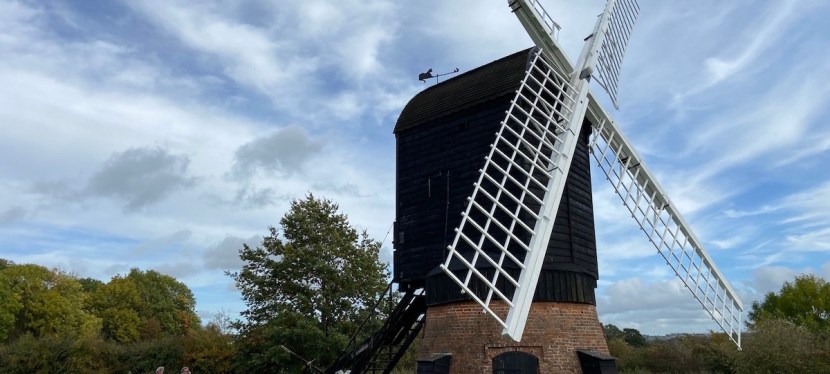
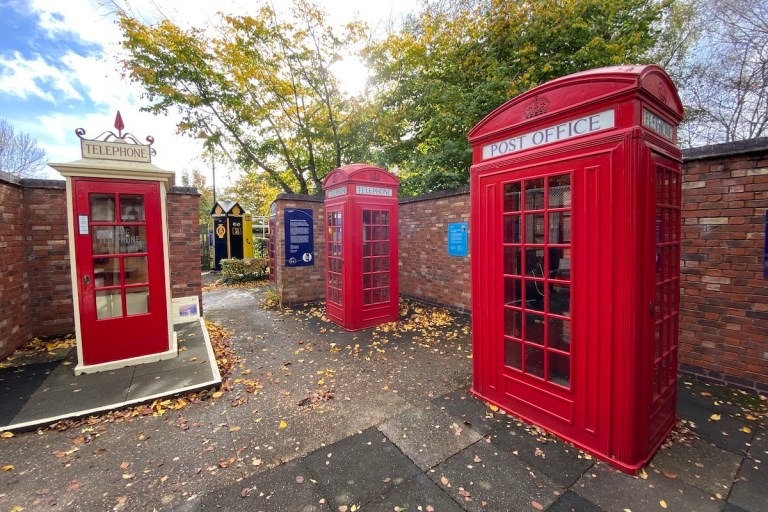
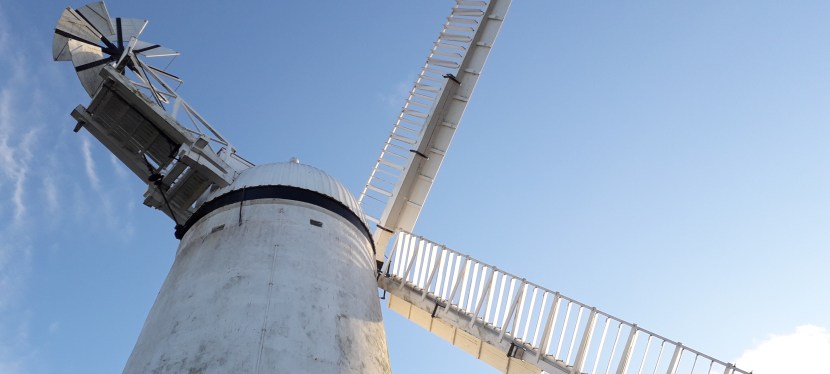
Get set for a day of engaging talks from leading speakers and a chance to explore Avoncroft’s remarkable open-air collection. The museum, home to over 30 rescued and reconstructed historic buildings spanning seven centuries, provides a unique backdrop. Highlights include the UK’s National Collection of Telephone Kiosks, working historic windmill, and a selection of timber-framed, brick, and prefabricated structures including a chain shop, nail workshop, sawmill, and icehouse. This inspiring setting promises a rich blend of learning, discussion, and heritage discovery.

Tickets cost £28 per person and include access to the museum’s entire collection, 30-minute dedicated tours, a buffet lunch including cold meats, new potatoes, crusty bread, and a selection of salads and cheese with unlimited hot and cold soft drinks plus free parking.

Society chairman Dr John Beale said “Avoncroft is home to 30 historic buildings and structures across a 19-acre site. For this reason, we have scheduled a 2-hour lunch break so that delegates can see the museum exhibits either self-guided and/or the dedicated tours of the 19th century windmill and the National Telephone Kiosk Collection. This marks a departure from the traditional arrangement of offsite visits as there is so much to see at Avoncroft.”

Get your tickets by completing an online or Microsoft Word booking form available at
https://wialhs.org.uk/swweriac2026/ or contact conference@wialhs.org.uk

Part of Avoncroft’s National Collection of phone boxes. Image corutesy of Avoncroft Musuem of Historic Buildings.

Places Still Available for South West and Cornwall & Devon Industrial Heritage Network Meetings

There are still free places available for the next two Industrial Heritage Network meetings in November. These meetings are an opportunity to chat in-person with volunteer and professionals from a variety of industrial heritage sites in each region.

To book a place on the South West Industrial Heritage Network meeting, at Crofton Beam Engines, on Friday 7th November foillow this link: https://www.eventbrite.co.uk/e/1827645881029?aff=oddtdtcreator

To booka palce on Cornwall & Devon Industrial Heritage Network meeting, at Coldharbour Mill, on Thursday 6th November follow this link: https://www.eventbrite.co.uk/e/1827645881029?aff=oddtdtcreator

Citizen Canal Heritage Survey Project Calls for Volunteers

The Canal & River Trust (CRT) is appealing for people interested in the history of canals to volunteer to map and record the heritage of Yorkshire’s 250-year-old canals, as part of a national survey. The heritage survey will chart how the canal system has changed over the past 30 years, by updating and augmenting a survey of canals completed in the early 1990s by British Waterways and Historic England (then English Heritage).

Over the course of several weeks earlier this year, CRT ran a pilot of the heritage survey on the Leeds & Liverpool Canal. Teams of volunteers used an app developed specifically to survey a range of heritage assets situated along the canal between Leeds and Liverpool. This work included looking at locks and lock cottages, bridges, aqueducts, tunnels, wharfs, warehouses, and stables. The project is now being rolled out across the 2,000-mile network of canals that span England and Wales, with the Yorkshire survey the latest area to be studied.

Carrying out the volunteer-led survey of the CRT’s network of canals, and the historic setting around them, is expected to take four years. The project is supported by funds raised by players of People’s Postcode Lottery.

More details here: https://canalrivertrust.org.uk/news-and-views/news/discover-the-fascinating-heritage-of-yorkshire-and-north-easts-waterways

Canal warehouses on the Leeds Liverpool Canal at Manchester Road Wharf, Burnley. Image copyright Dr Michael Nevell

Grants for Two Mining Industrial Heritage Sites

Two mining industrial heriatge sites have recently received grants towards conservation and community engagement.

The headstocks at Woodhorn Museum, Ashington, has received extra money from Northumbrian County Council for the continuing conservation work at the industrial site. The £1.4m grant is in addition to earlier funds for the restoration of the site, including nearly £1m from the UK Government’s ‘Heritage at Risk’ support scheme. Further details can be found here: https://www.chroniclelive.co.uk/news/north-east-news/additional-14-million-agreed-save-32416167

The National Coal Mining Museum for England, Wakefield, has received a grant in the first round of the re-imagined Esmée Fairbairn Communities and Collections Fund. £98,561 will be used to celebrate the role of Miners’ Welfare by bringing together heritage, community, health, academic partners, and people living with marginalisation, mental and physical ill-health. This fund supports projects using museum collections to improve inclusion and equitable working with community partners. Further details can be found here: https://www.ncm.org.uk/news/funding-miners-welfare/

The headstocks at Woodhorn Museum. Image courtesy of North East Museums Development Trust.

South East Industrial Heritage Network Meeting Now Booking for 3rd October

The next in-person South East Industrial Heritage Network meeting will be held at the Amberley Museum, West Sussex, on the 3rd October, from 11am to 1pm. This will be followed, after lunch (there is a splendid cafe on site or please bring your own), by a tour of the site (2pm to 3pm). The themes for the 2025-26 IHN meetings are conservation and maintenance.

The Amberley Museum is an open-air industrial heritage museum at Amberley, near Arundel in West Sussex. The museum was founded in 1978 and is owned and operated by Amberley Museum and Heritage Centre, a not-for-profit company and charity, with the support of an active Friends organsiation. The museum occupies a former chalk pit, and includes exhibits relating to quarrying, transport, metal working, and communications. For further details follow this link: https://www.amberleymuseum.co.uk/

To book a free place at the network meeting please follow this link:

All IHN members are very welcome to attend.

Amberley Museum entrance. Image copyright Dr Michael Nevell.

Historic England Publish Report on the Local Listing of Buildings

In 2019, the Ministry of Housing, Communities & Local Government (MHCLG) announced a campaign to develop or revise local heritage lists across England. Historic England’s new overview advocates for local heritage listing as a proactive, locally-led, tool that can support place-shaping and community empowerment, helping to deliver high-quality, unique places to live and work. The new report is intended to support Historic England and Central Government in developing policy and guidance to support Local Planning Authorities (LPAs), and others, in the production and revision of local heritage lists.

Historic England defines a local heritage list as ‘a list or register of assets (primarily but not exclusively historic) which are of importance to a particular place and the community who live and work there. Buildings included on local heritage lists are classified in the planning system as ‘non designated heritage assets’ (NDHAs).’ The concept of such local heritage lists goes back to the 1930s, often as a bottom-up approach to recognising heritage through the local community. They have recieved greater prominence in the last decade as one of the ways in which NDHAs can be formally identified, so that their significance can be taken into account in planning applications affecting the asset, or its setting.

With thousands of surviving industrial buildings across England not formally protected through listed building legislation, local listing provides an effective way of recognising these buildings’ importance to their local communities.

Download the report here: https://historicengland.org.uk/research/results/reports/38-2025?local

How to Contribute to Grace’s Guide on British Industrial and Engineering History

Grace’s Guide Ltd is a charity (No.1154342) whose aim is to advance the education of the history of Industry and Engineering in the UK. Their website contains 169,231 pages and 247,697 images on early companies, their products, and the people who designed and built them. Much of this material is free to access.

The charity is keen to hear from potential contributors able to help with the building of this educational resource by adding something – big or small – to the information already online. You can suggest new information about anything they already have online, or suggest something that might need editing. To do this please email the Editor here: Editor@gracesguide.co.uk

Details about the website and the charity can be found here: https://www.gracesguide.co.uk/Contact_Us

Festival of Archaeology 2025

The Festival of Archaeology is back this summer (19th July to the 3rd August 2025), and the Council for British Archaeology (CBA) want you to be part of it! Whether you’re a local society, heritage organisation, youth group, community project, or passionate individual, your event can help open up archaeology to new audiences. This year’s Festival theme is Archaeology and Wellbeing.

Archaeology is a wonderful way to make a positive impact on people’s well-being. During this year’s Festival, CBA will be incorporating the five ways to wellbeing into the events and activities, creating opportunities for people to give, be active, learn, take notice and connect. The Festival of Archaeology brings history to life, inspiring curiosity, learning, and engagement with the past. Each year, CBA connect thousands of people across the UK with archaeology through events, activities, and digital content.

Access to the organiser materials now requires an individual to log in to have access and permission to use the Festival of Archaeology branding materials and ulitise the amazing FREE guidance and training CBA provide to help you with your events. To submit your event follow this link:

https://www.archaeologyuk.org/festival/organiser-area.html

Discover some of the 2025 Festival events already planned here: https://www.archaeologyuk.org/festival/festival-event-listing.html

Summer Solstice 2025 at Bennerley Viaduct

Join the Friends of Bennerley Viaduct to see the sun rise on the longest day of the year, 21st June, on the Iron Griant and mark the arrival of astronomical summer when the northern hemisphere tilts towards the sun. If you thought you were an early bird for the dawn chorus, try this 03:00 start!

The event is quickly filling up, so Hadley Trueman urges you to book your place. “Although our events are always free, please consider making a suggested donation of £3 per person,” says Hadley.  “Due to the early start time of this event we ask you to find your own way up onto the viaduct from the Cotmanhay/Ilkeston, Derbyshire side. The FoBV team will be there to greet you.”

To find out more, or to book your place, follow the link:

If eventbrite says SOLD OUT, we can often book you in by email, as we sometimes have no-shows or cancellations: community@bennerleyviaduct.org.uk

Festival of Archaeology Summer 2025 Officially Launched by CBA

The Festival of Archaeology, run by the Council for British Archaeology (CBA), is back for summer 2025. This year’s theme, ‘Archaeology and Wellbeing’, celebrates the ways archaeology can inspire, connect, and enrich our lives. Whether it’s exploring historic landscapes, taking part in hands-on activities, or engaging in mindful moments with the past, there’s something for everyone.

Running from the 19 July to the 3 August, the CBA has announced some key festival events, including the opening in Northern Ireland at Divis and the Black Mountain, and the festival finale in Bradford, the UK City of Culture for 2025. During this year’s Festival, the CBA will be incorporating the five ways to wellbeing into the events and activities, creating opportunities for people to give, be active, learn, take notice, and connect. 

In 2024 there were dozens of industrial archaeology events across the country, so if you are an Industrial Heritage site or group lookign to get /involved as an organiser now’s the time to submit your event. Or, if you’re looking for some great events this July, you can start exploring what’s coming up now. In both cases follow this link to the Festival website for how to get involved: https://www.archaeologyuk.org/festival.html