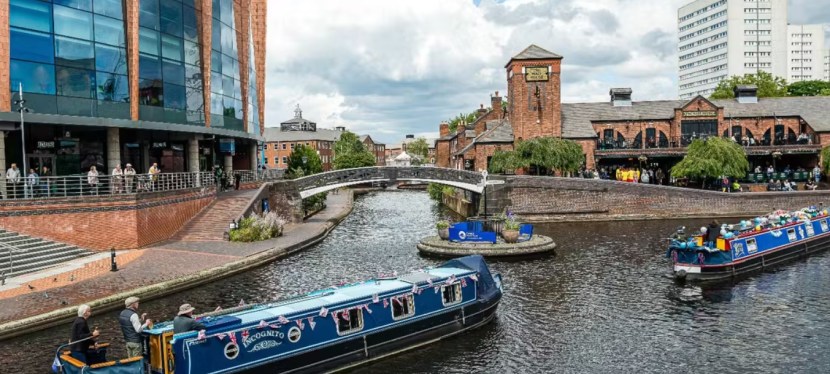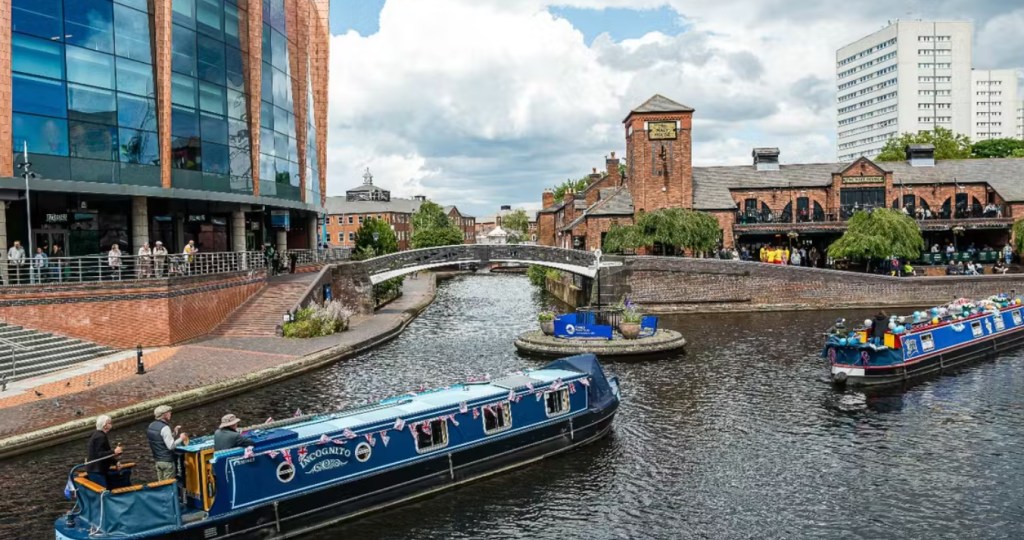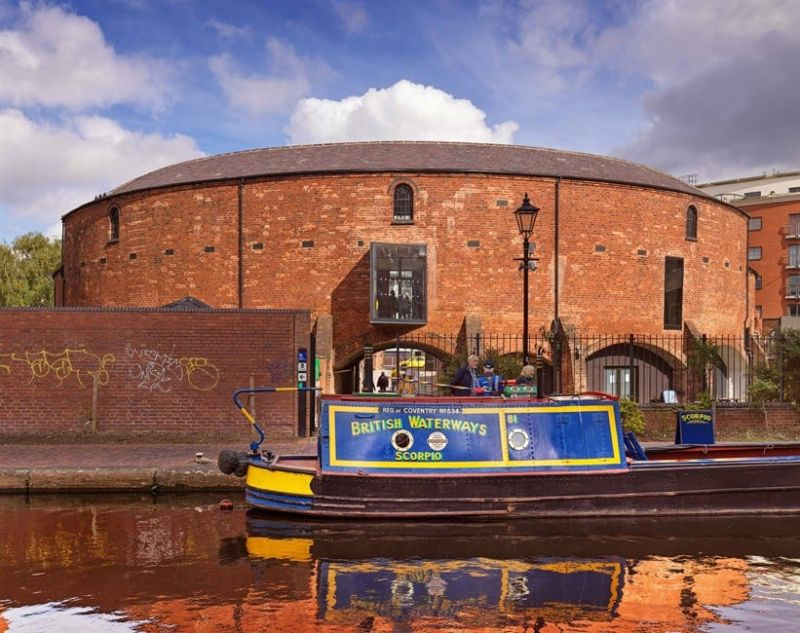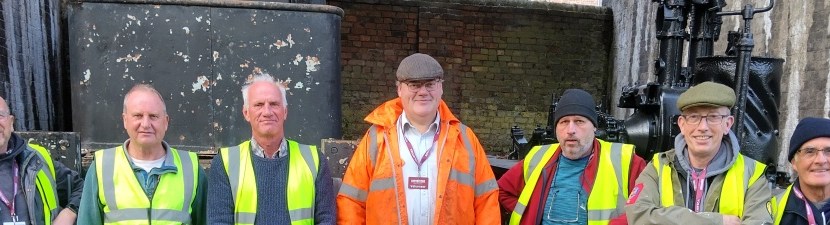
Welcome to the Industrial Heritage Networks and Support website. This site is maintained and updated by the Ironbridge Gorge Museum Trust who run the project and the networks. We aim to support industrial heritage in England through networking, information exchange, guidance, and training. Please explore the website and please contribute! For more information you can … Read more Welcome to the IHNs website!
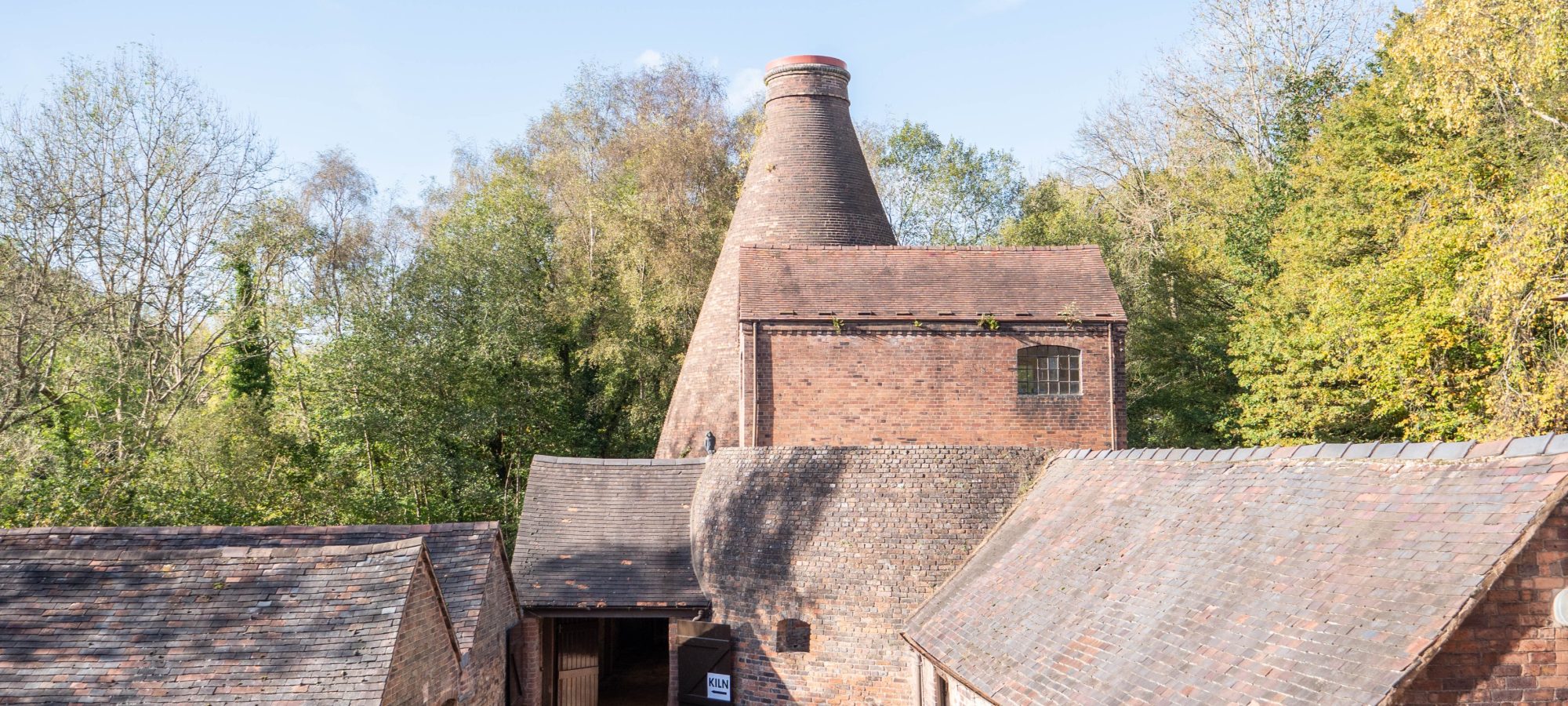
Middleport Pottery, Stoke-0n-Trent, has launched an online appeal to raise £1600 to help with maintenance work on its iconic Bottle Oven. In particular the charity Re-Form Heritage, who own and run the site, need to remove foliage and to ensure the structure remains safe.
Middleport Pottery was established in 1888-89 by Burgess & Leigh Ltd, as a ‘model pottery’ for the period. The Grade II* Bottle Kiln was first fired in the late 19th century and continued working until the 1960s. During the kiln’s working life heat from the regular firing destroyed any plant seeds attaching themselves to the brickwork and in the mortar joints, which protected it from vegetation growth; with no firing, it lost its mechanism to defend its structure.
SPAB is running an online mills day event on Saturday March 2nd providing an insight into problems and how they have been solved both in windmills and watermills.
All SPAB speakers are experts in their own field and have come across problems both before and during work on a mill. Using a variety of mill case studies (including Burseldon Windmill, Kibworth Harcourt Post Mill, and Wicken Smock Windmill) to illustrate how they overcame the problems. The speakers will be millwrights both volunteer and professional, millwright consultants, also a structural engineer, and Chairman of the Hampshire Buildings Preservation Trust.
SPAB hopes that you will be part of the day starting at 10am, with 40-minute talks with time for Q & A’s. There will be a break during the morning, then lunch, and another break in the afternoon before the summing up of the day with any more questions.
Please note that the last day for booking this event will be Friday 1st March 4pm. A recording of the talks will be available after the event for all bookings that were registered before 2nd March 2024. Price: £20 Early Bird until Wednesday 21 February 2024, then £25. For further details follow this link:
Sunderland City Council is seeking to appoint a design team for a £2.2 million upgrade of Washington’s F-Pit Museum. Following a consultation on regeneration plans for Washington F-Pit Museum and Albany Park in 2022, the Council has now developed a draft outline Masterplan for improvements to the Park and a concept sketch proposals for a new Heritage Centre and Café to enhance the heritage offer and visitor appeal of this unique site for residents and visitors.
The successful architect-led multi-disciplinary design team will oversee the details of the upgrade. Due for completion in 2027, the project aims to boost visitor numbers to the museum and to secure a ‘viable and sustainable long-term future’ for the site, drawing new visitors to Washington and Sunderland. The museum is currently on Historic England’s Heritage At Risk Register and only receives around 1,000 visitors a year
The F-Pit Engine House and attached headgear are a Scheduled Ancient Monument, and are the only surviving structures of New Washington Colliery. The Engine House was presented by the National Coal Board to the people of Washington as a monument, following its closure in 1968, and it has operated as a Museum since 1976. Albany Park was formed from land reclaimed from the former colliery.
Historic England released its annual Heritage at Risk Register in November 2023, marking the 25th anniversary of publicly recording neglected or imperilled heritage sites. In total, there are 4,871 entries on the 2023 register, 44 fewer than in 2022. However, heritage sites continue to be added to the Register every year. In 2023 there were 159 new entries, made up of 44 buildings and structures, 53 places of worship, 55 archaeology entries, 3 parks and gardens and 4 conservation areas.
Hunslet Mill, Leeds. Image courtesy of Historic England
Amongst those heritage sites conserved and so removed from the list are 13 industrial heritage sites. These are:
Bourn Mill, Caxton end, Bourn, Cambridgeshire, LB I, 1162375
Electricity Substation at junction with Sunnyside Passage, Sunnyside SW19, LB II*, 1358028
Lambeth uncovered coal store including tower and attached tunnels, Portsmouth Road, Surbiton, Greater London, LB II*, 1031864
Remains of iron works and gun foundry at North Park Furnace, Linchmere / Fernhurst, Chichester, West Sussex, SAM, 1021403
Surrey Iron Railway embankment, approximately 130m south west of Lion Green Road, Coulsdon, SAM, 1021441
Upminster Windmill, St Mary’s Lane, Upminster, LB II*, 1079878
Westlink House, Great West Road, Hounslow, LB II*, 1255218
Ditherington Flax Mill: Spinning Mill, Shrewsbury, LB I, 1270576
Tom Hassall (OPT Vice-President), Andy Savage, Debbie Dance, and Baron Hendy of Richmond Hill (Chair of Network Rail) at the opening ceremony for the newly restored Rewley Road Swing Bridge, in September. Image courtesy of Oxford Preservation Trust.
The Oxford Preservation Trust is celebrating receiving a National Railway Trust Award for its restoration of the Rewley Road Swing Bridge. A plaque commemorating the work of many individuals in saving and restoring the bridge was unveiled on 7 September 2023.
Debbie Dance, Director of OPT was joined by Andy Savage and Tim Hedley Jones from the Railway Heritage Trust, and representatives of Network Rail and Historic England together with the judges, funders, and the specialist experts all of whom made a significant contribution to the project. And so good was their work that OPT was awarded the top national prize for railway heritage conservation. Later in the day Debbie was also joined by the Baron Hendy of Richmond Hill, Chair of Network Rail taking to the water to see the mechanism from below.
The London Midland and Scottish Railway Swing Bridge is a disused railway bridge over Oxford’s Sheepwash Channel and is one of only two moving bridges on the Thames – the other being Tower Bridge in London. The bridge was designed by engineer Robert Stephenson and built in 1850. A Scheduled Monument, the bridge holds a unique place in the history of England’s first railways, narrow versus wide gauge, and the battle between giants Brunel and Stephenson.
By 1951, it was no longer in use and closed to passenger traffic, and to goods by 1984, which led to its suffering from severe decay of the plating and paintwork which were protecting its surviving parts, including the original mechanism. The bridge had fallen into disrepair and was added to the national Heritage at Risk Register in 2013 where it remained for nearly ten years, until it was removed last year, as the restoration progressed.
“We are so delighted to have been recognised in this way and cannot thank the team enough for their part. The fact that it was recognised at a national level shows the importance of the structure which could have been so easily lost with its significance somewhat lost beneath its rusty exterior” This winter we will make the final touches with interpretation boards to go up and the sowing of a wildflower meadow to increase biodiversity.” Debbie Dance, OPT Director.
The Britannia Sailing Trust are thrilled to announce a recent generous donation from the Association for Industrial Archaeology of £6,600. This is the second time the AIA have funded restoration work on Britannia. The first time was in fact the first grant the Trust ever received and helped to kick-start the monumental restoration project.
Britannia Sailing Trust cares for the last remaining Class 1 East Coast Smack. Britannia was built in 1914 in Kings Lynn, Norfolk, by a well-known and respected family of shipwrights, the Worfolk brothers. She is a Gaff Cutter, 58 feet long on the deck, with a 13 foot six inch beam and drawing eight feet. She has a beautiful hollow bow, making her a very fast vessel and giving her beautiful lines. Having discovered her in a state of severe disrepair, the Britannia Sailing Trust was formed in 2014 and has succeeded in saving her from destruction.
Vicki Samuels of the Trust said that ‘We are so grateful for the Association’s continued support. The money will go towards the completion of the restoration, helping us get Britannia back in the water on the 24th September this year!’
Part of the old ‘Nagger Line’ which runs across Lime Pit Lane, in Stanley, Yorkshire, is to to dug up over road safety fears. The narrowgauge track was part of a network of tramways dating back to the late 1700s that were used to transport coal from the many mines in the area. Matthew Morley, Wakefield Council’s cabinet member for highways, said the line is to be removed as its deteriorating condition is creating a traffic hazard. Residents have expressed concerns on social media over the loss of the much-loved piece of local history.
Councillor Morley added that it is hoped the some of the line can still be retained. The council had the lines independently assessed by civil engineers after receiving complaints of damage to passing cars. A report says the lines are twisted and badly damaged, causing them to move and lift parts of the road.
The recording of Historic England’s recent industrial heritage webinar on the Elsecar Heritage Action Zone is now available to view on-line. It provides an overview of the project, which ran from 2017 to 2020, including the research programme, protection and management strategies, community outreach and engagement, and how Barnsley Museums are building on this legacy with an ambitious programme and vision for the village.
Elsecar is an industrial estate village of the later 18th and 19th century near Barnsley. It retains important buildings relating to the coal and iron industries from this period, as well as extensive workers’ housing. The first major colliery, Elsecar Old, was sunk in 1750 and taken over by the Marquis of Rockingham in 1752. The small village next door was then transformed from the 1790s at the direction of the 4th Earl of Fitzwilliam of Wentworth Woodhouse, with the sinking of its first deep colliery (which retains its original Newcomen pumping engine in situ), the cutting of a canal, the building of two ironworks and associated housing designed by architect John Carr of York. Elsecar is thus one of the first model industrial villages in the UK.
The deadline for the Association for Industrial Archaeology’s conservation and research grant schemes, 31st March 2020, is fast approaching.
Conservation Grants
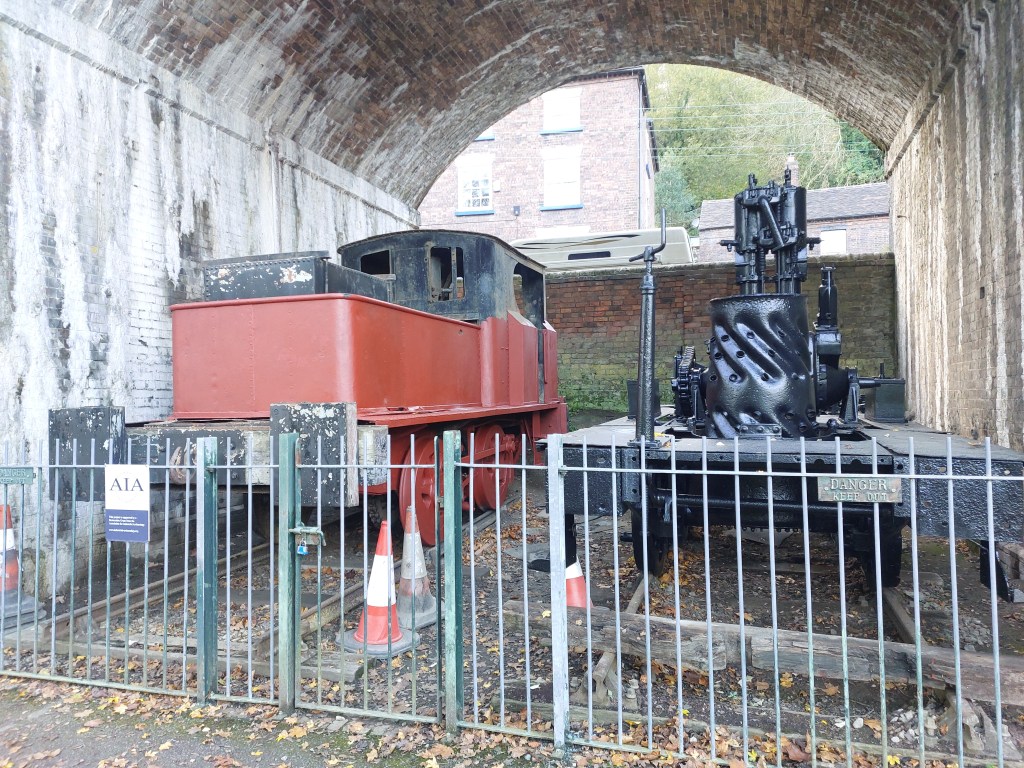
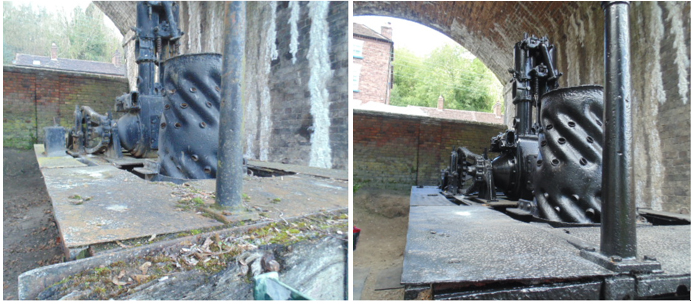
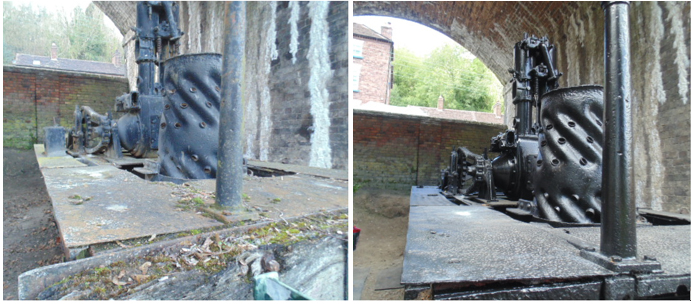
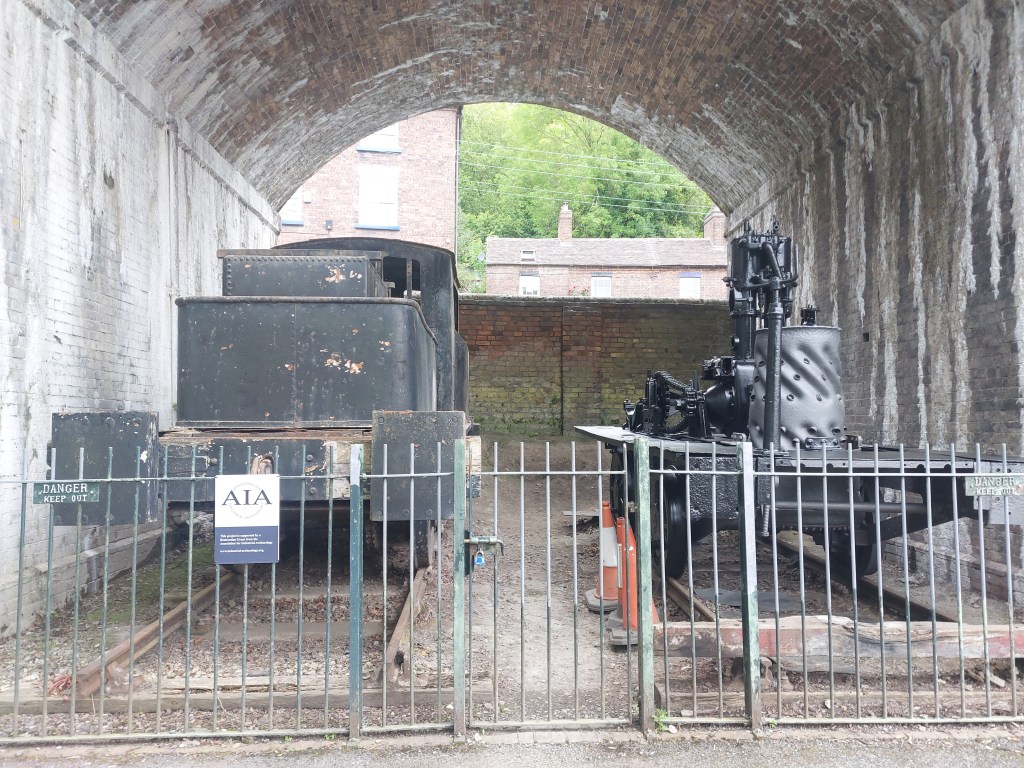
The Lion Salt Works salt wagon, before conservation with monies for the AIA in 2014.
Thanks to a series of donations the Association for Industrial archaeology can make available Restoration Grants of up to £20,000 for a range of historic and industrial archaeology purposes.
The first awards were made in 2009, and they have since been able to allocate nearly three quarters of a million pounds. Details of some of those projects can be found in the link below. From 2020 onwards the available Grants pot is divided into two categories:
Major projects where the maximum grant that can be awarded is £20,000. The grant from the AIA must be a significant part of the total project cost, not just a small contribution to a very large project, so that the AIA grant has real impact. The AIA would not normally fund projects where our grant represents less than 20% of the total project costs
Small projects which are allocated at least 20% of the available funds. The grant limit is £7,500, for which the total cost of the project, excluding the value of volunteer labour, must not exceed £10,000.
Download Criteria and How to Apply for a Restoration Grant can be found here:
The research grant scheme underpins the study aim of the Association which is to promote the study, preservation and presentation of Britain’s industrial archaeology and heritage. It does that by:
Encouraging individual researchers to study industrial archaeology subjects
Encouraging the development of industrial archaeology skills within commercial units, the main repository of professional skills in the subject
Supporting local industrial archaeology and industrial heritage societies in exploring and understanding their local areas
Helping to develop the next generation of industrial archaeologists
The total fund available in any single year is £1,500 and multiple grants may be given up to this maximum in a single year. The AIA may consider part-funding a wider grant application or project as long as the AIA grant is a significant part of the larger application / project. Follow the link below for an application form: