Energy Resilience Fund 2025

The Energy Resilience Fund (ERF) provides a blended funding package of loan (60%) and grant (40%) to bolster the energy resilience of eligible charities and social enterprises in England.   The Fund is the successor to the pilot Energy Resilience Fund managed by Key Fund and its primary purpose is to enable the supply of renewable energy to an organisation’s own building (s). Many industrial heritage sites may find that they qualify and are suitable for such a fund.

The Fund is delivered by a partnership made up of Social Investment BusinessBig Issue InvestCharity BankCo-operative and Community Finance, Groundwork UK,Key FundResonance LtdThe Architectural Heritage Fund, and The Ubele Initiative. 

Applicants must have fewer than 250 employees, £35m assets, or £40m turnover, but a turnover of more than £100,000, and be based primarily in England. For further details follow this link:

Cheddleton Flint Mill to Host ‘Flint Garretaw: Music at the Mill’ Fundraising Event

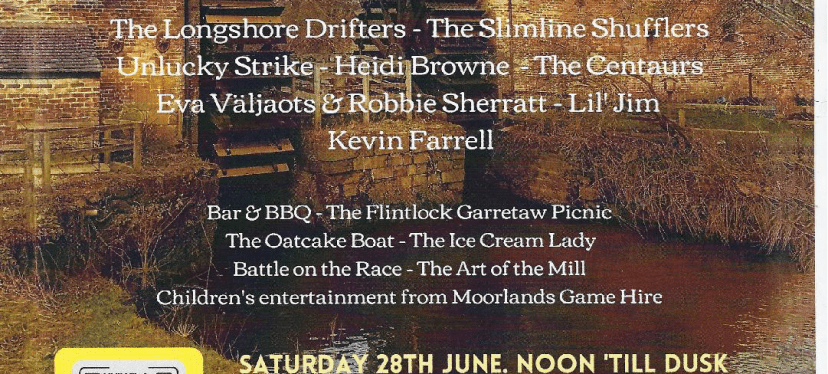
On the 28th June 2025 the Cheddleton Flint Mill Industrial Heritage Trust will be hosting a live music festival at the listed 18th century bone mill. This is a festival fundraiser to mark the centenary of the Garretaw carnival on the Caldon Canal in 1925, hence the ‘Flint Garretaw’ naming.

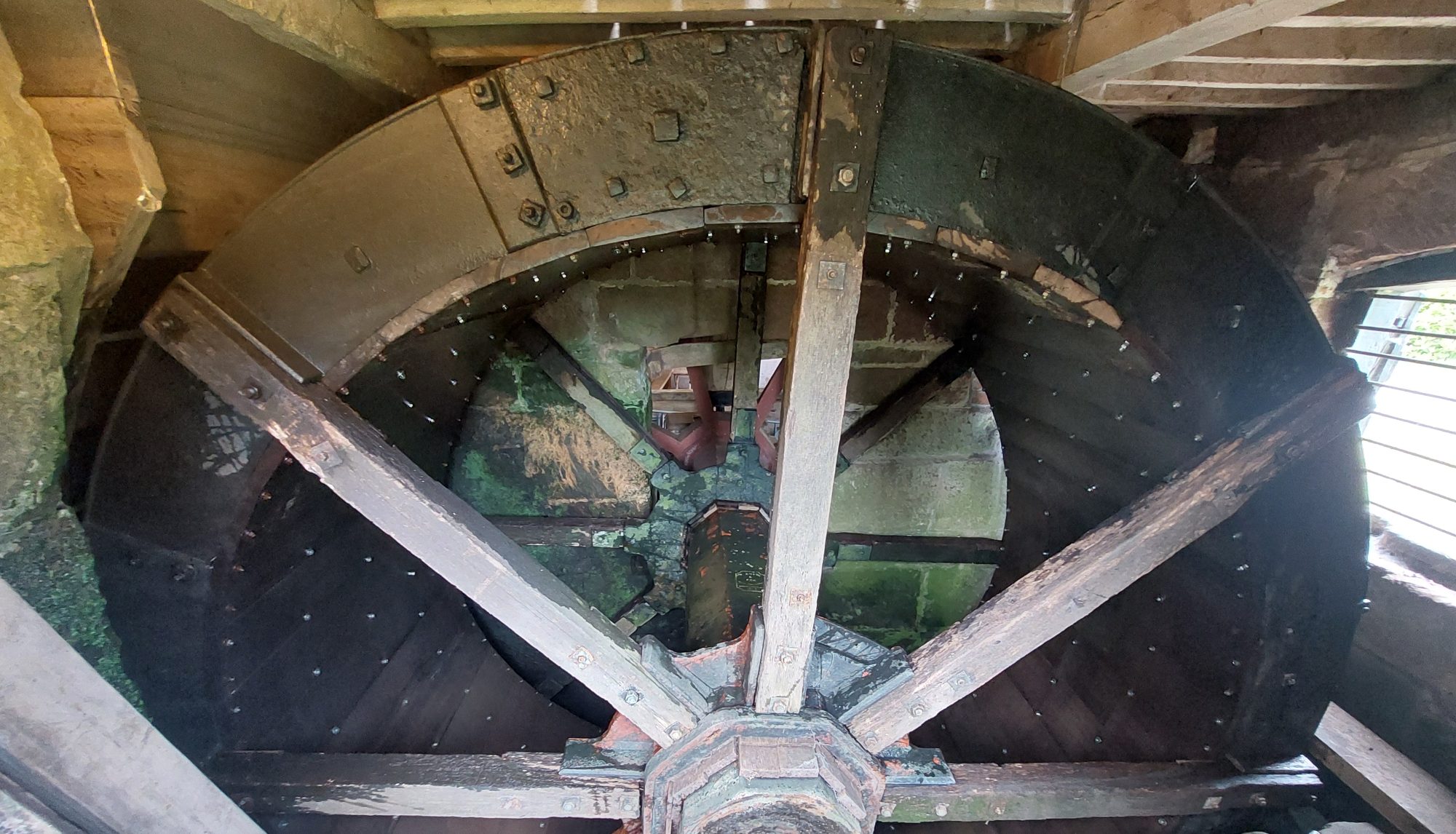
The festival village will be situated on the Flint Mill car park between the river and the canal with a specially built stage utilising the Mill as a uniquely lit backdrop to an afternoon and evening of music and various activities with both water wheels turning. All proceeds from this event go to the charity Cheddleton Flint Mill Industrial Heritage Trust. (Registered Charity No: 254196)

Book your place via any of the following:

Online: https://wegottickets.com/event/654925

Or in person at Cheddleton Flint Mill (open Mondays & Wednesdays).

All enquiries: flintgarretaw@gmail.com

Cheddleton Flint Mill is a fine example of a water mill that ground flint for the local Staffordshire pottery industry. The site features two listed water mills, a small museum, a period cottage, the canal, and many other exhibits. The site is open to the public and is run by The Cheddleton Flint Mill Industrial Heritage Trust which was formed in 1967.

Saving Basuto: Canal & River Trust Launch Crowdfunding Appeal to Save Historic Clyde Puffer

The Canal & River Trust (CRT) have launched a Crowdfunding Appeal for an urgent conservation project to save the Clyde Puffer Basuto, one of the UK’s most unique and historically important vessels.

Built in 1902, Basuto played a vital role in industrial Britain transporting iron across the country, before then coaling naval vessels during World War I, and supporting wartime efforts in World War II. With a rich and varied history, she has been a working vessel, a coal barge, and a steam-powered cargo ship. She remains one of the oldest vessels of her kind still afloat today, and is recognised as an important vessel on the National Historic Ships’ Historic Fleet Register, alongside esteemed vessels like the Cutty Sark and HMS Victory.

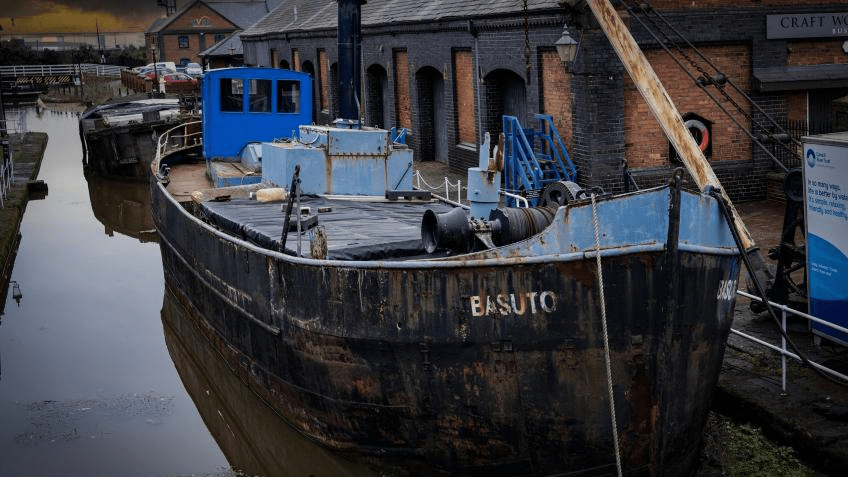
However, time and the elements have taken a devastating toll on Basuto. Currently sitting in the lower basin at the National Waterways Museum in Ellesmere Port, this iconic vessel is sinking and must be continuously pumped to stay afloat. Due to her construction Basuto cannot be repaired while in the water, and without immediate action she risks sinking completely, which would further damage her structure and threaten the water quality of the surrounding area. Having secured generous initial funding from the National Heritage Memorial Fund to undertake this conservation effort, CRT need your help to secure the remaining funding and to raise awareness of this historic conservation effort.

To make a donation to help cover the final costs of the conservation works follow this link: Saving Basuto – a Charities crowdfunding project in Ellesmere Port by Canal & River Trust

The Basuto at the National Waterways Museum, Ellesmere Port. Image courtesy of CRT.

National Trust in Talks to Run Heartlands Industrial Heritage Site

The National Trust, Cornwall Rural Community Charity, and Cornwall Voluntary Sector Forum are in discussions with Cornwall Council over the future of the Heartlands mining heritage site at Pool in Cornwall.

The site opened in 2012 after more than £20m in lottery funding was used to regenerate the derelict mining area and retsore the listed mining pumping engine house and surrounding buildings as a visitor attraction with retail units. It was run by the Heartlands Trust, and leased from Cornwall Council, before it ran into financial difficulty, closing in January 2024. The Trust was wound up and the Council has took over the maintenance of the site, and has been seeking a partner to lease the entire site from it.

The National Trust said: “The National Trust, with partners, Cornwall Rural Community Charity (CRCC) and Cornwall Voluntary Sector Forum (VSF) are in discussions with Cornwall Council to look at how a sustainable future could be secured for Heartlands, an important cultural heritage and community site in Cornwall.”

Further details here: https://www.falmouthpacket.co.uk/news/25018765.national-trust-talks-heartlands-cornwall-lease/

https://www.bbc.co.uk/news/articles/c8e79608rg1o

Seven Industrial Museums Share £7.25m as Part of £270m Package of Support for Museums and Heritage Venues

Land of Iron, North Yorkshire. Image copyright Dr Michael Nevell

Museums, arts venues, libraries, and heritage attractions in urgent need of financial are to recieve significant Government funding. The ‘Arts Everywhere Fund’ totals £270m, and is to be shared between organisations the UK Government deems in most urgent need of financial support. It consists of both new and renewed funds for the sector.

As part of this package of support, five Industrial Heritage museums and sites will share grants from the 5th round of MEND support worth £7,253,849. These sites are:

  • Bletchley Park – £2,451,350
  • Land of Iron – £655,907
  • London Museum of Water & Steam – £2,626,277
  • Queen Street Mill – £813,115
  • Wheal Martyn Clay Works – £707,200

The £270m package of support will be targeted at organisations in urgent need of financial support to keep them up and running, carry out vital infrastructure work, and improve long term financial resilience. The support includes: 

  • A fifth round of the Museum Estate and Development (MEND) Fund worth £25 million
  • A new £20 million Museum Renewal Fund offering much-needed support to 29 civic museums  
  • An additional £120 million to continue the Public Bodies Infrastructure Fund
  • An additional £15 million for Heritage at Risk through Historic England 
  • A new £4.85 million Heritage Revival Fund
  • A 5% increase to national museums and galleries budgets  
  • Confirmation that DCMS will be providing £3.2 million in funding through the Museums and Schools Programme, the Heritage Schools Programme, the Art & Design National Saturday Club and the BFI Film Academy. 

The Association for Independent Museums (AIM) Director Lisa Ollerhead said, “We very much welcome this significant investment. It is fantastic news for the sector, not least given the pressure the public purse is under.  It also underlines the important role museums and heritage organisations play in strengthening our communities, boosting our economy and providing strong foundations for our creative industries.” 

The full announcement can be found here: https://www.gov.uk/government/news/major-investment-to-boost-growth-and-cement-britains-place-as-cultural-powerhouse

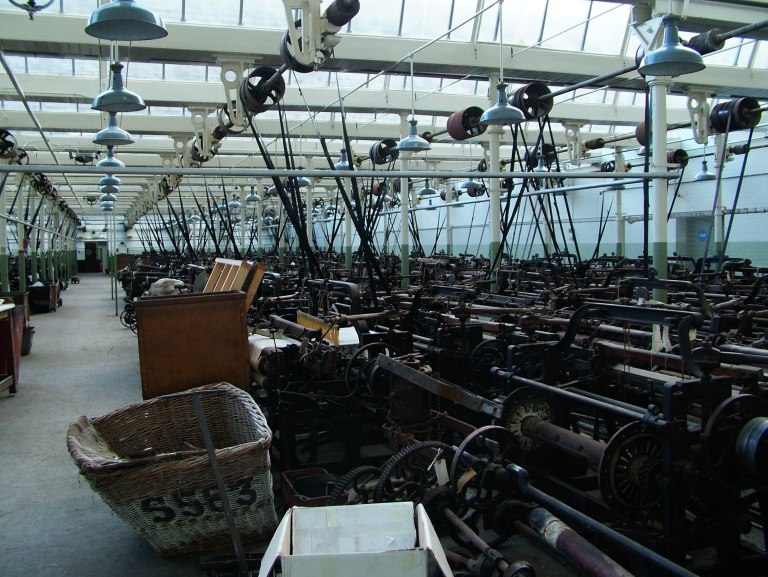
The weaving shed at Queen Street Mill, Burnley, Lancashire. Image copyrighht Dr Michael Nevell.

The Balkerne Water Tower, ‘Jumbo’, Recieves £8m NLHF Grant

North Essex Heritage (NEH), which has a 150 year lease on the Balkerne Water Tower, Colchester’s last intact listed water tower, has recieved an £8m grant from the National Lottery Heritage Fund. Affectionately known ‘Jumbo’, the money will help conservere the water tower and open it up to the public as a heritage attraction. The work to secure the future of the water tower will start in spring 2025 and be completed in mid 2027, when Jumbo will be open to the public for the first time in its 143 year history.

The grant will be used to make the 40m (131ft) tower fully accessible to the public for the first time as a heritage and events space. Simon Hall, chair of North Essex Heritage, the site’s leaseholders, said “This breathtaking support from the National Lottery Heritage Fund is a game-changer for our project and our city.”

The 131ft tall Grade II* Listed tower was originally constructed using 1.2m locally produced bricks in 1883. It could hold up to 1,000 tonnes of water when it was in use. It was used for its original purpose until 1984 and has been empty ever since.

Further details here: https://www.savejumbo.org.uk/

The Balkerne Water Tower, known as ‘Jumbo’. Image courtesy of North Essex Heritage

Dean Heritage Centre & Cambridge Museum of Technology Recieve NHLF Grants

The National Lottery Heritage Fund has granted £164,000 for the Dean Heritage Centre’s “Investing in the Past, Future, and Present” project, and a grant of £99,932 to the Cambridge Museum of Technology for their ‘Full Steam Ahead’ project.

Horizontal stam engine, Cambridge Museum of Technology. Copyright: Dr Michael Nevell

Cambridge Museum of Tehcnology’s grant will fund the ‘Full Steam Ahead’ project. This will see two new heritage roles recruited to expand the Museum’s capacity for both general opening, and for increased education and community outreach work. The funding will also re-invigorate existing space in the Engineer’s House to be used as a space for community hires. Building on existing partnerships within the local Abbey community, the Museum will offer more opportunities for engaging with industrial heritage and their collections, through events and workshops. The Museum will be able to expand its schools programme, reaching more young people and engaging with teachers to form lasting links.

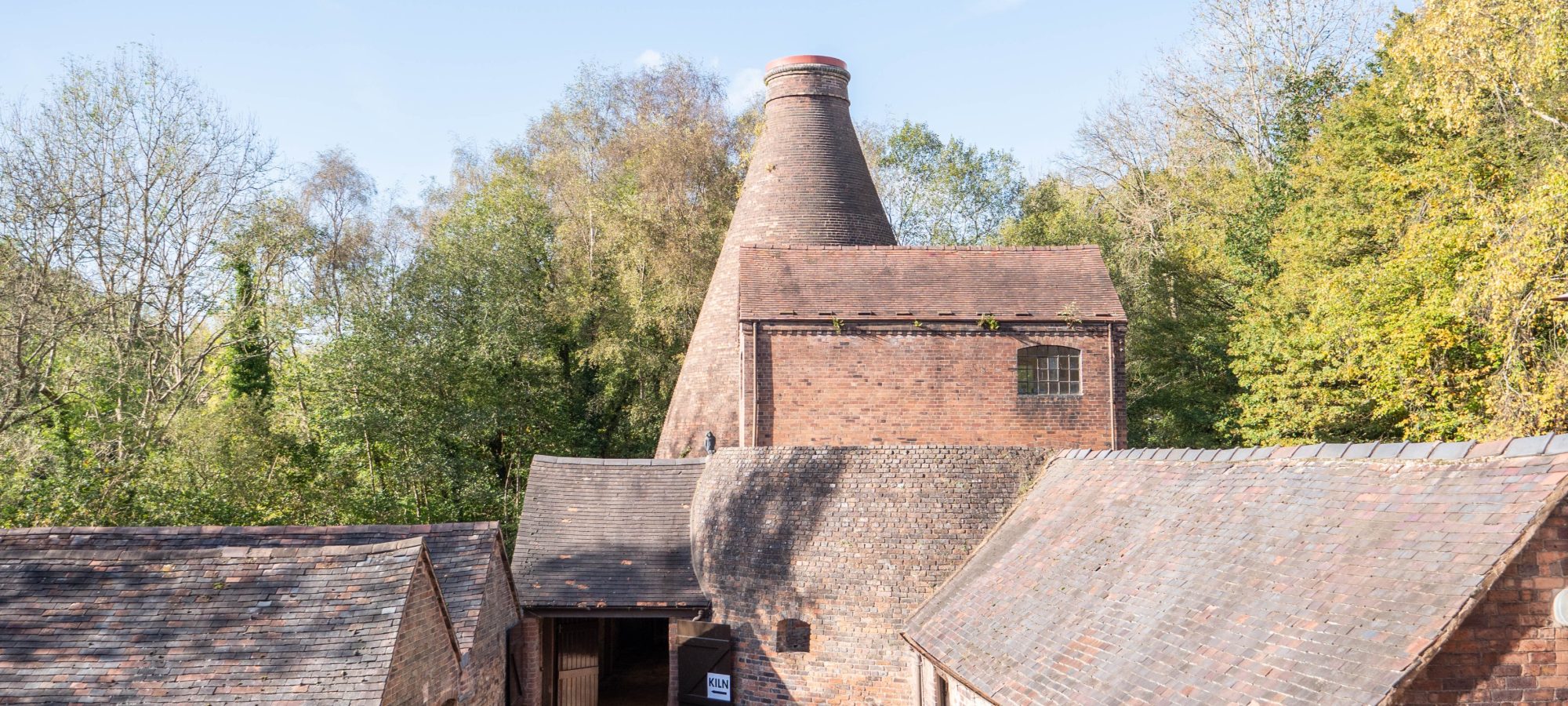
Dean Heritage Centre. Copyright: Dr Michael Nevell

The Dean Heritage Centre, which reflects the history of the Forest of Dean, is based in a listed cornmill and will use its grant for the “Investing in the Past, Future, and Present” project, which aims to “transform the museum”. Volunteers, local groups and schools will be able to take part in the project through “citizen science” activities, including sampling water that runs through the site. “We want to have new galleries, develop the site, and actually make it a viable place for the future,” Mark George, centre manager, said.

Further details about the Dean Heritage Centre here: https://www.deanheritagecentre.org/

Further details abou the Cambridge Msuem fo Technology’s plans can be found here: https://www.museumoftechnology.com/full-steam-ahead

Small Grants Available in 2025 for Industrial Heritage Museums & Sites

The dealines for several grant streams suitable for Industrial Heritage museums and sites occur in early 2025. To catch up with what is available for industrial heritage sites and museums explore the following websites.

Foyle Foundation Small Grants The Small Grants Scheme is provided by the Foyle Foundation to support smaller, grass-roots, and local charities in the UK with projects that have the potential to make a significant difference to their work. Grants range from £2k to £10k and the closing date for applications is 31 January. Find outr mor eby followign this link: https://foylefoundation.org.uk/how-to-apply/small-grants-scheme-guidelines/

The Heritage Alliance, whilst not a funding body in itself, co-manages the Heritage Funding Directory  with the Architectural Heritage Fund. This free resource for the sector includes a directory listing funding sources for heritage projects across the UK (and internationally), and includes some helpful guidance on fundraising.  It is regularly updated, so its worth visiting regularly.

Finally, the Association for Industrial Archaeology runs several annual grant and award schemes specifically for industrial archaeology and heritage, with closing dates at the end of January and the end of March. Follow this link for further details: https://industrial-archaeology.org/aia-awards/

Online Petition Started to Save Museum of Cannock Chase

The news that Cannock Chase Council is proposing the closure of the Museum of Cannock Chase in April 2025, as part of proposed budgets cuts for 2025/2026, has led to the establishment of an online petition against the closure.

The Council is holding a public consultation on the closure of the museum, and the council’s Prince of Wales theatre, which runs from the 29 November 2024 to the 2nd January 2025. The council released a report in November regarding the closure of the msuem and theatre which estimated that closing the two cultural venues would save £350k per annum. This report can be download by following this link (see pages 179 – 187):
https://www.cannockchasedc.gov.uk/council/meetings/agendas-reports-minutes/cabinet/2024-11-28

The Museum of Cannock Chase first opened in 1989 on the site of the former Valley Pit, a training pit for young coal miners. It covers the history of the Cannock Chase area across four galleries and also hosts a number of temporary exhibitions throughout the year. Although council-owned, it is operated by the charity Inspiring Healthy Lifestyles (IHL), who who also run the theatre, with a contract until 2027. Vistor numbers to the free musuem, before COVID, reached 46,500 in 2018/19. The number of visitors since the pandemic initially fell to 10,500 in 2021/22, but partially recovered to 21,000 in 2023/24.

The online petition notes that: ‘The museum’s collections tells over 300 years of history of the district and wider area and have become cherished resources. They have collected and safeguarded not only our industrial history but our social history, presenting and preserving the stories of people past and present – of those people who worked to create and shape our communities, and of the people who continue to do so. This entire collection is now at risk of being lost.’

The petition can be found here: https://www.change.org/p/save-the-museum-of-cannock-chase-protect-our-mining-heritage

AIA Restoration, Research, & Awards Grants for 2025

Applications are now open for the Association for Industrial Archaeology’s 2025 round of restoration, research, and other awards (including community, dissertaton, publication, and travel bursary). The deadline for most of these awards is the 31st Janaury 2025, although the deadline for the Restoration Grants is the 31st March 2025. Details and links can be found below.

Restoration Grants

The first of these grants were made in 2009, and from the initial modest beginnings we have, by 2024, been able to allocate nearly £1,500,000 since the scheme began. The industrial heritage sector, despite difficulties with volunteer projects during the Pandemic, has continued to be increasingly appreciative of this source of aid. A source which is entirely thanks to the continuing support of our anonymous donors.  A brief history of the scheme and details of many of those projects can be found below. Regular updates on progress with these projects appear in I A News, our quarterly bulletin. From 2020 onwards the available Grants pot is divided into two categories:

Major projects where the maximum grant that can be awarded is £30,000. The grant from the AIA must be a significant part of the total project cost, not just a small contribution to a very large project, so that the AIA grant has real impact. The AIA would not normally fund projects where their grant represents less than 20% of the total project costs. Small projects where the grant limit is £10,000, for which the total cost of the project, excluding the value of volunteer labour, must not exceed £12,500.

Download the Criteria and Guidance and a Restoration Grant Application Form

Research Grants

The AIA research grant scheme underpins the study aim of the Association. It does that by:

  • Encouraging individual researchers to study industrial archaeology subjects
  • Encouraging the development of industrial archaeology skills within commercial units, the main repository of professional skills in the subject
  • Supporting local industrial archaeology and industrial heritage societies in exploring and understanding their local areas
  • Helping to develop the next generation of industrial archaeologists

The total fund available in any single year is £1,500 and multiple grants may be given up to this maximum in a single year. The AIA may consider part-funding a wider grant application or project as long as the AIA grant is a significant part of the larger application / project.

Click to download full details and an application form: (.pdf) (.docx)

If you have any further questions please contact the coordinator:  research-grants@industrial-archaeology.org

Other Awards

A link to the other awads can be found here: https://industrial-archaeology.org/aia-awards/

In 2024 Claymills Pumping Station received a major grant for the restoration of boiler No 1 to fully working condition. Image courtesy of Claymills Pumping Station Trust.