7th East-West Workshop on Industrial Archaeology: Weaving the Industrial Period

The production of fabric and its transformation into clothes was worldwide one of the first sectors to embrace modern industrialisation, even though continuities (of domestic working spaces, traditional production processes, manual technologies, etc.) often coexisted with changes (the factory, the factory system, the power loom). The 7th East-West Workshop on Industrial Archaeology revisits the capital importance of the textile sector in the development of the industrial period.

The East-West series of workshops aims to exchange ideas and knowledge among Western and Eastern colleagues to build a more international and diverse industrial archaeology. This edition focuses on the heritage and archaeology of the textile industry from the East, the West, and the world to explore its commonalities (transfer of technology, building materials, typologies, etc) and singularities (chronological disparities, heritage practices, etc.)

The event is organised jointly by the Institute for Cultural Heritage and History of Science & Technology (USTB, China), and the UK Association for Industrial Archaeology with its Young Members. IOt will trake place on Staurday 23rd Novemebr, between 10am and 12pm (GMT). The speakers are:

  • Yiping Dong (Xiโ€™an Jiaotong-Liverpool University, China): “Complexity of the Conservation of Textile Heritage in China”
  • Ian Miller (The University of Salford, Britain): “Salford Twist Mill: Uncovering an Iconic Textile Factory”
  • Mark Watson (Historic Environment Scotland, Britain): “Global Textile Industries and their Built Heritage”

To register for FREE workshop and to get the Zoom link for the event, follow this link:
https://www.eventbrite.co.uk/e/7th-east-west-workshop-on-industrial-archaeology-tickets-1072988229679
ย 

Museum Decarbonisation Case Studies

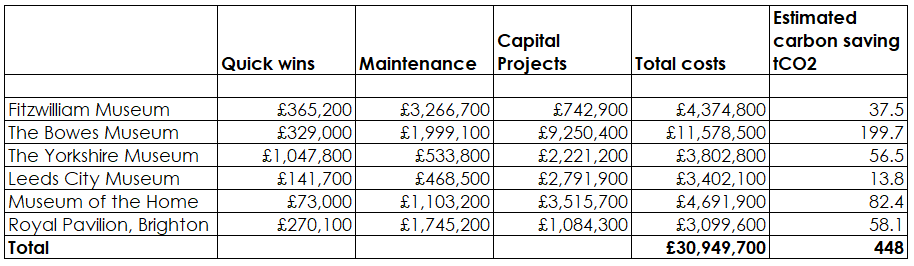
The National Musuem Directors’ Council (NMDC) has published the findings of a series of case studies looking at the actions and costs required to decarbonise museum buildings. It worked with a consulting engineer and a construction consultancy on a study of potential improvements to the energy performance of six different museum sites across the country, identifying where changes could be made to make buildings more efficient and reduce carbon emissions.

The National Museum Directors’ Council represents the leaders of the UK’s national collections and major regional museums. Aware that many museums havenโ€™t yet carried out baseline surveys or carbon audits due to capacity and affordability, and that some who have done so canโ€™t share results widely due to  commercial sensitivities, six museums agreed to share their findings publicly to increase sector literacy about potential improvements and outline costs. Each case study considers three categories: quick wins, maintenance, and capital projects, and within these demonstrates a range of potential carbon savings for individual measures โ€“ ranging from reviewing boiler controls or time schedules, to more ambitious interventions such as upgrading roof insulation, window repairs, or replacing gas boilers with Air Source Heat Pumps.The detailed case studies can be read by clicking the link here.

The importance of baseline carbon surveys to identify such measures cannot be overstated, as implementing these may mitigate potentially larger costs of more advanced maintenance or capital work, for which considerably more external funding is necessary.

*all carbon savings and costs are estimates. See case study document for full details.

Icon Industrial Heritage Conservation Accreditation Workshop

Icon is hosting an industrial heritage conservation accreditation workshop at Imperial War Museum Duxford on 28 October. If you work in industrial conservation and are interested in finding out more about Icon accreditation, then this is the workshop for you.

This free workshop event will cover:

  • Learn about the basics of Icon accreditation, what it involves and how it can benefit your you and your organisation.
  • Listen to real examples of Industrial conservation projects and understand how these meet the Icon assessment criteria.
  • Discuss the unique challenges of industrial conservation and explore how these can be presented in an Icon assessment.
  • Lots of opportunity for Q&A!

To find out more and to book follow this link

Ironbridge Launches ‘Get Us Winding Again’ Appeal

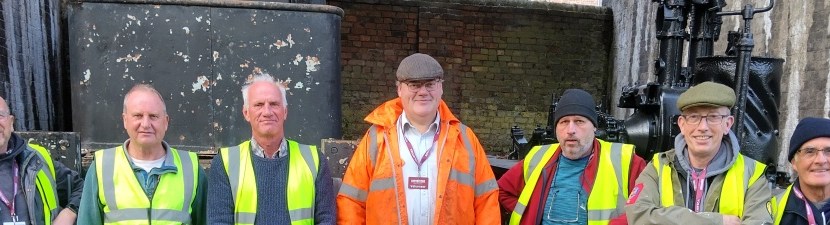
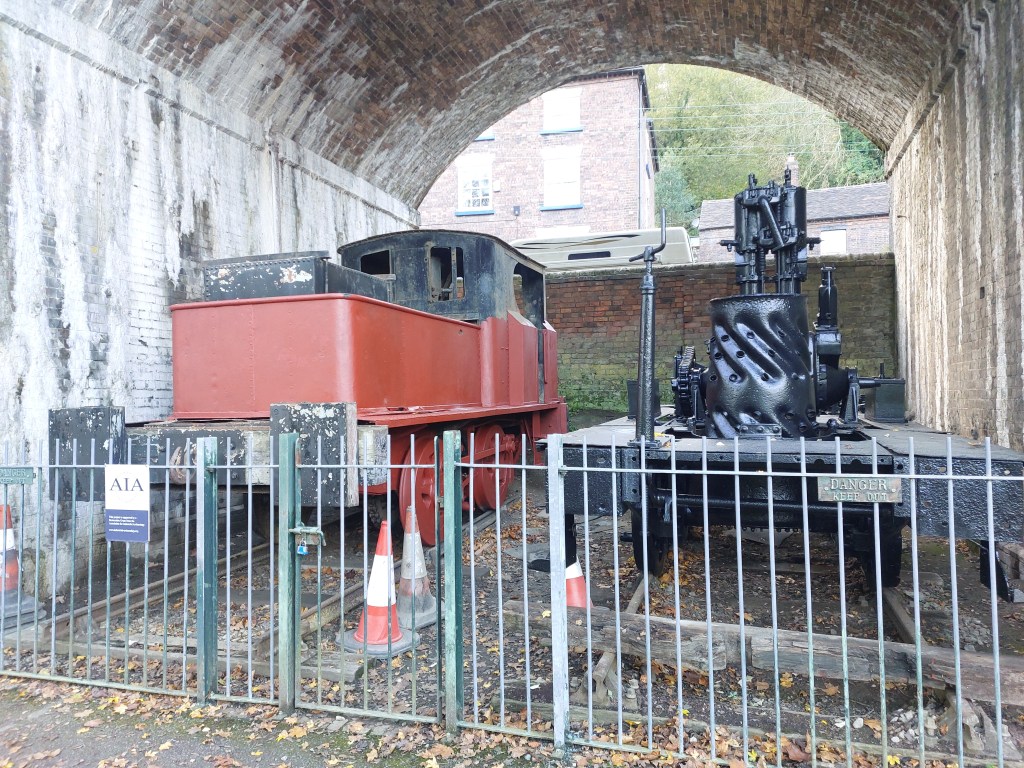
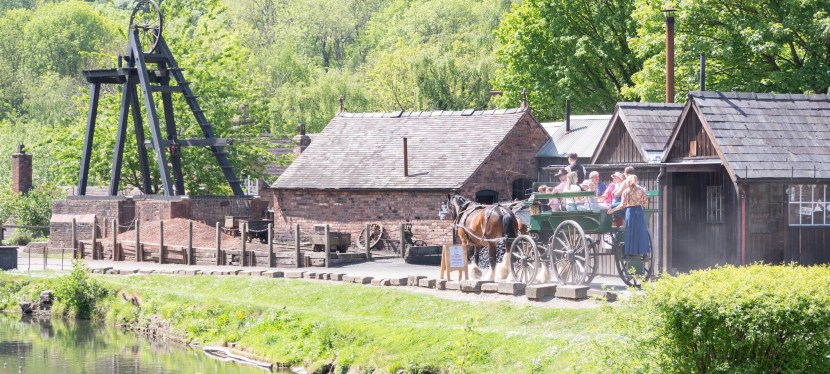
The Blists Hill winding engine

The Ironbridge Gorge Museum Trust has launched a new ยฃ100,000 fundraising appeal, Get Us Winding Again, to raise funds to repair the winding engine at Blists Hill Victorian Town. The steam-powered winding engine is one of the earliest and most significant exhibits in Blists Hill Victorian Town.ย 

Winding engines were used to carry people, equipment and horses up and down a mine shaft. The museumโ€™s winding engine dates to the mid-19th century and was originally used at Milburgh Tileries, a mine in nearby Jackfield. The cage on the end of the cable would have carried one tub of coal or clay at a time or six men at winding speeds of up to 30mph (44 feet per second) without men and about half that with men on.

Today the winding engine at Blists Hill Victorian Town is capable of winding empty tubs a short distance up and down the original mine shaft. However, due to normal wear and ageing (the winding engine ran most days from its installation in 1973 to 2018) and due to an overwind incident that occurred in 2018, it has not been in operation for the last six years.

The new Get Us Winding Again campaign aims to raise ยฃ100,000 to repair and restore the winding engine so that visitors can once again see it in action.ย Find out more about the campaign, as well as seeing a video of the winding engine in action, on theย IGMT website. ย 

The Blists Hill mining headstocks and centrte, the winding engine house. Image Coutesy fo IGMT.

Historic England ‘History in the Making’ 2024 Funding Announced

Historic England is inviting applications from youth groups who want to explore fascinating local stories and have innovative ideas for place markers to commemorate them so these histories can be shared with the whole community and beyond. The History in the Making fund will enable underrepresented young people aged 13 to 25 from across England to research, discover and mark a part of their local heritage that has been overlooked or forgotten.

Funding is available for up to 15 projects across England. The successful applications will be chosen with the help of Historic Englandโ€™s panel ofย Young Advisers, aged 18 to 25. History in the Making was originally launched last year (2023) in northern England, with Historic England funding 11 projects.ย Young people living in deprived areas will be helped to explore and celebrate untold local histories thanks to the launch of a national grant scheme by Historic England.

Industrial Heritage Network Online Meeting Dates 2024

The latest round of online meetings for the Industrial Heritage Networks in England are now taking place. Members will be recieving a ‘save the date’ email this week and then links to the meetings in the following weeks. These meetings are run by the Ironbridge Gorge Musuem Trust as part of the IHSO project. The networks provide a chance for those involved in running and maintaining industrial heritage sites, archaeological monuments, or local societies to get together and discuss current issues and experiences.

One of the current themes being explored by this year’s network meetings is how industrial museums, groups, and those supporting industrial archaeology monuments work with their local authority and how that has changed over the years. Membership of the regional networks is voluntary and free. If you would like to take part please email the IHSO at: mike.nevell@ironbridge.org.uk

Dates for the 2024 Online Industrial Heritage Network meetings:

Wedensday 19 June – London – completed

Wednesday 26 June โ€“ North West

Tuesday 2 July โ€“ South East

Wednesday 3 July โ€“ South West

Monday 8 July โ€“ East Midlands

Wednesday 10 July โ€“ West Midlands

Monday 15 July โ€“ East of England

Tuesday 16 July – Yorkshire

Monday 22 July – Cornwall & Devon

Wednesday 24 July – North East

‘Our Leather industries’ New Exhibiton by the Wandle Industrial Museum

The latest exhibition by the Wandle Industrial Musuem opens on 9th June 2024. ‘Our Leather Industries’ looks at the history of leather making and some of the products produced in the Wandle Valley in the 19th and 20th centuries.

The exhibition can be found at the Vestry Hall Annexe, London Road, Mitcham, Surrey. Open on Wednesdays, 1-4pm and Sundays 2-5pm, the exhibtion is free to enter.

New Industrial Archaeological & Historical Research Included in Lancashire & Cheshire Antiquarian Conference, May 2024

The Lancashire and Cheshire Antiquarian Society are holding their annual conference on 11th May 2024. The theme is new research, with a focus on local history, family history, and industrial archaeology.ย It will be held at the friendโ€™s Meeting House, Mount Street, Manchester, M2 5NS from 10am to 3pm.

The talks will include presentations Helen Corlett talking aboutย The Cooper at Old Bridge End: Finding a Place in Early 19c Manchester (a micro study of the experience of an artisan-tradesman family migrating to Manchester from the rural north); Neil Coldrick onย Medieval Ironworking in Holcombe Valley; and Kelly Griffiths discussingย Scuttled: Excavations on the Historic Canal Basin in Rochdale (looking at excavating late 19th century canal boats).

The conference is free to members of the Lancashire and Cheshire Antiquarian Society and the Manchester Local Family History Society, but donations are gratefully accepted. The fee for non members is ยฃ12.00 payable to Lancashire and Cheshire Antiquarian Society.ย Please emailย secretary@landcas.org.ukย to book your place.

A canal boat being excavated at Rochdale.
Medieval bloomery during excavation at Holcombe in 2018.

L T C Rolt: Life, Work, Legacy. Ironbridge Conference Booking Now Open

Booking is now open for a major conference at Ironbridge looking at the life, work, and legacy of L T C Rolt on the 10th May 2024. L T C Rolt, also known as Tom, was a renowned practical engineer and prolific author who wrote books and articles on industrial history, canals, railways, and cars as well as fiction. Rolt was an early supporter of the work of the Ironbridge Gorge Museum Trust and is regarded as one of the founders of the 20th century waterways and railway preservation movements. He was also involved in helping to establish the Association for Industrial Archaeology.

To mark the 50th anniversary of his death, Ironbridge Gorge Museum Trust has partnered with academics from Keele University to host a conference on Friday 10th May which will celebrate his life and the continuing legacy of his work. There will also be conference-related events on the 9th and 11th May.

The programme can be seen by following this link:

๐Ÿ—“๏ธ See the programme here: https://bit.ly/42XRI0y

To book tickets follow this link:

๐ŸŽŸ๏ธ Get your tickets here: https://bit.ly/49xHcjm

The team responsible for the recent re-archiving of the Rolt collection at IGMT

Historic England Adds Interactive Map to its Historic Manufactured Gas Webpages

Historic England has added an interactive map to its Historic Gas Industry webpages. The new feature allows researchers to search for manufactured gas sites in England from the 19th and 20th centuries and to view summary details about each site. This new feature expands the resources already available for those wishing to research the local manufacture of gas, which already includes a detailed overview report on the history of the manufactured gas industry in England, a heritage assets guide, and advice on recording such sites.

The new interactive map shows the location of hundreds of sites including listed gasworks buildings and gasholders, non-designated surviving gasworks buildings and gasholders, possible surviving structures related to the industry, sites with only below ground evidence, and sites only known from map evidence. The map also has links to the relevant Aerofilms Collection of aerial photographs where these show these gas industry sites, a database which is held by Historic England.

To view the interactive map follow this link: https://historicengland.org.uk/research/current/discover-and-understand/industry-and-infrastructure/manufactured-gas-industry/

The base of the the 1864-5 gasholder at Quarry Bank Mill, Cheshire. Gas manufacture on the site ceased in 1904, but the gasholder was retained for several years thereafter to cope with periods of peak demand. Image copyright: Dr Michael Nevell.