Citizen Canal Heritage Survey Project Calls for Volunteers

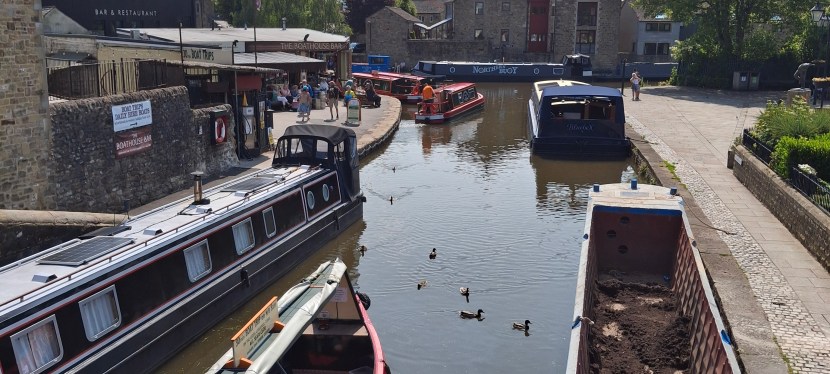
The Canal & River Trust (CRT) is appealing for people interested in the history of canals to volunteer to map and record the heritage of Yorkshire’s 250-year-old canals, as part of a national survey. The heritage survey will chart how the canal system has changed over the past 30 years, by updating and augmenting a survey of canals completed in the early 1990s by British Waterways and Historic England (then English Heritage).

Over the course of several weeks earlier this year, CRT ran a pilot of the heritage survey on the Leeds & Liverpool Canal. Teams of volunteers used an app developed specifically to survey a range of heritage assets situated along the canal between Leeds and Liverpool. This work included looking at locks and lock cottages, bridges, aqueducts, tunnels, wharfs, warehouses, and stables. The project is now being rolled out across the 2,000-mile network of canals that span England and Wales, with the Yorkshire survey the latest area to be studied.

Carrying out the volunteer-led survey of the CRT’s network of canals, and the historic setting around them, is expected to take four years. The project is supported by funds raised by players of People’s Postcode Lottery.

More details here: https://canalrivertrust.org.uk/news-and-views/news/discover-the-fascinating-heritage-of-yorkshire-and-north-easts-waterways

Canal warehouses on the Leeds Liverpool Canal at Manchester Road Wharf, Burnley. Image copyright Dr Michael Nevell

Adapting to Net Zero on Industrial Heritage Sites Online Seminar, May 2025

The Industrial Heritage Support project is running a free online seminar on 22 May 2025 focussing on climate change and Net Zero. The seminar is designed to give an overview of Net Zero adaptation strategies on industrial heritage sites in England. This is a follow-up seminar from an event on climate change and industrial heritage sites run in 2023.

The seminar will include a short presentation from Historic England covering their latest research and advice on reaching Net Zero in the Heritage sector. This will be followed by three industrial heritage site case studies from Cromford Mills, the National Mining Museum in Wakefield, and the Ironbridge Gorge Museum Trust discussing practical and future steps as these sites to achieve Net Zero. The seminar will finish with a discussion and questions.

The seminar is free and will run from 10:30am to 12 noon. To book via Eventbrite click here

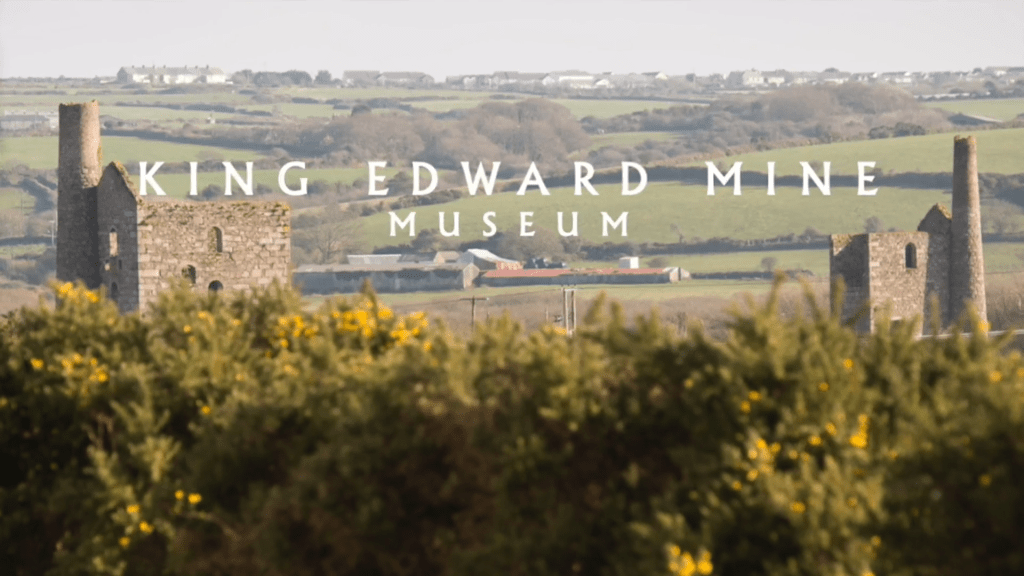
King Edward Mine Museum Looking for More Volunteers Ahead of 2025 Season

King Edward Mine Museum (KEM), a volunteer-led charity within the UNESCO Mining World Heritage Area of Cornwall, is looking for more tour guides when it re-opens for the new season on 20 April.

The site saw a significant rise in visitor numbers last year, many of whom travelled from overseas to explore the mine complex. The museum, which is dedicated to sharing the history of mining on the Great Flat Lode, and is Grade II* listed, lies in the village of Troon, near Camborne.

The mine tells the stories of Cornish miners and maintains a collection of historic mining equipment, including an operational Cornish tin mill, and a Holman winding engine. Originally worked under the name of Old Tye it was opened in 1844 together with Great Condurrow about 300m to the north, finally closing in 1921. However, the surface buildings continued in use for the teaching of mining, ore dressing, and surveying skills until 1974. In 1987 a volunteer group was formed with the aim of conserving the site as an educational resource for the future and the local community. 

If you would like to volunteer as a museum guide or help in the reception area in 2025, follow this link for more details: https://www.kingedwardmine.co.uk/about/volunteering

Historic England – Myths and Misconceptions of Heat Pump Technology Webinar 2 – Online

Due to the high demand for their latest webinar on the myths and misconceptions around heat pumps, Historic England is running an additional session on the 8th April 2025.

In this free webinar, Dan McNaughton and Sehrish Wakil, Senior Building Services Engineers at Historic England, will share practical advice and case studies to help participants plan and implement a successful heat pump installation project. The session will be followed by a Q&A. Book your free place here.

Spring 2025 Online Industrial Heritage Network Meetings

The next round of online Industrial Heritage Network (IHN) meetings is taking place this Spring. The IHN networks are a chance to meet those working, volunteering, or researching in the industrial heritage sector.

Four lunchtime IHN meetings will be held in late March, and will run from 12noon to 1pm, and there will be an IHSO update followed by news and updates from members. The first round of 2025 IHN meetings will take place on the following dates and will include the following groups:

  • 21 March – East of England
  • 25 March – South East
  • 26 March -North East
  • 31 March – London

Zoom links for the meetings will be sent to each region nearer the dates. If you would like to join any of these Industrial Heritage Networks as a member please email the IHSO here: mike.nevell@mikenevell

Avoncroft Craft Skills Workshops for 2025

Avoncroft Museum has published their 2025 craft workshops programme. These workshops include a number of subjects relevant to industrial heritage sites, including blacksmithing, traditional signwriting, and basket weaving.

The workshop programme runs from Febraury through to November. During the workshops you’ll get expert guidance, all the materials needed, and free museum entry. No experience is needed. Costs vary, and there is a discount for Members of Avoncroft Museum. Follow this link for more details:

Free Online Talks and Training Videos for Industrial Heritage Sites in Early 2025

The early new year is often a time for charities and musuems to undertake staff training and maintenance in the ‘off season’. Online, several organisation offer free training and briefing videos relevant for industrial heritage sites. Some of the recent offerings listed below provide an opportunity for armchair training.

The East-West Workshops on Industrial Archaeology aim to exchange ideas and knowledge among Western and Eastern colleagues to build a more international and diverse industrial archaeology. The workshops are organised jointly by the Institute for Cultural Heritage and History of Science and Technology (USTB, China), and the Association for Industrial Archaeology (AIA) together with its Young Members Board. Videos of all the workshops are available on the AIA’s YouTube Channel, including the latest event from November 2024 on ‘Weaving the Industrial Period’. Follow this link to view the workshops: https://www.youtube.com/channel/UCILr2TkRAOIfk_NKchshwZQ

On Thursday 21st November 2024 the ‘Craft of the Miller’ network held an online conference on ‘Managing Health & Safety Risks in Your Mill’. Jon Cook gave an introduction to highlight a number of key risks in a working mill, including hygiene, flour dust, vacuum equipment, and fire risks. Jippe Kreuning explored how to work with a stone crane and how to operate it safely to lift a set of millstones. You can catchup with the recordings from the conference here: https://network.molens.nl/

Finally, Historic England have a range of heritage webinars to watch with topics from flooding, embodied carbon, and renewabler energy, to heritage building skills, roofs, and windows. The Historic Environment Webinars strand includes a session on the role and work of the Canal & River Trust form November 2024. Follow this link to view the webinars: https://historicengland.org.uk/services-skills/training-skills/training/webinars/recordings/#technicaltuesdays

Museum Development Midlands ‘Recruiting Volunteers’ Training, January 2025

Museum Development Midlands (MDM) is running an evening online training session in January 2025 around how Museum Trustees can recruit volunteers.

Many of the Midland region’s museums rely on volunteers and since the Covid-19 pandemic it’s been increasingly tough for industrial museums across England to recruit and retain the volunteer capacity they need to operate. This reflects a wider picture across the voluntary sector with surveys suggesting that the majority of organisations are finding volunteer recruitment difficult. In this tough climate, what can museums do to attract and retain the committed, skilled, volunteers that they need?

This practical session of ideas and approaches to volunteer recruitment will be held on 20 January 2025, online, 6pm to 8.30pm. More details here.

SPAB Mills November Day Event: Mills at Risk   

Join SPAB on Saturday 30 November, 10am – 4.45pm , for a day of online talks about windmills and watermills that are currently or have been in the past listed on the Heritage at Risk Register. 

What happens when a mill is added to the Heritage at Risk Register? What steps can you take to protect a mill from different risks? And why do some restored mills remain at risk?  This is a unique opportunity to hear from a range of mill professionals – including volunteers and millwrights. You’ll have a chance to have your questions answered and will receive a recording of the talks after the event. 

Follow this link to book a place: https://www.spab.org.uk/whats-on/lectures/spab-mills-day-event-mills-risk

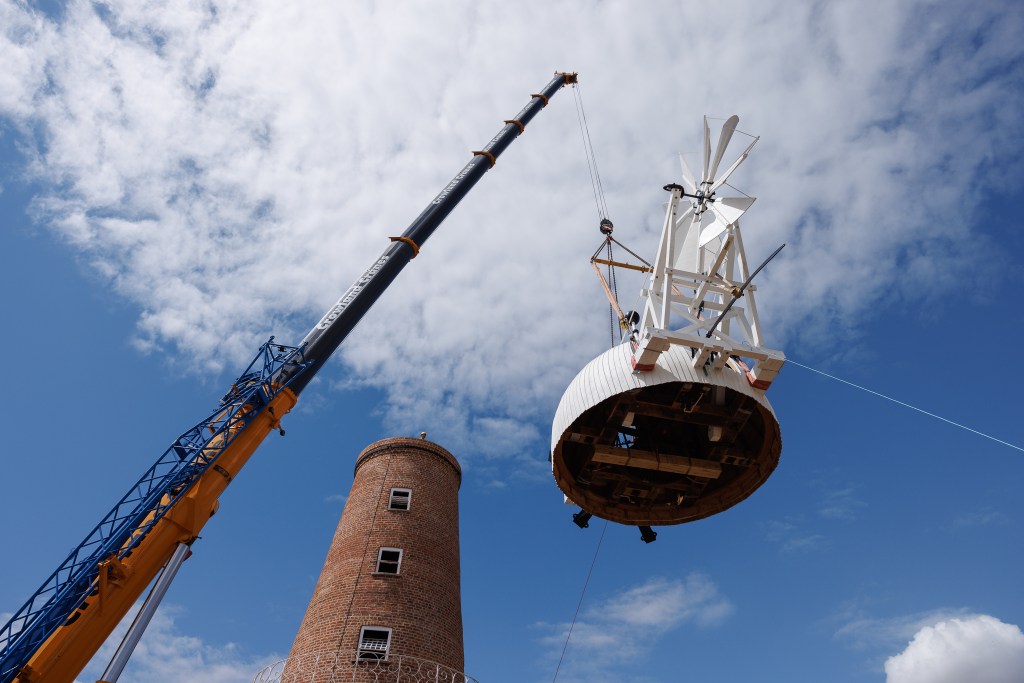
Sibsey Trader Mill cap undergoing restoration. Image courtesy of SPAB mills section.

Mills Archive Trust’s ‘Living Heritage Appeal’

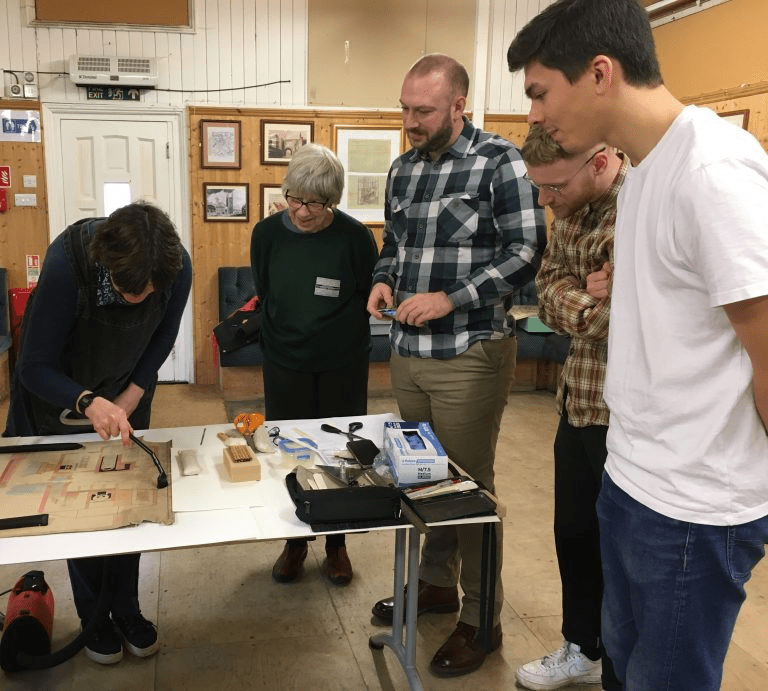
Milsl Archive Trust volunteers learning new archibing skills. Image couresy fo the Mills Archive Trust.

The Mills Archive Trust’s ‘Living Heritage’ appeal is designed to keep alive the legacy of millers and millwrights found within the Trust’s archives, sharing this knoweldge with the public and providing life-changing experiences for their volunteers.

The Mills Archive Trust is a permanent repository for the documentary and photographic records of traditional and contemporary mills and milling, as well as similar structures dependent on traditional power sources, in the UK and beyond. It makes that material freely available for public inspection and use in research and learning.

Their latest appeal is designed to help volunteers acquire the skills needed to catalogue archives relating to specific millers and wind and watermill restorers and experts, such as David Nicholls (1938-2020), and Alan Stoyel. Not only does that help to save these archives and improve public access to them, but the skills acquired help many volunteers to find work within the hertiage sector.

The Mills Archive is one of the world’s great mill collections. It has rescued over three million documents and images that might otherwise have ended up in a landfill site. It is an Aladdin’s cave filled with memories and is free to use. The collections show the rich and diverse crafts, buildings, machinery, equipment, and people involved with mills in the UK and around the world. There is an urgent need to record and make public the technical details of these crafts and the potential impact of the loss of this aspect of our shared cultural heritage.

To donate to the Trust follow this link: https://new.millsarchive.org/donate/