Welcome to the Industrial Heritage Networks and Support website. This site is maintained and updated by the Ironbridge Gorge Museum Trust who run the project and the networks. We aim to support industrial heritage in England through networking, information exchange, guidance, and training. Please explore the website and please contribute! For more information you can … Read more Welcome to the IHNs website!
The next Historic England free industrial heritage webinar will be on October 24th, from 13.00 to 14.00. It will focus on the canal network and the work of the Canal & River Trust in England and Wales.
Presented by the Canal & River Trust, it will describe the organisations establishment and role, the nature and significance of the canal network, its operation, management and maintenance, and how the Trust works in partnership with others.
Booking is now open for the 2024 Devizes Industrial Archaeology Conference. It will be held on the 26th October at Devizes Town Hall (SN10 1BZt) and the theme will be the agricultural industrial heritage of the region.
The programme includes talks on:
Milk, Butter, cheese and churns from the farm to the table, by Mike Stone
Steam Ploughing in Wiltshire, by Doug Roseaman
Early Agricultural Engineers in Wiltshire, by Dr Tony Pratt
Farm Buildings, Construction and Use in South Wiltshire, by Tim Mayhew
Agricultural landscapes in Art and Film, by Mike Stone
The Canal & River Trust is seeking people to join its team of fantastic volunteers and help care for the historic Gloucester Docks and the Gloucester & Sharpness Canal. There are a wide range of opportunities on offer.
The Trust is seeking volunteers to join its Gloucester Task Force, which cares for the environment around Gloucester Docks, making it a special place to visit, popular with boaters, local people and visitors. People who have a passion for teaching and inspiring young people are needed to support the Trust’s Explorers education programme. This role offers the opportunity to bring the waterways and their heritage to life for children and schools through events, visits and the National Waterways Museum.
The National Waterways Museum Gloucester is a popular visitor destination in the heart of the docks. The museum needs volunteers to act as guides and talk to visitors, sharing their passion for local history, the docks and what the waterways has provided for people and wildlife for over two centuries.
The canal boasts 18 historic swing bridges running down its entire length from Gloucester to Sharpness. Volunteer bridge keepers are needed to keep these bridges open for boats to navigate the canal, speaking to people and keeping them safe while operating the bridges.
Once the broadest and deepest canal in the world, the Gloucester & Sharpness Canal still stands out from other navigations because of its sheer scale and impressive engineering. Its rich history in acting as a bypass to protect boats from a treacherous stretch of the River Severn is still alive today, with Gloucester Docks a stunning Victorian inland port, and home to the popular Tall Ships Festival. To discover more about the work of the Canal & River Trust, and how you can volunteer or donate, go to canalrivertrust.org.uk.
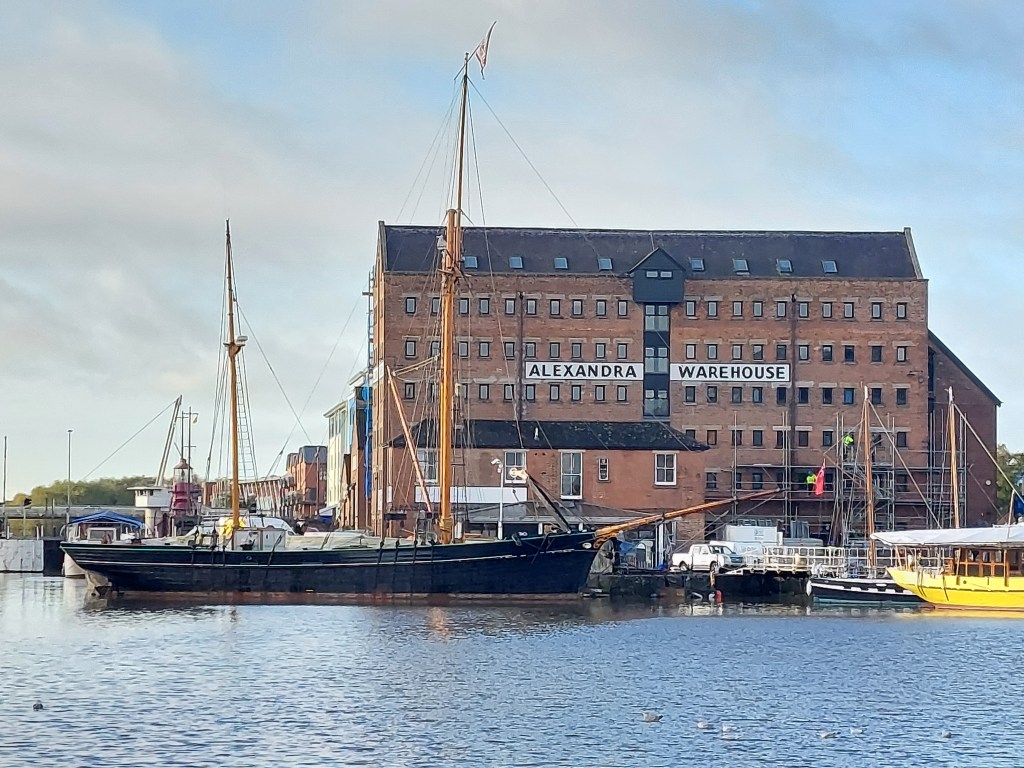
19th century canal warehouse at the Glouscester Docks. Image copyright Dr Michael Nevell.
The next round of in-person Industrial Heritage Network (IHN) regional meetings will be taking place this autumn. These regional network meetings take place twice a year in the spring (online) and in the autumn (in-person). They are a chance to bring together volunteers and professionals from industrial heritage sites around England to exchange experiences, catch up with the latest news and practices, and make or renew contacts. There are ten regional networks in England run by the IHSO project at the Ironbridge Gorge Museum Trust, and funded by Historic England, with the support of the Association for Industrial Archaeology.
The first four in-person IHN meetings will be held this autumn for the following regions:
North West England, Catalyst Museum, 25th October 2024.
Cornwall & Devon, East Pool Mine, Redruth, 7th November 2024.
South West, Westonzoyland, 8th November 2024.
West Midlands, Claymills, 22nd November, 2024
Further dates for other regions will be published in October. Regional network members will be emailed details of the venues and how to attend. For further details contact the Industrial Heritage Support Officer for England: mike.nevell@ironbridge.org.uk
Calderdale Industrial Museum is working to bring life back to its beautiful steam engines and is seeking to raise funds to complete this exciting steam project. These engines include the early beam engine, the vertical steam engine, the Newton Bean and Mitchell horizontal engine, and the Belliss & Morcom twin cylinder steam generator set. Using steam to power these engines again will add a fantastic dimension to the visitor experience at the museum.
The museum has been lucky to have some very generous support from individuals who have donated a considerable amount of money to help fund this, but they are now looking to widen their Appeal, as they still need to raise more money. With the launch of the ‘Full Steam Ahead Appeal’ they hope to raise the final amount of funding to complete the project, which will allow them to refurbish the engines, install a smaller, more efficient boiler and carry out the necessary safety and operation training.
Bringing steam back to the power gallery will be integral to showing how these amazing steam engines drove the development of the Industrial Revolution in this area. Visitors will be able to see how these magnificent workhorses powered the industry of Calderdale, and many could even enjoy specialist experiences and steam days, which will bring enthusiasts from around the country to this vibrant area of West Yorkshire. The introduction of steam to the museum should make a significant addition to the overall visitor experience, further cementing the museum’s place as a major contributor to local heritage and the economy and driving their efforts to reach a wider audience.
Calderdale Industrial Museum
Calderdale Industrial Museum, an Arts Council accredited museum, sits at the heart of the historical quarter of Halifax and makes a considerable contribution to the heritage engagement and economy of this region of West Yorkshire. It tells the story of how the industry of the past grew as a direct consequence of the particular physical landscape and ingenuity of its local people, resulting in the rich heritage and exciting story, relevant to the history of the Industrial Revolution in Great Britain.
Since the local authority had to close the museum due to a shortage of funds in 2000, local enthusiasts and industry specialists have fought hard to save this nationally and regionally significant collection of industrial heritage. From the museum’s re-opening in 2017, this group of enthusiasts has continued to grow and now works hard to bring their combined knowledge and experience to deliver one of our region’s most popular visitor attractions. Sitting next to Halifax’s amazing and unique Piece Hall, the museum is central to telling this story of the town of one hundred trades. The museum is now run for the most part by this unpaid volunteer workforce, with all maintenance and conservation work funded by open day takings. Any special projects require additional funding sourced from a wide range of donors.
It has always been the ambition of these dedicated volunteers to bring life back to as many of the collections machines as possible. Work has been going on in many areas of the museum to show looms, sock knitting machines, and many of the worsted industry machines, in working order.
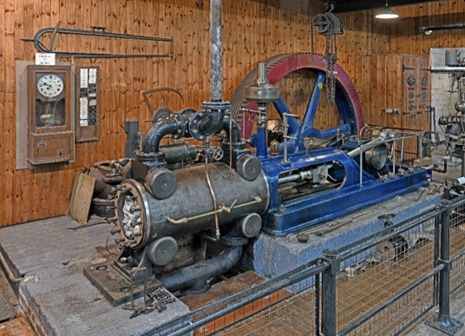
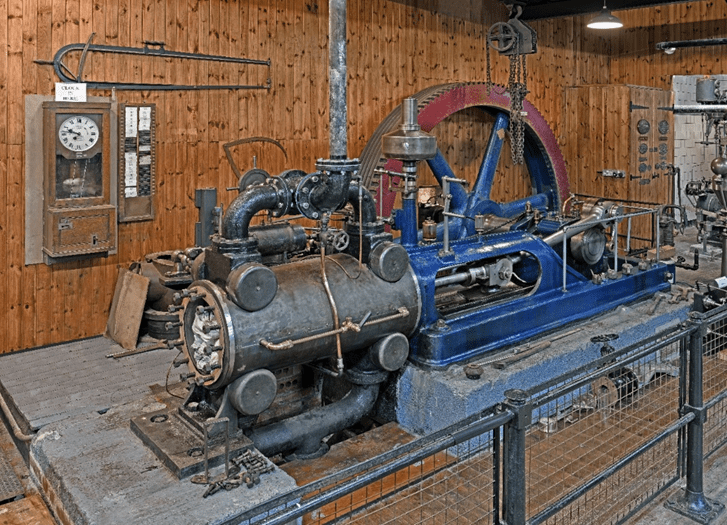
The Horizontal Newton Bean and Mitchell Engine known as Enid part way through restoration and recommissioning. This is just one of the engines that fill soon be powered by steam. Image copyright Calder Industrial Museum.
Each year, Historic England (HE) commissions a detailed economic study that aims to capture the economic ‘footprint’ of the heritage sector using national statistics disaggregated into subsectors, occupations, and local geographies. Using the latest available national statistics (2022), England’s heritage sector is estimated to have contributed £44.9 billion in Gross Value Added (GVA) to the UK economy in 2022 and supported the employment of over 523,000 workers (CEBR, 2024).
Like many sectors, the heritage sector has faced extraordinary challenges since 2020 due to macro-economic shocks, including the COVID-19 pandemic, growing cost-of-living costs, and escalating global energy prices. The post-pandemic evidence demonstrates a resilient and recovering heritage sector emerged in 2022.
The top three constituent sub-sectors of England’s Heritage Sector (construction; libraries, archives and museums; and architectural and engineering activities) accounted for over 80% of the total GVA of England’s heritage sector. The construction industry remained the largest constituent heritage sub-sector in 2022, generating £7.42 billion GVA. The next largest industry – Libraries, archives, museums and other cultural activities -contriubed almost £3.34 billion. Architectural and engineering activities contributed £1.86 billion. The heritage sector in the South East supported the largest number of workers in 2022, with 61,000 directly and indiretcly employed in the sector.
On 13 September the Great Grimsby Ice Factory Trust (GGIFT) celebrated the completion of the Peterson’s Project on the Port of Grimsby. First conceived in 2017, the project was developed jointly by GGIFT, Associated British Ports (ABP), and North East Lincolnshire Council (NELC), and was instrumental in Great Grimsby becoming a Heritage Action Zone in 2018. Designed to be a catalyst for the regeneration of the historic dock, the Peterson’s Project has brought back into use two important buildings within the Kasbah Conservation Area.
The Grade II listed Peterson’s Smokehouse on Henderson Street had functioned as a kipper house since the 19th century, when the original building was first erected. By 2017 the building had been out of use for some time, and much of it was inaccessible. It will now have a new life as a fully functioning fish processing and smoking factory, using the unique cold smoking process that can only take place in a traditional smokehouse.
The second building, at 89 Wharncliffe Road, was most recently known as Fred’s Fisheries. Built by the Osborne family of fish merchants – again in the 19th century when the docks were developed following the arrival of the railway – it was in dire need of modernisation. Through the project the stunning architectural features, and the lovely proportions of the rooms have been revealed, and it awaits tenants for the offices and retail spaces that have been re-created.
The project has taken seven years to complete, including feasibility studies, appraisal and design, and has cost over £1.4 million. Thanks to National Lottery players, the majority of the funding was provided by The National Lottery Heritage Fund. Additional grant funding was from the Architectural Heritage Fund (AHF), Historic England (HE) and NELC.
In February 2024, the West Somerset Railway Heritage Trust completed the purchase of the shed at track at Washford from the Somerset and Dorset Railway Trust and agreed a new 10 year lease of the site with the West Somerset Railway PLC. Since then, work has been continuing to bring all the heritage stock owned by the Trust to the Washford site, which is now the base for all the Trust’s restoration activities.
The planned move of the three carriages previously stored at Dunster sidings to Washford was successfully completed on Monday 9 September by a WSR PLC specialist team, while the railway was closed to passenger traffic. Carriages 5131, 7740 and 2578 have been located in a siding near Dunster station for many years awaiting restoration, leaving them exposed to the sea air despite being covered with tarpaulin covers. Coastal storms have periodically caused further deterioration to the carriages.
Given the poor condition of the carriages, a comprehensive risk assessment was prepared in advance of the move. This included a 3 meter hard hat exclusion zone around the move, and even a camera wired up to one of the shunters, pointing underneath the carriages to check if anything fell between the tracks during the move. The whole exercise was professionally executed by the PLC team, using two top and tail shunters, without incident.
The following day, the Trust’s horse box was brought by road from its previous location at Bishops Lydeard. During the First World War, horses and mules were used extensively by the British army – nearly one million by 1918 – and were transported by rail, and it is believed that this is the only one horse box of the era to survive. It was built for the LNWR and found on a farm at Pershore. Following the move to Washford, restoration of the horse box will be completed.
The Washford Engineerign Shed was open to visitors on 14tth & 15th September, as part of the Heritage Open Days and the WSR 1940s weekend.
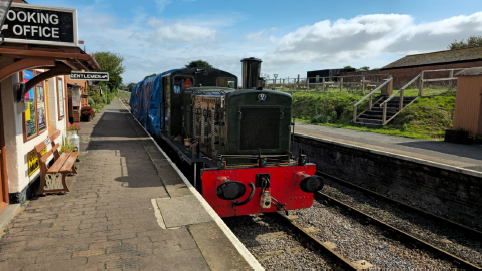
Carriage 7740 on the move at Blue Anchor platform. Copyright WSRHT.
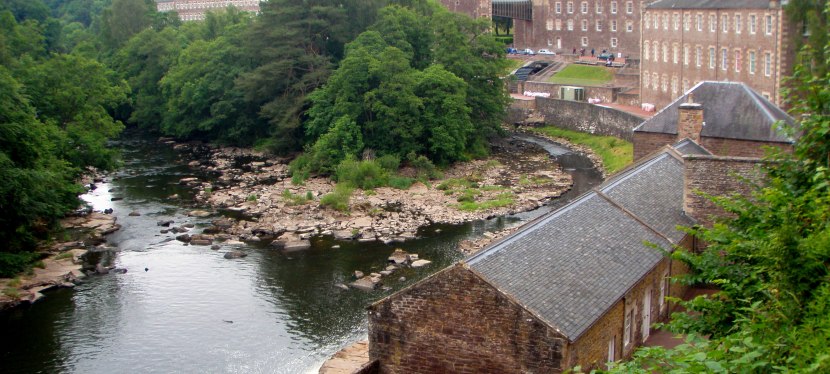
The North UK Mills Working Group are holding a free online meeting about hydro electric power schemes on 9th October.The 1.5 hour meeting will include a presentation on hydro power at New Lanark Mills.
These meetings are for members of the public with an interest in mill heritage, owners or operators of commercial or converted historic mill buildings, and/or those with a full-time role in developing and/or running mills. Everyone welcome!
The North UK Mills Working Group is a collection of interested individuals and organisations (including Heritage Trust Network and SPAB Scotland) who have come together to explore how people and organisations working with mills could be better connected with each other and help keep these buildings, skills, and mill cultures alive and accessible.The group offers an opportunity for organisations working with or people interested in mill buildings to come together, network, and discuss.
Gloucester’s historic docks. Image copyright Dr Mchael Nevell.
Gloucester and Ramsgate officially become Heritage Harbours on Saturday 7th September 2024, joining twelve other locations across the UK already recognised for their contribution to saving our maritime heritage. The Heritage Harbours project is supported by National Historic Ships UK, Historic England and Maritime Heritage Trust.
Gloucester and Ramsgate join Bideford, Bristol, Buckler’s Hard, Chester, Exeter, Faversham and Oare Creeks, Ipswich, Maldon and Heybridge, Sandwich, Shardlow, Stourport, and Wells next the Sea in the Heritage Harbours National Working Group.
Gloucester, a Roman town in origin, will be celebrating its Heritage Harbour status on Gloucester Day, Saturday 7th September, with a procession through the city and proclamation by the town crier, rounding off with cannon fire from the Sealed Knot re-enactment society. Tony Conder, Chair of the Gloucester Docks Bicentenary Working Team, said: “Heritage Harbour designation is an amazing achievement for Gloucester, building on the work of the City Council, Canal & River Trust, previously British Waterways, in bringing new life to the waterfront. It offers fantastic opportunities for all the current partners engaged within the historic Port of Gloucester to celebrate the Bicentenary in 2027 and to go on to strengthen the Gloucester Docks businesses and enhance the enjoyment of visitors to this maritime heritage site into the future.”
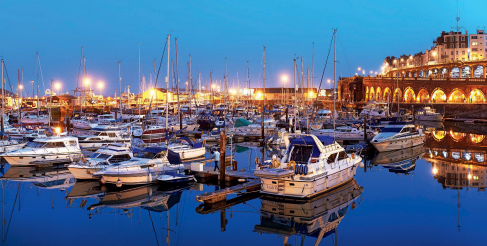
Ramsgate’s Royal Harbour is Grade II* listed and is the only royal harbour in the world, an honour bestowed by King George IV in 1821. “We are thrilled to receive the Heritage Harbour designation,” said John Walker, Chair of the Ramsgate Heritage Harbour Working Group. “It’s wonderful that our amazing maritime heritage, combined with the activities of a working harbour and thriving cafe culture, has been recognised nationally. Ramsgate is a great place to work and to visit.”
“We are very pleased to welcome on board Gloucester Docks, and Ramsgate’s Royal Harbour, during Heritage Open Days 2024, the largest festival of history and culture in the UK,” said Henry Cleary, Heritage Harbours’ convenor and chair of Maritime Heritage Trust. “Heritage Harbours are about capturing the interactions between navigable water and the land and buildings alongside it. No other designation does this and we now have locations which represent the main types of historic port from the Roman period to the 19th century.”
Many of the Heritage Harbours are staging maritime events during Heritage Open Days and deatils can be foundont he Heritage Open Days website here: https://www.heritageopendays.org.uk/

















 Industrial Heritage Networks