New Industrial Archaeological & Historical Research Included in Lancashire & Cheshire Antiquarian Conference, May 2024

The Lancashire and Cheshire Antiquarian Society are holding their annual conference on 11th May 2024. The theme is new research, with a focus on local history, family history, and industrial archaeology. It will be held at the friend’s Meeting House, Mount Street, Manchester, M2 5NS from 10am to 3pm.

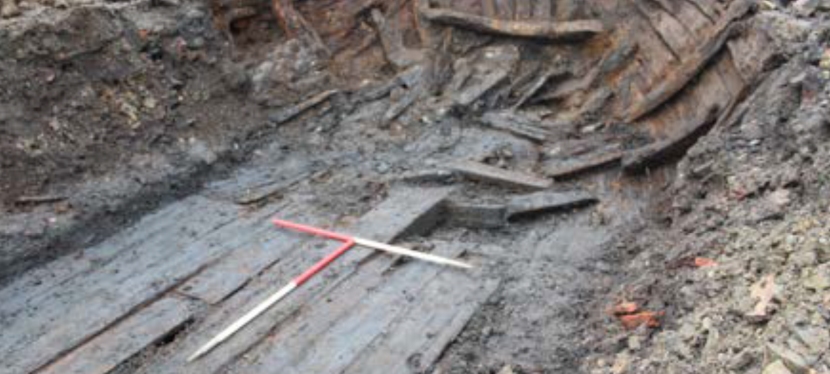
The talks will include presentations Helen Corlett talking about The Cooper at Old Bridge End: Finding a Place in Early 19c Manchester (a micro study of the experience of an artisan-tradesman family migrating to Manchester from the rural north); Neil Coldrick on Medieval Ironworking in Holcombe Valley; and Kelly Griffiths discussing Scuttled: Excavations on the Historic Canal Basin in Rochdale (looking at excavating late 19th century canal boats).

The conference is free to members of the Lancashire and Cheshire Antiquarian Society and the Manchester Local Family History Society, but donations are gratefully accepted. The fee for non members is £12.00 payable to Lancashire and Cheshire Antiquarian Society. Please email secretary@landcas.org.uk to book your place.

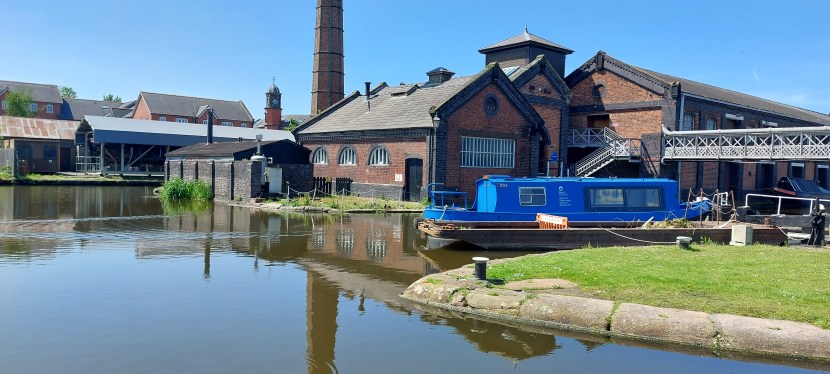
A canal boat being excavated at Rochdale.
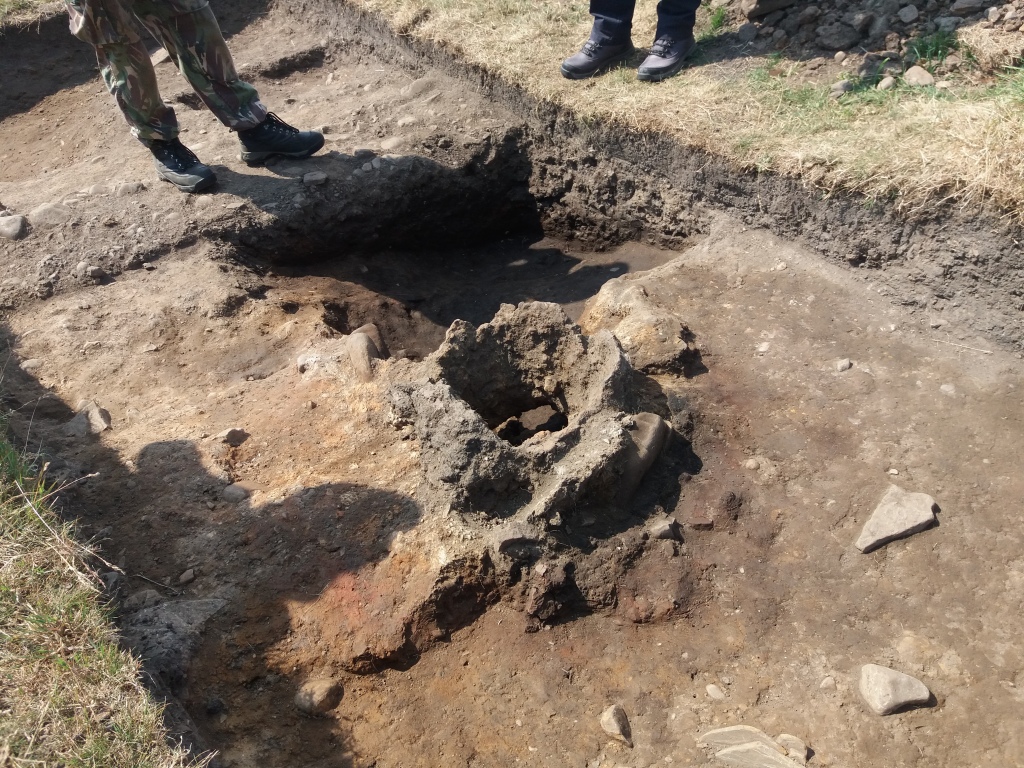
Medieval bloomery during excavation at Holcombe in 2018.

Museum Development Support in England Reorganised for 2024

April marks the re-organisation of the Museum Development (MD) support scheme in England. Arts Council England will support the new MD regional partnerships from 1 April 2024 until 31 March 2027. These new partnerships build on the English regional teams’ experience of collaborative working since 2018, with the programme for the next three years continuing to support museums, and the people who work for, and volunteer in them.

The new English regional partnerships are:

  • MD North
  • MD Midlands
  • MD South West
  • MD South East
  • MD London

There are new websites and new newsletters to sign up for, so be sure to explore the the refreshed structures. Follow this link to the new regional partnerships: https://www.artscouncil.org.uk/supporting-arts-museums-and-libraries/supporting-museums/museum-development-programme/museum-development-2024-26/museum-development-2024-27-partners

For an overview of the changes in England follow this link: https://www.artscouncil.org.uk/supporting-arts-museums-and-libraries/supporting-museums/museum-development-programme/museum-development-2024-26

Claverton Pumping Station Launch Flood Appeal

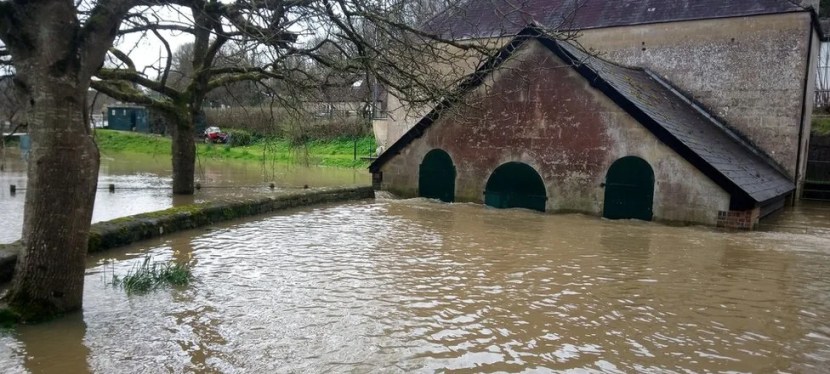
Flooding in the wheel pit at Claverton, 2024. Image courtesy of The Claverton Pumping Station Trust.

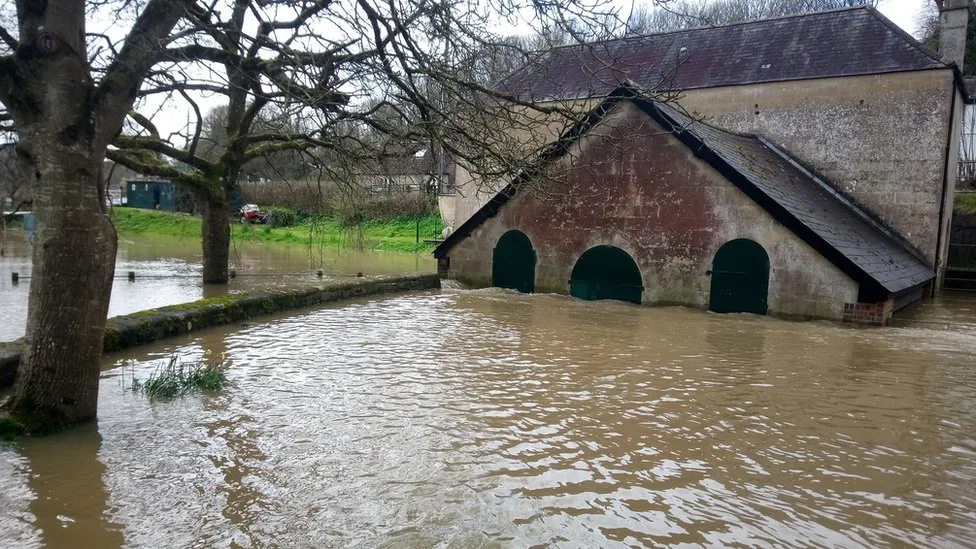
Claverton Pumping Station have launched an online appeal for funds after suffering 17 floods between October 2023 and April 2024. The aim of the appeal is to replace rotten timber, and to make the site’s operations more flood resilient. The Grade I listed building was restored by volunteers between 1969 and 1976, and is maintained and run by the volunteers of The Claverton Pumping Station Trust CIO, though it is owned by the Canal and Rivers Trust.

Claverton Pumping Station was built between 1809 and 1813, to a design by the engineer John Rennie, to overcome problems of water supply for the Kennet and Avon Canal near Bath. A  17 foot (5 m) diameter by 24 foot (7 m) wide water wheel powers a large beam engine that pump 50 gallons of water every two seconds from the River Avon up 48 feet into the Kennet and Avon canal. The pump operated from 1813 until 1952. It is the only working example of a waterwheel-driven pumping station on the national canal network. 

The Claverton Pumping Station Trust observed that ‘as flooding is predicted to become more frequent and more severe having extra money ring-fenced for flood repairs and flood resilience will allow us to continue proactive maintenance and to make timely repairs when necessary.’

For details on how to give follow this link: https://justgiving.com/campaign/claverton-floods

Flooding at Claverton Pumping Station, 2024. Image courtesy of The Claverton Pumping Station Trust.

Canal & River Trust to Use AI to Protect Historic Canal Bridges from Vehicle Strikes 

The Canal and River Trust (CRT) have announced how they are trialling an innovative AI CCTV system on the Lancaster Canal to catch hit-and-run motorists damaging 200-year-old stone bridges. Annually, vehicle strikes on CRT bridges cost up to £1 million in repairs, diverting vital funds away from work waterway conservation. 

The new system is controlled by AI using a mobile phone signal and doesn’t continuously record but takes a few photos when it detects vehicle movement. The AI then assesses if the bridge has been impacted. If there is no strike, the photos are deleted and if damage has been caused, Trust staff receive a notification, allowing them to identify number plates to track down the offenders and claim full repair costs on their insurance.

Andy Dobson, CRT asset engineer, said: “Hump-back bridges, an iconic part of Britain’s canal network, were built for the passage of horse-drawn carts, not for today’s modern vehicles and HGVs. Due to the large number of rural, narrow roads crossing the Lancaster Canal, it has more bridge strikes than any other. The bridges are part of the canal’s special character and heritage, and each time one is hit a small piece of history is lost.”

More details of the experimental scheme can be found here: https://canalrivertrust.org.uk/news-and-views/news/artificial-intelligence-helps-to-protect-historic-canal-bridges-from-vehicle-strikes

A typical humped-back bridge on the Lancaster Canal near the city of Lancaster

Crofton Beam Engines Given Grant to Expand Children’s Activities

Crofton Beam Engines has secured a grant of £6,120 from the Association of Independent Museums under its ‘New Stories New Audiences’ programme funded by the National Lottery Heritage Fund for their ‘Crofton for Kids’ project. The grant will fund the development and production of a class set of working models of the pumping station, buildable by children and designed by volunteers.

Visiting groups of children will visit the station to learn how it works. They will be helped to build the models and will then work in small groups to create short videos about the station. These videos will be made accessible to visitors to the station through the use of QR codes, taking advantage of the intranet installed around the site.

Whitney Cawley, the Learning and Community Engagement Officer at Crofton Beam Engines said: “This is an exciting opportunity to develop our activities with children. We have already signed up three local schools to work with us, and are talking to others. We will then be able to use the models created as part of the project in our existing learning sessions and incorporate them into a more regular family workshop which we hope to offer throughout the year”. Graham Snook, a Trustee and Chairman of the Crofton Branch, said: “This grant recognises the value of the work we are doing at Crofton to develop our learning and engagement programme. We are grateful to the Association of Independent Museums for their continuing support to small museums such as Crofton Beam Engines.”

The New Stories New Audiences programme is designed to support small museums to stay relevant to their audiences and to increase their impact by identifying new stories and by working with a new partner, to work differently and to try something new.

Crofton Beam Engines is owned by the Kennet and Avon Canal Trust, a registered charity. It is managed by the Crofton Branch of the Trust. For more information follow this link: https://www.croftonbeamengines.org/

Historic England Funding More Projects to Uncover and Celebrate Working Class Heritage

Historic England’s Everyday Heritage Grant programme aims to shine a light on the diversity of heritage and is part of Historic England’s commitment to ensuring that a wider range of people are able to connect with, enjoy and benefit from the historic environment. Building on the success of Historic England’s  first round of Everyday Heritage Grants in 2022, they are funding an additional 56 projects that celebrate working class histories and the historic places that make up everyday life.

The grants are for creative projects that focus on heritage connecting people to historic places, specifically those people and places that are overlooked or underrepresented. The community-led projects will explore the diverse stories of people and places, such as homelessness in Waterloo, a pen factory in Newhaven, and roller-skating in Birmingham. The total amount of funding awarded by Historic England is £875,000, ranging from £6,800 to £25,000 per individual project.

For details of all these projects and those funded in 2023 follow this link: https://historicengland.org.uk/campaigns/help-write-history/everyday-heritage-grants/

L T C Rolt: Life, Work, Legacy. Ironbridge Conference Booking Now Open

Booking is now open for a major conference at Ironbridge looking at the life, work, and legacy of L T C Rolt on the 10th May 2024. L T C Rolt, also known as Tom, was a renowned practical engineer and prolific author who wrote books and articles on industrial history, canals, railways, and cars as well as fiction. Rolt was an early supporter of the work of the Ironbridge Gorge Museum Trust and is regarded as one of the founders of the 20th century waterways and railway preservation movements. He was also involved in helping to establish the Association for Industrial Archaeology.

To mark the 50th anniversary of his death, Ironbridge Gorge Museum Trust has partnered with academics from Keele University to host a conference on Friday 10th May which will celebrate his life and the continuing legacy of his work. There will also be conference-related events on the 9th and 11th May.

The programme can be seen by following this link:

🗓️ See the programme here: https://bit.ly/42XRI0y

To book tickets follow this link:

🎟️ Get your tickets here: https://bit.ly/49xHcjm

The team responsible for the recent re-archiving of the Rolt collection at IGMT

Industrial World Heritage Workshop April 2024

World Heritage UK, in conjunction with Bangor University, is delighted to be hosting the 2024 World Heritage workshop on the 10th and 11th April 2024. The workshop will explore aspects of Industrial World Heritage as well as broader topics that will be of interest to all World Heritage and heritage professionals.

The two-day workshop will cover topics such as regeneration, events, tourism, STEM, intangible heritage, slavery and more. Included are afternoon guided site visits to Dinorwig Quarry, the National Slate Museum, Penrhyn Castle and Quarry and the Slate Landscape of NW Wales WHS, refreshments and buffet lunches. There is a social event on Wednesday evening with local food and live local music. Tickets for this social night are sold separately.

In-person workshop tickets are £100 for National Trust members, £115 for non-National Trust members and £75 for digital tickets. The social night is £30 pp. Sadly there is no wheelchair access to the social night.

For more details and to book, please go to https://worldheritageuk.org/events/world-heritage-uk-2024-spring-workshop/

There you’ll also find details on how to get to Bangor, and suggestions on where to stay, including discounted accommodation at the university’s management centre.

Thefts Cause Temporary Closure of Island Warehouse at National Waterways Museum

Eleven exhibits missing from the National Waterways Museum in Cheshire are thought to have been stolen from its collection between Friday 9th and Monday 12th February 2024. The Canal and River Trust, who run the museum said that a recent ‘significant’ cataloguing exercise had allowed it to quickly spot that exhibits were missing. The museum’s Island Warehouse room, where smaller objects are displayed and where the thefts are thought to have taken place, has been temporarily closed.

A security review is now being completed and the museum is working with police to recover the items. The Canal & River Trust, which operates the museum, has released a document which details the missing exhibits. Included is a model boat, along with several small model engines and three large ‘Tilly’ lamps.

The Canal & River Trust said that “We understand that a closure of part of our museum is disappointing for visitors and thank everyone affected for their patience and support. We hope people appreciate how serious such a theft is and the importance of the investigation and security review currently taking place.”

Anyone with information into the missing items is being urged to speak to police.

The museum’s collection includes the majority of the UK’s inland waterways Collection, more than 15,000 objects and more than 50 boats. For more details follow this link: https://canalrivertrust.org.uk/news-and-views/news/theft-from-the-national-waterways-museum-ellesmere-port

Restoration Work is Helping to Preserve Craft Skills at Paradise Mill in Macclesfield

The Grade II listed Paradise Silk Mill in Cheshire reopened to the public in February 2024 after a £309k National Heritage Memorial Fund backed restoration project, supported by building owners Allmand-Smith Ltd. This grant has helped the Silk Heritage Trust acquire a 125-year lease of the top floor of the mill. Paradise Mill, which produced luxury silk goods from 1862 until 1981, will once again be home to silk production, after restoration of two of the mill’s 19th century Jacquard looms.

Silk weaving has now joined the list of Endangered Heritage Craft Skills. The Silk Museum has secured funding from The Radcliffe Trust to develop a plan for the conservation of the looms alongside creative placements for emerging craftspeople. Director of the Silk Museum, Emma Anderson, said: “The looms tell remarkable stories of silk production in Macclesfield. It is essential that they are kept in working order so that visitors can experience the incredible sights and sounds of these historically-important machines. We need to revive and expand the technical knowledge of how to operate and care for them so they can continue to inspire future generations of weavers for years to come.”

The Museum is planning to return more of its collection of 26 Jacquard handlooms to working order . Tour guides at the museum, Daniel Hearn, and Trish Halloran, alongside Rebecca Faragher, who is a trained weaver, are undertaking the conservation of the building’s handlooms, in work supported by funding from the Association for Industrial Archaeology. Hearn said the restoration had required considerable effort. “Establishing a strong foundation in acquiring these skills means we are taking the first critical steps in ensuring that this niche type of Jacquard handloom weaving remains operational within the extraordinary time capsule that is Paradise Mill.” As part of the restoration project textile students Bea Uprichard and Ruth Farris, from Manchester Metropolitan University, have designed and woven a new silk – the first one to be created at the mill in decades.

Guided tours of the Silk Mill resumed in February. For more information follow this link: https://www.thesilkmuseum.co.uk/

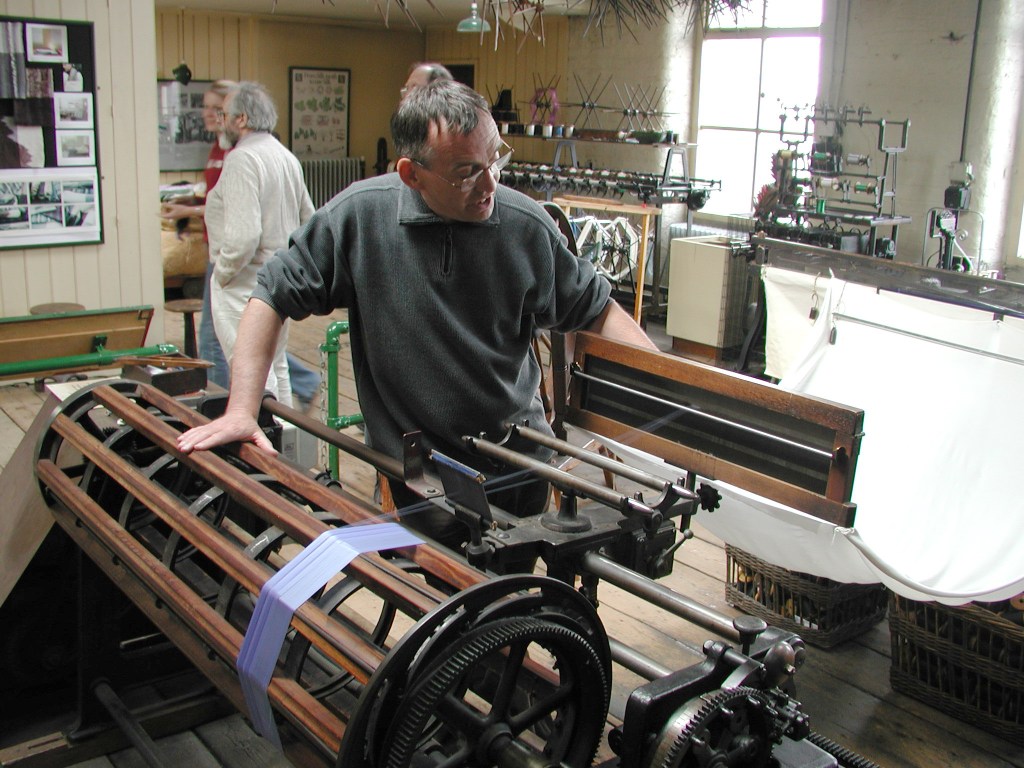
Warping drum for silk thread, Paradise Mill. Image copyright Dr Michael Nevell